Search This Blog

Showing posts with label Socialists. Show all posts

Monday, June 10, 2013

Fairness vs. Liberty and Entrepreneurship

“The champions of socialism call themselves progressives, but they recommend a system which is characterized by rigid observance of routine and by a resistance to every kind of improvement. They call themselves liberals, but they are intent upon abolishing liberty. They call themselves democrats, but they yearn for dictatorship. They call themselves revolutionaries, but they want to make the government omnipotent." — Economist Ludwig von Mises (1881-1973)

We have an administration that is dedicated to something called “fairness.” Obama’s call for this form of class warfare is not new. It dates back to the beginning of the Progressive movement at the turn of the twentieth century. It ebbed and flowed with various administrations. Grover Cleveland was not a fan and neither were Warren Harding, Calvin Coolidge, and Ronald Reagan. Woodrow Wilson, while an ardent progressive in his later years, was lukewarm on the issue. Franklin Roosevelt and Lyndon Johnson were no doubt its biggest advocates both in words and policies.

Our economy is lousy, the labor force participation rate is the lowest in 31 years, we’ve had 50 consecutive months with real unemployment over 8 percent, and a record 47 million people are on food stamps, so one might expect President Obama would welcome as much help as he could get. Surely he would want private sector job creators — investors and entrepreneurs — to have the strongest possible incentives for turning around this Obama “recovery” where household incomes are falling faster than they fell in the Bush recession.

But Obama’s priority is class warfare. That’s why he relentlessly denounces job creators as “millionaires and billionaires.” That’s why he demands that they be punished with higher tax rates.

Recently New York Senator Charles Schumer, one of Obama’s comrades, vowed that there would be no bipartisan budget deal without higher taxes on the rich.

What is it that drives class warriors? “Fairness,” of course, is the familiar battle cry, but according to the IRS the top 1 percent of taxpayers pay about 36 percent of federal income taxes. Before the financial meltdown when the rich were richer, the top 1 percent paid over 40 percent. By any standard, that’s a lot — especially considering that as we have heard, 47 percent of taxpayers don’t pay any income tax.

We need to understand that class warfare is a mortal enemy of economic growth and jobs. At the very least, class warfare means “progressive” taxation — higher tax rates on investors and entrepreneurs, eventually reaching confiscatory levels. In many places, class warfare has gone much farther with suffocating regulations, exchange controls, asset seizures, arbitrary imprisonment and other measures that suppress private property rights and throttle a market economy.

Confiscatory tax rates cannot be justified as revenue-generators, because they don’t raise much money. They discourage work, they drive away investors and entrepreneurs to lower-tax jurisdictions, and there aren’t enough rich people to keep the government going very long, even if all their assets were expropriated. If assets were expropriated this year that would be a one-time event, and next year government would have no choice but to plunder the middle class and the poor.

Whatever tax revenue is realized means less money available for private employers to hire people and less money for consumers to buy things. This offsets any possible benefits from government spending — the theoretical “stimulus” effect is zero.

Actually, the economy suffers when money is taxed away from private individuals and spent by government. In part, this is because regardless how smart politicians and bureaucrats might be, they have only a miniscule fraction of the total knowledge in a society. Politicians and bureaucrats tend to have book learning that’s related to academic credentials, whereas specific, practical knowledge needed to make an economy work is dispersed among multitudes of ordinary people. This includes knowledge about the best locations for a particular business, individuals most likely to be good employees, changing consumer preferences, the most suitable business models, and technologies and so on.

Private individuals not only have such knowledge, they have stronger incentives than politicians or bureaucrats to use the knowledge effectively. It’s well-known that people tend not to be as careful with other people’s money as they are with their own money.

It’s hard to argue, as class warriors do, that the rich have “too much,” meaning compared to average pay or some other arbitrary standard. Pay is a matter of supply and demand. Many people can do good yard work, but it’s tough to find individuals capable of turning around a troubled computer company — particularly when large amounts of money and large numbers of jobs are at stake.

In any event, as Henry Ford once said employees aren’t really paid by bosses. They’re paid by consumers who voluntarily buy a company’s goods or services among many possible choices available in the marketplace. Newspapers aren’t able to pay as many people or pay as much money like they used to, because more consumers are reading news online for free.

Some people earn large amounts of money by taking risks that other people don’t want. Commodities speculators assume the risk that prices of various commodities might go up or down. Insurance companies assume the risk that various adverse events might happen. If confiscatory taxation limits the gains needed to offset losses, fewer people will be willing to help others avoid risks.

Is it fair that some people get rich because they’re lucky? No, but government didn’t earn the money, either, and it’s hard to think of any moral justification for seizing it. If government did seize the money, undoubtedly politicians and bureaucrats with the most clout would make sure it was spent to help enhance their power, and why would that be wonderful? When lawfully-acquired private property is secure, people have incentives to make the most of their luck, by investing some of the money which would make more equity capital available, by saving some of the money which would make more lending possible and/or by spending it which would mean more revenue for private businesses.

Quite apart from incentive effects, progressive taxation has contributed to hideous complexity in the tax code. This is because the higher tax rates go, the stronger the incentives various interest groups have to lobby for special treatment, and since politicians always need more campaign contributions, they’re eager to oblige lobbyists. The more complex the tax code, the more arbitrary and capricious enforcement is sure to be. With high top rates, progressive taxation promotes an illusion of “fairness,” while causing considerable unfairness.

Lindy L. Paull, who served as chief of staff for the Joint Committee on Taxation, reported:

“The Internal Revenue Code consists of nearly 1.4 million words and includes 693 separate sections that impact individual taxpayers. The Treasury Department has issued some 20,000 pages of regulations containing over 8 million words. Individual taxpayers who file an annual Form 1040 must deal with its 79 lines, 144 pages of instructions and 11 schedules totaling 443 lines plus instructions to go with them. There are 19 separate worksheets imbedded in the Form 1040 instructions, and the possibility of filing numerous other forms, depending on the circumstances.”

Despite these problems with class warfare, Obama has led America along the class warfare road. He has made it clear he’ll try to escalate class warfare now that he’s elected for a second term.

Argentina’s progressive president Christina Kirchner has gone farther and shows what we might expect. Several years ago, she seized private pensions supposedly to help cover government budget deficits. Government spending subsequently soared 40 percent! Frightened Argentines fled the country, carrying suitcases stuffed with cash. The government retaliated by organizing teams of dogs trained to sniff vehicles and luggage for the scent of flight capital.

Class warfare tends to intensify, because people don’t like to be pushed around. If government threatens their property or their lives, they’re likely to push back. Dedicated class warriors could be counted on to assert their power with more force. Class warfare attracts people who like to use force, which is why class warfare is associated with so many thugs.

During the French Revolution, the Jacobin class warrior Maximilien Robespierre believed in “equality of wealth,” and he enforced confiscatory taxes with the guillotine.

Other much-admired class warriors like Lenin, Stalin and Mao were strong believers in executing class enemies.

During the Bolshevik Revolution, Lenin declared class war against wicked capitalists, seizing privately-owned land, banks, wholesale and retail businesses. He triggered a famine in which an estimated 5 million Russians starved to death in the breadbasket of the USSR — the Ukraine. Lenin was famously reported to have remarked that “You can’t make an omelet without breaking eggs.”

Lenin’s successor Stalin pursued class war against “kulaks” — supposedly rich peasants who might have had several cows. Kulaks were demonized as “bloodsuckers, vampires and profiteers.” In 1929, Stalin ordered their property seized, and some 7 million people subsequently starved to death.

Mao denounced “capitalist-roaders,” “counter-revolutionaries” and other class enemies. He promoted the “Great Leap Forward” in which as many as 45 million Chinese people were worked, starved or beaten to death between 1958 and 1962.

Where did all this class warfare come from?

According to tax historian E.R.A. Seligman, progressive taxation goes back to Athens during the sixth century B.C.E., but it disappeared in the Roman republic and empire. In some parts of Italy after about 1000 C.E., town populations embraced the idea of taxing people differently, but they persuaded assessors that poor people should pay higher rates than the rich.

The history of taxation abounds with struggles among interest groups, each of which has tried to push tax burdens on somebody else. For example, the Medici family that controlled Renaissance Florence manipulated progressive tax rates to ruin their rivals. As Seligman explained, “Individuals were frequently reduced to beggary, and forced sales of property to pay taxes were a common occurrence.” Ruthless tax collectors provoked much political turmoil during the 1400s.

In 1795, the revolutionary French government (the Directorate) imposed a 100 percent tax on income above modest exemptions. Not surprisingly, people subject to the tax scrambled to transfer assets out of harm’s way, and the tax yielded only about a fifth of what officials had anticipated. Martin-Michel-Charles Gaudin, the French finance minister at the time, observed that the 100 percent tax caused much resentment, but “no real revenue was to be expected.”

The first U.S. income tax was enacted in 1862, during the Civil War, and there were two brackets (three percent of incomes from $600 to $10,000 and five percent for incomes above that). That tax ended in 1871. The Confederacy had a progressive income tax, too.

Progressive taxation didn’t become widespread until after 1900. Self-styled “progressives” promoted higher tax rates for the rich. Ironically, though, peacetime progressive tax rates were very low by our standards. High — progressive — tax rates were mainly a consequence of war, notably World War I and World War II. During World War II, FDR issued an executive order that outlawed annual pay exceeding $25,000 (the equivalent of perhaps $200,000 today). High income tax rates persisted into the 1960s, because of the Cold War. Since then, progressives, who claim to love peace, have worked hard to revive high wartime rates. They opposed the Kennedy, Reagan and Bush across-the-board tax cuts of the 1960s, 1980s and 2000s respectively.

Progressive taxation has survived as a dogma that the rich should pay higher tax rates simply because they have more money. Like Obama, Schumer and so many others, today’s defenders of class warfare don’t feel they need to provide a moral, philosophical or economic justification for it. The case for class warfare boils down to nothing more than envy and resentment.

The last extended discussion about progressive taxation in the United States — on property, personal incomes, corporate incomes and inheritance — was more than a century ago. Farmers were having a hard time, because the number of farms quadrupled between 1850 and 1900, and total cultivated acreage nearly tripled to more than 840 million acres. Soaring food production generated downward pressure on prices for agricultural commodities, and farmers struggled to cut their costs. Farmers resented having to pay higher prices for imported goods, because of high tariffs that were the principal source of federal revenue. The farmers had a point.

Farmers in the South and West wanted an income tax from which they could be exempt, an income tax that would push the tax burden onto the rich who lived in the East. An income tax bill was introduced in nearly every session of Congress during the 1870s and 1880s. “Most of the agitation was by those active in the ‘share-the-wealth’ and ‘soak-the-rich’ campaigns,” reported historians Roy G. Blakey and Gladys C. Blakey. Those income tax bills were buried by the Republican-controlled House Ways & Means Committee.

More and more people spoke out for a progressive income tax. Felix Adler, who founded the popular Ethical Culture movement, demanded an income tax with rates up to 100 percent. A publication called The Progressive Taxpayer urged higher tax rates on the rich to “maintain among men a certain real equality.” Joseph Pulitzer, the New York newspaper publisher, beat the drums for special taxes on high incomes, luxuries and inheritances.

The main political opponents of the income tax were Republicans who defended high tariffs, but there were principled opponents without conflicting interests, too. Economist David A. Wells, who had previously supported an income tax, became a critic. He called graduated rates the beginning of “unmasked confiscation.” Tax historian Randolph Paul pointed out that many Democratic newspapers like the New York Times, Brooklyn Eagle and Boston Globe opposed an income tax because it could authorize inquisitorial power to pry into people’s private lives. The higher the rates and the more aggressively an income tax was enforced, the more it would promote evasion and capital flight. The Milwaukee Journal warned about “a tax of tyrants.” Such critics had a point.

Paradoxically, in 1894, an income tax bill was passed as an amendment to the Wilson-Gorman tariff bill. President Grover Cleveland, a low-tax, freeGorman trade Democrat, didn’t want an income tax or high tariffs. He refused to sign the final bill, but Congress had enough votes to make it law. The income tax provision was subsequently overturned by the Supreme Court due to its violation of Article 9, Section 4 of the Constitution.

As it turned out, most of the arguments offered on behalf of progressive taxation were satisfied by proportional taxation where everybody pays the same rates — in modern lingo, a flat tax. The same rate applied to a higher income yields more tax revenue.

The traditional justification for proportional rates is the idea that people should pay for the most fundamental benefit of government — namely, national defense. The more property people own, the greater their presumed benefit, and the more they should pay. To be sure, governments often start wars and imperil their citizens. Many governments also become tyrannical and seize their citizens’ property or worse. There’s no precise formula in the taxing business.

Ultimately, the progressive income tax became law, in 1913, because about 98 percent of the people were exempted, and perhaps they anticipated sharing some of the loot. It’s not hard to see why that was a formula for legislative success.

But Milton Friedman warned people to “always look a gift horse in the mouth.” The presumed “fairness” of our progressive income tax was illusory, even after President Franklin Delano Roosevelt hiked income tax rates during the Great Depression. FDR’s New Deal programs, intended to help the middle class and the poor, were funded mainly by the middle class and the poor, because the biggest source of federal revenue during the 1930s was the federal excise tax. It applied to beer, cigarettes, soda, chewing gum and other cheap pleasures enjoyed disproportionately by the middle class and the poor. Under FDR, depression era excise taxes more than doubled. Until 1936, the federal excise tax generated more revenue than the federal personal income tax and the federal corporate income tax combined.

During World War II, the federal income tax became a people’s tax. Millions of previously-exempt citizens had to pay it. In 1942, for instance, the IRS received some 28 million tax returns — 1,300 percent more than a decade earlier.

While progressive taxation can make the rich poorer, it makes the poor poorer, too. If the aim is to foster economic growth and jobs, then one needs to forget about class warfare.

Economists in the French Enlightenment (like Jacques Turgot) and the Scottish Enlightenment (like Adam Smith) recognized that essential humanimages institutions such as language, culture, legal customs, mutual aid societies and markets develop spontaneously when governments get out of the way. In The Wealth of Nations, for instance, Smith, who supported proportional taxation, observed that “Little else is requisite to carry a state to the highest degree of opulence from the lowest barbarism but peace, easy taxes, and a tolerable administration of justice.”

Government power is exercised only in the absence of liberty. If you are legally compelled to do something, you are not free to refuse. The government does spend a good deal of time making “suggestions” and offering optional “benefits” these days, but all of this activity is funded by the compulsory seizure of wealth.

Power takes many forms. Money is power. Everything the government does requires funding. The ability to take money unevenly from the populace, assigning different tax rates and exemptions to people, conveys tremendous power. The tax code can be used to reward favored constituents, and punish behavior the government disapproves of.

Taxation is really a form of command, even under a relatively flat and simple system, because after all, time is money. As the calculation of Tax Freedom Day each year demonstrates, when the government takes a percentage of your income, it is commanding a certain percentage of your labor; you work for the State until April or May each year to pay off your tax burden. Paying taxes in currency is a much less painless way of surrendering time to the government than impressing people into servitude on some governmentb90229924ecd4c78a980abd8e4b44329-e1369158211929 project for a couple of days a week, or a few months each year. Paying taxes through invisible paycheck deductions is even more painless. But the essential nature of the transaction, as a form of command, remains the same. That’s why it was grotesque to hear a top IRS official under Congressional interrogation in the recent scandal describe it as “poor customer service.” We are not the government’s customers; there is nothing voluntary about the transaction. Shulman seemed not to realize that he worked for us, not the reverse. This is the effect of power on the mentality of the bureaucrats and masterminds in Washington, D.C.

Spending money without taxation — in other words, deficit spending — is also an expression of power. It is the rejection of a limit upon the State, namely that it should spend only the money it has been given. Rather than presenting the people with a set of proposals and asking if they are willing to cover the estimated costs, the government does what it pleases, and hands the invoices to a generation of children that never had a chance to say no. In this way, authority is taken from people who cannot refuse, rather than being requested from respected citizens by their humble officials.

Information is also a form of power. It can be very valuable, both in terms of how it is used, and the expense involved in accumulating it. Bureaucracies are eager to gather all sorts of information about the people they regulate. The people, in turn, believe they exercise power over government by demanding transparency. What they learn about the conduct of government officials influences their votes.

When the flow of information becomes unequal, the party with more data assumes a position of power and dominance over the less well-informed. If you spent a few hours locked in a room with someone who asked you a barrage of intrusive questions under penalty of perjury, while answering none about himself, you’d have no illusions about whether he was more powerful than you.

We find ourselves looking at a particularly painful imbalance of power between American citizens and their central government. The Administration is not willing to disclose much about itself. Its high officials are impervious to consequences for their action — they’re more likely to be promoted than punished after a scandal. But they are gathering enormous amounts of information about us, and improperly disclosing it for their own benefit.

Even leaving scandals aside, we have before us a system of government that requires a very deep sea of power beneath it to stay afloat. It cannot function without monitoring the public in countless ways, and exerting a high201212_teaparty level of compulsive control. It has to take a vast amount of money from the public, and it grows extremely upset at the suggestion that it should make do with any less. It spends a fantastic amount of money it doesn’t actually have, periodically using its own insolvency as a weapon against the public, twisting concern about the national debt into an irresistible demand for higher taxes. Growing amounts of behavior are forbidden, regulated, or even mandated. More and more of what the government does is not even subject to the political process any more — for example, we are told we’ll never even have a chance to vote on reclaiming control of our health care. Many decisions have been swept off the table and there’s an awful lot going on underneath the table.

This means the old understanding of “privacy” has become obsolete. You’re not allowed to conduct your life away from the unblinking gaze of the government any more. Everything is taxed, monitored, and controlled. All business is the government’s business. They have to know what we’re up to, before they can tell us what to do.

As it grows, the government becomes less concerned with the strict performance of carefully outlined duties. It has its own interests, and it looks out for them. It treats its allies much differently than its perceived adversaries, as any conservative group seeking a tax exemption, or information from the Environmental Protection Agency, can testify.

As the French economist Frederic Bastiat stated some 150 years ago when talking about the creep of socialism into the French economy:

"These socialist writers look upon people in the same manner that the gardener views his trees. Just as the gardener capriciously shapes the trees into pyramids, parasols, cubes, vases, fans, and other forms, just so does the socialist writer whimsically shape human beings into groups, series, centers, sub-centers, honeycombs, labor-corps, and other variations. And just as the gardener needs axes, pruning hooks, saws, and shears to shape his trees, just so does the socialist writer need the force that he can find only in law to shape human beings. For this purpose, he devises tariff laws, relief laws, and school laws."

This is the nature of government power. Of course it seems arrogant, for its great works are justified as moral crusades when they are actually moral hazards. How can a few selfish dissenters be allowed to stand in the way of almighty Progress? Who are you, to doubt the judgment of top officials? Social justice must be dispensed, wealth must be re-distributed to the deserving, discourse must be purified, and the Earth itself must be saved. You little people aren’t really qualified to ask questions about it, much less refuse to participate. And if you want a government that asks fewer questions of you, insist on making it smaller. The big ones are always pushy.

Sunday, August 12, 2012

The Intolerance and Bigotry of the Left

"Let us with caution indulge the supposition that morality can be maintained without religion. Whatever may be conceded to the influence of refined education on minds of peculiar structure, reason and experience both forbid us to expect that national morality can prevail in exclusion of religious principle." — George Washington (Farewell Address, 1796)

Today we live in a society where morality is considered relative to the times. In many cases there are no absolutes when it comes to morality and those who believe that religion and morality go hand in hand, as George Washington did, are considered to be either intolerant or racist. This is the mantra that the Left tosses around on a daily basis in the mainstream media and our TV and films.

The latest example of this appears in Salon Magazine in an article by Mary Elizabeth Williams writing about Olympic Gold Medalist Gabby Douglas and her expression of Christian faith. Rather than simply ignoring Ms. Douglas’ comments on her religious faith when she tweeted; “Let all that I am praise the LORD; may I never forget the good things he does for me” Ms. Williams felt compelled to write a negative article ridiculing Douglas’ expression of faith by stating:

“I’ve often wondered what it is about Christians like Douglas that unnerves me so. The closest I’ve been able to figure it is that Douglas and her ilk seem to espouse a faith based on what is commonly referred to as “The God of Parking Spaces.” It’s the deity that grants wishes to those who ask nicely. Douglas is a girl who has described God as the figure who’s “waking me up every morning and keeping me safe in the gym every day.”

There was no need for Williams to make such statements about a 16-year old girl who won a gold medal and expressed her believe in God and Jesus Christ. Williams could have written about numerous positive aspects of Douglas’ life but instead she had to take a whack at her Christian beliefs. Why?

Evidently, quite a few liberals amongst us are just as patriotic as the rest of us; unless our athletic avatars tarnish their medals with the stain of faith. According to Salon sourpuss Mary Elizabeth Williams. I understand the reasons for watching the Olympics extend well beyond the usual jingoistic expressions of sports fandom. Anyone who has seen Usain Bolt rocket through the 100 meters like a gazelle on amphetamines knows what I mean. Just as art can be appreciated for its own sake, so can athletic accomplishment.

So, who are these miserable curmudgeons like Williams? They’re the people who sneer at us for chanting “U-S-A,” but don’t bat an eyelid when the Europeans bellow their way through most of Wagner’s Ring Cycle while watching a 1-0 soccer match. They’re the people who just can’t bring themselves to be patriotic; even for a moment. We know who they are; we also know how they vote. To paraphrase Ms. Williams: they’re “commonly referred to as “liberals.”

I was raised in an extended family that voted for the Democrat no matter who he was. They considered themselves to be progressive and liberal and believed the Democratic Party was the party of the working people and would bring them the most benefits, especially when it came to unions. The exception to this was my father, who while professing to be a progressive did not like unions and was not a member of one.

These progressive family members and many of our middle-class neighbors who held similar beliefs were also intolerant of other nationalities, races, and ethnic heritages. Yet they considered themselves to be “liberal”.

Somewhere along the way I broke with this tradition of “liberalism” and progressive ideology and became a conservative — a Constitutional Conservative who was more in tune with the philosophy of our Founders, The Declaration of Independence, and the Constitution than the oft failed schemes of the progressives and their big government ideology. Perhaps this is due to the fact that I became a professional who was not beholden to a union and was an entrepreneur who started and successfully ran a professional engineering consulting business for over thirty years.

It was during this time that I was able to travel the world and see the damage done by progressives with their socialistic policies and the tyranny they imposed on the people. I was also able to develop some theories about liberals and progressives and how they group think. You can see is these theories have any validity by watching TV news shows, reading liberal publications and listening to liberals speak.

American progressives hold these truths to be self-evident:

All cultures and religions are equally meritorious (except for Christianity)

There is no objective truth (until and unless progressives declare the truth)

You cannot legislate morality, therefore everything is "moral" — except Christian morality.

Progressives celebrate diversity and are tolerant, inclusive, and accepting of all fellow humans — except conservative, white and Christian people)

Progressives are intelligent, thoughtful, reality-based, and benevolent

Objective? Diverse? Inclusive? Thoughtful? Reality-based? Benevolent? Not really. Progressives and liberals are the worst offenders of their own axioms when they talk about the "evils" of those who dispute liberal versions of facts, policy, or, especially, morality. The bigotry liberals direct toward those with whom they merely disagree is staggering.

Liberals believe in free speech, unless it offends someone's tender sensitivities (meaning only that liberals disagree with it). They protest the "wealthiest 1%," but exempt from their condemnations billionaire liberals and wealthy movie and rock stars, most of whom share the same ideology. Many liberals believe corporations and capitalism to be evil, even though the capitalist system and many of the corporations of which they disapprove have created the products and standard of living liberals enjoy.

But the American left reserves its ugliest bigotry for Christians. When liberals speak or write about practicing Christians, especially evangelical Christians and, in this presidential election year, Mormons, no slander is unacceptable and no religious custom is off-limits. America's most prominent liberal has condescendingly denigrated Christians as "bitter clingers" to guns and religion. Liberals have seriously asked: "Do All Evangelical Leaders Believe Gays Should Be Put to Death?" They worry about reports that evangelicals are voting in record numbers. And they invent scenarios which question whether religious convictions resonate in the political arena. Every Christian, of any age or gender, is fair game for liberal animosity — or left-wing redefinition. Liberals bash Christians with impunity; because Christians are Christian, and behave in a Christian manner from which liberals fear no reprisal. Ironic, huh? And opportunistic, too.

Thomas Jefferson believed in something called the “American Mind.” It was Jefferson who said, our Constitution was the product of “the American mind” and was made with the same purpose as the Declaration—to establish a regime where the people are sovereign, and the government protects the rights granted to them by their Creator.

The basis of Jefferson’s beliefs, and those of our founders, was the philosophy of classical liberalism (not to be mistaken for today’s liberal thinking) of economic and social writers such as John Locke, Montesquieu, Adam Smith, and Edmund Burke. They believed in small government, free markets and personal freedom. The classical liberals advocated policies to increase liberty and prosperity. They sought to empower the commercial class politically and to abolish royal charters, monopolies, and the protectionist policies of mercantilism so as to encourage entrepreneurship and increase productive efficiency. They also expected democracy and laissez-faire economics to diminish the frequency of war.

However, liberalism in the United States shifted between 1877 and 1937 from laissez-faire constitutionalism to New Deal statism, from classical liberalism to democratic social-welfarism. Another regularly asserted contrast between classical and modern liberals. Classical liberals tend to see government power as the enemy of liberty, while modern liberals fear the concentration of wealth and the expansion of corporate power. Classical liberalism has grown into two divergent philosophies since the beginning of the twentieth century: social liberalism and market liberalism.

So what do today’s liberals believe in if they do not subscribe to the ideology of tradition classical liberalism as expressed by John Locke and our Founders. After observing thousands of interviews with liberals over the years here is my take on the “Liberal Mind.”

Liberals believe they can change human nature.

Sure, human beings can be shaped and molded to a certain extent. Any parent who has spanked a child can tell you that. However, most people care more about what they're having for lunch today than an earthquake that kills ten thousand people on the other side of the world. We're just built that way and no amount of sensitivity training, preschool classes, or Michael Moore documentaries is going to "fix" it.

Our Founders knew that human nature was flawed and that the best way to counter the ambition of one group was to place it in opposition to the ambition of an opposing group or as James Madison stated to pit ambition against ambition. Madison stated in Federalist No. 10:

“The latent causes of faction are thus sown in the nature of man; and we see them everywhere brought into different degrees of activity, according to the different circumstances of civil society. A zeal for different opinions concerning religion, concerning government, and many other points, as well as speculation as of practice; an attachment to different leaders ambitiously contending for pre-eminence and power; or to persons of other descriptions whose fortunes have been interesting to the human passions, have, in turn, divided mankind into parties, inflamed them with mutual animosity, and rendered them much more disposed to vex and oppress each other than to cooperate for their common good.”

Madison wrote on Human Nature in Federalist No. 51:

“It may be a reflection on human nature that such devices should be necessary to control the abuses of government. But what is government itself but the greatest of all reflections on human nature? If men were angels, no government would be necessary. If angels were to govern men, neither external nor internal controls on government would be necessary.”

No race or class of supermen, who can govern us, exits. There are no masterminds. There are no Philosopher Kings as Plato describes. Madison believed that man had a nature to abuse power: “If given the opportunity human beings will violate each other’s rights. The protection of individual rights is the primary purpose of government. Without government there is no effective security for our rights.

Liberals believe we can talk everything out with our enemies.

One of the weirder quirks of liberalism is their belief that many of our bitterest enemies have rational reasons for disliking us and that can easily be talked away if they realize we're good people. Hence, the common liberal refrain of, "Why do they hate us?" The reason this is a particularly odd belief is that liberals don't even believe this about conservatives in the United States. The average liberal thinks that if we're nice enough, we can reach an understanding with Hugo Chavez or Mahmoud Ahmadinejad, but Rush Limbaugh and Glenn Beck can't be reasoned with.

Throughout the last 100 years history liberals have been wrong. They have been wrong about Nazi Germany when Neville Chamberlain and his European ilk believed they could negotiate with Adolph Hitler over the fate of Europe only to find out that they were being used by the Nazi dictator. Liberals were wrong about Ronald Reagan when he took on the Soviet Union in a direct and powerful manner. Liberals were wrong when they felt Castro was a liberator of Cuba. In fact liberals have a problem dealing with problems head-on. They would rather talk than act. As most liberals are so closely tied with academia they would rather talk than. If today’s liberals (not the classical liberals of the sixteenth and seventh centuries) were in the majority in 1776 we would never had had the Declaration or Independence and we would still be subjects of the British Monarchy. Liberals just can’t face up to tyranny. If you don’t believe this just think about the masses of liberal European Jews that believed they could deal with Hitler and the Nazis.

Transforming questions of fact into questions of intent has been the great achievement of twentieth-century totalitarians. It is a dangerous achievement which has survived the collapse of both fascist and Communist empires and has become a hallmark of much of the Western intelligentsia.

Liberals have no respect for our culture and traditions.

To liberals, our cultural, economic, and political norms were formed by backwards troglodytes making arbitrary decisions based on superstition and racism. Unfortunately for them, as a general rule, that's not so and proceeding as if it is, will often lead to exactly the same difficulties that our ancestors already dealt with in times past. No matter how smart we are, as Thomas Sowell would say; "For the anointed, traditions are likely to be seen as the dead hand of the past, relics of a less enlightened age, and not as the distilled experience of millions who faced similar human vicissitudes before.”

The German composer Carl Orff once said; Tradition is the glue that holds a society together.” It is tradition that holds families, communities and nations together; it is also something liberals frown upon. To a liberal morality is relative to the times and not absolute. There are three things that make a people into a nation — borders, language and culture. Without these three items a nation cannot exist. Today’s liberals despise all three. They want open borders where anyone can cross with impunity. They don’t want one language in our schools, government, and businesses. And they believe in multiculturalism, something that the Europeans are drifting away from as they have found out the problems and class separation it has caused in nations like France, Germany, and The Netherlands.

Liberalism is a fundamentally immoral political philosophy.

Ironically, given all their talk about "shades of gray," liberals have a very moral dualism view of the world. They consider their fellow travelers to be on the side of the angels, while the people who disagree with them are treated as evil. This leads to an "anything goes" mentality when dealing with their foes: ignoring the law via a "living constitution," politically based prosecutions, shouting down opposing speakers, and treating lying about their agenda or opponents to be moral. On the other hand, liberals will support other libs, no matter how corrupt, sleazy, or vile they are as long as they're politically useful to the left. See Ted Kennedy, Barney Frank, John Murtha, and Robert Byrd for examples of that. In other words, as Margaret Thatcher has said of the Left, "For them, the end always seems to justify the means."

Today’s liberals believe there is no absolute morality. They believe morality is relative to the times and situations. Liberals believe that the killing of the unborn is not immoral when it comes to women’s rights, but they have a right to withhold baby formula from a new mother if she does not want to beast feed. They believe there are no sin and no judgment.

Fay Voshell writes provocative article in American Thinker about the mind of the progressive when it comes to religion and morality.

Liberals believe merely being liberal makes them good people.

Liberals who're obsessed with money think they're compassionate because they give away other people's tax dollars. They believe they care more about the earth than other people, even as they fly around in private jets, because they babble on about global warming. They can be dumb as a rock, but believe they're smarter than most other people because they're liberals. In other words, in the minds of most liberals, liberalism is an all-purpose substitute for actual virtue instead of just another political philosophy.

Liberals believe conservatives and free-market capitalists are evil because they believe in free-market solutions, individual freedom, and personal responsibility. I think Frédéric Bastiat said more eloquently then I could have when he stated in his treatise on the Law when talking about the mind of the socialist:

"Socialism, like the ancient ideas from which it springs, confuses the distinction between government and society. As a result of this, every time we object to a thing being done by government, the socialists conclude that we object to its being done at all. We disapprove of state education. Then the socialists say that we are opposed to any education. We object to a state religion. Then the socialists say that we want no religion at all. We object to a state-enforced equality. Then they say that we are against equality. And so on, and so on. It is as if the socialists were to accuse us of not wanting persons to eat because we do not want the state to raise grain."

You must remember that in Bastiat’s day “liberals” were of the classical type and socialist were considered those masterminds who believed in big government, as today’s liberals do.

Liberals have too much faith in government.

Even most liberals would admit that government regularly fails the people. If you don't believe that, just ask them about the Bush Administration and they'll give you an earful. However, liberals tend to believe that with the right person in charge and with enough of other people’s money, government won't be so slow, stupid, inefficient, and badly run. Human history proves that they're wrong about that deal.

Out of every hundred new ideas ninety-nine or more will probably be inferior to the traditional responses which they propose to replace. No one man, however brilliant or well-informed, can come in one lifetime to such fullness of understanding as to safely judge and dismiss the customs or institutions of his society, for those are the wisdom of generations after centuries of experiment in the laboratory of history.

The secret to the power and success of the United States has been in the family, entrepreneurs, and morality. Our Founders knew this from the get go. They believed government had only one purpose and that was to protect the rights and property of its citizens — not to become the nanny state the liberals so desire. People such as Henry Ford, the Wright Brothers, Thomas Edison, Alexander Graham Bell, Andrew Carnegie, and John D. Rockefeller did not rely on government for their success — they relied on their ideas and faith in those ideas. When they failed they simply tried again and again until they achieved success.

Once again as Sowell states:

"The presumed irrationality of the public is a pattern running through many, if not most or all, of the great crusades of the anointed in the twentieth century--regardless of the subject matter of the crusade or the field in which it arises. Whether the issue has been 'overpopulation,' Keynesian economics, criminal justice, or natural resource exhaustion, a key assumption has been that the public is so irrational that the superior wisdom of the anointed must be imposed, in order to avert disaster. The anointed do not simply happen to have a disdain for the public. Such disdain is an integral part of their vision, for the central feature of that vision is preemption of the decisions of others."

Liberals have minimal interest in whether the programs they support work or not.

To most liberals, whether a government program betters people's lives is completely irrelevant to whether they'll support it. A program that doesn't work and costs billions, but sounds compassionate and helps Democrats politically is a huge success in the eyes of the Left. Once you understand that liberals think this way, their baffling support for programs that make no "common sense" is much easier to understand. As Thomas Sowell stated:

“In their zeal for particular kinds of decisions to be made, those with the vision of the anointed seldom consider the nature of the process by which decisions are made. Often what they propose amounts to third-party decision making by people who pay no cost for being wrong--surely one of the least promising ways of reaching decisions satisfactory to those who must live with the consequences.”

How many liberal programs costing trillions of dollars have failed over the past century? The list is long. The New Deal failed. The War on Poverty failed. The onerous regulatory policies of the EPA have failed. Just consider how many African children have died from Malaria when DDT was banned by masterminds who did not consider or care about the consequences of their actions. They were playing to unfounded fears, flawed and biased academic reports and the media.

It was government intervention that was the root cause the crash of the housing bubble by forcing banks to make loans to people they knew would not be able to pay them back. Government intervention into the college loan business is the main contributor to the inflationary rise on the cost of college today.

In their haste to be wiser and nobler than others, the liberal anointed masterminds have misconceived two basic issues. They seem to assume (1) that they have more knowledge than the average member of the society and (2) that this is the relevant comparison. The real comparison, however, is not between the knowledge possessed by the average member of the educated elite versus the average member of the general public, but rather the total direct knowledge brought to bear though social processes (the competition of the marketplace, social sorting, etc.), involving millions of people, versus the secondhand knowledge of generalities possessed by a smaller elite group of academics and masterminds. A farmer in Nebraska has far more knowledge and a vested interest in the land they farm than any ten masterminds in Washington.

Why are the horrors of Nazism so well-known and widely condemned but not those of socialism and communism? What goes untaught — and possibly is covered up — is that socialist and communist ideas have produced the greatest evil in mankind's history. You say, what in the world are you talking about? Socialists, communists and their fellow travelers, such as the Wall Street occupiers supported by our president, care about the little guy in his struggle for a fair shake! They're trying to promote social justice." Let's look at some of the history of socialism and communism so touted by liberals.

What's not appreciated is that Nazism is a form of socialism. In fact, the term Nazi stands for the National Socialist German Workers' Party. The unspeakable acts of Adolf Hitler's Nazis pale in comparison to the horrors committed by the communists in the former Union of Soviet Socialist Republics and the People's Republic of China. Between 1917 and 1987, Vladimir Lenin, Josef Stalin and their successors murdered and were otherwise responsible for the deaths of 62 million of their own people. Between 1949 and 1987, China's communists, led by Mao Zedong and his successors, murdered and were otherwise responsible for the deaths of 76 million Chinese. The most authoritative tally of history's most murderous regimes is documented on University of Hawaii Professor Rudolph J. Rummel's website here, and in his book "Death by Government." According to Rummel 262 million people have been killed by government in the twentieth century with the bulk be exterminated by so called “liberal” socialist or communist regimes. Rummel states:

“Just to give perspective on this incredible murder by government, if all these bodies were laid head to toe, with the average height being 5', then they would circle the earth ten times. Also, this democide murdered 6 times more people than died in combat in all the foreign and internal wars of the century. Finally, given popular estimates of the dead in a major nuclear war, this total democide is as though such a war did occur, but with its dead spread over a century.”

How much hunting down and punishment have there been for these communist murderers? To the contrary, it's acceptable both in Europe and in the U.S. to hoist and march under the former USSR's red flag emblazoned with a hammer and sickle. Mao Zedong has long been admired by academics and leftists across our country, as they often marched around singing the praises of Mao and waving his little red book, "Quotations from Chairman Mao Tse-tung." President Barack Obama's communications director, Anita Dunn, in her June 2009 commencement address to St. Andrews Episcopal High School at Washington National Cathedral, said Mao was one of her heroes.

Whether it's the academic community, the media elite, stalwarts of the Democratic Party or organizations such as the NAACP, the National Council of La Raza, Green for All, the Sierra Club and the Children's Defense Fund, there is a great tolerance for the ideas of socialism — a system that has caused more deaths and human misery than all other systems combined.

Today's leftists, socialists and progressives would bristle at the suggestion that their agenda differs little from those of Nazi, Soviet and Maoist mass murderers. One does not have to be in favor of death camps or wars of conquest to be a tyrant. The only requirement is that one has to believe in the primacy of the state over individual rights.

Today's leftists, socialists and progressives would bristle at the suggestion that their agenda differs little from those of Nazi, Soviet and Maoist mass murderers. One does not have to be in favor of death camps or wars of conquest to be a tyrant. The only requirement is that one has to believe in the primacy of the state over individual rights.

The unspeakable horrors of Nazism didn't happen overnight. They were simply the end result of a long evolution of ideas leading to consolidation of power in central government in the quest for "social justice." It was decent but misguided earlier generations of Germans — who would have cringed at the thought of genocide — who created the Trojan horse for Hitler's ascendancy. Today's Americans are similarly accepting the massive consolidation of power in Washington in the name of social justice.

If you don't believe it, just ask yourself: Which way are we headed tiny steps at a time — toward greater liberty or toward more government control over our lives?

Sunday, July 15, 2012

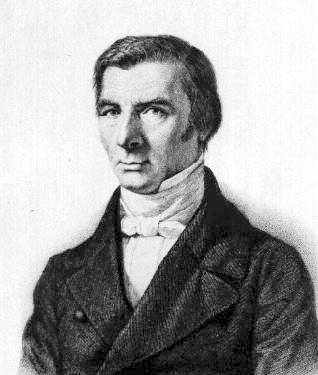
Frederic Bastiat

"Where you find the laws most numerous, there you will find also the greatest injustice." — Arcesilaus

In my previous blog I touched on the philosophy of Frederic Bastiat. In this post I would like to tell you something about the life and philosophy of Bastiat and why you should read his writings if you believe in freedom and the natural rights of man as our Founders did.

Claude Frederic Bastiat was born on June 30, 1801, in Bayonne, France, the son of a prominent merchant. His mother died when he was seven years old, and his father passed away two years later, when Frederic was only nine. He was brought up by an aunt, who also saw to it that he went to the College of Sorèze beginning when he was 14. But at 17 he left without finishing the requirements for his degree and entered his uncle’s commercial firm in Bayonne. Shortly afterward he came across the writings of the French classical-liberal economist Jean- Baptiste Say, and they transformed his life and thinking. He began a serious study of political economy and soon discovered the works of many of the other classical-liberal writers in France and Great Britain.

In 1825 he inherited a modest estate in Mugron from his grandfather and remained there until 1846, when he moved to Paris. During these 20 years Bastiat devoted almost all his time to absorbing a vast amount of literature on a wide variety of subjects, sharing books and ideas with his friend Félix Coudroy. It seems that Coudroy had socialist leanings, and Bastiat began to refine his skills in clear thinking and writing by formulating the arguments that finally won over his friend to a philosophy of freedom.

In the late 1820s and 1830s he began writing monographs and essays on a variety of economic topics. But his real reputation as a writer began in 1844, when he published a lengthy article in defense of free trade and then a monograph on Cobden and the League: The English Movement for Free Trade. While writing these works Bastiat began a correspondence with Richard Cobden, one of the primary leaders of the British Anti-Corn Law League, the association working for the repeal of all barriers to free trade. The two proponents of economic freedom became fast friends, supporting each other in the cause of liberty.

The success of these writings, and the inspiration from the success of Cobden’s free-trade activities in bringing about the end of agricultural protectionism in Great Britain in 1846, resulted in Bastiat’s moving to Paris to establish a French free-trade association and to start Le Libre Échange, a newspaper devoted to this cause. For two years Bastiat labored to organize and propagandize for free trade. At first he was able to attract a variety of people in commerce and industry to support his activities, including delivering speeches, designing legislation for the repeal of French protectionism, and preparing writings to change public opinion. But it was to no avail. There were too many factions benefiting from privileges and favors given by the government, and he was unable to arouse a sustained interest in his cause among the general public. It appeared that Adam Smith had been right in lamenting the prejudices of the public and the power of the factions, at least in France. This is what Madison feared most when writing in support of the Constitution in Federalist 10.

Following the revolution of February 1848, Bastiat began a career in politics,Bastiat serving first in the French Constituent Assembly and then in the Legislative Assembly. Having devoted most of his previous writings to demonstrating the fallacies in the arguments for protectionism, Bastiat turned his attention to a new enemy of economic liberty: socialism. In the Legislative Assembly he delivered powerful speeches against public-works programs, guaranteed national-employment schemes, wealth redistribution proposals, nationalization of industry, and rationales for the expansion of bureaucratic controls over social and economic life. But because of worsening tuberculosis that weakened his voice, he turned to the written word, producing a large number of essays detailing the absurdities in the arguments of the socialists.

Bastiat made his last appearance in the Assembly in February 1850. By spring of that year his health had declined so dramatically that he was forced to step down from his legislative responsibilities and spend the summer in the Pyrenees Mountains in the south of France. He returned to Paris in September and visited his friends in the cause for free trade, before setting out for Italy in search of a cure for his tuberculosis. He died in Rome on December 24, 1850, at the age of 49 — much too soon.

Frederic Bastiat’s intellectual legacy in the fight for economic freedom is contained in three volumes. Two of them are collections of some of his most biting, witty, and insightful essays and articles, and are available in English under the titles Economic Sophisms and Selected Essays on Political Economy. In his last years, Bastiat devoted part of his time to a general work of social philosophy and economic principles, published under the name Economic Harmonies.

As Henry Hazlitt rightly emphasized, the central idea in much of Bastiat’s writings is captured in his essay “What Is Seen and What Is Not Seen,” which was the last piece he wrote before his death in 1850. He points out that the short-run effects of any action or policy can often be quite different from its longer-run consequences, and that these more remote consequences in fact may be the opposite from what one had hoped for or originally planned.

Bastiat was able to apply the principle of the seen and the unseen to taxes and government jobs. When government taxes, what is seen are the workers employed and the results of their labor: a road, a bridge, or a canal. What is unseen are all the other things that would have been produced if the tax money had not been taken from individuals in the private sector and if the resources and labor employed by the government had been free to serve the desires of those private citizens. Government, Bastiat explained, produces nothing independent from the resources and labor it diverts from private uses.

This simple but profoundly important insight is the theoretical weapon through which Bastiat is able to demonstrate the errors and contradictions in the ideas of both protectionists and socialists. Thus in such essays as “Abundance and Scarcity,” “Obstacle and Cause,” and “Effort and Result,” he shows that barriers and prohibitions to freedom of trade only lead to poverty.

He points out that each of us is both a consumer and a producer. To consume a good we must either make it ourselves or make some other good that we think someone else will take in exchange for the good we want. As consumers we desire as many goods as possible at the lowest possible prices. In other words, we want abundance. But as producers we want a scarcity of the goods we bring to market. In open competition, in which all exchanges are voluntary, the only way to “capture” customers and earn the income that enables each of us, in turn, to be a consumer is to offer better, cheaper, and more goods than our competitors. The alternative to this method, Bastiat warns, is for each of us as a producer to turn to the government to gain from our neighbors what we are unable to obtain through peaceful, nonviolent trade on the market. Consider that you own a pizza shop and the government takes five dollars out of your till in taxes and then gives that five dollars to people to purchase a pizza from you. What would you have gained? Of course this does not take into consideration the 50 cents the government would keep for administrative costs. This is what government does when it takes money from person “A” to give to person “B” and claims this action is helping the economy and creating jobs. Bastiat saw 150 years ago that this was a false assertion — one that the progressives and socialists have rammed down our throats for years.

Herein lays Bastiat’s famous distinction between illegal and legal plunder, which is at the center of his analysis in The Law. The purpose of government, he says, is precisely to secure individuals in their rights to life, liberty, and property. Without such security men are reduced to a primitive life of fear and self-defense, with every neighbor a potential enemy ready to plunder what another has produced. If a government is strictly limited to protecting men’s rights, then peace prevails, and men can go about working to improve their lives, associating with their neighbors in a division of labor and exchange. This is what Jefferson meant when he said that your rights ended at the tip of his nose.

But government can also be turned against those whom it is meant to protect in their property. There can arise legal plunder, in which the powers of government are used by various individuals and groups and factions to prevent rivals from competing, to restrict the domestic and foreign trading opportunities of other consumers in the society, and therefore to steal the wealth of one’s neighbors. This, Bastiat argues, is the origin and basis of protectionism, regulation, and redistributive taxation.

But the consequences of legal plunder are not only the political legitimizing of theft and the breakdown of morality through the blurring of the distinction between right and wrong—however crucially important and dangerous these may be for the long-term stability and well-being of society. Such policies also, by necessity, reduce the prosperity of the society.

Every trade protection, every domestic regulatory restriction, every redistributive act of taxation above that minimal amount necessary to secure the equal protection of each individual’s rights, Bastiat insisted, reduces production and competition in society. Scarcity replaces abundance. Limiting competition reduces the supply of goods available to all members of the society. Imposing protectionist barriers on foreign trade or domestic regulations on production decreases the general availability of goods and makes them more expensive. Everyone is, in the end, made worse off. And thus Bastiat reached his famous conclusion that the state is the great fiction through which everyone tries to live at the expense of everyone else.

Why does legal plunder come about? Bastiat saw its origin in two sources. First, as we have just seen, some people see it as an easier means of acquiring wealth than through work and production. They use political power to redistribute from others what they are unwilling or unable to obtain from their neighbors through the voluntary exchanges of the marketplace. One basis for legal plunder, in other words, is the misguided spirit of theft.

The second, and far more dangerous, source of legal plunder is the arrogant mentality of the social engineer or utopian mastermind. Through the ages, Bastiat showed, social and political philosophers have viewed the multitude of humanity as passive matter, similar to clay, waiting to be molded and shaped, arranged and moved about according to the design of an intellectually superior elite.

Bastiat writes in The Law:

"These socialist writers look upon people in the same manner that the gardener views his trees. Just as the gardener capriciously shapes the trees into pyramids, parasols, cubes, vases, fans, and other forms, just so does the socialist writer whimsically shape human beings into groups, series, centers, sub-centers, honeycombs, labor-corps, and other variations. And just as the gardener needs axes, pruning hooks, saws, and shears to shape his trees, just so does the socialist writer need the force that he can find only in law to shape human beings. For this purpose, he devises tariff laws, relief laws, and school laws."

With a timeless relevance, Bastiat points out that the political elite praises the ideal of democracy, under which “the people” select those who will hold political office. But once the electoral process is finished, those elected to high political office arrogate to themselves the planning, directing, and controlling of every aspect of social and economic life. The task of modern democracy, apparently, is to periodically appoint those who shall be our societal dictators and masterminds.

Is this the way men have to live? Was illegal and legal plundering the only form of social existence? Bastiat answered no. In Economic Harmonies he tried to explain the nature and logic of a system of peaceful human association through production and trade. Historians of economic thought and other critics of Bastiat have said this work demonstrates that, despite his brilliant journalistic talents, he failed as a serious economic theorist. They point to his use of a form of a labor theory of value or his .faulty theory of savings, capital, and interest.

But beyond these errors and limitations is an aspect of Economic Harmonies that still makes it insightful. Harmonies attempts to offer a grand vision of the causal relationships among work, the division of labor, voluntary exchange, and mutual improvement of men’s condition, as well as the importance of private property, individual freedom, and domestic and foreign free trade. In freedom there is social harmony, since each man sees his neighbor not as an enemy but as a partner in the ongoing processes of human improvement. Where relationships are based on consent and mutual agreement there can be no plunder, only reinforcing prosperity, as each works to trade with his neighbors and acquire all the things that make life better for each and all. This is exactly the way our Founders thought.

If one looks at the period during which Bastiat devoted his efforts to fight for freedom and free trade, the conclusion would appear to be that his life ended in failure. Both during his lifetime and following his death France remained in the grip of the protectionist and interventionist spirit, never achieving the degree of economic liberty enjoyed in Great Britain through the second half of the nineteenth century.

And yet Bastiat’s life should be seen as a glorious success. For the 150 years since his passing, each new generation of advocates of economic liberty has been inspired by his writings. His fables and essays read as fresh as if they were written yesterday, because they address the underlying nature of human association and the dangers from political encroachment on the social and market orders.

Today we live in a society where 50% of the people pay no taxes for the government benefits they receive. This means they are plundering the other 50% to pay for their needs. According to the Bureau of Labor Statistics there are 48 million people on food stamps. These 48 million are plundering the people paying taxes for their daily bread and other niceties of life. Government assistance in the form of various welfare programs are plunder of those not receiving welfare payments. The bailout of the auto industry was plunder of the taxpayers for the purpose of protecting two auto manufactures who were in financial trouble due to their lack of providing the consumer what he or she wanted and the mismanagement of the companies. Government sponsorship of student loans has allowed the colleges and universities to plunder students, their parents, and taxpayers with higher and higher tuition costs. The list of examples of plunder goes on and on.

One of Bastiat’s comments in The Law referring to socialist and progressive is particularly relative today with all of the talk of fairness and the equality of results. Bastiat states:

"Socialism, like the ancient ideas from which it springs, confuses the distinction between government and society. As a result of this, every time we object to a thing being done by government, the socialists conclude that we object to its being done at all. We disapprove of state education. Then the socialists say that we are opposed to any education. We object to a state religion. Then the socialists say that we want no religion at all. We object to a state-enforced equality. Then they say that we are against equality. And so on, and so on. It is as if the socialists were to accuse us of not wanting persons to eat because we do not want the state to raise grain."

Bastiat’s writings are timeless as they show us the tyranny of the elite and masterminds as they rule over us for their own purposes and use legal plunder as their political currency. They have influenced conservative economists and philosophers such as; Ludwig von Mises, Friedrich Hayek (who had a profound influence on Margaret Thatcher), Henry Hazlitt, .Nobel Prize winning Milton Friedman, Walter Williams, and Thomas Sowell.

The video shown below, produced by the Von Misses Institute, presents a good overview of the writings and philosophies Frederic Bastiat.If you are interested in learning more about Bastiat and French liberalism it is well wrth your time.

Thursday, May 3, 2012

The Occupy Movement Is A Bust

"To take from one, because it is thought his own industry and that of his fathers has acquired too much, in order to spare to others, who, or whose fathers, have not exercised equal industry and skill, is to violate arbitrarily the first principle of association, the guarantee to everyone the free exercise of his industry and the fruits acquired by it." — Thomas Jefferson

On Tuesday, May 1st there were demonstrations by the Occupy Wall Street crowd in various cities across the United States. With the exception of Cleveland, Seattle, and Oakland most of the demonstrators were a big bust with little or no news coverage. In Cleveland the FBI, through a sting operation arrested five anarchists who wanted to blow up a bridge and in Seattle, known for its leftists leanings, arrests were made for vandalism and attacks on the police. Outside of these highly publicized events the occupy crowd did not make much of impact. Perhaps this was due to the coming end of the college year with final exams and the usual suspects now looking for jobs that are hard to come by.

Robert Weissberg writes in his article in American Thinker entitled Deciphering the Occupy Wall Street Movement:

“How are we to understand the Occupy Wall Street (OWS) movement? Is it, as many on the left insist, a commendable reaction to "obscene" inequalities in wealth? Or is it, as according to the right, a union-financed, thinly disguised Obama-supported ruse to stir up egalitarian envy? Both interpretations are partially valid, but let me offer a different take, and one that links OWS to countless similar political outcroppings that have flourished since the 1960s.

My descriptor is "recreational politics" and as such lies somewhere between, say, the well-organized ideologically driven Communist Party USA and the spontaneous, disorganized 1992 LA "Rodney King" riot. The ancestors of today's recreational politics would include a small portion of the civil rights movement and much of the opposition to the Vietnam War.

As a biologist might identify the key characteristics of new species, here are the Occupy movement's essential traits.

First, the ideological "glue" holding the movement together is a collection of alluring slogans and clichés that evaporate into nothingness when probed. Critically, if asked (and I have asked), no two participants can flesh out terms like "social justice" or "ending poverty." This is predictable, since recreational politics lacks anything resembling officially certified dogma, let alone leaders who can impose orthodoxy. No Communist Manifesto or Chairman Mao's Little Red Book here. This is make-it-up-as-you-go-along politics, and the result is, naturally, a cacophony of strident voices light-years away from anything resembling a legislative agenda.”

Mr. Weissberg is correct when he points out that the OWS movement, if it can be called a movement, lacks any comprehensive agenda, or any agendaMay Day Protests Seattle 6 at all. For the most part the OWS is comprised of upper middle class college students, who have been indoctrinated by a bevy of left-wing and communist leaning professors, wanting not to pay back their exorbitant student loans, loans they took with their free will for colleges and universities that promoted them knowing the federal government would guarantee the loans.

While the OWS gang point at the banks and corporations as the culprits in our stagnant economy and cause of many of the ills in the country they say nothing about the colleges who have taken them and their parents to the cleaners for, in many cases, educations that will not do them much good in the job market. I just can’t see how breaking the windows of a Starbucks, a left leaning corporation, and promoting anarchy will do them much good.

Mr. Weissberg continues:

“The ideological incoherence is displayed in any OWS event. I recently watched their Manhattan May Day parade; dozens of signs and banners abounded, most homemade, and no two were precisely alike. Messages covered the ideological waterfront -- everything from opposing racism to calling for bankers to be put on trial. There were signs for open borders, a Palestinian flag, and demands for government-supplied well-paying jobs. Some marchers just shouted obscenities at nearby police. Try assembling these messages into a sensible political agenda. Hopeless.

Second, participants gravitate to the easy, "fun" aspects of movement politics while neglecting essential drudgery. My forty years as a college professor confirms that this is typical for today's politically inclined (often lazy) youngsters. Who wants to collate mailing lists if one can chant slogans while dancing to the drum beat? With no hierarchy to assign odious tasks and monitor performance, "pop-up" crusades tend toward chaos. Beyond calling for the marchers to assemble so as to "confront the ruling class," running OWS is akin to herding cats.

Third, since the movement lacks any concrete agenda, there can be no pay-off; absent this incentive, the only available fuel is passion, and we all know how passion wilts with time. The upshot, then, is that tactics abandon accomplishing anything tangible (too tedious, anyhow) to favor behavior whose real purpose is sustaining the passion. Given a choice between, say, drafting a legislative proposal to help the poor versus walking down the middle of the Brooklyn Bridge to instigate a media-circus police confrontation, the latter wins every time. After all, who can get excited over researching the impact of the minimum wage on poverty? But five minutes on the local 6:00PM news and screaming "police brutality" is such great fun -- enough fun to keep doing it, at least for a day or two more.”

The Constitution gives these useful idiots the right of free speech, but I venture to say that most of them have no idea of the mind of our Founders, the Federalist Papers, or the rise of the progressive movement. I can’t see how a farmer in Nebraska working 24/7 or a welder in the North Dakota oil fields, who are working hard to earn a good living, give a tinker’s damn about the OWS crowd and look at them as a bunch of pampered and spoiled children who have come of age in a society devoted to progressivism, plunder, and cultural Marxism.

The presence of such a "movement" is evidence of our abysmal public education system. If each of these kids had received about two hours of training on basic economics, western civilization and United States government, they would be embarrassed to hold the silly positions they do.

If they really wanted to protest the one percent they should have demonstrated outside of last week’s correspondent’s dinner in Washington, D.C. where hundreds of liberal print and media journalists were gathered in the tuxedos and designer dresses drinking expensive champagne and eating $100 dollar meals. These are the folks that use the OWS gang for ratings and news stories, but would not relinquish one penny of their wealth to the OWS.

Professor Weissberg concludes his critique of the OWS movement by stating:

“Political participation is one of my academic specialties, and my lectures always cite the great German sociologist Max Weber to explain political successes and failures. In a nutshell, successful movements must transition from charismatic leadership to bureaucratic organizations, where aims are advanced business-like. The contemporary gay rights movement illustrates this perfectly -- from ragtag spontaneous Stonewall demonstrations to the Human Rights Campaign with an impressive Washington headquarters and a paid, ample professional staff to promote gay rights with specific proposals, expert fund-raising, and all the rest. Most bottom-up movements cannot make this transition and are thus doomed to become historical footnotes.

Finally, down deep, OWS, like so many spontaneous recreational movements before it, is not serious about accomplishing anything other than some fun therapy. How do I know? Oscar Wilde once quipped that only shallow people do not judge by appearances, and I judge by appearances. If you want to shape American public opinion, you must outwardly respect public norms, and one look at the OWS crowd shows that they don't. Thanks to living in lower Manhattan, I've long observed these people in their various habitats, and take my word: with few exceptions, they look like unwashed, ill-clothed street people. To make matters worse, their trash-laden venues only confirm this rejection of public sensibilities. And I suspect that this is intentional -- they have no interest in winning public sympathy by looking like well-scrubbed all-American college kids. Once more, fun outweighs accomplishing anything.

In general, the attire of movement participants is, in my estimation, the best indicator of seriousness. Remember the pictures of Southern blacks conducting sit-ins or marching for the right to vote? Every single participate was in a dark suit, white shirt, and tie and was neatly groomed! And they made a point of speaking clear English with zero profanities. Let their opponents dress like slobs and curse. In 1968, many students traveled to New Hampshire to elect the anti-war Eugene McCarthy, who was running in the Democratic primary against the hawkish President Lyndon Johnson. Given that many of these volunteers faced the draft, this was serious business, and their slogan was "Neat and Clean for Gene." Thus, rather than alienate conservative New Hampshire voters, they got real haircuts, shaved their scruffy beards, and dressed like preppie college students. And it was worth it -- McCarthy fell short, but his strong showing forced LBJ not to seek a second full term.

The bottom line, then, is that OWS is not a serious political movement -- not a movement to be feared, let alone respected. It exists thanks to a kind and gentle political system that has a warm spot for wackiness and dissent that stops well short of treason. Only in Western democracies do police receive special training on how to handle protestors with kid gloves. Actually, street theatre, not political activism, better depicts OWS, and perhaps we should be thankful that its most serious offense is occasionally disrupting traffic, a few minor police scuffles, making too much noise, and generating millions in police overtime. America has seen and occasionally experienced far worse.”

Professor Weissberg makes an astute academic analysis of the OWS, but as Paul Harvey used to say there is more to the story.

Last fall when the OWS began by occupying New York City's Zuccotti Park the Washington Post described the movement, which has been described asMay Day Protests Seattle a "democratic awakening" by Cornel West, difficult to distill to a few demands. On October 12, the Los Angeles City Council became one of the first governmental bodies in the United States to adopt a resolution stating its informal support of the Occupy movement.

It did not take long for Democrat luminaries like Nancy Pelosi and Barack Obama to praise the movement’s tactics and goals even though they did not know what the goals were. They were also quick to compare OWS to the Arab Spring in Cairo’s Tahrir Square — and we know how that all turned out.

It did not take long for the union bosses like Richard Trumka and the SEIU to jump on the bandwagon. Even Mayor Bloomberg took a conciliatory stance by not evicting the OWS from the park until conditions became so unsanitary and deplorable that he had to take action in the interest of public health. Also it has been reported that George Soros provided financial support for food, medicines, and kitchen and sanitary facilities.

With this in mind one has to think there is a larger elephant looming in the background. The dedicated communists and socialist have always used useful idiots like the passionate students of OWS. Hitler used it to gain power in Germany, Mussolini and Italy and the master of the use of the useful idiots Lenin in the Soviet Union. In fact it was Lenin who coined the phrase.

James Madison warned of factions such as the OWS movement in Federalist Paper No. 10 where he posed the argument for establishing a republican form of government when he wrote:

“…Among the numerous advantages promised by a well-constructed Union, none deserves to be more accurately developed than its tendency to break and control the violence of faction. The friend of popular governments never finds himself so much alarmed for their character and fate as when he contemplates their propensity to this dangerous vice. He will not fail, therefore, to set a due value on any plan which, without violating the principles to which he is attached, provides a proper cure for it. The instability, injustice, and confusion introduced into the public councils have, in truth, been the mortal diseases under which popular governments have everywhere perished, as they continue to be the favorite and fruitful topics from which the adversaries to liberty derive their most specious declamations.”

Madison continues:

…” By a faction I understand a number of citizens, whether amounting to a majority or minority of the whole, who are united and actuated by some common impulse of passion, or of interest, adverse to the rights of other citizens, or to the permanent and aggregate interests of the community.”

The progressives, socialist, and communists hiding behind the scenes will no doubt hijack the OWS movement use the boneheaded radical students until they are no long of use to them. Once this happens the face of the movement will change. Gone will be the anarchists and vandals. They will be replaced with the people like Van Jones and Bill Ayers. They will look and talk like the “Clean for Gene” crowd and push their social justice and fairness agenda. This is the point Professor Weissberg misses or elected not to delve into.