Search This Blog

Showing posts with label Government Spending. Show all posts

Wednesday, July 24, 2013

Which State Has The Worst Roads

“I do not think it is an exaggeration to say history is largely a history of inflation, usually inflations engineered by governments for the gain of governments.” — Friedrich August von Hayek

When I moved to California from Ohio in 1962 construction on the Interstate Highway System was in full bloom. States across the land were building bridges, buy rights of way, and laying down miles of concrete roadway.

Upon arrival in California I accepted a position as a highway engineering technician for the California Division of Highways (now Caltrans) and began working on the Santa Monica Freeway (I-10) in Los Angeles. We were building eight lanes of concrete roadway from downtown Los Angeles to the Coast Highway in Santa Monica. We were excited over what we were doing and thought this superhighway would solve much of the traffic problems in getting from Los Angeles to Santa Monica.

At the time we were building the Santa Monica Freeway there were hundreds of miles on freeway being built in Los, Angels, Ventura, and Orange counties the area covered by the district I worked for.

At the same time other states were building their interstates and as always when a massive undertaking such as the Interstate Highway System is underway there will be those who will take advantage of the program. Two examples come to mind. The first was the construction of the Tampa Bay causeway where the contractor used sea water to mix his concrete. The salt in the sea water weakens the strength of the concrete and will shorten its life. When this was discovered by inspectors from the Bureau of Public Roads (now the Department of Transportation) the project was stopped, the weaken concrete removes and replaces and the contractor ended up in jail.

The second example was discovered just east of my home town of Cleveland Ohio on the newly constructed I-90. When the roadway was opened a reporter to the Cleveland Plain Dealer was driving along the road just after a heavy rain storm. He noticed large puddles of water (birdbaths in the lexicon of highway engineers) and thought that this should not be happening. He began to write a series of articles about the condition of the roadway. These article brought attention to the Ohio Highway Department and they began an investigation as to why the roadway was sinking in spots. When they conducted test borings they discovered that the sub-base rather than being the required 8 inches thick was only 4 inches. It seems as the contractor has cheated on the sub-base charging for 8 inches while only delivering 4 inches. This amounts to 3097.6 cubic yards per mile for a dual roadway. As you can see if the contract was for a 10 mile section your about talking 31,000 cubic yards of expensive sub base material.

There were other scandals involving the Interstate program including interchanges to nowhere in the desert except dirt roads leading to ranches bids going to friends of local politicians.

Not all states were involved in these scandals and California was considered a model for the building of the Interstate System. This lead NBC’s Huntley-Brinkley Report to do a special on the Great Interstate Scandal where they exposed all of the shenanigans going on across the nation. They also closed their report with a segment on how to do it right. For that segment they brought their camera crews to the project I was working on. Of course they had Governor Pat Brown, the highway department’s chief engineer and our district engineer on site for the filming. They even took shots of my survey crew doing some work and interviewed one of the members.

In 1963 California was considered a model for all states to follow when building their highways. The Golden State was ranked as number one in the nation.

But all of that has changed. Now California is ranked number 47 for their roads. Even with the highest motor fuel taxes in the nation California is at the bottom of the list only ahead of Hawaii. Rhode Island, and Alaska.

The Libertarian Think Tank Reason Foundation has just released their annual report on the condition of our national highways. Their report states:

“The nation’s road conditions show slight improvement; North Dakota, Kansas and Wyoming have the best, most cost-effective highway systems and that Alaska, Rhode Island, Hawaii and California have the worst highway systems in study of pavement condition, congestion, deficient bridges, fatalities and cost-effectiveness.”

Reason Foundation’s Annual Highway Report measures the condition and cost-effectiveness of state-owned roads in 11 categories, including pavement condition on urban and rural Interstates, urban traffic congestion, deficient bridges, unsafe narrow lanes, traffic fatalities, total spending per mile of state roads and administrative costs per mile. The study’s rankings are based on data that states reported to the federal government for 2009, the most recent year with full spending statistics available.

Nationwide there was small progress in every category except for pavement condition on rural arterial roads. These improvements were achieved at a time when per-mile expenditures dropped slightly. Despite receiving stimulus funding from the federal government in 2009, spending on state roads decreased slightly, by 0.6%, in 2009 compared to 2008.

“It’s hard to believe it when you hit a pothole or see a bridge in Washington collapse, but the nation’s roads have been getting better,” said David Hartgen, author of the study and emeritus transportation professor at the University of North Carolina at Charlotte. “There are still several states struggling and plenty of problem areas but progress continues to be made.

Among the states plagued with problems are New Jersey and California. New Jersey spends $1.2 million per mile on its state-controlled roads. That’s nearly twice as much as the $679,000 per mile that the next biggest spending state—California—spends. North Carolina, home to the nation’s largest state highway system, spends $44,000 per mile on its roads. South Carolina spends just $31,000, the lowest per mile rate in the nation, according to a Reason Foundation study of all 50 state-controlled road systems.

Drivers in California and New Jersey may be wondering what they are getting in return for that money. More than 16 percent of urban Interstate pavement in each of those states is in poor condition. Only Hawaii ranks worse, with 27 percent of its urban Interstate pavement rated as poor.

Not only are California’s Interstates full of potholes, they are also jammed —smog.p0416.per.jpg80 percent of the state’s urban Interstates are congested. Minnesota has the next highest percentage of gridlocked Interstates, with 78 percent of urban Interstates deemed congested.

In terms of overall road conditions and cost-effectiveness, North Dakota has the country’s top ranked state-controlled road system, followed by Kansas (2nd), Wyoming (3rd), New Mexico (4th) and Montana (5th), according to Reason Foundation’s Annual Highway Report.

Alaska’s state-controlled road system is the lowest quality and least cost-effective in the nation. Rhode Island (49th), Hawaii (48th), California (47th), New Jersey (46th) and New York (45th) also perform poorly.

Vermont’s roads showed the most improvement in the nation, improving from 42nd in the previous report to 28th in the new overall rankings. New Hampshire (27th) and Washington (24th) both improved nine spots in the rankings.

Minnesota system plummeted 17 spots in the rankings, from 25th to 42nd and Delaware dropped nine spots to 20th.

Massachusetts had the lowest traffic fatality rate, while Montana had the highest.

Here is the Reason Foundation’s ranking for all 50 states:

1. North Dakota

2. Kansas

3. Wyoming

4. New Mexico

5. Montana

6. Nebraska

7. South Carolina

8. Missouri

9. South Dakota

10. Mississippi

11. Texas

12. Georgia

13. Oregon

14. Kentucky

15. Virginia

16. Nevada

17. Idaho

18. New Hampshire

19. North Carolina

20. Delaware

21. Tennessee

22. Indiana

23. Arizona

24. Washington

25. Ohio

26. Utah

27. Alabama

28. Vermont

29. Maine

30. Michigan

31. Wisconsin

32. West Virginia

33. Iowa

34. Illinois

35. Louisiana

36. Arkansas

37. Florida

38. Oklahoma

39. Pennsylvania

40. Maryland

41. Colorado

42. Minnesota

43. Massachusetts

44. Connecticut

45. New York

46. New Jersey

47. California

48. Hawaii

49. Rhode Island

50. Alaska

I can’t speak for all 49 states, but I can comment on a few of the reasons California’s roads have gotten so bad over the past few decades.

Bloated Caltrans civil service workforce.

It is estimated that Caltrans employs about 23,000 full-time civil service employees. this includes engineers, surveyors, mappers, maintenance workers, administrators, and clerical staff. Unlike other highway departments across the country Caltrans outsources less than 10% of its work to the private sector. Other states outsource between 30% to 70% of their engineering and maintenance services to the private sector on a competitive basis. This means that even when there is a reduced workload there is no reduction in Caltrans’ staff. This bloated staff is due to the political power of the public service unions in California, namely the Professional Engineers in California Government (PECG). This union dictates how much of Caltrans’ work is outsourced. This causes inefficiencies in balancing the work load and creates a larger demand for future pension liabilities

Increasing costs of health care for retired Caltrans employees.

Today about one-third of the money Caltrans collects from gas taxes and other motor vehicle fees are paid out to retirees for health care. Even with the highest gas taxes in the nation Caltrans is getting less money for maintenance of California’s roads and bridges and less and less money that should be reimbursed to local counties and cities for the maintenance of local streets. Also there has been very little new construction financed by the state. Most of the new construction is financed by counties through voter-approved sales tax measures.

The state raiding into the highway trust fund.

Until recently due to a voter approved initiative forbidding the state of California to raid the highway trust fund for the purpose of bolstering the general fund the state used money intended for maintenance of roads and bridges to be used to support the giant social welfare programs in California. After the passage of the initiative this was no longer allowed, but the state can still “borrow” highway money at the discretion of the Democrat controlled legislature. No matter how you cut it these highway funds do not end up maintaining the state’s roads and bridges.

In 50 years of mismanagement and union control the State of California has gone from no.1 in highway construction and management to no. 47.

Tuesday, July 23, 2013

Another Infringement From The Administrative State

“The most fundamental fact about the ideas of the political left is that they do not work. Therefore we should not be surprised to find the left concentrated in institutions where ideas do not have to work in order to survive.” — Thomas Sowell

The administrative state, the fourth branch of government, has struck again. Today the U.S. Department of Housing and Urban Development (HUD) has published a new “fair housing” regulation to ensure “every American is able to choose to live in a community they feel proud of.

The new guidelines are reportedly intended to help individual communities understand “fair housing barriers” and “establish clear goals” for “improving integrated living patterns and overcoming historic patterns of segregation.”

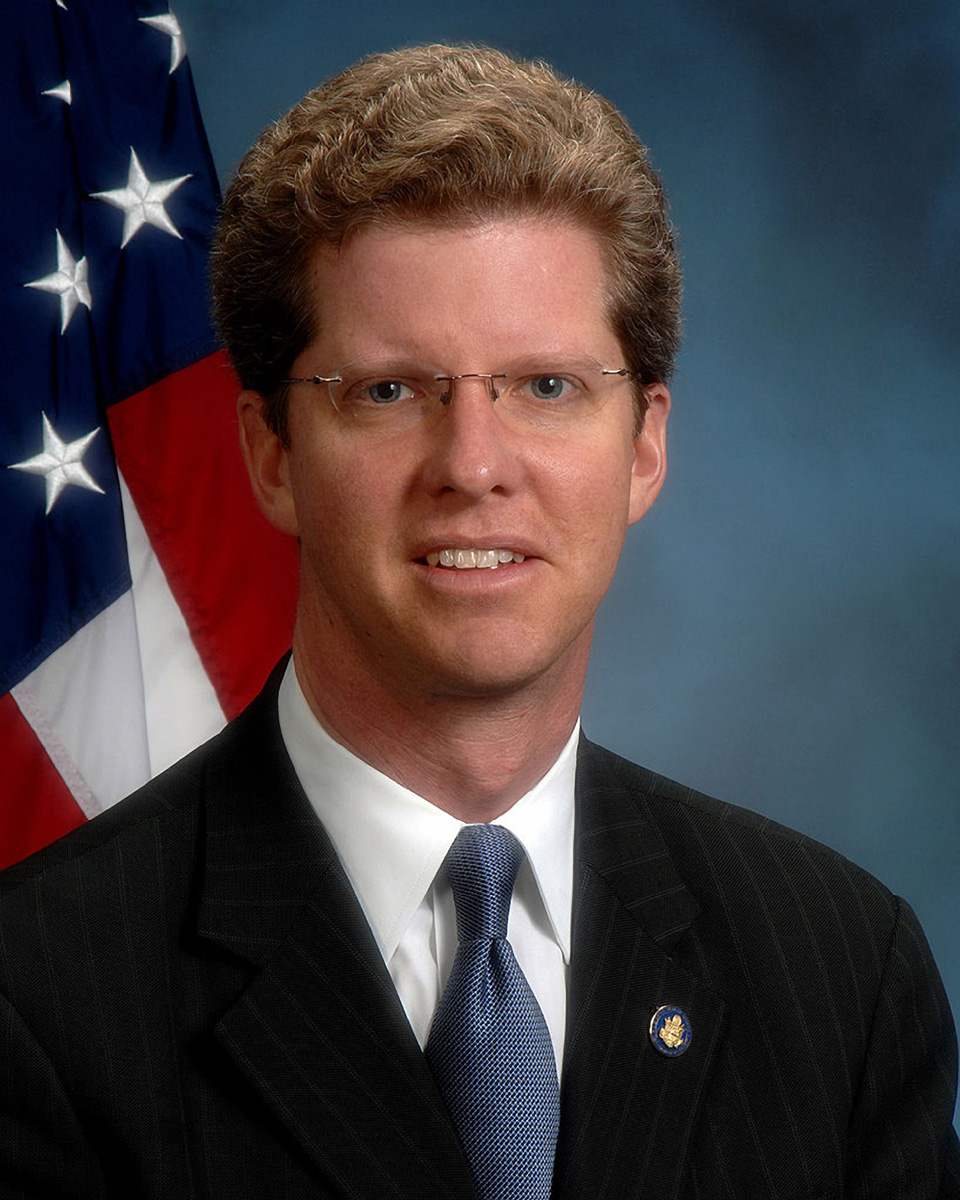
“This proposed rule represents a 21st century approach to fair housing, a819px-Shaun_Donovan step forward to ensuring that every American is able to choose to live in a community they feel proud of — where they have a fair shot at reaching their full potential in life,” HUD Secretary Shaun Donovan said.

Donovan continued: “For the first time ever, HUD will provide data for every neighborhood in the country, detailing the access African American, Latino, Asian, and other communities have to local assets, including schools, jobs, transportation, and other important neighborhood resources that can play a role in helping people move into the middle class.”

CNSNews.com reports:

“According to HUD, long-term solutions include “helping people gain access to different neighborhoods and channeling investments into under-served areas.” The mapping tool may guide development and zoning decisions, for example.

In a July 16 speech to the NAACP, Donovan said the American Dream still isn’t within equal reach of all communities. He lamented the lack of diversity in America’s boardrooms, schools, and the nation’s “strongest neighborhoods.”

“We have got to shape a future where ladders of opportunity are available for all Americans,” Donovan said. “For African Americans, this is critically important. Historically, for this community, the rungs on these ladders have been too far apart -– making it harder to reach the middle class.”

Donovan said HUD’s new neighborhood mapping tool, which uses Census data, will “expand access to high opportunity neighborhoods and draw attention to investment possibilities in under-served communities.”

HUD requires grantees, including cities, that receive federal housing funds to adhere to the Fair Housing Act, which means to “affirmatively further fair housing.”

HUD, under the proposed “fair housing” rule, will be able to evaluate patterns of so-called integration and segregation, racial and ethic concentrations of poverty and access “valuable community assets,” CNSNews.com elaborates.

This is nothing but another blatant example of social engineering by the federal government and an infringement on tour property rights

According to HUD, long-term solutions include "helping people gain access to different neighborhoods and channeling investments into under-served areas." The mapping tool may guide development and zoning decisions, for example.

In a July 16 speech to the NAACP, Donovan said the American Dream still isn't within equal reach of all communities. He lamented the lack of diversity in America's boardrooms, schools, and the nation's "strongest neighborhoods."

"We have got to shape a future where ladders of opportunity are availabledetroit.si for all Americans," Donovan said. "For African Americans, this is critically important. Historically, for this community, the rungs on these ladders have been too far apart —making it harder to reach the middle class."

Donovan said HUD's new neighborhood mapping tool, which uses Census data, will "expand access to high opportunity neighborhoods and draw attention to investment possibilities in under-served communities."

"Make no mistake, this is a big deal," Donovan said. "With the HUD budget alone, we are talking about billions of dollars. And as you know, decades ago, these funds were used to support discrimination. Now, they will be used to expand opportunity and bring communities closer to the American Dream."

Under the Fair Housing Act, HUD requires grantees, such as cities, that receive federal housing funds to "affirmatively further fair housing."

Under the proposed rule, the neighborhood data provided by HUD will be used to evaluate patterns of integration and segregation, racial and ethnic concentrations of poverty, and access to "valuable community assets." HUD wants to know if existing laws and policies — such as zoning, financing, infrastructure planning and transportation — create, perpetuate or alleviate segregation.

The proposed rule explicitly incorporates fair-housing decision-making into existing planning processes and other decision-making that influences how communities and regions grow and develop.

There is no enumerated power for Congress specified in Article I, Section 8 of the Constitution to interfere with local communities and how people decide to conduct their lives. Yet When Congress created HUD they gave them broad administrative and unchecked powers to put forth regulations that did exactly what Congress could not do according to Article I, section 8 and the Ninth and Tenth Amendments. This is the power of the administrative state.

Suppose you worked hard, saved your money, and bought your dream home in a beautiful gated community. You wanted to live here because you not only lover the amenities offered by the HOA, such as tennis courts, pools, and community meeting halls. You didn’t much care who your neighbors were and figured it they could afford to live in this community they had a right to be here and would make good neighbors. Perhaps some of your neighbors were Black or Hispanic. Perhaps they were Asian. It didn’t matter. You all had one thing in common. They qualified financially to live in the community.

I doubt if there would be any welfare recipients living in your community. Now HUD will map your community and discover that it is not “diverse” enough to suit some bureaucrat in Washington, D.C. They will notify your town council and mayor of this fact and impose sanctions if this condition is not changed to their model. They could do this through denial of block community grants and even civil rights law suits. Somehow the federal government will have to subsidize families to move in even if they have to use the power of eminent domain (see Kelo v. City of New London). Kelo was a case decided in 2005 by the Supreme Court of the United States involving the use of eminent domain to transfer land from one private owner to another private owner to further economic development. In a 5–4 decision, the Court held that the general benefits a community enjoyed from economic growth qualified private redevelopment plans as a permissible "public use" under the Takings Clause of the Fifth Amendment.

The case arose in the context of condemnation by the city of New London, Connecticut, of privately owned real property, so that it could be used as part of a “comprehensive redevelopment plan.” However, the private developer was unable to obtain financing and abandoned the redevelopment project, leaving the land as an empty lot, which was eventually turned into a temporary dump.

The big difference this time is that the land won’t be turned into a dump as HUD will provide the money for the welfare family to obtain the house next door and pay the association dues. This will be a direct infringement on your property rights.

This HUD ruling will affect every community in the United States. HUD will control decisions of local planning commissions. They will dictate who builds what and where they build it. Land developers and home builders will be mandated to provide “diversity” in the communities they create. HUD will make sure mortgage companies follow the diversity rules when they issue mortgages, even if the mortgagor can’t financially quality.

HUD will also further step up fair housing enforcement. In the past three over $54million in compensation has been awarded to 25,000 people who were wrongly discriminated against as a result of enforcement actions, Donovan noted.

By disseminating this information, HUD believes the original Fair Housing Act, signed into law in 1968, will be modernized for the 21st century,

This inequality comes from real estate agents showing fewer available properties to minorities than to equally qualified whites, Donovan explained, adding that ‘because of the subtle nature of this discrimination, often times, they don’t even know they have been subjected to this abuse.

If you think Detroit is bad wait until the central planners in Washington, D.C. come to your neighborhood.

It Finally Happened

“It is hard to imagine a more stupid or more dangerous way of making decisions than by putting those decisions in the hands of people who pay no price for being wrong.” — Thomas Sowell

Before I begin this blog I want to share a video that was done by Steven Crowder of PJTV in December of 2009. In the video Crowder takes you on a tour of the motor city and shows what has and is happening to the once great manufacturing center of the world.

And there is another video from the Reason Foundation address the issues causing the demise of Detroit.

In my search of YouTube videos about Detroit I found several hundred that would have be suitable for this article, but you can do that on your own by simply typing “Detroit in Ruins” in the search field.

In December 2010 I posted an article about the “Vanishing Detroit” in which I wrote about the history and potential demise of the motor city. In the concluding paragraphs of the article I state:

“This is a condition not limited to Detroit. Cities such as Oakland, St. Louis, Cleveland, and many others are approaching the same precipice of economic bankruptcy. With the massive costs for welfare and social services, shrinking tax base, poor schools, unfunded liabilities for public service workers pensions, teachers unions with the protection of underperforming teachers and increasing demands for higher wages and guaranteed pensions and a political class that panders for votes we are approaching a time in our history when cities are beginning to fail.

Until now cities have been relying on funds from state and the federal government to bails them out of their financial woes. With states experiencing the same malaise and the rising deficits of the federal budgets money for these cities are no longer going to be available. Perhaps the time has come for these cities to realize the mess they are in and declare bankruptcy rewrite their public service and teacher union contracts and tighten their belts in all areas of spending so they can survive. No more promises, no more pandering to special interest groups and no more fountains and stadiums unless they are totally financed with private money.”

Most rational economists and rational thinking people have been predicting the demise and eventual bankruptcy of Detroit for years. Now it has become official and no amount of state or, God forbid, federal funds can solve the problem.

Last week Governor Rick Snyder filed for Chapter 9 bankruptcy for the city of Detroit. The once leader of American industry has now joined the junk heap as a third world city. Chapter 9, Title 11 of the United States Code is a chapter of the United States Bankruptcy Code, available exclusively to municipalities that assists them in the restructuring of debts..

Why did this happen and will it happen to other American cities?

Michigan Gov. Rick Snyder and the bankruptcy specialist he appointed to fix Detroit’s1019-Rick-Snyder-ads.JPG_full_600 unprecedented financial problems put the blame Sunday squarely on the city and defended their decision to file for Chapter 9.

The Republican governor said Detroit created the problems and stood steadfast behind his decision to file Thursday for bankruptcy, with the city roughly $19 billion in debt.

“This is a tragic, difficult decision, but a right one,” he told CBS' "Face the Nation." “It’s not about just more money, it’s about accountable government.”

He said corruption and city leaders ignoring warning signs for 60 years contributed to the problems. Among his biggest concerns, Snyder said, is the decline of municipal services for Detroit’s remaining 700,000 residents, including police response times of nearly one hour.

Snyder said the state cannot help and asking for a federal bailout is “not the right answer,” though Washington has that option.

The Obama administration has extended no offer to help, after Congress and the White House agreed to bail out Chrysler and General Motors during the recent recession.

“Can we help Detroit? We don’t know,” Vice President Joe Biden said last week. His remarks followed White House Press Secretary Jay Carney appearing to rule out such assistance.

“That's something that local leaders and creditors are going to have to resolve,” he said. “But we will be partners in an effort to assist the city and the state as they move forward.”

Among the emerging concerns is that the federal government would have to help repeatedly, considering Chicago reportedly has an unfunded pension liability of at least $19 billion while Los Angeles’ is estimate to be as much as $30 billion.

The bankruptcy filing for Detroit marks a final step in the chrome-plated city’s decades-long decline — which started with the country’s overall manufacturing slowdown and continued with the departure of U.S. automakers and residents, leaving behind a sprawling city trying to survive on dwindling coffers.

Detroit was in the 1950s a worldwide hub of auto manufacturing, making it the fourth-largest U.S. city with one of the country’s highest per-capita incomes.

However, the so-called Motor City’s decline started soon after with residents — following their counterparts in other U.S. cities — starting to move to the suburbs and take with them businesses, jobs and tax dollars.

Historians argue the deadly 1967 riot in Detroit, one of the many so-called “race riots” across the country in the 1960s, accelerated the trend.

And as the population dwindled from roughly 1.8 million to 700,000, city officials struggled to keep up with municipal services in the 142-square-mile city, with a tax base just half of what it was in the 1950s.

Meanwhile, auto companies began opening plants in other cities as Japan-made cars dominated the international market. By 2009, the U.S. auto industry collapsed with the entire economy, eventually pulling down Detroit with it. When the UAW demanded high wages and more benefits the auto companies began moving to right to work states in the south so they could better compete with the Japanese car companies that were manufacturing cars and trucks there. As this happened the unions got what they wanted, but the jobs began to vanish and with that the tax base declined.

The city’s efforts to provide and maintain such basic services as law enforcement andDetroit Then And Now Photo Gallery trash removal were further complicated by the costs of paying union contracts and benefits, which have contributed to nearly $15 billion in unfunded liabilities for the city.

Once again these public service unions got the raises and pensions they demanded and the Democrats gave into their demands to get their financial support and their votes but the city did not have the money to fund these liabilities.

In addition, Detroit has a roughly 18 percent unemployment rate, one of the country’s highest violent-crime rates and about 80,000 blighted or abandon buildings.

“Chronic budget problems have taken a significant toll on everyday life for citizens,” Snyder said recently. “Detroiters deserve to feel safe when they walk down the street, to have their street lights on, to have the bus show up to take them to work.”

However, the city also has a history of corruption that has led to its financial problems, including Mayor Kwame Kilpatrick resigning in a 2008 sex-and-perjury scandal that cost the city almost $9 million from a lawsuit and legal fees.

Years of Democratic Party rule, corruption, escalating social welfare programs, failing public schools, high taxes, demands of the teachers and public service unions, racial tensions, gangs, and a rising crime rate have finally taken heir toll on Detroit.

The recent bankruptcy filing in Detroit is raising red flags about other major U.S. cities also dealing with billions in under-funded retiree benefits, prompting the question — who might be next?

Just last week, Chicago’s credit rating was downgraded as a result of its $19 billion in under-funded pension liabilities.

Moody's Investors Service called the liabilities “very large and growing" and warned that Chicago, the country’s third-largest city, faces a “tremendous strain’’ in trying to meet future funding requirements and public safety demands.

A similar scenario, though decades in the making, largely doomed Detroit, whose average police response time has grown to more than 50 minutes.

And like Michigan, which appears in no position to bail out Detroit, Illinois is dealing with its own $97 billion pension shortfall.

To be sure, other smaller cities have filed for bankruptcy, most notably California’s Stockton and San Bernardino in 2012. No other city of Detroit's size appears to be on the cusp of imminent financial collapse.

However, those bankruptcy filings together have resulted in speculation about whether more are on the horizon

Other cities now on the radar include Cincinnati, Minneapolis, Portland, Ore., and Santa Fe, N.M. — following Moody’s saying in April that they and 11 other municipalities were being reviewed for a possible credit downgrade, the result of a new analysis system that further considers pension liabilities.

Though much of the national concerns have focused on pension liabilities, heath care costs for retired municipal employees pose an equally if not larger problem.

Amid the $18.5 billion in long-term debt that led Detroit to file for bankruptcy is roughly $3.5 billion in under-funded pension liabilities. However, roughly $5.7 billion of that debt is health care costs and so-called “other post-employment benefits.”

The situation is highlighted a Pew Charitable Trusts Study of 61 major U.S. cities that found they collectively had enough money to cover 74 percent of pension liabilities but only 6 percent of health care liabilities.

The total difference between what the cities owed to retired employees and what was covered equaled $217.2 billion, according the report, “A Widening Gap in Cities.” It was released in January and based on 2009 numbers, the most complete data at the time.

The nonprofit group also released a report in March that found New York City has a combined $1.15 billion in under-funded pension and health-care costs, followed by such major cities as Philadelphia, at $8.6 billion. In comparison, that figure for Detroit was $12.9 billion.

The video clip shown here is from PJTV and the three commentators summarize the reasons Detroit and other cities will continue to fail.

As our nation continues down the road of higher taxes, more regulations, and runaway spending by politicians only interested in the next election more cities will fail. Just wait until 30 million illegal immigrants are added in the equation.

Today we have 47 million people on food stamps. That’s 15% of the population. Even college students are receiving food stamps today.

Rather than use the meager funds available to cities and states for big union contracts, luxury projects like light rail, and promoting more welfare programs they need to pay attention to the basic municipal functions of police and fire services, garbage collection, repairing crumbling sewer lines, streets, and bridges — the things people pay property taxes for.

Since the early days of the Republic, America’s cities have been centers of innovation, wealth, and power. As they grew larger and their governments more commanding, places like Boston, Chicago, Newark, New York, Philadelphia, and St. Louis also became battlegrounds where political machines contended for influence. The early ideal of the part-time citizen-legislator gave way to the professional pol. In his 1904 “The Shame of the Cities”, Lincoln Steffens observed that big-city governments across America had been undermined by a series of problems, including police corruption, politicians using the public till for their own gain, and rampant bribery in awarding public contracts, known at the time as “boodle.”

The Democratic Party is a party of special interest groups, or “factions” as James Madison called them. There are racial groups, LGBT groups, unions (both private and public sector), teachers unions, environmentalists, and pro-abortion advocates. All of these groups want something and the Democratic Party is who they turn to for it. They want plunder and the Democrats will give it to them as long as it brings them votes. They don’t care about the future. They only care about the next election and how to retain their power.

Decades of corruption built a mountain of liabilities, while scaring off the taxpayers needed to finance those promises. It’s like a movie trailer for the blockbuster disaster film to come, when America’s declining demographics catch up with the federal government’s vastly higher mountain of unfunded commitments. Detroit is the city our debt monster destroyed to get limbered up for the greater fiscal carnage to come.

Death spirals spin even faster when it’s possible for productive workers to escape. Thedetroitbt12_20130723_030548 population implosion in Detroit was swifter and more dramatic than our national workforce collapse, because it was relatively easy for citizens to escape the degenerate loop of declining municipal services and rising taxes but in the long run, the result will be the same. There are people capable of fleeing the United States entirely, when our moment of truth arrives. Their departure will be a good sign that the Great Crash is at hand. The loss of their capital and business acumen will hasten our collapse.

We should stop the death spiral before things get bad enough for the smart money to take a powder. Of course, there were people in Detroit who said the same thing, twenty or thirty years ago. They were drowned out by a perpetual-motion political machine, which promised the good times would keep rolling forever. Even now, frantic liberals are gibbering that Republican austerity measures somehow killed Detroit, even though Democrats held absolute power for fifty years. You’ll hear the same things right before the end at the national level too. In the very near future, you’ll be told your Social Security and Medicare benefits are being cut because evil rich people don’t want to pay enough taxes to fund them. It won’t matter that there literally isn’t enough money in the entire world to cover Uncle Sam’s long-term liabilities. Anger and resentment will be milked for power until the very end. Those who do the milking will soar away from the wreckage with millions of dollars in their pockets.

Pension and benefit liabilities are really just a concentrated form of the same toxin eating away at every level of government: deficit spending. They’re just another way to spend tomorrow’s money, which is easy, because tomorrow casts very few votes in today’s elections. The people who fret over “sustainable” development at environmentalist conferences are nowhere to be found when it’s time to discuss sustainable government. Forward-thinking “progressives” are perfectly happy to be ruled by the dead hand of past entitlement promises. Those who regard the U.S. Constitution as a dead scrap of old parchment think union benefit plans are chiseled on tablets of stone.

Here’s a trick question for you: What does the government buy with its billions in deficitDetroit money? The correct answer is: commitments. Very little of that crazy deficit spending is a one-time outlay, evaporating without trace in the next fiscal year. Governments use money they don’t have to rack up long-term spending commitments, which quickly acquire human faces. Cut a million in spending, and you’ll be putting this government employee out of work, or trimming back a program that person depends on for their livelihood. Lay a finger on the pension plans of Detroit, and you’ll outrage people who are counting on those payments to finance their lengthy retirements. Promises were made. Reform is betrayal. You’ll never see a more motivated group of voters than people who believe their well-earned benefits are at risk.

Maybe the people who made all those unsustainable promises should have thought about the grim day when it would become impossible to keep them. Perhaps the outraged beneficiaries should direct their ire at the people who bought their support by making commitments that can no longer be fulfilled. But it doesn’t work that way. The people who made the unsustainable commitments are long gone. Criticizing them is living in the past. All that’s left to discuss is how today’s young people will be indentured to pay off bills they never had a chance to vote against. Fate is written one borrowed dollar at a time, and the “progressives” tell us it cannot be unwritten. We surrender control of our fate whenever we allow the government to spend money it doesn’t have. We leave our children with a hope chest full of chains.

Liberals pretend that debt is only a concern when they want to talk about tax increases. And even then, it’s not that big of a concern. They’re not interested in balancing the budget, much less paying off the mountain of debt already incurred. Skeptics are told there’s no reason to worry, we’ll always be able to borrow more money. And then the day arrives that we can’t. It happens fast. The final promises of unlimited government credit are still ringing in our ears. Contrary to the promises of charlatans, government debt is not an abstract number floating on some spreadsheet. Money cannot be printed forever. There comes a moment that the cost of financing debt abruptly explodes, and suddenly the government’s financial commitments balloon by 30 percent, 50 percent, or more. Draconian tax increases are presented as the only possible solution. The geese that lay our golden eggs are duly strangled. And then what? It’s funny how quickly political rhetoric can shift from bright futures of unlimited possibility, to grim demands for the cash needed to fulfill ironclad entitlement commitments.

Private corporations and unions make unsustainable problems too, but at some point0722-Business-Detroit_full_600 unsupportable demands will kill off the host organism. The company and its unions collapse together, leaving others to pick up the pieces and devise a more workable business plan. That’s what happened with the Twinkie — it’s back on store shelves following a cycle of creative destruction. But that’s not what happened with Big Auto or Detroit, is it? When the operation reaches a certain size, we’re told it can’t be allowed to undergo the cleansing cycle of death and rebirth which means suddenly it’s everyone’s problem.

As goes Detroit, so goes America. The steering wheel is lashed in place, a cement block has been dropped on the gas pedal, the emergency exits are welded shut, and nervous passengers are told to swallow their complaints. The commitments that were so very easy to make yesterday will become impossible to fulfill tomorrow. The range of options available to deal with fiscal crisis will be dramatically restricted, as every strategy to increase economic growth is pronounced unthinkable. How much flexibility does Detroit have to win investors, and attract productive labor back to the city? How much flexibility will Barack Obama’s successor have to restart the American economy? Promises become curses, then wither away into epitaphs.

For more photos of crumbling Detroit please click here.

As Stephen D. Eide, a senior fellow at the Manhattan Institute’s Center for State and Local Leadership, writes in the Daily Beast:

“However long it takes, bankruptcy will cut Detroit’s debt, but that’s a necessary, not sufficient condition of any revitalization. On its own, bankruptcy can’t reform city government, reduce unemployment, bring down the crime rate, or reverse depopulation. Eventually, Kevyn Orr will exit the stage, and leave those challenges for Detroit’s citizens and public officials to resolve. In the near-term, the task for Detroit city government is usefully simple: bring down the debt. If progress is made on other fronts along the way, private sector actors will most likely be responsible. Government was not the only cause of Detroit’s decline, and will play, at most, a supporting role in the city’s revival.”

Friday, July 19, 2013

The Myth of High Speed Rail

"When plunder becomes a way of life for a group of men living together in society, they create for themselves, in the course of time, a legal system that authorizes it and a moral code that glorifies it." — Frederic Bastiat

For the past two years I have been writing about the myth of high speed passenger rail. (See my blog from May 12, 2012 — “The Train to Nowhere, Part Deux”) In my May 12th blog I addressed the history of rail in the United States and talked about the proposed $7 billion dollar high speed rail from Victorville, California to Las Vegas, California. Since that time the name of the project has changed from DesertXpress to XpressWest and the United States Department of Transportation’s Federal Railroad Administration has nixed the requested $5.5 billion dollar loan.

On July 17th the Washington Post reported:

“WE’VE SEEN some bad policy ideas but not many more awful than the proposal to extend a $5.5 billion low-interest, 35-year federal loan to a West Coast start-up for a high-speed rail connection between Southern California and Las Vegas. This time, though, we are happy to report, common sense has prevailed: The Obama administration has stopped the project.

Backed by wealthy casino moguls, who in turn enjoyed the support of Senate Majority Leader Harry Reid (D-Nev.), a company called XpressWest wanted to lay tracks between Vegas and lonely Victorville, Calif., some 81 miles east of downtown Los Angeles. Several times larger than the largest amount ever loaned under the obscure federal Railroad Rehabilitation and Improvement Financing Program, the federal money would cover 80 percent of the project’s costs. The supposed public benefits were reduced carbon emissions, less auto traffic and, of course, more jobs.

What XpressWest struggled to explain was why taxpayers should bet on a proposition that private investors apparently found too risky: hordes of travelers driving to Victorville, parking their cars and then boarding the train for an 80-minute ride to Vegas — as opposed to driving the whole way, flying or taking “My Party Ride,” a limo-like bus trip for up to 30 passengers at $99 each, including food and drinks.

The whole thing had the makings of a boondoggle, for which taxpayers would eventually end up paying. Yet multiple federal and state agencies had given environmental and regulatory approvals, leaving the crucial matter of the loan up to the Transportation Department. Given the project’s political connections, DOT’s thumbs-up seemed inevitable — until June 28, when then-Secretary Ray LaHood, as one of his final acts in office, sent XpressWest Chairman Anthony Marnell II a letter saying that the department had decided to “suspend further consideration” of the loan.”

LaHood, in his June 28 letter to the company, cited "serious issues" with the application in the decision to cut the project off. He suggested the company was having difficulty ensuring that the project would be built with enough American products like U.S-made steel and iron.

Some of the letter was redacted, but LaHood also suggested concerns about the sheer size of the loan and the risk, and the company's apparent failure to submit additional documentation on other participants in the project.

"After several years of engagement with no resolution to the thresholdXpressWest-Train issues addressed in this letter and the significant uncertainties still surrounding the project, we have decided to suspend further consideration of XpressWest's loan request," LaHood wrote. The request had been under consideration with both his department and the Federal Railroad Administration.

The decision is a major blow to the project, as the federal loan was expected to make up the bulk of funding for the $6.9 billion rail line.

The 185-mile line was billed as the most advanced and fastest in the U.S. According to the company, it would connect Southern California and Vegas with an 80-minute train ride.

Yet critics warned that costs could spiral and ridership projections might be too rosy, and that such a massive federal investment was not wise.

The XpressWest line is running into a wall after another project — a proposed magnetic levitation (Maglev) train with a similar route — also ran into recent problems, as state planners backed away from that project and federal funding ran dry.

Sen. Jeff Sessions, (R-Alabama), top Republican on the Senate Budget Committee, and Rep. Paul Ryan, (R-Wisconsin)., chairman of the House Budget Committee, had earlier revealed they'd been told about the department's decision on XpressWest. The two lawmakers had been among the toughest critics of the project and loan, calling it "costly, wasteful and risky."

On February 12, 2013 Laura Carroll Reported in the Las Vegas Review Journal:

“At best, it could be another 18 months before any ground is broken on the XpressWest project - the same time frame backers gave the Las Vegas Review-Journal in 2009.

The reality of a high-speed train shuttling travelers between Victorville, Calif., and Las Vegas hinges on funding of $5.5 billion from the Railroad Rehabilitation and Improvement Financing, which is administered by the Federal Railroad Administration. XpressWest's first loan application was submitted in December 2010 and is still under review.

The nearly $7 billion project will largely be financed from this loan, if approved, and the rest in private equity investment.

At Tuesday's meeting of the Las Vegas Convention and Visitors Authority board of directors, XpressWest Chief Operating Officer Andrew Mack, said it could be six months before a decision is made on the application. If approved, it would be still another year before ground is broken.

"It's really dependent on the RRIF pay," Mack said. "That's really driving the schedule.

The train would be built adjacent to Interstate 15 with service every 20 minutes and one-ways taking about 80 minutes. The average fare is less than $100, Mack said. Each train would seat between 500 and 600 passengers.

If construction eventually starts, XpressWest estimates that 80,000 direct and indirect construction jobs will be created, with a third of those going to Southern Nevadans. The estimated economic output of the rail line during its lifetime is $7.8 billion.

In Las Vegas, two potential sites have been chosen for train stations: one across from the Rio and the other across from Mandalay Bay.”

The Transportation Department later said in a statement that "XpressWest has the ability to revive its application by significantly revising its request."

The project still has a powerful supporter in Congress — Senate Majority Leader Reid, as well as Republican Nevada Sen. Dean Heller.

According to the Las Vegas Review-Journal, Reid claims the administration has not "permanently foreclosed" the possibility of an investment. He stressed Friday that he plans to keep pushing for "this vital investment." Obviously this decision is a death blow to Reid and the backers of the project — a decision I totally agree with. (See the Fox News report from March 13, 2013)

According to an August 2012 tax risk assessment by the libertarian Reason Foundation should the Victorville to Las Vegas train commercial revenues fail to pay operating costs and debt service, the project would not have enough money to repay the federal loan, resulting in a default that would make Solyndra look like small change. Taxpayers would lose up to $6.5 billion in principal and any unpaid interest, an amount that could climb to more than $7.5 billion if a full six-year deferment of repayment is granted. The Taxpayer Risk Assessment identifies a number of concerns that could result in taxpayer losses.

This Taxpayer Risk Assessment examines the financial risks to taxpayers of the proposed XpressWest high-speed rail project from Victorville to Las Vegas. There would be no need for a Taxpayer Risk Analysis without government (taxpayer) involvement. For example, if a bus company were to establish a new service between Victorville and Las Vegas, there would be no taxpayer financial exposure under normal circumstances. The company would either succeed or fail depending on its ability to cover its costs through various commercial activities. As with private loans, the ability to secure the loan depends on the bank’s assessment of its successfully pay off — a natural inhibitor of risky propositions. XpressWest is intended to be self-supporting, with the construction and financing expenses and operating expenses covered by commercial revenues, principally passenger fares. Tellingly, the project sponsors are apparently unable to arrange conventional private sector financing and seek a federal loan with a subsidized interest rate, which would pass the risks on to taxpayers if the forecasted ridership should fail to materialize. Moreover, in the event of financial difficulty, state and local taxpayers could face significant pressure to provide funding to complete the system or to subsidize its operations. Thus, a Taxpayer Risk Assessment is necessary.

This Taxpayer Risk Analysis reviews ridership, revenue and capital cost forecasts to the extent that they are available. The principal focus is on ridership, since the repayment of the proposed federal loan from taxpayers is entirely dependent upon commercial revenues, principally the fares that will be paid by riders and ancillary revenues, such as advertising.

1. A Speculative Consumer Market: The greatest risk is that the potential consumer market for the train is far smaller, in geographical terms, than is assumed in the project documentation. There is no parallel for large numbers of drivers and airline passengers to travel well outside the urban areas in which they live to connect to a train (or plane) to any destination, much less one so close to Southern California as Las Vegas. As a result, common sense finds ridership and revenue likely to be a mere fraction of forecast. This would likely make repayment of the federal loan impossible. This risk to taxpayers of an exaggerated market is “unknown, but potentially severe.”

2. Materially Changed Circumstances: Even if the consumer market were geographically as large as assumed, growth in the Las Vegas tourist market has been far below forecasts in recent years. As a result, the base ridership figures are implausibly exaggerated and need to be revised downward. The ridership and revenue risk to XpressWest from this factor is high and risks make paying the federal debt impossible, calling for a taxpayer bailout.

3. Ridership and Revenue Forecast Model Concerns: The international record indicates that rail projects tend to average approximately 39% less in ridership than forecast. Specific factors of the ridership forecast for the Victorville to Las Vegas train indicate that actual ridership is likely to be 39% to 70% less than forecasted, even after adjustment for the materially changed circumstances. These factors include an optimistic estimate of the base year market, a market growth rate greater than in pre-recession years, an optimistic assumption of attraction from cars and an optimistic bus attraction assumption. Such rosy predictions increase the likelihood that the federal loan would not be repaid.

4. Capital Cost Escalation: Capital cost escalation for rail projects has been pervasive in similar projects, suggesting that capital cost escalation is likely to occur on the Victorville to Las Vegas train, leaving the project impossible to complete and triggering a default on the federal loan. Governments (federal, state and local) would be faced with difficult decisions about whether to complete the project, at elevated costs, with public funding or to fund dismantlement of a partially completed system.

5. Likely Commercial Losses: Even if there is no capital cost escalation, it is unlikely that the business plan for this project is flexible enough to deal with all the variations discussed above without suffering either higher costs or commercial revenue shortfalls. This inflexibility could lead to a default on the federal loan with the loss paid by taxpayers. Further, political pressure to keep the train operating could lead to a federal Amtrak-style takeover with subsidies, or the train could be operated with state and/or local subsidies. The risk of taxpayer loss from this factor is evaluated at “high.”

6. Higher Cost for Highway Expansion: Use of the median of I-15 for the Victorville to Las Vegas train could preclude the most cost-effective options to expand highway capacity. This would increase costs to taxpayers and highway users. The risk of higher expansion costs on I-15 is evaluated as “moderate.”

In 1991 I was involved with the proposed Maglev line from Anaheim to Las Vegas. This was to be a cooperative venture between Transrapid (the German consortium pushing their Maglev technology), The California High Speed Rail Corporation, and Bechtel to design, build and operate a Maglev train from Disneyland to Las Vegas. The technology seemed sound but there were two major problems. One is that they could not get a permit from Caltrans to use any right of way along the I-15 corridor and two; they could not find any investors. Eventually the right of way issue was solved by an act of the California Legislature, but there still was no money coming forth.

The majority of high-speed rail lines require large government subsidies from both general taxpayers and drivers. Even with generous subsidies, traveling by high-speed rail is still more expensive than flying for 12 of the 23 most popular high-speed rail routes in the world. Evidence suggests it can only be competitive on routes that are 200 to 500 miles in length.

High-speed rail is also very expensive to build. Most new routes cost at least $10 million per mile to construct. The cheapest European rail line costs more than $50,000 per seat to operate annually. A U.S. high-speed rail line would need ridership of 6 million to 9 million people per year to break even. The high-speed Acela service, despite operating in the busy Northeast Corridor, averages only 3.4 million passengers per year.

Advocates cite other advantages for high-speed rail, but most fall apart under close examination:

Environment: High-speed rail creates more pollution than it prevents because building a high-speed rail line is very energy-intensive.

Economic development: High-speed rail does not create much new development; it merely redirects development from one area to another.

Mobility: High-speed rail is unlikely to improve mobility since most of its potential passengers already travel by air.

Choice: Customers can already choose between a low-cost bus, a fast plane or a personalized car trip.

Most countries have built high-speed rail to relieve passenger overcrowding on their existing lines. The U.S. lacks this overcrowding, which suggests consumer demand for high-speed rail may not be there. Furthermore, freight rail dominates track usage, and railroad companies are reluctant to relinquish capacity, as is evident in the discussions surrounding the proposed multimodal passenger terminal in downtown Atlanta.

Any U.S. rail operator will have to compete on the same terms that cause Amtrak to lose large amounts of money each year. Railways are subject to outdated labor laws that were enacted when railroads did not face competition. Operating a passenger railroad in the existing regulatory environment is not a profitable proposition.

Our core cities, where people are most likely to board high-speed trains, are much less dense than European or Asian cities, which also limits the potential market.

The U.S. has far higher rates of car ownership than most other countries. Gas taxes are lower, road tolls are less common, and many cities — especially in the South and West — have grown up around the automobile.

As a result, high-speed rail is best regarded as a luxury toy this country cannot afford. For far less money, we could create a world-class highway and aviation system with first-rate bus and airplane service and far more flexibility.

We’d like to think that cost and feasibility concerns ultimately derailed this crazy train, but that is not what Mr. LaHood emphasized in his letter. Rather, he faulted XpressWest for not guaranteeing that it would get steel and other manufactured goods from U.S. suppliers. We disagree with protectionist “Buy America” thinking; still, in this case it at least shows that the project’s job-creation potential was always limited by the fact that no U.S. manufacturer makes high-speed rail cars or the needed heavy steel rails and electrification systems. However imperfect his rationale, Mr. LaHood reached the right result, and that’s cause for celebration.

Saturday, June 22, 2013

The G.I. Bill

“Wars are not paid for in wartime, the bill comes later.” — Benjamin Franklin

On this day in 1944, U.S. President Franklin D. Roosevelt signs the G.I. Bill, an unprecedented act of legislation designed to compensate returning members of the armed services — known as G.I.s — for their efforts in World War II.

As the last of its sweeping New Deal reforms, Roosevelt's administration created the G.I. Bill — officially the Servicemen's Readjustment Act of 1944 — hoping to avoid a relapse into the Great Depression after the war ended. FDR particularly wanted to prevent a repeat of the Bonus March of 1932, when 20,000 unemployed veterans and their families flocked in protest to Washington. The American Legion, a veteran's organization, successfully fought for many of the provisions included in the bill, which gave returning servicemen access to unemployment compensation, low-interest home and business loans, and — most importantly — funding for education.

The G.I. Bill provided a comprehensive benefits package that included up to four years of education or training, federally guaranteed home, business, or farm loans with no down payment, and unemployment compensation that set aside a weekly unemployment allowance of $20 for 52 weeks. Those eligible had to have been in active duty for at least 90 days, even if they were not in combat, and couldn't have been dishonorably discharged. The Veterans Administration was responsible for implementing these key components of the bill.

While for most Americans higher education and home ownership were unattainable dreams before WWII, the G.I. Bill allowed millions of veterans to take part, and by 1947 they made up 49 percent of college admissions. By 1956, nearly 7.8 million of the 16 million WWII veterans had taken part in an education or training program and the VA had guaranteed 5.9 million home loans. It represented a huge contribution to the welfare of veterans and their families and to U.S. economic growth.

While it was a controversial bill, many agreed that they did not want to seewwii2 a repeat of what happened after WWI. At that time, the Great Depression made it extremely difficult for veterans to assimilate into civilian society. Many were only compensated with a $60 allowance and a train ticket home. While they were supposed to get bonuses from the Bonus Act, they found out that they wouldn't see this money for 20 years and began protesting. The G.I. Bill was initially stalled due to disagreement in the Senate and House over the unemployment provision, as some believed this would make veterans lazy. However, after it was eventually passed, less than 20 percent of the funds set aside for unemployment benefits were actually used.

The education benefits didn't last long, and after the Veterans Adjustment Act of 1952 the government no longer paid tuition directly to colleges and universities, affecting veterans from the Korean War and the Vietnam War. While the 'Montgomery G.I. Bill' was introduced in 1984 to revamp the original and provide more money for education, it couldn't keep up with the rising cost of tuition in higher education and it was decided that a '21st Century G.I .bill' was needed.

By giving veterans money for tuition, living expenses, books, supplies and equipment, the G.I. Bill effectively transformed higher education in America. Before the war, college had been an option for only 10-15 percent of young Americans, and university campuses had become known as a haven for the most privileged classes. By 1947, in contrast, vets made up half of the nation's college enrollment; three years later, nearly 500,000 Americans graduated from college, compared with 160,000 in 1939.

As educational institutions opened their doors to this diverse new group of students, overcrowded classrooms and residences prompted widespread improvement and expansion of university facilities and teaching staffs. An array of new vocational courses were developed across the country, including advanced training in education, agriculture, commerce, mining and fishing — skills that had previously been taught only informally.

The G.I. Bill became one of the major forces that drove an economic expansion in America that lasted 30 years after World War II. Only 20 percent of the money set aside for unemployment compensation under the bill was given out, as most veterans found jobs or pursued higher education. Low interest home loans enabled millions of American families to move out of urban centers and buy or build homes outside the city, changing the face of the suburbs.

During my high school years in the early 1950s I had two teachers who were products of the G.I. Bill. One a biology teacher and the other taught mathematics, specifically geometry. Both were good no nonsense teachers that had no problems controlling the class. The biology teacher walked with a very severe limp due to wounds he received during the war. This was a small price for the government to pay for a person who gave his physical well-being for the rest of his life in service of his country.

The one thing that affected many WWII vets was PTSD. Not much was known of this trauma induced disorder in the 1950s and 1960s. This is no doubt the reason so many of these WWII vets returning home had problems with relationships and alcohol.

While I don’t favor federal dollars being paid to individuals for things such as food stamps and welfare as I can find no warrant in the Constitution for the federal government to do so. However, I do believe that when the federal government snatches a young man out of civilian life, dresses him in a uniform and sends him of to risk his life for the policies of the government then the government has some obligation to give back to that person. If Article I, Section of the Constitution allows Congress to spend money on:

  • To define and punish piracies and felonies committed on the high seas, and offenses against the law of nations;
  • To declare war, grant letters of marque and reprisal, and make rules concerning captures on land and water;
  • To raise and support armies, but no appropriation of money to that use shall be for a longer term than two years;
  • To provide and maintain a navy;
  • To make rules for the government and regulation of the land and naval forces;
  • To provide for calling forth the militia to execute the laws of the union, suppress insurrections and repel invasions;
  • To provide for organizing, arming, and disciplining, the militia, and for governing such part of them as may be employed in the service of the United States, reserving to the states respectively, the appointment of the officers, and the authority of training the militia according to the discipline prescribed by Congress;

Then I believe the authority is here to take care of the veterans who have3823743 sacrificed so much to carry out the stated foreign policy goals of the United States. This is what we have a Veterans Administration and V.A. Hospitals that are supposed to care for returning vets be they suffering from physical or mental wounds. So by giving these vets a chance to better themselves through higher education is a small price to pay for their service.

Over 50 years, the impact of the G.I. Bill was enormous, with 20 million veterans and dependents using the education benefits and 14 million home loans guaranteed, for a total federal investment of $67 billion. Among the millions of Americans who have taken advantage of the bill are former Presidents George H.W. Bush and Gerald Ford, former Vice President Al Gore and entertainers Johnny Cash, Ed McMahon, Paul Newman and Clint Eastwood.

Wednesday, June 19, 2013

The Obama Family Vacation

“One must bear in mind that the expansion of federal activity is a form of eating for politicians.” — William F. Buckley, Jr.

It’s nice to take a family vacation. Over the years my family and I have taken many family vacations. We have toured the United States by car and flown to Europe. I have taken my kids to see Big Ben, the Eifel Tower, and Canals of Venice. We kissed the Blarney Stone and saw the Tower of London.

Each time we took a family vacation we had to save our money so we could pay for it. We did not have the luxury of having someone pay for our vacation. My wife and I, like every American family, earned the money to pay our vacations. But not so with our first family.

As I write this blog post Barack, Michelle, Sasha, and Malia are in IrelandFirstFamilyIreland enjoying the sights while Michelle and the kids are staying at a $3,300-per-night hotel suite in Dublin’s five-star Shelbourne Hotel. She and her entourage have booked 30 rooms in the hotel.

The first lady will be hunkering down in the Princess Grace Suite, which is named for the late Hollywood film star and princess. The suite is fit for a princess, with two guest bedrooms, a living room and a dining area, four phones, three large televisions, bedding of 100 percent Egyptian cotton, an espresso machine and butler service.

The estimated cost of the two-day trip to Ireland and Northern Ireland is approximately $5 million, with the bill being footed by U.S. taxpayers.

Mrs. Obama, the president and their daughters flew on Air Force One to Belfast, Northern Ireland, where Obama is attending the Group of Eight summit. A few hours after touching down, the first lady and the girls boarded Air Force Two for a flight to Ireland, landing in Dublin.

While the Obama’s are enjoying the Princess Grace Suite the White House is closed to kids from Iowa and Maine who sell soap, candy, and cookies to pay for a trip to Washington, D.C. to see our historic landmarks. Obama claims his residence is closed due the of sequestration budget cuts.

The “journalists” at Good Morning America on Tuesday offered a light-hearted, whimsical look at the Obama family's multi-country vacation. Reporter Linsey Davis played U2's "Beautiful Day" and compared the Ireland part of the trip to National Lampoon's European Vacation. Davis gushed, "You know it's a beautiful day when U2's Bono reportedly invites you to a private lunch at his favorite Irish pub, the famous Finigan's of Dalkey.

She added that "dining with a rock star is one of the perks of being a first family." Nowhere on the morning program was there any mention of the cost of the trip. Ireland's Independent reported, "It is understood a total of 30 rooms in the five-star, 265-bedroom hotel, have been booked for the visit of Mrs. Obama and her entourage."

90-10-05-104We know the left-leaning mainstream media loves the Obama family and just can’t wait for an opportunity to trip over themselves to proclaim the beauty of the emperor’s new clothes as Michelle, Sasha, Malia do the light fantastic around the hot spots of Ireland on the taxpayer’s dollar. I do hope Michelle gets to kiss the Blarney Stone as it’s quite a task while you are held upside down by your feet.

But if you think this a bit extravagant just consider where the Obamas are going after they leave the emerald isle. They are going to Africa! And this one is a vacation fit for the royalty they believe they are.

When President Obama makes his first extended trip to sub-Saharan Africa this month, the federal agencies charged with keeping him safe won’t be taking any chances.

Hundreds of U.S. Secret Service agents will be dispatched to secure facilities in Senegal, South Africa and Tanzania. A Navy aircraft carrier or amphibious ship, with a fully staffed medical trauma center, will be stationed offshore in case of an emergency.

Military cargo planes will airlift in 56 support vehicles, including 14 limousines and three trucks loaded with sheets of bulletproof glass to cover the windows of the hotels where the first family will stay. Fighter jets will fly in shifts, giving 24-hour coverage over the president’s airspace, so they can intervene quickly if an errant plane gets too close.

obama

The elaborate security provisions — which will cost the government tens of millions of dollars — are outlined in a confidential internal planning document obtained by The Washington Post. While the preparations appear to be in line with similar travels in the past, the document offers an unusual glimpse into the colossal efforts to protect the U.S. commander-in-chief on trips abroad.

The first family is making back-to-back stops from June 26 to July 3 in three countries where U.S. officials are providing nearly all the resources, rather than depending heavily on local police forces, military authorities or hospitals for assistance.

The president and first lady had also planned to take a Tanzanian safari as part of the trip, which would have required the president’s special counterassault team to carry sniper rifles with high-caliber rounds that could neutralize cheetahs, lions or other animals if they became a threat, according to the planning document.

But officials said Thursday that the safari had been canceled in favor of a trip to Robben Island off the coast of Cape Town, South Africa, where Nelson Mandela was held as a political prisoner.

“We do not have a limitless supply of assets to support presidential missions, and we prioritized a visit to Robben Island over a two-hour safari in Tanzania,” said spokesman Josh Earnest. “Unfortunately, we couldn’t do both.”

Internal administration documents circulated in April show that the Obama family was scheduled to go to both Robben Island and the safari park, according to a person familiar with the plans.

Former presidents Bill Clinton and George W. Bush also made trips to multiple African nations involving similarly laborious preparations. Bush went in 2003 and 2008, bringing his wife on both occasions. Bush’s two daughters went along on the first trip, which included a safari at a game preserve on the Botswana-South Africa border.

“Even in the most developed places of Western Europe, the level of support you need for mass movements by the president is really extraordinary,” said Steve Atkiss, who coordinated travel as special assistant for operations to Bush. “As you go farther afield, to less-developed places, certainly it’s more of a logistical challenge.”

Obama’s overseas travels come as government agencies, including the Secret Service, are wrestling with mandatory, across-the-board spending cuts. The service has had to slice $84 million from its budget this year, and this spring the agency canceled public White House tours to save $74,000 a week in overtime costs.

“For the cost of this trip to Africa, you could have 1,350 weeks of White House tours,” Rep. George Holding, a North Carolina Republican, said last week. “It is no secret that we need to rein in government spending, and the Obama administration has regularly and repeatedly shown a lack of judgment for when and where to make cuts. The American people have had enough of the frivolous and careless spending.”

The White House had defended the trip cost saying the Secret Service plan determines the security cost and that first family’s trip will result in long-term goodwill.

“The infrastructure that accompanies the president’s travels is beyond our control,” said Ben Rhodes, Obama’s deputy national security adviser for strategic communications. “When you travel to regions like Africa that don’t get a lot of presidential attention, you tend to have very long-standing and long-running impact from the visit.”

Meanwhile on the home front as the Obamas flit from hither to yon thousands of civilian workers at the Walter Reed National Military Medical Center — the country’s top facility for wounded combat soldiers — are facing furloughs this summer, as a result of sequester and other federal budget problems, according to the Defense Department.

According to a report on Fox News.com:

“Roughly 2,400 workers at the suburban Washington facility were recently notified by letter that the department needs them to take off as many as 11 days without pay this summer to help with “extraordinary and serious budgets challenges.”

The furloughs target a wide scope of non-combat facilities and civilian workers to “provide the war-fighters with what they need to protect national security,” states the May 28 letter, first obtained by Federal News Radio.

In a development that worries advocacy groups, the furloughs willUSA/ impact about 94 percent of the Walter Reed civilian staff including doctors, nurses, lab technicians and physical therapists.

In a development that worries advocacy groups, the furloughs will impact about 94 percent of the Walter Reed civilian staff including doctors, nurses, lab technicians and physical therapists.

However, officials insisted Monday that the quality of care, particularly for wounded soldiers, will not suffer and that they continue to assess the situation including appeals from workers saying their jobs are too critical for them to be furloughed.

“Wounded warrior care is our top priority and will not be compromised,” Louise Cooper, spokeswoman for National Capital Regional Medical, told FoxNews.com on Tuesday. “Exemptions were targeted to those individuals needed for warrior care and other critical services.”

…

The massive federal budget cuts known as sequester have caused a number of other spending decisions to be called into question. Among them are plans for President Obama and the first family to take an eight-day trip to Africa that is projected to cost as much as $100 million.

Walter Reed’s Department of Orthopedics and Rehabilitation is the largest of its type within the Defense Department and is made up of seven specialty-services clinics including one for traumatic brain injuries.

Raezer fears the situation at the flagship facility will unfold like many others.

“It starts as an access issue and goes to a quality of care issue,” she told FoxNews.com.”

Michelle Obama has been capitalizing on her status as a descendant of170737131 slaves. Her latest junket to Ireland and the planned African junket show she is definitely enjoying the 21st-century benefits of the transatlantic slave trade her radical friends in Chicago refer to as Linda Chavez writes "genocide" by white Americans.

According to the First Couple's pals, Reverend Jeremiah Wright, Louis Farrakhan, Rahm Emanuel, and Dr. Conrad W. Worrill of Northeastern University, white Americans should monetarily compensate black Americans for past slavery. The four, along with others, have been pushing reparations legislation since 1987.

Worrill, a lesser-known Obama friend, has been involved with the National Black United Front, a Chicago-based, '60s-style radical group. He's also with the National Coalition of Reparations for Blacks in America (N'COBRA).

The black professor doesn't admit that it was his own hatred, along with that of others like Michelle Obama, that beat this reparations and "slave masters" garbage into the black consciousness over the last four decades, but the meme is finally paying off for jet-setting Michelle.

According to Worrill, who showed up as Obama's special guest this past February when the president spoke at Hyde Park Academy in Chicago, "white folk of all stripes owe reparations. Yes, they owe. They benefited simply because they white."

In 2002, Worrill actually organized a March in D.C. called "They Owe Us." He was also a close friend of Michelle's hero, Stokely Carmichael, and a rabid anti-Semite. He railed against Jewish organizations in 2010, stating, "They do not want to face the truth. The Jewish Zionist forces have consistently not wanted to address the truth of their involvement in the slave trade, controlling Black institutions in the philosophical and educational arenas."

In a 2008 interview, Worrill let us know why Michelle and Barack will continue to spend our money without shame — and why slavish blacks will continue to give him a pass.

“Black people were inspired at the idea of a Black man being in the slave master's house that the slave master built. So we're celebrating in this idea.

What we have is historical discontinuity where one generation does not know what previous generations have contributed so if we do not have the history of the evolution of Black people’s participation in electoral politics, if the young generation doesn’t understand the 13th, 14th and 15th amendments; the period of Reconstruction, the compromises of 1876, the retrenchment of our enfranchisement in voting in the United States. From 1870 to 1901 there were 20 Blacks elected to the Congress of the United States; by 1901 there was not one national Black elected official in office because of the compromise of 1876; the violence that was protracted against our people, the Ku Klux Klan, the lynching, the poll, everything they did to take back the Black vote. So if you don’t have this history underpinning our fight in America around electoral politics, then you don’t understand where we are and how Barack Obama got to be president of the United States in the first place.”

So you see, Michelle is entitled to fly all over the world as the surrogate beneficiary of reparations. Hope the poor black folk living in Obama's and Valarie Jarrett's tenement slums in Chicago are having a wonderful time watching their beloved First Lady enjoy her $5-million Irish holiday and her $80-$100 million dollar African junket.

Barack and Michelle Obama have no doubt taken more trips for vacations, fund raising, and political speeches than any president and his spouse in our history. This fact should cause Travelocity.com to replace its garden gnome with bobble-head dolls of Michelle and Barack Obama traveling hand in hand to various places on the globe.

The next time you pack the family into your 5-year old SUV with the snacks and cooler as you make your way to a national park or Disneyland, dining at MacDonald’s, and making reservations at a Motel 6 or Super-8 think of the Obamas staying at a $3,300 per night luxury hotel and eating at Finigan's of Dalkey on your dollar. I am sure it will warm the cockles of your heart.