Search This Blog

Showing posts with label France. Show all posts

Wednesday, January 14, 2015

Perception Management of Radical Islam

“We're in a new world. We're in a world in which the possibility of terrorism, married up with technology, could make us very, very sorry that we didn't act.” — Condoleezza Rice, Former U.S. Secretary of State

The term “Perception Management” (PM) has firmly entered the public lexicon. The Department of Defense even defines PM in one of its manuals, so the military folks obviously take it very seriously.

Perception management is a type of strategy that is aimed at guiding the motives, emotions, and conclusions of another party by means of using different approaches to alter that party’s perception of past events and the projections of future events. This particular type of strategy has been used in military operations in attempts to gain advantages over enemies, and has also found use in the business world among competitors. The goal is to alter the perception of the opposing party in a way that provides the manager with an advantage that can be used successfully to score a victory or otherwise defeat that opposing party.

There is some difference of opinion regarding whether the task of perception management must remain firmly rooted in the use of verifiable information that is presented in a manner that is likely to trigger the desired outcome, or if the strategy allows for the selective use of certain facts while ignoring others or even leaving room for the inclusion of data that is questionable. For those that focus on the use of verifiable data only, the task is to assess all the available information, then determine the best way to present those facts in a way that is likely to cause recipients to react in a certain manner. Sometimes referred to as spinning, here the focus is not on attempting to mislead per se, but instead to call more attention to certain bits of information while downplaying the importance of others. When successful, this approach has the benefit of having provided all the information, although in a format that definitely slanted the point of view in a specific direction.

At other times, the process of perception management includes the selective use of available data. In this scenario, certain facts are presented completely and concisely, while others are either presented only in part of are left out altogether. Doing so makes it easier to create a particular perception that can be sold to consumers, the citizens of a given country, or to a rival of some sort, assuming the opposing party is not privy to and does not discover the omissions.

In essence PM is not spin doctoring because perception managers don’t spin facts. They create facts and then sell them to the world as truth. Using these methods, a major untruth can be established so quickly and overwhelmingly across the world that no digging after the fact can make a dent in public consciousness that it actually isn’t true at all. And that’s what makes it so dangerous.

Examples of PM might be considered as: The sinking of the Battleship Maine, which got us into the Spanish-American War; the sinking of the Lusitania, which caused public opinion to enter World War I, the shooting at Fort Hood by a Radical Islamic terrorist shouting “Allāhu Akbar” was “work place violence”; and that Islam is a religion of peace and only a few nut jobs carry out terrorist activities.

Here is a quick test

Savages go on a shooting spree at the offices of a satirical magazine. While they're murdering journalists, the killers shout:

  1. Hail Mary full of grace…
  2. John 14:6
  3. Shema Yisrael
  4. Allahu akbar

A captive is beheaded by:

  1. The Salvation Army
  2. The Book of the Month Club
  3. The National Geographic
  4. The Islamic State of Iraq and the Levant (ISIL)

In Europe, demonstrators carry signs calling for "Death to the Jews" and proclaiming "Hitler was right!" are:

  1. Octogenarian Nazis
  2. Members of the Church of Scientology
  3. Representatives of Jimmy Dean Pork Sausages
  4. Moslems

Someone who plants a shrapnel-packed bomb near the finish line of a marathon is likely to belong to:

  1. an Ashram
  2. a Reform synagogue
  3. a Masonic Lodge
  4. a Mosque

You’ll probably get death threats if you:

  1. Produce something called “Piss Christ”
  2. Make a movie that presents Moses as a psycho
  3. Call Tea Party members terrorists
  4. Do or say anything which shows Mohammed in an unflattering light

The response to the latest Religion of Peace atrocity – the attack on a humor magazine Charlie Hebdo in Paris that left 17 dead, 21 wounded — was craven, inane and utterly predictable. This count does not include the three Radical Islamic Killers.

The facts so far known and verified by the French authorities pin the attack on three French citizens – all Muslims. According to a report by Fox News the terrorist attack was sponsored by Al Qaeda in the Arabian Peninsula (AQAP) from its base in Yemen:

“Shortly after the massacre in Paris, a series of tweets went out from a known Al Qaeda in the Arabian Peninsula Twitter account. They show images of the Paris massacre with photos of al-Awlaki and Samir Khan (editor of Inspire magazine, who was killed along with al-Awlaki).

An intelligence source told Fox News that the tweets suggest foreknowledge of the Paris attack.

On Friday, U.S. government sources confirmed to Fox News that 34-year-old Said Kouachi, who, along with his brother Cherif, was responsible for the attack in Paris, travelled to Yemen in 2011 and trained with or fought along side AQAP, and one of his goals was to meet with the Al Qaeda branch's leadership. A U.S. intelligence assessment described to The Associated Press shows that Kouachi was trained in preparation to return home and carry out an attack.

Soon after the Al Qaeda member claimed responsibility for the Paris attack on Friday, The Associated Press reported that the branch's senior cleric Sheikh Harith al-Nadhari issued a recording on the group's Twitter feed commenting on the "blessed raid on Paris." He denounced the "filthy" French and called them "the heads of infidelity who insult the prophets." He praised the "hero mujahedeen" who he said "taught them a lesson and the limits of freedom of speech."

In a recent report by Fox News Al Qaeda's affiliate in Yemen has released a video claiming responsibility for last week's deadly attack by two gunmen on the offices of the satirical newspaper Charlie Hebdo in Paris:

“Nasr al-Ansi, a top commander of Al Qaeda in the Arabian Peninsula, or AQAP as the branch is known, appeared in an 11-minute Internet video posted Wednesday, saying that the massacre was in "vengeance for the prophet."

Al-Ansi also said in the video that France belongs to the "party of Satan" and warned of more "tragedies and terror." He says Yemen's Al Qaeda branch "chose the target, laid out the plan and financed the operation," though he produced no evidence to support the claim.

The attack by two brothers, Said and Cherif Kouachi killed 12the-paris-terrorists-were-found-with-gopro-cameras people, including eight staffers at the magazine, which had reportedly drawn their ire for repeatedly depicting the Muslim Prophet Muhammad. Muslim orthodoxy holds that any depiction of Muhammad is blasphemous.

An eyewitness heard the gunmen say in French, "We have avenged the Prophet Muhammad!" as they fled the newspaper office, while another witness claimed the gunmen addressed him before fleeing, saying, "Tell them this was Al Qaeda in Yemen."

It did not take long for major media in the West to begin to alter the facts and the truth.

The White House and State Department refuse to use the words “Islamic” or “Radical Islamic” when talking about the latest or any other act of terrorism committed by Radical Islamist. Instead they use the word “Extremists” lumping all acts of terrorism together. They don’t even call Al Qaeda or ISIL radical Islam. In this way they are presenting us with a new set of facts — facts that are intended to led us to a new truth. In essence they are managing the perception of what is happing around the world when it pertains to Islam. The motives for doing this are unclear, but one must consider Barack Obama’s background and various statements he has made about Islam over the years.

It is the job of a conscientious and diligent press to challenge the action and statements of those in authority over us — this why we have a First Amendment in our Constitution. When a free press becomes the spokespersons for authority bad things happen. This is what happens in totalitarian states such as Germany under the Nazis, Russia under the Communists, North Korea, and Cuba.

Below is a video clip of CNN’s Christiane Amanpour reporting on the slaughter at Charlie Hebdo in Paris last week refused to use the words “Islamic Terrorism” or even “Terrorism” but instead used the word "Activists" when referring to the actions of the two Islamic gunmen. This video of her is introduced by Greg Gutfeld of Fox News and reported extensively across the Internet.

Of course what would one expect from a woman of Iranian heritage and married to American James Rubin, a former US Assistant Secretary of State and spokesman for the US State Department during the Clinton administration and currently an informal adviser to former US Secretary of State Hillary Rodham Clinton and President of the United States Barack Obama.

There are other quotes from CNN contributors in this clip warning of an overreaction to the killings by “right-wing” activists. It should be noted that no such action has ever happened – even in the wake of 9/11.

Activists are people championing a cause. Most right-wing act activists are peaceful marchers. Many left-wing activists use violence – note the recent demonstrations in Ferguson, Missouri and New York City.

Martin Luther King was an activist. Gandhi was an activist. Al Sharpton and Jesse Jackson are activists. They don’t walk into an establishment with AK-47s and start indiscriminately blasting away. Major Nidal Hasan is a terrorist.

As Gutfeld states in his comments on Christiane Amanpour:

“I get it. The enemy is pre-ordained. It's us. Which means Howard Dean is right. This is a cult, a cult of apologists. But Dean is also right when he says this is not a religious issue, which means, if I don't see Islam when I fight terror, then you cannot see Islamophobia when I fight it.

What should we see instead? Again, a death cult, one that needs no understanding, just eradication. It would be nice for moderate Muslims to help, but if they don't, we can handle it, it's nothing personal, Muslims. Just step aside.

Finally, where did this cult learn to punish language? From the Quran? From Al Qaeda? How about Harvard, and our modern cult of hate speech activists, who see language as violence, creating speech codes with penalties? Seeing "activists" silence critics so easily must make them drool with envy.”

Gutfeld is pointing out how language and the management of perception is why we cannot mount effective attack on Radical Islam.

Fueling the Western paralysis in dealing with radical Islam is the late 20th century doctrine of multiculturalism.

Multiculturalism is one of those buzzwords that does not mean what it should. The ancient and generic Western study of many cultures is not multiculturalism. Rather, the trendy term promotes non-Western cultures to a status equal with or superior to Western culture largely to fulfill contemporary political agendas.

On college campuses, multiculturalism not so much manifests itself in the worthy interest in Chinese literature, Persian history, or hieroglyphics, but rather has become more a therapeutic exercise of exaggerating Western sins while ignoring non-Western pathologies to attract those who see themselves in some way as not part of the dominant culture.

It is a deductive ideology that starts with a premise of Western fault and then makes evidence fit the paradigm. This is classic Perception Management.

A multicultural approach to the conquest of Mexico usually does not investigate the tragedy of the collision between 16th-century imperial Spain and the Aztec Empire. More often it renders the conquest as melodrama between a mostly noble indigenous people slaughtered by a mostly toxic European Christian culture, acting true to its imperialistic and colonialist traditions and values.

In other words, there is little attention given to Aztec imperialism, colonialism, slavery, human sacrifice, and cannibalism, but rather a great deal of emphasis on Aztec sophisticated time-reckoning, monumental building skills, and social stratification. To explain the miraculous defeat of the huge Mexican empire by a few rag-tag, greedy conquistadors, discussion would not entail the innate savagery of the Aztecs that drove neighboring indigenous tribes to ally themselves with Cortés.

For the multiculturalist, the sins of the non-West are mostly ignored or attributed to Western influence, while those of the West are peculiar to Western civilization. In terms of the challenge of radical Islam, multiculturalism manifests itself in the abstract with the notion that Islamists are simply the fundamentalist counterparts to any other religion. Islamic extremists are no different from Christian extremists, as the isolated examples of David Koresh or the Rev. Jim Jones are cited ad nauseam as the morally and numerically equivalent bookends to thousands of radical Islamic terrorist acts that plague the world each month. We are not to assess other religions by any absolute standard, given that such judgmentalism would inevitably be prejudiced by endemic Western privilege. There is nothing in the Sermon on the Mount that differs much from what is found in the Koran. And on and on and on.

In the concrete, multiculturalism seeks to use language and politics to mask reality. The slaughter at Ford Hood becomes “workplace violence,” not a case of a radical Islamist, Major Nidal Hasan, screaming “Allahu Akbar” as he butchered the innocent. After the Paris violence, the administration envisions a “Summit on Countering Violent Extremism,” apparently in reaction to Buddhists who are filming beheadings, skinheads storming Paris media offices, and lone-wolf anti-abortionists who slaughtered the innocent in Australia, Canada, and France.

The likes of James Clapper and John Brennan assure us of absurdities such as the Muslim Brotherhood being a largely secular organization or jihad as little more than a personal religious journey. Terrorism is reduced to man-caused violence and the effort to combat it is little more than an “overseas contingency operation.” The head of NASA in surreal fashion boasts that one of his primary missions for the hallowed agency is to promote appreciation of Muslim science and accomplishments through outreach to Islam. The president blames an obscure film-maker for causing the deaths of Americans in Benghazi (when in reality, it was a preplanned Al-Qaeda affiliate hit) — and then Obama makes it a twofer: he can both ignore the politically incorrect task of faulting radical Islam and score politically correct points by chastising a supposedly right-wing bigot for a crime he did not foster.

For the useful idiot, multiculturalism is supposedly aimed at ecumenicalism and hopes to diminish difference by inclusiveness and non-judgmentalism. But mostly it is a narcissistic fit, in which the multiculturalist offers a cheap rationalization of non-Western pathologies, and thereby anoints himself both the moral superior to his own less critical Western peers and, in condescending fashion, the self-appointed advocate of the mostly incapable non-Westerner.

Multiculturalism is contrary to human nature. Supposedly if Muslims understand that Westerners do not associate an epidemic of global terrorism and suicide bombing with Islam, then perhaps Muslims — seeing concession as magnanimity to be reciprocated — will appreciate such outreach and help to mitigate the violence, all the more so if they also sense that they share with the more radical among them at least some legitimate gripes against the West.

In the psychological sense, multiculturalism also serves as a way of dealing with affluent Western guilt: one does not have to put his kids in an inner-city school, visit the barrio to shop, or invite undocumented aliens over for dinner, when one can both enjoy a largely affluent and apartheid existence in the concrete, while praising the noble Other in the abstract. In the European context, the liberal French or British elite welcomes in the Muslim Other for low-wage jobs and to feed his multicultural sensitivities — only to outsource the immigrants to outlander suburbs that devolve into no-go zones even for the police. In the Clinton context, when Hilary lectures us that we must understand and even empathize with the minds of our enemies, we assume that Chelsea is not on the barricades trying to fathom what drives the violent “Other.”

Ultimately multiculturalism is incoherent, claiming that all cultures are equal, but then (privately) disturbed that Iranians behead gays or Saudi women cannot drive a car — or radical Muslims prefer to live in Europe than among the believers in Yemen. Yet even multiculturalism cannot quite equate honor killings with the glass ceiling.

Radical Muslims both emigrate to the West and yet, once there, seek through Sharia law to destroy the very foundations of what made the West attractive to them in the first place. Clean water, advanced medicine, entitlement support and free speech ultimately cannot exist in a society that routinely assassinates the outspoken satirist. In a less dramatic sense, the entire open-border, La Raza movement is based on the anomaly that the United States is such an inhospitable and racist place, while Mexico is such a benevolent homeland, that 11 million risk their lives to reach the former and abandon the latter.

For Muslims of the Middle East, there is a clear pathway to economic prosperity and a secure lifestyle; countries as diverse as South Korea, Japan, and Chile are proof of it. Within wide parameters, success only asks adherence to a mostly free market, some sort of freedom of expression, religious tolerance, a separation of science from orthodoxy, the rule of law, and consensual constitutional government — along with a cultural ethos of rough parity between the sexes, merit-based evaluation instead of tribal favors, and tolerance for ethnic and religious minorities.

Fail that, and human misery follows of the now familiar Middle East sort, in turn followed by the tired blame that the Jews, the Americans, the Europeans, or the West caused these self-generated pathologies.

If the Western establishment were truly moral, it would reject multiculturalism as a deductive, anti-empirical, and illiberal creed. It would demand that critics abroad first put their own house in order before blaming others for their own failures, and remind Western elites that their multicultural fantasies are cheap remedies designed to deal with their own neuroses.

Finally, it would also not welcome in newcomers who seek to destroy the very institutions that make the West so unlike the homelands they have voted with their feet to utterly abandon.

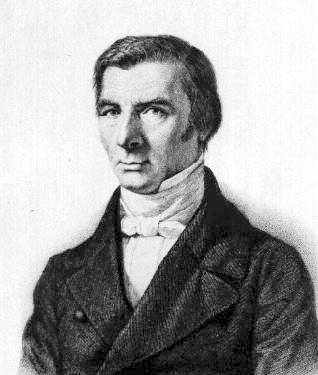
Sunday, July 15, 2012

Frederic Bastiat

"Where you find the laws most numerous, there you will find also the greatest injustice." — Arcesilaus

In my previous blog I touched on the philosophy of Frederic Bastiat. In this post I would like to tell you something about the life and philosophy of Bastiat and why you should read his writings if you believe in freedom and the natural rights of man as our Founders did.

Claude Frederic Bastiat was born on June 30, 1801, in Bayonne, France, the son of a prominent merchant. His mother died when he was seven years old, and his father passed away two years later, when Frederic was only nine. He was brought up by an aunt, who also saw to it that he went to the College of Sorèze beginning when he was 14. But at 17 he left without finishing the requirements for his degree and entered his uncle’s commercial firm in Bayonne. Shortly afterward he came across the writings of the French classical-liberal economist Jean- Baptiste Say, and they transformed his life and thinking. He began a serious study of political economy and soon discovered the works of many of the other classical-liberal writers in France and Great Britain.

In 1825 he inherited a modest estate in Mugron from his grandfather and remained there until 1846, when he moved to Paris. During these 20 years Bastiat devoted almost all his time to absorbing a vast amount of literature on a wide variety of subjects, sharing books and ideas with his friend Félix Coudroy. It seems that Coudroy had socialist leanings, and Bastiat began to refine his skills in clear thinking and writing by formulating the arguments that finally won over his friend to a philosophy of freedom.

In the late 1820s and 1830s he began writing monographs and essays on a variety of economic topics. But his real reputation as a writer began in 1844, when he published a lengthy article in defense of free trade and then a monograph on Cobden and the League: The English Movement for Free Trade. While writing these works Bastiat began a correspondence with Richard Cobden, one of the primary leaders of the British Anti-Corn Law League, the association working for the repeal of all barriers to free trade. The two proponents of economic freedom became fast friends, supporting each other in the cause of liberty.

The success of these writings, and the inspiration from the success of Cobden’s free-trade activities in bringing about the end of agricultural protectionism in Great Britain in 1846, resulted in Bastiat’s moving to Paris to establish a French free-trade association and to start Le Libre Échange, a newspaper devoted to this cause. For two years Bastiat labored to organize and propagandize for free trade. At first he was able to attract a variety of people in commerce and industry to support his activities, including delivering speeches, designing legislation for the repeal of French protectionism, and preparing writings to change public opinion. But it was to no avail. There were too many factions benefiting from privileges and favors given by the government, and he was unable to arouse a sustained interest in his cause among the general public. It appeared that Adam Smith had been right in lamenting the prejudices of the public and the power of the factions, at least in France. This is what Madison feared most when writing in support of the Constitution in Federalist 10.

Following the revolution of February 1848, Bastiat began a career in politics,Bastiat serving first in the French Constituent Assembly and then in the Legislative Assembly. Having devoted most of his previous writings to demonstrating the fallacies in the arguments for protectionism, Bastiat turned his attention to a new enemy of economic liberty: socialism. In the Legislative Assembly he delivered powerful speeches against public-works programs, guaranteed national-employment schemes, wealth redistribution proposals, nationalization of industry, and rationales for the expansion of bureaucratic controls over social and economic life. But because of worsening tuberculosis that weakened his voice, he turned to the written word, producing a large number of essays detailing the absurdities in the arguments of the socialists.

Bastiat made his last appearance in the Assembly in February 1850. By spring of that year his health had declined so dramatically that he was forced to step down from his legislative responsibilities and spend the summer in the Pyrenees Mountains in the south of France. He returned to Paris in September and visited his friends in the cause for free trade, before setting out for Italy in search of a cure for his tuberculosis. He died in Rome on December 24, 1850, at the age of 49 — much too soon.

Frederic Bastiat’s intellectual legacy in the fight for economic freedom is contained in three volumes. Two of them are collections of some of his most biting, witty, and insightful essays and articles, and are available in English under the titles Economic Sophisms and Selected Essays on Political Economy. In his last years, Bastiat devoted part of his time to a general work of social philosophy and economic principles, published under the name Economic Harmonies.

As Henry Hazlitt rightly emphasized, the central idea in much of Bastiat’s writings is captured in his essay “What Is Seen and What Is Not Seen,” which was the last piece he wrote before his death in 1850. He points out that the short-run effects of any action or policy can often be quite different from its longer-run consequences, and that these more remote consequences in fact may be the opposite from what one had hoped for or originally planned.

Bastiat was able to apply the principle of the seen and the unseen to taxes and government jobs. When government taxes, what is seen are the workers employed and the results of their labor: a road, a bridge, or a canal. What is unseen are all the other things that would have been produced if the tax money had not been taken from individuals in the private sector and if the resources and labor employed by the government had been free to serve the desires of those private citizens. Government, Bastiat explained, produces nothing independent from the resources and labor it diverts from private uses.

This simple but profoundly important insight is the theoretical weapon through which Bastiat is able to demonstrate the errors and contradictions in the ideas of both protectionists and socialists. Thus in such essays as “Abundance and Scarcity,” “Obstacle and Cause,” and “Effort and Result,” he shows that barriers and prohibitions to freedom of trade only lead to poverty.

He points out that each of us is both a consumer and a producer. To consume a good we must either make it ourselves or make some other good that we think someone else will take in exchange for the good we want. As consumers we desire as many goods as possible at the lowest possible prices. In other words, we want abundance. But as producers we want a scarcity of the goods we bring to market. In open competition, in which all exchanges are voluntary, the only way to “capture” customers and earn the income that enables each of us, in turn, to be a consumer is to offer better, cheaper, and more goods than our competitors. The alternative to this method, Bastiat warns, is for each of us as a producer to turn to the government to gain from our neighbors what we are unable to obtain through peaceful, nonviolent trade on the market. Consider that you own a pizza shop and the government takes five dollars out of your till in taxes and then gives that five dollars to people to purchase a pizza from you. What would you have gained? Of course this does not take into consideration the 50 cents the government would keep for administrative costs. This is what government does when it takes money from person “A” to give to person “B” and claims this action is helping the economy and creating jobs. Bastiat saw 150 years ago that this was a false assertion — one that the progressives and socialists have rammed down our throats for years.

Herein lays Bastiat’s famous distinction between illegal and legal plunder, which is at the center of his analysis in The Law. The purpose of government, he says, is precisely to secure individuals in their rights to life, liberty, and property. Without such security men are reduced to a primitive life of fear and self-defense, with every neighbor a potential enemy ready to plunder what another has produced. If a government is strictly limited to protecting men’s rights, then peace prevails, and men can go about working to improve their lives, associating with their neighbors in a division of labor and exchange. This is what Jefferson meant when he said that your rights ended at the tip of his nose.

But government can also be turned against those whom it is meant to protect in their property. There can arise legal plunder, in which the powers of government are used by various individuals and groups and factions to prevent rivals from competing, to restrict the domestic and foreign trading opportunities of other consumers in the society, and therefore to steal the wealth of one’s neighbors. This, Bastiat argues, is the origin and basis of protectionism, regulation, and redistributive taxation.

But the consequences of legal plunder are not only the political legitimizing of theft and the breakdown of morality through the blurring of the distinction between right and wrong—however crucially important and dangerous these may be for the long-term stability and well-being of society. Such policies also, by necessity, reduce the prosperity of the society.

Every trade protection, every domestic regulatory restriction, every redistributive act of taxation above that minimal amount necessary to secure the equal protection of each individual’s rights, Bastiat insisted, reduces production and competition in society. Scarcity replaces abundance. Limiting competition reduces the supply of goods available to all members of the society. Imposing protectionist barriers on foreign trade or domestic regulations on production decreases the general availability of goods and makes them more expensive. Everyone is, in the end, made worse off. And thus Bastiat reached his famous conclusion that the state is the great fiction through which everyone tries to live at the expense of everyone else.

Why does legal plunder come about? Bastiat saw its origin in two sources. First, as we have just seen, some people see it as an easier means of acquiring wealth than through work and production. They use political power to redistribute from others what they are unwilling or unable to obtain from their neighbors through the voluntary exchanges of the marketplace. One basis for legal plunder, in other words, is the misguided spirit of theft.

The second, and far more dangerous, source of legal plunder is the arrogant mentality of the social engineer or utopian mastermind. Through the ages, Bastiat showed, social and political philosophers have viewed the multitude of humanity as passive matter, similar to clay, waiting to be molded and shaped, arranged and moved about according to the design of an intellectually superior elite.

Bastiat writes in The Law:

"These socialist writers look upon people in the same manner that the gardener views his trees. Just as the gardener capriciously shapes the trees into pyramids, parasols, cubes, vases, fans, and other forms, just so does the socialist writer whimsically shape human beings into groups, series, centers, sub-centers, honeycombs, labor-corps, and other variations. And just as the gardener needs axes, pruning hooks, saws, and shears to shape his trees, just so does the socialist writer need the force that he can find only in law to shape human beings. For this purpose, he devises tariff laws, relief laws, and school laws."

With a timeless relevance, Bastiat points out that the political elite praises the ideal of democracy, under which “the people” select those who will hold political office. But once the electoral process is finished, those elected to high political office arrogate to themselves the planning, directing, and controlling of every aspect of social and economic life. The task of modern democracy, apparently, is to periodically appoint those who shall be our societal dictators and masterminds.

Is this the way men have to live? Was illegal and legal plundering the only form of social existence? Bastiat answered no. In Economic Harmonies he tried to explain the nature and logic of a system of peaceful human association through production and trade. Historians of economic thought and other critics of Bastiat have said this work demonstrates that, despite his brilliant journalistic talents, he failed as a serious economic theorist. They point to his use of a form of a labor theory of value or his .faulty theory of savings, capital, and interest.

But beyond these errors and limitations is an aspect of Economic Harmonies that still makes it insightful. Harmonies attempts to offer a grand vision of the causal relationships among work, the division of labor, voluntary exchange, and mutual improvement of men’s condition, as well as the importance of private property, individual freedom, and domestic and foreign free trade. In freedom there is social harmony, since each man sees his neighbor not as an enemy but as a partner in the ongoing processes of human improvement. Where relationships are based on consent and mutual agreement there can be no plunder, only reinforcing prosperity, as each works to trade with his neighbors and acquire all the things that make life better for each and all. This is exactly the way our Founders thought.

If one looks at the period during which Bastiat devoted his efforts to fight for freedom and free trade, the conclusion would appear to be that his life ended in failure. Both during his lifetime and following his death France remained in the grip of the protectionist and interventionist spirit, never achieving the degree of economic liberty enjoyed in Great Britain through the second half of the nineteenth century.

And yet Bastiat’s life should be seen as a glorious success. For the 150 years since his passing, each new generation of advocates of economic liberty has been inspired by his writings. His fables and essays read as fresh as if they were written yesterday, because they address the underlying nature of human association and the dangers from political encroachment on the social and market orders.

Today we live in a society where 50% of the people pay no taxes for the government benefits they receive. This means they are plundering the other 50% to pay for their needs. According to the Bureau of Labor Statistics there are 48 million people on food stamps. These 48 million are plundering the people paying taxes for their daily bread and other niceties of life. Government assistance in the form of various welfare programs are plunder of those not receiving welfare payments. The bailout of the auto industry was plunder of the taxpayers for the purpose of protecting two auto manufactures who were in financial trouble due to their lack of providing the consumer what he or she wanted and the mismanagement of the companies. Government sponsorship of student loans has allowed the colleges and universities to plunder students, their parents, and taxpayers with higher and higher tuition costs. The list of examples of plunder goes on and on.

One of Bastiat’s comments in The Law referring to socialist and progressive is particularly relative today with all of the talk of fairness and the equality of results. Bastiat states:

"Socialism, like the ancient ideas from which it springs, confuses the distinction between government and society. As a result of this, every time we object to a thing being done by government, the socialists conclude that we object to its being done at all. We disapprove of state education. Then the socialists say that we are opposed to any education. We object to a state religion. Then the socialists say that we want no religion at all. We object to a state-enforced equality. Then they say that we are against equality. And so on, and so on. It is as if the socialists were to accuse us of not wanting persons to eat because we do not want the state to raise grain."

Bastiat’s writings are timeless as they show us the tyranny of the elite and masterminds as they rule over us for their own purposes and use legal plunder as their political currency. They have influenced conservative economists and philosophers such as; Ludwig von Mises, Friedrich Hayek (who had a profound influence on Margaret Thatcher), Henry Hazlitt, .Nobel Prize winning Milton Friedman, Walter Williams, and Thomas Sowell.

The video shown below, produced by the Von Misses Institute, presents a good overview of the writings and philosophies Frederic Bastiat.If you are interested in learning more about Bastiat and French liberalism it is well wrth your time.

Tuesday, June 7, 2011

Leave it to the French

"No country upon earth ever had it more in its power to attain these blessings than United America. Wondrously strange, then, and much to be regretted indeed would it be, were we to neglect the means and to depart from the road which Providence has pointed us to so plainly." — George Washington

My last post was dedicated to the remembrance of D-Day and the invasion of Normandy. Since then I have been watching presentations on the History and Military channels honoring the 67th anniversary of this momentous event of the twentieth century.

While looking for articles and blogs about the D-Day anniversary I came upon a disgusting report from France. AP reported:

“French artist Rachid Khimoune has installed 1,000 sculptures shaped like sea turtles on Omaha Beach to mark the 67th anniversary of the D-Day landings in Normandy.

The turtles’ “shells” are molded from American, Russian and German combat helmets, sprouting flippers and long-necked heads. The sculptures were arranged Sunday along the sandy expanses of Omaha Beach — where the Allies won a pivotal victory against the Nazis.

Some 215,000 Allied soldiers, and roughly as many Germans, were killed or wounded during D-Day and the ensuing nearly three months it took to secure the capture of Normandy.

A French artist of Berber origin, Khimoune is a sculptor, painter and video artist whose work often features everyday objects.”

Tell me: How could the French government countenance this art installation,dday3-620x362 which manages to be both juvenile and deeply insulting at the same time?

Khimoune claims his installation of 1,000 casts of Russian, German and American combat helmets of WWII which also represent turtles, to denounce global violence. What the turtles have to do with his protest art is beyond me. And what did the Russians have to do with the invasion of Normandy?

The AP report continues:

“The turtles’ “shells” are molded from American, Russian and German combat helmets, sprouting flippers and long-necked heads. The sculptures were arranged Sunday along the sandy expanses of Omaha Beach — where the Allies won a pivotal victory against the Nazis.”

I ask you: So, would the artist prefer that the Allies had refrained from dday1-620x362committing any icky violence and instead not invaded Normandy, so as to preserve peace? In which case, France would to this day be called Frankenreich, the western province of Greater Germany?

I mean, OK, sure, stupid artists make stupid art making stupid points all the time. But the French government gave permission for this particular statement to be made on Omaha Beach on the anniversary of D-Day.

The ghosts of 10,000 men who sacrificed their lives that day to save France all say “You’re welcome!” in unison.

At this stage, there’s really nothing left to do but quote George Orwell:

“Pacifism is objectively pro-Fascist. This is elementary common sense. If you hamper the war effort of one side you automatically help that of the other. Nor is there any real way of remaining outside such a war as the present one. In practice, ‘he that is not with me is against me’. The idea that you can somehow remain aloof from and superior to the struggle, while living on food which British sailors have to risk their lives to bring you, is a bourgeois illusion bred of money and security. Mr Savage remarks that ‘according to this type of reasoning, a German or Japanese pacifist would be “objectively pro-British”.’ But of course he would be! That is why pacifist activities are not permitted in those countries (in both of them the penalty is, or can be, beheading) while both the Germans and the Japanese do all they can to encourage the spread of pacifism in British and American territories. The Germans even run a spurious ‘freedom’ station which serves out pacifist propaganda indistinguishable from that of the P.P.U. They would stimulate pacifism in Russia as well if they could, but in that case they have tougher babies to deal with. In so far as it takes effect at all, pacifist propaganda can only be effective against those countries where a certain amount of freedom of speech is still permitted; in other words it is helpful to totalitarianism.”

Apparently the French government is marking all the victories over the Nazis by allowing this guy to display his pacifism helmet-turtles at each world-famous French national landmark:

But what about the never-ending horrors of addlebrained moral relativism?

To my knowledge the French have never won a war in their history. They were beaten at Crécy and Agincourt by the English. They were beaten by the Germans at the battle of Sedan. Without the intervention of the British and Americans they would have been beaten by the Germans in the First World War. They were soundly defeated and occupied by the Germans in the Second World War. The lost Algiers to the Marxists Muslims and were routed at Dien Bien Phu. Yes, they assisted us in our revolutionary war with the British and we are thankful for that. There are monuments in our nation’s capital to Lafayette and streets named after him throughout the country. We certainly do not have statues of turtles with tri-cornered hats on them. Now we are following France in Libya. I can only guess how badly that will turn out.

I have been to Normandy on several occasions and I can tell you the people of the Calvados Coast appreciate the sacrifice’s the American soldiers did for them on D-Day and the weeks after the invasion when the battle for northwest France raged in the fields and boscage of Normandy.

When my wife and I were in Paris in 1977 we met a couple Kathy had been corresponding with prior to our trip. Francois was a vice president with the Bank of America in Paris and he had been sending Kathy tips on where to stay and eat. We finally met Francois and his wife Isabelle when we arrived in Paris and they invited us to dinner at their home in the Neuilly district of Paris. Both Francois and Isabelle were very pro-American. Francois had seen his older brother lined up against a wall and shot by the Germans.

Isabelle was a young girl living in Normandy in 1944. She remembered the hardships and restrictions imposed on the Normans by the German occupiers. She also remembered the day of the invasion and the shell firing and bombings. She said it was terrible, but he people realized it was necessary to drive the Germans out. She told me with a smile on her face that the first American she ever saw was a soldier riding atop a tank passing through her village. He recalled waving at the soldier and he smiled and tossed her a chocolate bar. It was the first chocolate bar she had ever had in her life. I am sure Francois and Isabelle do not think much of Khimoune’s “art.”

Another wonderful experience we had in Normandy was in the village Sainte-Mère-Église — the first town in France to liberated. We had been touring the Normandy battle sites and lost tract of time. When we reached Sainte-Mère-Église it was two in the afternoon and we were ready for some lunch. Not realizing that rural French cafes do not serve lunch after two we walked into the Le John Steele hotel and restaurant expecting to get something to eat.

When we entered the restaurant we saw a group seated in the far cornerLe John Steele hotel and café at Sainte Mère Église eating so we sat down. When we were seated a man wearing an apron approached us and informed us in French that the restaurant was closed. When we expressed our disappointment in English he asked if we were Americans. When we informed him we were in fact Americans he smiled and told us to wait. A few moments later he returned with two large ham sandwiches and two small pitchers of red wine. He smiled and told us to eat. When we finished our baguette ham sandwiches and asked him for the bill he told us there was no charge and thanked us for our contribution to France. Kathy and I were astonished and delighted. We thanked him and his family and left the restaurant. I am sure the man in the apron does not think much of Khimoune’s “art.”

When you visit WWII military graves and memorials in Europe, you will find a Looking over the grave markers towards the Chapel .significant difference between those built by America and those built by European nations: American memorials honor the heroism and sacrifice of young men who fought to preserve our freedom. European memorials lecture the visitor on the futility and stupidity of all war, treating the war dead as mere victims. The idea that the Allied soldiers should be honored as heroes for sacrificing their lives to defeat an evil enemy, well, that idea is offensive to the guides at European memorials.

One question remains: How many Europeans still deserve freedom, and how many might as well be slaves and serfs?