Search This Blog

Showing posts with label Governance. Show all posts

Sunday, November 16, 2014

We Have Been Grubered

"These socialist writers look upon people in the same manner that the gardener views his trees. Just as the gardener capriciously shapes the trees into pyramids, parasols, cubes, vases, fans, and other forms, just so does the socialist writer whimsically shape human beings into groups, series, centers, sub-centers, honeycombs, labor-corps, and other variations. And just as the gardener needs axes, pruning hooks, saws, and shears to shape his trees, just so does the socialist writer need the force that he can find only in law to shape human beings. For this purpose, he devises tariff laws, relief laws, and school laws." — Frederic Bastiat, The Law, 1848

Bastiat explains the call for laws that restrict peaceable, voluntary exchange and punish the desire to be left alone by saying that socialists1 want to play God. Socialists look upon people as raw material to be formed into social combinations. To them — the elite—“the relationship between persons and the legislator appears to be the same as the relationship between the clay and the potter.” And for people who have this vision, Bastiat displays the only anger I find in The Law when he lashes out at do-gooders and would-be progressive rulers of mankind, “Ah, you miserable creatures! You who think that you are so great! You who judge humanity to be so small! You who wish to reform everything! Why don’t you reform yourselves? That task would be sufficient enough.”

1. In 1848 Bastiat referred to socialist. If writing today he would no doubt change that reference to liberal/progressive. When reading The Law keep this change in mind and Bastiat’s words will ring current.

Bastiat was an optimist who thought that eloquent arguments in defense of liberty might save the day; but history is not on his side. Mankind’s history is one of systematic, arbitrary abuse and control by the elite acting privately, through the church, but mostly through government. It is a tragic history where hundreds of millions of unfortunate souls have been slaughtered, mostly by their own government. A historian writing 200 or 300 years from now might view the liberties that existed for a tiny portion of mankind’s population, mostly in the Western world, for only a tiny portion of its history, the last century or two, as a historical curiosity that defies explanation. That historian might also observe that the curiosity was only a temporary phenomenon and mankind reverted back to the traditional state of affairs—arbitrary control and abuse.

I came upon the writings of Frederick Bastiat about 10 years ago and they clarified many of my long held beliefs regarding progressives. Bastiat’s writing show how the liberal progressive mend works. It firmly believes that they are superior in the thinking and believe themselves to be members of an elite cadre that should be our rulers. This is a far cry from what our Founders believed and expressed in the Declaration of Independence and codified in our Constitution.

Last week this condition was demonstrated in spades when the media exposed the statements of Jonathan Gruber regarding his involvement in constructing and selling ObamaCare and was paid handsomely for it — $400,000 to be “a paid consultant to the Obama.

Much has been made of Jonathan Gruber insulting American voters by calling them stupid. Though worthy of contempt, that comment is one of the least interesting aspects of this short statement, which is otherwise chock-full of revelations with respect to the modern liberal mindset. Insulting the American voter is bad. Demonstrating altogether one's disregard for democratic principles is far worse.

First, Gruber says that the bill was written in a tortured way to make surejonathan_gruber_5 that the Congressional Budget Office did not score the mandate as a tax because, had it been scored as a tax, the bill would have died. The fact that the bill was written “in a tortured way” implies more than mere difficulty or complexity in the drafting process. When Gruber said “the bill was written in a tortured way,” he was saying that the drafters intentionally distorted or perverted the bill’s real meaning in order to fool the Congressional Budget Office.

Modern liberalism operates on expediency exclusively. Nothing matters but winning. The democratic process can be – must be – sacrificed to win. Gruber willingly proclaimed his disregard for the democratic process when he declared that “lack of transparency is a huge political advantage.” He demonstrated with perfect clarity that modern liberalism is indeed an “ends justifies the means” ideology driven by expediency when he said, “I wish that we could make it all transparent, but I’d rather have this law than not.” This is a perfect example of the elitist progressive view of the world. We know better and you, the people are stupid sheeple.

For one brief moment, videotaped for posterity, Jonathan Gruber personified the modern liberal mindset. In an instance of perfect irony, he pontificated on the political advantages of avoiding transparency while simultaneously shining the bright light of day on the black heart of modern liberalism in the most transparent way possible. His perspective would be no clearer had he said, it would be nice if we could tell the public the truth, but only if we get our way. If the only way we can get the bill passed is by perpetrating a fraud on the CBO and on the American people, so be it. Transparency and the democratic process be damned.

Because modern liberalism as reflected by the actions of its establishment flag bearers is entirely policy driven and has no regard for our constitutional rule of law, the democratic process, or the truth, it is bankrupt of any guiding principle other than expediency. It is the pure reflection of the tyranny of the administrative state. Its approach to governance and the acquisition of power is ultimately tyrannical because it seeks to impose its policies and obtain the political power necessary to do so by whatever means possible, without regard for any of the fundamental principles of our founding; principles which they no doubt deem outdated the democratic process, limited government constrained by a constitution created by a sovereign people, and the unalienable rights of free individuals.

Since the Wilson administration this administrate state has grown. Experts now replace the peoples representatives, something our Founders were fearful of. There have been a few curbs on this growth such as the Coolidge administration where Silent Cal was criticized for not being an active president. It should be noted that during his administration the United States experienced phenomenal growth, prosperity, and personal liberty.

Since Coolidge’s tenure the U.S. has seen a gradual growth of a government by bureaucrats and experts. Liberal progressives love to claim that government by the “best and the brightest” is the way to rule the American people. All that is required is for them to use any means, including deception and lies, to retain their power.

Our Founders wanted three branches of government beset with checks and balances on each. They wanted an executive to enforce laws passed by Congress and a Congress to pass laws that the people who elected them wanted. They wanted a Supreme Court to settles disputes between states and make sure laws passed by Congress were in step with the Constitution — not to make new laws. Our Founders wanted a bicameral Congress consisting of a lower house responsible for the nation’s purse strings and an upper house (Senate) to take a longer view and be responsible for treaties and government appointments. As Madison stated the lower house with its two year terms would be subject to the passions of the day and the Senate would take a longer view and curb the passions of the lower house.

Jonathan Gruber certainly never intended to expose modern liberalism’s tyrannical approach so completely – but expose it he did. The revelations he provided should be often remembered and never forgotten. He has now added a new word to our lexicon — “Grubered” to be deceived by someone.

Wednesday, September 18, 2013

Happy Constitution Day – One Day Late

"We have duties, for the discharge of which we are accountable to our Creator and benefactor, which no human power can cancel. What those duties are, is determinable by right reason, which may be, and is called, a well informed conscience. What this conscience dictates as our duty, is so; and that power which assumes a control over it, is an usurper; for no power can be pleaded to justify the control, as any consent in this case is void." — Theophilus Parsons, The Essex Result, 1778

The United States Constitution has endured for more than two centuries. Even now, this single, guiding document remains the greatest statement of liberty ever written and a powerful beacon to all who strive for liberty.

On September 17th in 1787 The Constitution of the United States of America was signed by 38 of 41 delegates present at the conclusion of the Constitutional Convention in Philadelphia. Supporters of the document waged a hard-won battle to win ratification by the necessary nine out of 13 U.S. states.

The Articles of Confederation, ratified several months before the British surrender at Yorktown in 1781, provided for a loose confederation of U.S. states, which were sovereign in most of their affairs. On paper, Congress — the central authority — had the power to govern foreign affairs, conduct war, and regulate currency, but in practice these powers were sharply limited because Congress was given no authority to enforce its requests to the states for money or troops. By 1786, it was apparent that the Union would soon break up if the Articles of Confederation were not amended or replaced. Five states met in Annapolis, Maryland, to discuss the issue, and all the states were invited to send delegates to a new constitutional convention to be held in Philadelphia.

On May 25, 1787, delegates representing every state except Rhode Island convened at Philadelphia's Pennsylvania State House for the Constitutional Convention. The building, which is now known as Independence Hall, had earlier seen the drafting of the Declaration of Independence and the signing of the Articles of Confederation. The assembly immediately discarded the idea of amending the Articles of Confederation and set about drawing up a new scheme of government. Revolutionary War hero George Washington, a delegate from Virginia, was elected convention president.

During an intensive debate, the delegates, due to Madison’s influence, devised a brilliant federal organization characterized by an intricate system of checks and balances. The convention was divided over the issue of state representation in Congress, as more-populated states sought proportional legislation, and smaller states wanted equal representation. The problem was resolved by the Connecticut Compromise, which proposed a bicameral legislature with proportional representation in the lower house (House of Representatives) and equal representation of the states in the upper house (Senate).

On September 17, 1787, the Constitution was signed. As dictated by Article VII, the document would not become binding until it was ratified by nine of the 13 states. Beginning on December 7, five states--Delaware,Photo of the Constitution of the United States of America. A feather quill is included in the photo.The Constitution of the United States is the supreme law of the United States of America and is the oldest codified written national constitution still in force. It was completed on September 17, 1787. Pennsylvania, New Jersey, Georgia, and Connecticut--ratified it in quick succession. However, other states, especially Massachusetts, opposed the document, as it failed to reserve undelegated powers to the states and lacked constitutional protection of basic political rights, such as freedom of speech, religion, and the press. In February 1788, a compromise was reached under which Massachusetts and other states would agree to ratify the document with the assurance that amendments would be immediately proposed. The Constitution was thus narrowly ratified in Massachusetts, followed by Maryland and South Carolina. On June 21, 1788, New Hampshire became the ninth state to ratify the document, and it was subsequently agreed that government under the U.S. Constitution would begin on March 4, 1789. In June, Virginia ratified the Constitution, followed by New York in July.

It should be noted here that this ratification process was spurred by the publication of 85 essays on the purpose and value of the new constitution authored by Alexander Hamilton, James Madison, and John Jay, writing under the pseudo name of Publius, known as the Federalist Papers. These papers spell out the thinking, intent, and reasons for the new constitution and a republican form of federal government.

On September 25, 1789, the first Congress of the United States adopted 12 amendments to the U.S. Constitution — the Bill of Rights — and sent them to the states for ratification. Ten of these amendments were ratified in 1791. In November 1789, North Carolina became the 12th state to ratify the U.S. Constitution. Rhode Island, which opposed federal control of currency and was critical of compromise on the issue of slavery, resisted ratifying the Constitution until the U.S. government threatened to sever commercial relations with the state. On May 29, 1790, Rhode Island voted by two votes to ratify the document, and the last of the original 13 colonies joined the United States. Today, the U.S. Constitution is the oldest written constitution in operation in the world.

Over the past 226 years since the signing of the Constitution it has been amended 27 times (including the first 10 known as the Bill of Rights). Some of these amendments such as the 13th and 14th were needed to complete our dedication to the Declaration of Independence “that all men are created equal, that they are endowed by their Creator with certain unalienable Rights, that among these are Life, Liberty and the pursuit of Happiness.--That to secure these rights, Governments are instituted among Men, deriving their just powers from the consent of the governed..”

On the other hand amendments such as the 16th and 17th are in direct contradiction to the wishes of our Founders. These amendments created a progressive direct income tax — something our Founders did not want — and the election of Senators by direct popular vote reducing the power of the state legislatures and therefore the power of the states. It was this manner of the states sending senators to the upper house of the congress that was needed to obtain ratification of the Constitution in the first place as the states were not willing to abdicate their authority to a strong and powerful central government. An example of this abdication can be seen in the case were the state legislature, governor, attorney general, and people of the Commonwealth of Virginia were opposed to the passage of the Affordable Health Care Act (ObamaCare) yet there two senators (both Democrats) voted for its passage. This was indirect contradiction to the will of the people of the state — something the Founders did not want.

For the past 100 years since the rise of the progressive movement at the turn of the twentieth century the Constitution has been slowly and steadily degraded. All three branches of the federal government have been overstepping the bounds imposed by the Constitution. The executive branch has gained more power than the Congress and the Supreme Court has made unconstitutional decisions based on politics and not on the intent of the Founders. Congress has passed laws in direct contradiction to their powers enumerated in Article I, Section 8 of the Constitution. Today we are living under a tyranny of the federal government that had the original 13 states known would occur they would have ratified the Constitution.

What we need today is a third American Revolution, a revolution not with guns as was the first one (the original revolt against the British and the progressive revolution of the twentieth century), but a revolution using the Constitution itself and the state legislatures as our weapons the main weapon being Article V that states that amendments can be added either through Congress or the States:

“The Congress, whenever two thirds of both houses shall deem it necessary, shall propose amendments to this Constitution, or, on the application of the legislatures of two thirds of the several states, shall call a convention for proposing amendments, which, in either case, shall be valid to all intents and purposes, as part of this Constitution, when ratified by the legislatures of three fourths of the several states, or by conventions in three fourths thereof, as the one or the other mode of ratification may be proposed by the Congress; provided that no amendment which may be made prior to the year one thousand eight hundred and eight shall in any manner affect the first and fourth clauses in the ninth section of the first article; and that no state, without its consent, shall be deprived of its equal suffrage in the Senate.”

Our Founders drafted this article for two reasons. One was to allow a rational amendment process using Congress as the initiating body and the second was to allow the states to curtail a tyrannical congress.

Mark Levin’s The Liberty Amendments: Restoring the American Republic is the revolutionary blueprint millions of Americans have been waiting for. In his book Levin leads the charge for restoring constitutional republicanism and preserving the civil society from the growing authoritarianism of a federal Leviathan.

Levin’s research into the Constitution, the debates of the 1787 Constitutional Convention as well as those of the state ratification conventions are beyond thorough. As is his sharp eye for the extensive writings of Founders famous — James Madison, Alexander Hamilton, George Mason — and lesser known: Virginia’s Edmund Randolph, Pennsylvania’s Gouverneur Morris and James Wilson along with Elbridge Gerry of Massachusetts and others. Levin has plunged into the contemporaneous thoughts and writings of all the Founders to document precisely what reasoning lay behind the creation of the nation’s founding document.

Writes Levin in his opening chapter of the nation’s current state of affairs:

“Social engineering and central planning are imposed without end, since the governing masterminds, drunk with their own conceit and pomposity, have wild imaginations and infinite ideas for reshaping society and molding man’s nature in search of the ever elusive utopian paradise.”

How did a country so carefully crafted as a constitutional republic by thoughtful men who had experienced tyranny up close and personal ever get to the point where the federal administrative state runs wild, Supreme Court justices, the president and the Congress disdain the Constitution they are all sworn to uphold and the nation, in Levin’s words, “is teetering on financial ruin due to the unconscionable profligate spending, borrowing, taxing and money printing by the federal government”? How does America wake up every day to find its government exercising unlimited power over the private economic behavior of every American? How is it possible that a federal government designed to operate from a defined “enumeration of grants of specific power” is now:

“…the nation’s largest creditor, debtor, lender, employer, consumer, contractor, grantor, property owner, tenant, insurer, health-care provider, and pension guarantor….with aggrandized police powers…(that) for example…regulates most things in your bathroom, laundry room, and kitchen, as well as the mortgage you hold on your house. It designs your automobile and dictates the kind of fuel it uses. It regulates your baby’s toys, crib, and stroller; plans your children’s school curriculum and lunch menu; and administers their student loans in college. At your place of employment the federal government oversees everything from the racial, gender, and age diversity of the workforce to the hours, wages, and benefits paid.”

In effect, over a century after the original American Revolution of 1776, followed by the writing and adoption of the Constitution after exhaustive debate in both Philadelphia at the Constitutional Convention and in the various states that then had to vote up or down on ratification — a Second American Revolution took place. A revolution that wasn’t termed as such, that was for the most part non-violent and in fact presented itself as just ordinary-politics-of-the-day. A “reform” that would, Americans of the day were assured, modernize the nation. This Second American Revolution — the Progressive Movement — burst onto the American scene in the 1880s. Progressives directly opposed the underlying principles of America. Where the Founders believed man was an individual — as Levin says a “unique, spiritual being with a soul and a conscience free to discover his own potential and pursue his own legitimate interests, temper by a moral order that has its foundation in faith.” the Progressives believed something else altogether.

Progressives believed man was not born free, that freedom was not a gift from God but a gift dispensed from the hand of the state. Freedom was redefined as the quest for utopia — or as Levin has termed it, Ameritopia. And in the endless quest for that utopia the social re-engineering of America, the Second American Revolution — the effective nullification of the Constitution — began.

Scornful of the Founders’ belief in limited government, progressives rammed through constitutional amendments that restructured the original design of the American government. Next up was the construction of an administrative state, and Levin quotes Alexis de Tocqueville — who was eerily prescient about what was to come in America long after his death in 1859. America, said the famous French philosopher, could be at risk of being consumed by a system that:

“…covers the surface of society with a network of small complicated rules, minute and uniform, through which the most original minds and the most energetic characters cannot penetrate, to rise above the crowd. The will of man is not shattered, but softened, bent, and guided; men are seldom forced by it to act, but they are constantly restrained from acting. Such a power does not destroy, but it prevents existence; it does not tyrannize, but it compresses, enervates, extinguishes, and stupefies a people, till each nation is reduced to nothing better than a flock of timid and industrious animals, of which the government is the shepherd.”

This is exactly the effect of the Statist or Progressive movement, taking a century to lead the nation into what Levin calls a “post-constitutional soft tyranny” through an endless series of “inventions and schemes hatched and promoted openly by their philosophers, experts, and academics, and the coercive application of their designs on the citizenry by a delusional elite.”

Levin writes:

“…I propose that we, the people, take a closer look at the Constitution for our preservation. The Constitution itself provides the means for restoring self-government and averting societal catastrophe (or, in the case of societal collapse, resurrecting the civil society) in Article V.”

And there it is. The Constitutional way-out of the Statist nightmare — or, as Levin calls it the “Achilles’ heel” of Statism. Article V of the United States Constitution. Levin reprints the relevant portion of Article V with his italics for emphasis:

“The Congress, whenever two thirds of both Houses shall deem it necessary, shall propose Amendments to this Constitution, or, on the Application of the Legislatures of two thirds of the several States, shall call a Convention for proposing Amendments, which, in either Case, shall be valid to all Intents and Purposes, as Part of this Constitution, when ratified by the Legislatures of three fourths of the several States, or by Conventions in three fourths thereof, as the one or the other Mode of Ratification may be proposed by the Congress….”

Levin notes a very important point. Article V does not provide for a constitutional convention. It provides for a process of proposing amendments. Article V:

“…provides for two methods of amending the Constitution. The first method, where two-thirds of Congress passes a proposed amendment and then forwards it to the state legislatures for possible ratification by three-fourths of the states, has occurred on twenty-seven occasions. The second method, involving the direct application of two-thirds of the state legislatures for a Convention proposing Amendments, which would thereafter also require a three-fourths ratification vote by the states, has been tried in the past but without success. Today it sits dormant.”

Which is to say, a new Constitutional Convention, and the subsequent ratification process would begin the long overdue process of shifting the tyrannical power out of the hands of the federal Leviathan and handing it back to the states. The states that created the federal government — a much different federal government — in the first place.

As Levin writes:

I was originally skeptical of amending the Constitution by the state convention process. I fretted it could turn into a runaway caucus. As an ardent defender of the Constitution who reveres the brilliance of the Framers, I assumed this would play disastrously into the hands of the Statists. However, today I am a confident and enthusiastic advocate for the process. The text of Article V makes clear that there is a serious check in place. Whether the product of Congress or a convention, a proposed amendment has no effect at all unless “ratified by the Legislatures of three fourths of the several States or by Conventions in three fourths thereof…” This should extinguish anxiety that the state convention process should hijack the Constitution.”

Thus Levin in The Liberty Amendments lays out in clear, concise language eleven proposed amendments to the Constitution. They are:

  1. An Amendment to Establish Term Limits for Members of Congress
  2. An Amendment to Restore the Senate
  3. An Amendment to Establish Term Limits for Supreme Court Justices and Super-Majority Legislative Override
  4. Two Amendments to Limit Federal Spending and Taxing
  5. An Amendment to Limit the Federal Bureaucracy
  6. An Amendment to Promote Free Enterprise
  7. An Amendment to Protect Private Property
  8. An Amendment to Grant the States the Authority to Directly Amend the Constitution
  9. An Amendment to Grant the States the Authority to Check Congress
  10. An Amendment to Protect the Vote

Here are my favorites (actually I like all of them but I find these to be of the highest importance):

An Amendment to Restore the Senate

SECTION 1: The Seventeenth Amendment is hereby repealed. All Senators shall be chosen by their state legislatures as prescribed by Article 1.

This amendment may well be, as Levin notes, considered to be “the most controversial and politically difficult to institute.” A rare Levin understatement. But repealing the 17th Amendment, which provides for the popular election of U.S. Senators, would decidedly begin to right the balance in the American governmental ship of state.

The 17th Amendment was sold to Americans by Progressives as, in Levin’s words, “a cleansing and transforming expansion of popular democracy” when in fact it has turned out to be “an object lesson in the malignancy of the Progressive mind-set and its destructive impact on the way we practice self-government in a twenty-first century, post-constitutional nation.”

The United States Senate, as its name indicates, was designed to represent — the states. For 124 years it did so, producing along the way some of the nation’s greatest legislators including Daniel Webster of Massachusetts, South Carolina’s John C. Calhoun, Kentucky’s Henry Clay, Stephen A. Douglas of Illinois and Charles Sumner of Massachusetts. But as Levin points out, the idea in the early 1900’s was that since electing members of the House of Representatives by direct popular vote was working as designed — why not do this with senators?

The obvious answer brushed aside in the day was that the Framers had a reason for making the lower House chosen by popular vote and the Senate by state legislatures. Our Funders wanted both individuals and state governments to have “direct input in the national government” — the states that had, of course, created the federal government in the first place. To prevent, in the words of George Mason, the possibility that “the national Legislature will swallow up the Legislatures of the States.” The Founders wanted a direct flow of power from the institutions of state government into the process of making federal law.

The 17th Amendment decidedly undid this bedrock principle — and all too predictably the federal government did in fact “fill whatever areas of governance and even society it chooses.”

In point of fact, United States Senators today are not representative of the interests of their state governments — which are elected directly by the people (see the example of Virginia I show above). Instead they are beholden to, as Levin accurately notes, “Washington lobbyists, campaign funders, national political consultants, and other national advocacy organizations.” Or in other words: goodbye Boston, Albany, Harrisburg, Springfield, Lincoln, Little Rock, Atlanta, Austin, Sacramento, Carson City, Juneau and Jackson — hello K Street. And who, exactly, elected K Street lobbyists? No one, of course.

The fact of the matter is that the responsibility of the states in the national government as envisioned by the Founders has been stripped away, taking power once reserved specifically for states and turning it over to, as Levin notes, Washington’s “governing masterminds and their disciples.” Indeed, there is considerable irony in the furious anger from President Obama and liberals over the recent defeat of gun control legislation by the U.S. Senate. Who did they blame for the defeat? That’s right — the NRA. Not an elected state government. They blamed a lobby.

The repeal of the Seventeenth Amendment effectively created K Street and the modern “lobbyist/consultant industrial complex” America has come to know and hate today. To repeal the Seventeenth Amendment would effectively become an attack on that thoroughly “bipartisan” and distinctly well-heeled complex. Most assuredly, as Levin indicates, launching a battle royal between Washington elites and the rest of America.

An Amendment to Establish Term Limits for Supreme Court Justices and Super-Majority Legislative Override

SECTION 1: No person may serve as Chief Justice or Associate Justice of the Supreme Court for more than a combined total of twelve years.

[…]

SECTION 4: Upon three-fifths vote of the House of Representatives and the Senate, Congress may override a majority opinion rendered by the Supreme Court.

SECTION 5: The Congressional override under Section 4 is not subject to a Presidential veto and shall not be the subject of litigation or review in any Federal or State court.

SECTION 6: Upon three-fifths vote of the several state legislatures, the States may override a majority opinion rendered by the Supreme Court.

There’s more in this amendment, but these sections listed above — designed to rein in what many perceive as an out-of-control federal judiciary will alone doubtless cause an uproar only marginally less vivid than the battle to repeal the Seventeenth Amendment.

Levin notes the concerns various Founders and others had with the idea of the federal judiciary (to use a modern phrase) “going rogue.” He cites the prescient writings of New York Judge Robert Yates, an articulate opponent of the Constitution. As supporters of the Constitution rallied around The Federalist Papers, Yates (writing under the pseudo-name of Brutus) and others writing under pen names authored The Anti-Federalist Papers. In Anti-Federalist 80 (Essay no. 11) Yates warned:

”Much has been said and written upon the subject of this new system on both sides, but I have not met with any writer who has discussed the judicial powers with any degree of accuracy. And yet it is obvious, that we can gain but very imperfect ideas of the manner in which this government will work, or the effect it will have in changing the internal police and mode of distributing justice at present subsisting in the respective states, without a thorough investigation of the powers of the judiciary and of the manner in which they will operate. This government is a complete system, not only for making, but for executing laws. And the courts of law, which will be constituted by it, are not only to decide upon the constitution and the laws made in pursuance of it, but by officers subordinate to them to execute all their decisions. The real effect of this system of government, will therefore be brought home to the feelings of the people, through the medium of the judicial power. It is, moreover, of great importance, to examine with care the nature and extent of the judicial power, because those who are to be vested with it, are to be placed in a situation altogether unprecedented in a free country. They are to be rendered totally independent, both of the people and the legislature, both with respect to their offices and salaries. No errors they may commit can be corrected by any power above them, if any such power there be, nor can they be removed from office for making ever so many erroneous adjudications.”

And so it has turned out. Yates died in 1801, two years before Chief Justice John Marshall famously wrote in 1803’s Marbury v. Madison:

The judicial power of the United States is extended to all cases arising under the constitution.

Levin notes importantly that Abraham Lincoln took the occasion of his first inaugural address in 1861 to speak out in favor of limits to judicial power. Lincoln went on at length that he did not “forget the position assumed by some that national questions are to be decided by the Supreme Court” But as a staunch opponent of the Court’s fateful 1857 decision in Dred Scott v. Sandford — in which Democrats led by Andrew Jackson appointee and slave-owner Chief Justice Roger Taney attempted to write slavery into the Constitution — Lincoln believed the Court had arranged affairs so that “the people will have ceased to be their own rulers.”

Contrast this with that exemplar of the Progressive movement and a liberal hero to this day — the Democrats’ Woodrow Wilson. Wilson the Progressive — and staunch segregationist — “endorsed flat-out judicial tyranny” says Levin. Wilson believed “the federal judiciary was to behave as a perpetual constitutional convention,” rewriting the Constitution at will and “nearly always promoting the centralization and concentration of power in the federal government.” Indeed, things are now so far off track with the federal judiciary that the liberal Associate Justice Ruth Bader Ginsburg has urged the Court to “look beyond one’s shores” to international law when writing and justifying Court rulings. The Constitution? What’s that?

Levin writes that by “claiming authority not specifically granted by the Constitution, abuses of power would certainly follow, as they have.”

The notion that, for example, Roe v. Wade might have been overturned by three-fifths of the state legislatures had Levin’s amendment been in place in January of 1973 will doubtless cause a frenzy on the left. On the other hand, there is no doubt the Left would love for this particular Liberty Amendment to be in place right now — so they could try and repeal Citizens United.

Giving the Congress and the States veto power over Supreme Court decisions will surely roil the waters political.

We won’t run through all the other amendments in detail here. It’s safe to say that each in their own fashion will arouse considerable controversy.

Limiting taxation to 15% of income? Abolishing the death tax and prohibiting a value-added (VAT) tax? A failure by the Congress and the President to adopt and sign a budget no later than the first Monday in May mandates “an automatic, across-the-board, 5 percent reduction in expenditures” from the previous year’s budget? Individually reauthorizing “all federal departments and agencies….individually in stand-alone reauthorization bills every three years by a majority vote of the House…and the Senate” — or said departments and agencies automatically expire? Finally reining in the much abused Commerce Clause? Securing “the fundamental right to own and maintain property” from government regulatory takings by forcing the government to “compensate fully” any financial loss over $10,000?

Boy will this cause a loud howl from the progressives who have their way with we the people for so long.

While the Liberty Amendments are the heart of Levin’s book, it is critical to go back to the reason for this book — and the undoubted reaction to his proposals that is surely about to rain down on the book and its supporters, not to mention the author himself. Writes Levin in his Epilogue, appropriately titled The Time for Action:

“No doubt, in a twist of logic, the state convention process and The Liberty Amendments will be assaulted by the governing masterminds and their disciples as an extreme departure from the status quo and, therefore, heretical, as they resist ferociously all efforts to diminish their power and position. Paradoxically, it is they who distort the Constitutions’ text and trespass its purpose by actively pursuing its nullification and abandonment. History demonstrates that republics collapse when demagogues present themselves as their guardians to entice the people and cloak their true intentions…..Indeed, the closer the approach to constitutional restoration, should that day arrive, a torrent of fuming and malevolent rage will, predictably, let loose, alleging perfidy by the true reformers.”

The Liberty Amendments — all eleven of them — are a serious work of restoration and reform. They are ironically the very embodiment of that current liberal favorite: “Hope and Change” — turned back on the entire progressive concept of government. There is in fact no reason whatsoever that Americans must accept what Levin calls the “obtuse and defeatist notion of moderation that accepts the disposition of inevitable societal self-destruction without recourse to an available escape. Its irrationality is self-evident.”

It is all too apparent after a hundred-years plus of the Progressive “Second American Revolution” that the revolution is not only failed but dangerous. Exceptionally dangerous. Dangerous to everything from the larger financial underpinnings of America to the individual lives of Americans who must daily face this, that or the other onslaught from their own government.

The plethora of scandals from recent years — tellingly in both the Obama and Bush administrations —speaks to the fundamental recognition that the problem is the inevitable out-of-control nature of a massive, intrusive federal government apparatus. From the Fannie Mae and Freddie Mac caused financial crisis of 2008 to recent headlines about the IRS, FEC, DEA, SEC, EPA, State Department, Food Stamps and more, all in a very real sense are nothing but the latest confirmation of just how massive and irrational the federal government has become. Indeed, the defense of President Obama by liberal allies in the IRS scandal is that surely one cannot expect the President to have any idea about what’s going on in his own government because the government is in fact so huge.

All the way back in 1964 in that famous speech A Time for Choosing (found here) that introduced Ronald Reagan to America as a political figure, Reagan saw all this coming. Said the future president in those famous closing lines:

“You and I have a rendezvous with destiny.

We’ll preserve for our children this, the last best hope of man on earth, or we’ll sentence them to take the last step into a thousand years of darkness. If we fail, at least let our children and our children’s children say of us that we justified our brief moments here. We did all that could be done.”

The challenge Mark Levin’s Liberty Amendments now poses to millions of Americans is exactly Reagan’s challenge.

Will we preserve the last best hope of man on earth?

Will, in Levin’s words, “we the people restore the splendor of the American Republic”?

Ronald Reagan’s A Time for Choosing has now become Mark Levin’s The Time for Action.

And Mark Levin has provided the blueprint.

I urge you to obtain a copy of Levin’s book and read it through. He not only presents the problem and offers the solution with one of his liberty amendments he does a fantastic job of giving the historical context and thinking (through the writing and speeches) of our Founders when they drafted and ratified the Constitution. Levine’s book should be read by anyone concerned about the direction of our Republic.

Monday, July 1, 2013

Remembrance of the Fourth of July

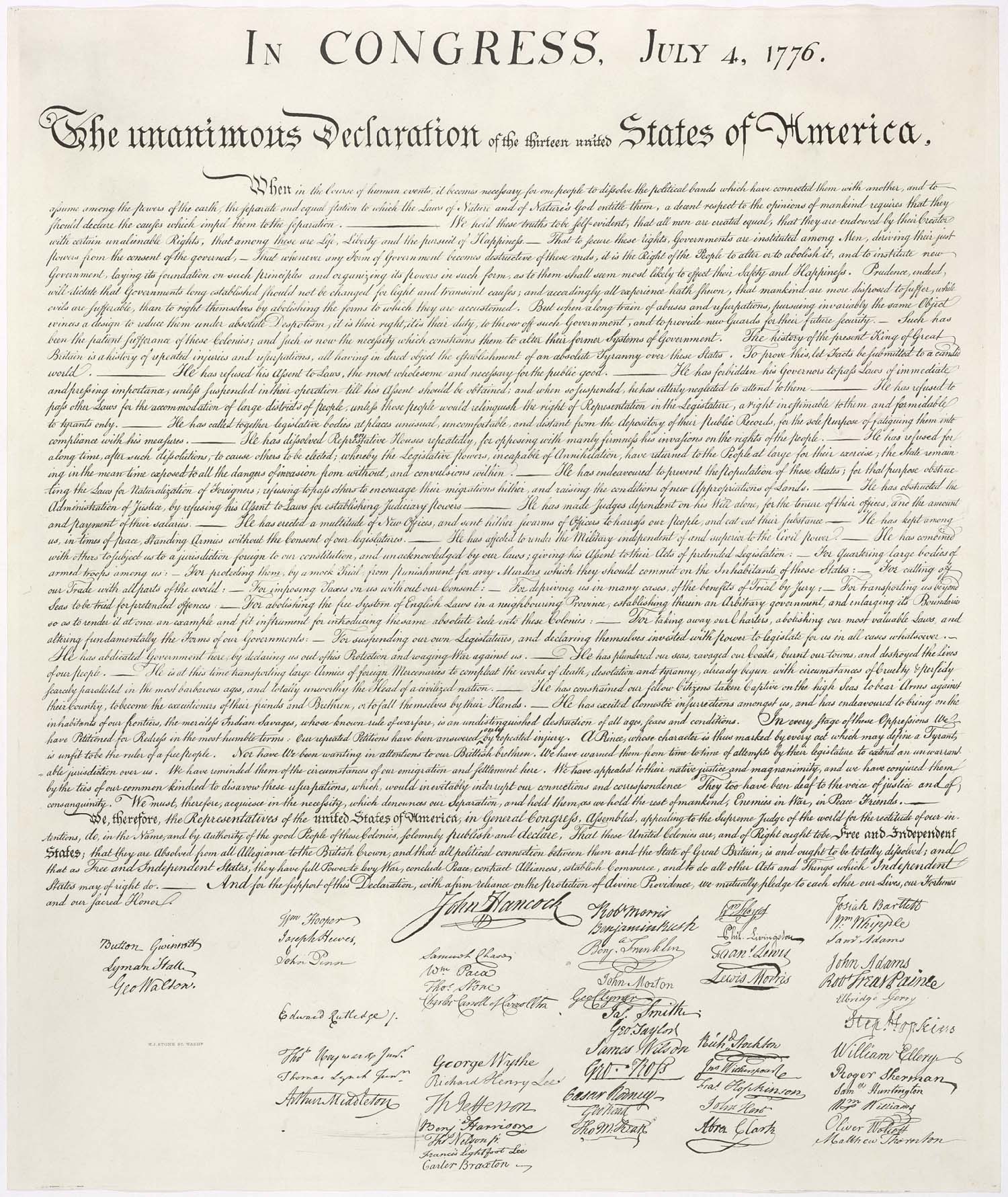
“We hold these truths to be self-evident, that all men are created equal, that they are endowed by their Creator with certain unalienable Rights, that among these are Life, Liberty and the pursuit of Happiness.” — The unanimous Declaration of the thirteen united States of America, July 4, 1776.

This coming Thursday will mark the 237th anniversary of the signing of our Declaration of Independence from Great Britain.

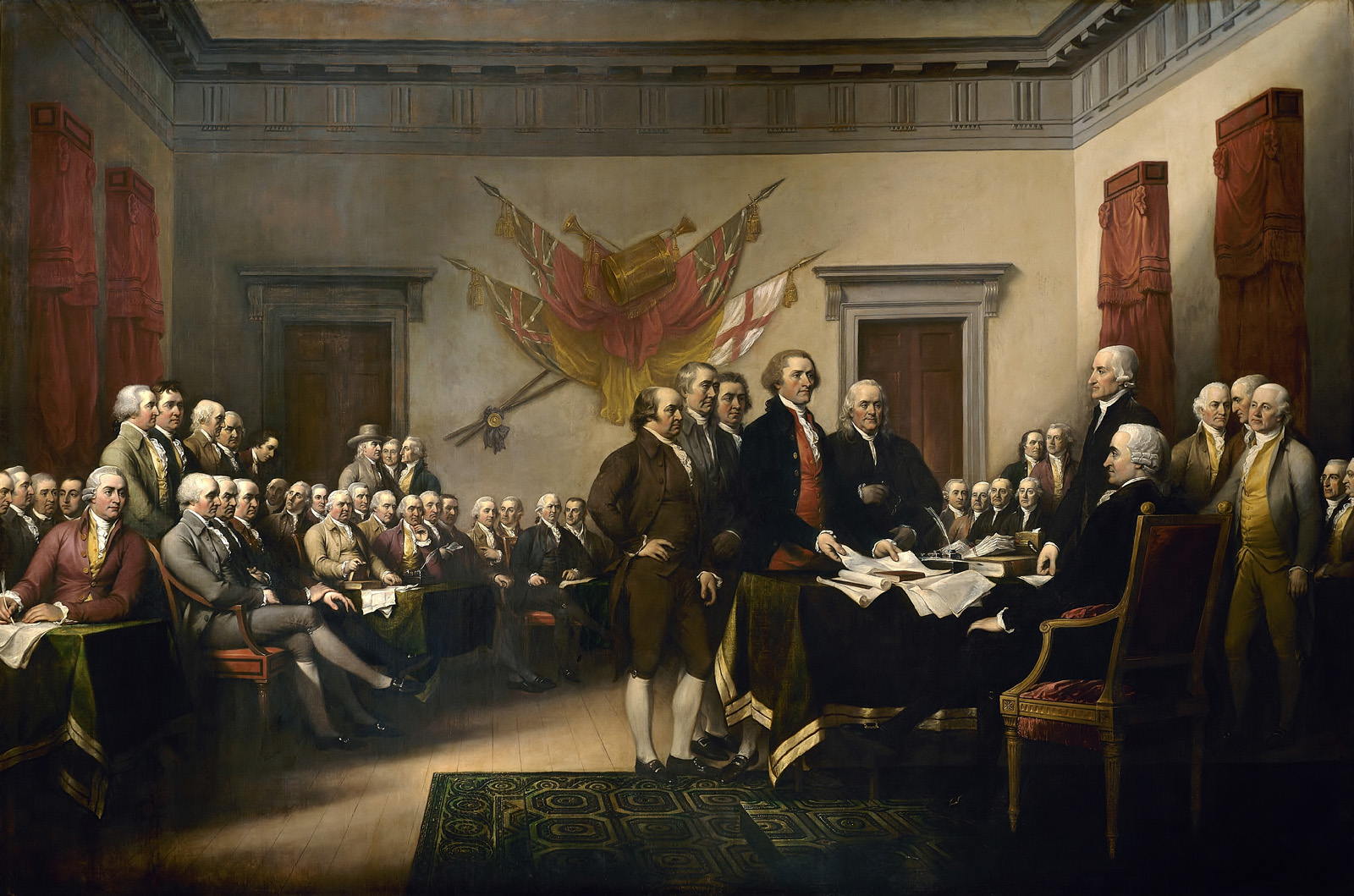
When armed conflict between bands of American colonists and British soldiers began in April 1775, the Americans were ostensibly fighting only for their rights as subjects of the British crown. By the following summer, with the Revolutionary War in full swing, the movement for independence from Britain had grown, and delegates of the Continental Congress were faced with a vote on the issue. In mid-June 1776, a five-man committee including Thomas Jefferson, John Adams and Benjamin Franklin was tasked with drafting a formal statement of the colonies' intentions. The Congress formally adopted the Declaration of Independence — written largely by Jefferson — in Philadelphia on July 4, a date now celebrated as the birth of American independence.

Even after the initial battles in the Revolutionary War broke out, few colonists desired complete independence from Great Britain, and those who did — like John Adams — were considered radical. Things changed over the course of the next year, however, as Britain attempted to crush the rebels with all the force of its great army. In his message to Parliament in October 1775, King George III railed against the rebellious colonies and ordered the enlargement of the royal army and navy. News of his words reached America in January 1776, strengthening the radicals’ cause and leading many conservatives to abandon their hopes of reconciliation. That same month, the recent British immigrant Thomas Paine published "Common Sense," in which he argued that independence was a "natural right" and the only possible course for the colonies; the pamphlet sold more than 150,000 copies in its first few weeks in publication.

In March 1776, North Carolina's revolutionary convention became the first to vote in favor of independence; seven other colonies had followed suit by mid-May. On June 7, the Virginia delegate Richard Henry Lee introduced a motionWriting_the_Declaration_of_Independence_1776_cph.3g09904 calling for the colonies' independence before the Continental Congress when it met at the Pennsylvania State House (later Independence Hall) in Philadelphia. Amid heated debate, Congress postponed the vote on Lee's resolution and called a recess for several weeks. Before departing, however, the delegates also appointed a five-man committee — including Thomas Jefferson of Virginia, John Adams of Massachusetts, Roger Sherman of Connecticut, Benjamin Franklin of Pennsylvania and Robert R. Livingston of New York — to draft a formal statement justifying the break with Great Britain. That document would become known as the Declaration of Independence.

Jefferson had earned a reputation as an eloquent voice for the patriotic cause after his 1774 publication of "A Summary View of the Rights of British America," and he was given the task of producing a draft of what would become the Declaration of Independence. As he wrote in 1823, the other members of the committee:

"unanimously pressed on myself alone to undertake the draught [sic]. I consented; I drew it; but before I reported it to the committee I communicated it separately to Dr. Franklin and Mr. Adams requesting their corrections. I then wrote a fair copy, reported it to the committee, and from them, unaltered to the Congress."

As Jefferson drafted it, the Declaration of Independence was divided into five sections, including an introduction, a preamble, a body (divided into two sections) and a conclusion. In general terms, the introduction effectively stated that seeking independence from Britain had become "necessary" for the colonies. While the body of the document outlined a list of grievances against the British crown, the preamble includes its most famous passage:

"We hold these truths to be self-evident; that all men are created equal; that they are endowed by their Creator with certain inalienable rights; that among these are life, liberty and the pursuit of happiness; that to secure these rights, governments are instituted among men, deriving their just powers from the consent of the governed."

The Continental Congress reconvened on July 1, and the following day 12 ofstone.tif the 13 colonies adopted Lee's resolution for independence. The process of consideration and revision of Jefferson's declaration (including Adams' and Franklin's corrections) continued on July 3 and into the late morning of July 4, during which Congress deleted and revised some one-fifth of its text. The delegates made no changes to that key preamble, however, and the basic document remained Jefferson's words. Congress officially adopted the Declaration of Independence later on July 4 (though most historians now accept that the document was not signed until August 2).

As the first formal statement by a nation's people asserting their right to choose their own government, the Declaration of Independence became a significant landmark in the history of democracy. In addition to its importance in the fate of the fledgling American nation, it also exerted a tremendous influence outside the United States, most memorably in France during the French Revolution. Together with the Northwest Ordinance, the Constitution (including the Bill of Rights), the Declaration of Independence can be counted as one of the three essential founding documents and the organic laws of the United States.

Abraham Lincoln was dedicated so much the Declaration that he called it “an apple of gold set in the silver frame of the Constitution.” He believed that the Declaration embodied all of the basic principles of the United States and that the Constitution was designed to codify those principles as a part of our organic law.

Today not many people have read the Declaration. I would venture that less than 30% of our high school or college graduates have ever read the entire document. My estimate is not based on any scientific evidence, but it is based on empirical data obtained from personal observation. Unless a student is enrolled in a very good college prep school or studying law or political science in college I doubt very much that they have had any exposure to the entire document. This includes most of the talking heads on TV.

One of the things you can do this Fourth of July when you have friends and family gathered for the barbeque of burgers, hot dogs, and ribs is to print out the Declaration and have you family members and friends each read aloud a portion of the document. I did this at my annual birthday party over the weekend and it was not only informative and educational, but was a fun experience — especially when they got to the part containing the grievances against the King George III.

After reading the grievances some discussion evolved on the listed grievances and how these same grievances can be adapted to what the government is doing to its citizens today. Here are a few examples.

Before citing the examples lets preface then with the remaining section of the preamble:

“That to secure these rights, Governments are instituted among Men, deriving their just powers from the consent of the governed, that whenever any Form of Government becomes destructive of these ends, it is the Right of the People to alter or to abolish it, and to institute new Government, laying its foundation on such principles and organizing its powers in such form, as to them shall seem most likely to effect [sic] their Safety and Happiness. Prudence, indeed, will dictate that Governments long established should not be changed for light and transient causes; and accordingly all experience hath shewn [sic], that mankind are more disposed to suffer, while evils are sufferable, than to right themselves by abolishing the forms to which they are accustomed.

But when a long train of abuses and usurpations, pursuing invariably the same Object evinces a design to reduce them under absolute Despotism, it is their right, it is their duty, to throw off such Government, and to provide new Guards for their future security. Such has been the patient sufferance of these Colonies; and such is now the necessity which constrains them to alter their former Systems of Government. The history of the present King of Great Britain is a history of repeated injuries and usurpations, all having in direct object the establishment of an absolute Tyranny over these States. To prove this, let Facts be submitted to a candid world.”

“He has refused his Assent to Laws, the most wholesome and necessary for the public good.”

Look at how the present administration refuses to enforce laws such as our current immigration laws and how the Justice Department refused to enforce the legally enacted Defense of Marriage Act (DOMA) signed into law by Bill Clinton.

“He has forbidden his Governors to pass Laws of immediate and pressing importance, unless suspended in their operation till his Assent should be obtained; and when so suspended, he has utterly neglected to attend to them.”

Just look at what the federal government is doing to states with the passage of ObamaCare and how governors are being pressed to pay for more and more towards Medicaid. Also how the federal government is attempting to force states to accept federal gun and drug laws.

“He has endeavoured [sic] to prevent the population of these States; for that purpose obstructing the Laws for Naturalization of Foreigners; refusing to pass others to encourage their migrations hither, and raising the conditions of new Appropriations of Lands.”

Just look at how the federal government has opposed the states enforcement of our immigration laws through the actions of the Justice Department using the power of the federal courts and Homeland Security by refusing to put forth the resources to control illegal immigration. Article IV, Section 4 of the Constitution states:

“The United States shall guarantee to every state in this union a republican form of government, and shall protect each of them against invasion; and on application of the legislature, or of the executive (when the legislature cannot be convened) against domestic violence.”

Millions of illegals have and are crossing our southern border as they invade the states of California, Texas, Arizona, and New Mexico while the executive branch does little to prevent this as the Democrats are looking for adding these illegals to their voting bloc.

“He has erected a multitude of New Offices, and sent hither swarms of Officers to harass [sic] our people, and eat out their substance.”

Over the past decades the administrative state has created hundreds of new czars and regulators to hassle, badger, and bully citizens. The EPA, Department of Agriculture, Department of Education, NSA, IRS, and Homeland Security have put forth thousands of regulations without the consent of Congress. They have mandated regulations for K-12 public schools overriding the will of states and local school boards. They have told us what light bulbs and toilets we can use. The NSA is collecting your personal data on your phone calls and e-mails. The IRS imposes illegal regulation of political opponents of the Obama administration. The Obama administration is waging a war against Christians who do not approve of gay marriage, abortion or the requirements for birth control and abortifacient pharmaceutical drugs for girls as young as 13-years of age without parental consent as mandated in ObamaCare. It has even reached the point of absurdity where the Department of Agriculture is demanding a children’s magician to submit a disaster plan for his rabbit. The new regulation became effective Jan. 30, 2012 without the consent of Congress.

“He has combined with others to subject us to a jurisdiction foreign to our constitution, and unacknowledged by our laws; giving his Assent to their Acts of pretended Legislation.”

The current administration and certain members of the U.S. Supreme Court are now referring to foreign laws to interpret our Constitution and Bill of Rights. As Associate Justice Antonin Scalia stated in his dissent to the recent DOMA decision

“The majority must have in mind one of the foreign constitutions that pronounces such primacy for its constitutional court and allows that primacy to be exercised in contexts other than a lawsuit.”

“For imposing Taxes on us without our Consent”

Today our tax code is so complex it obfuscates many of the taxes we pay the federal government. Also the administration through its regulatory agencies imposes thousands of fees on unsuspecting citizens. How about the carbon taxes and the taxes on your telephone and cable TV? Or the taxes on your electric bill to pay for those who do not have enough money to afford electricity?

I am sure you can find many examples of current actions of the federal government that pertain to the grievances I have cited.

Jefferson’s conclusion to the Declaration states:

“We, therefore, the Representatives of the united States of America, in General Congress, Assembled, appealing to the Supreme Judge of the world for the rectitude of our intentions, do, in the Name, and by Authority of the good People of theseThomas_Jefferson_rev Colonies, solemnly publish and declare, That these United Colonies are, and of Right ought to be Free and Independent States; that they are Absolved from all Allegiance to the British Crown, and that all political connection between them and the State of Great Britain, is and ought to be totally dissolved; and that as Free and Independent States, they have full Power to levy War, conclude Peace, contract Alliances, establish Commerce, and to do all other Acts and Things which Independent States may of right do. And for the support of this Declaration, with a firm reliance on the protection of divine Providence, we mutually pledge to each other our Lives, our Fortunes and our sacred Honor.”

I wonder how many of today’s crop of politicians are willing to pledge their lives, fortunes, and sacred honor in the cause of liberty.

When and if you do decide to have a communal reading of the Declaration at your Fourth of July BBQ here are nine things you may not know about our Declaration of Independence — things that will no doubt impress your family and friends:

1. The Declaration of Independence wasn’t signed on July 4, 1776.

On July 1, 1776, the Second Continental Congress met in Philadelphia, and on the following day 12 of the 13 colonies voted in favor of Richard Henry Lee’s motion for independence. The delegates then spent the next two days debating and revising the language of a statement drafted by Thomas Jefferson. On July 4, Congress officially adopted the Declaration of Independence, and as a result the date is celebrated as Independence Day. Nearly a month would go by, however, before the actual signing of the document took place. First, New York’s delegates didn’t officially give their support until July 9 because their home assembly hadn’t yet authorized them to vote in favor of independence. Next, it took two weeks for the Declaration to be “engrossed”—written on parchment in a clear hand. Most of the delegates signed on August 2, but several—Elbridge Gerry, Oliver Wolcott, Lewis Morris, Thomas McKean and Matthew Thornton—signed on a later date. (Two others, John Dickinson and Robert R. Livingston, never signed at all.) The signed parchment copy now resides at the National Archives in the Rotunda for the Charters of Freedom, alongside the Constitution and the Bill of Rights.

2. More than one copy exists.

After the adoption of the Declaration of Independence, the “Committee of Five”—Thomas Jefferson, John Adams, Benjamin Franklin, Roger Sherman and Robert R. Livingston—was charged with overseeing the reproduction of the approved text. This was completed at the shop of Philadelphia printer John Dunlap. On July 5, Dunlap’s copies were dispatched across the 13 colonies to newspapers, local officials and the commanders of the Continental troops. These rare documents, known as “Dunlap broadsides,” predate the engrossed version signed by the delegates. Of the hundreds thought to have been printed on the night of July 4, only 26 copies survive. Most are held in museum and library collections, but three are privately owned.

3. When news of the Declaration of Independence reached New York City, it started a riot.

By July 9, 1776, a copy of the Declaration of Independence had reached New York City. With hundreds of British naval ships occupying New York Harbor, revolutionary spirit and military tensions were running high. George Washington, commander of the Continental forces in New York, read the document aloud in front of City Hall. A raucous crowd cheered the inspiring words, and later that day tore down a nearby statue of George III. The statue was subsequently melted down and shaped into more than 42,000 musket balls for the fledgling American army.

4. Eight of the 56 signers of the Declaration of Independence were born in Britain.

While the majority of the members of the Second Continental Congress wereDeclaration_independence native-born Americans, eight of the men voting for independence from Britain were born there. Gwinnett Button and Robert Morris were born in England, Francis Lewis was born in Wales, James Wilson and John Witherspoon were born in Scotland, George Taylor and Matthew Thornton were born in Ireland and James Smith hailed from Northern Ireland.

5. One signer later recanted.

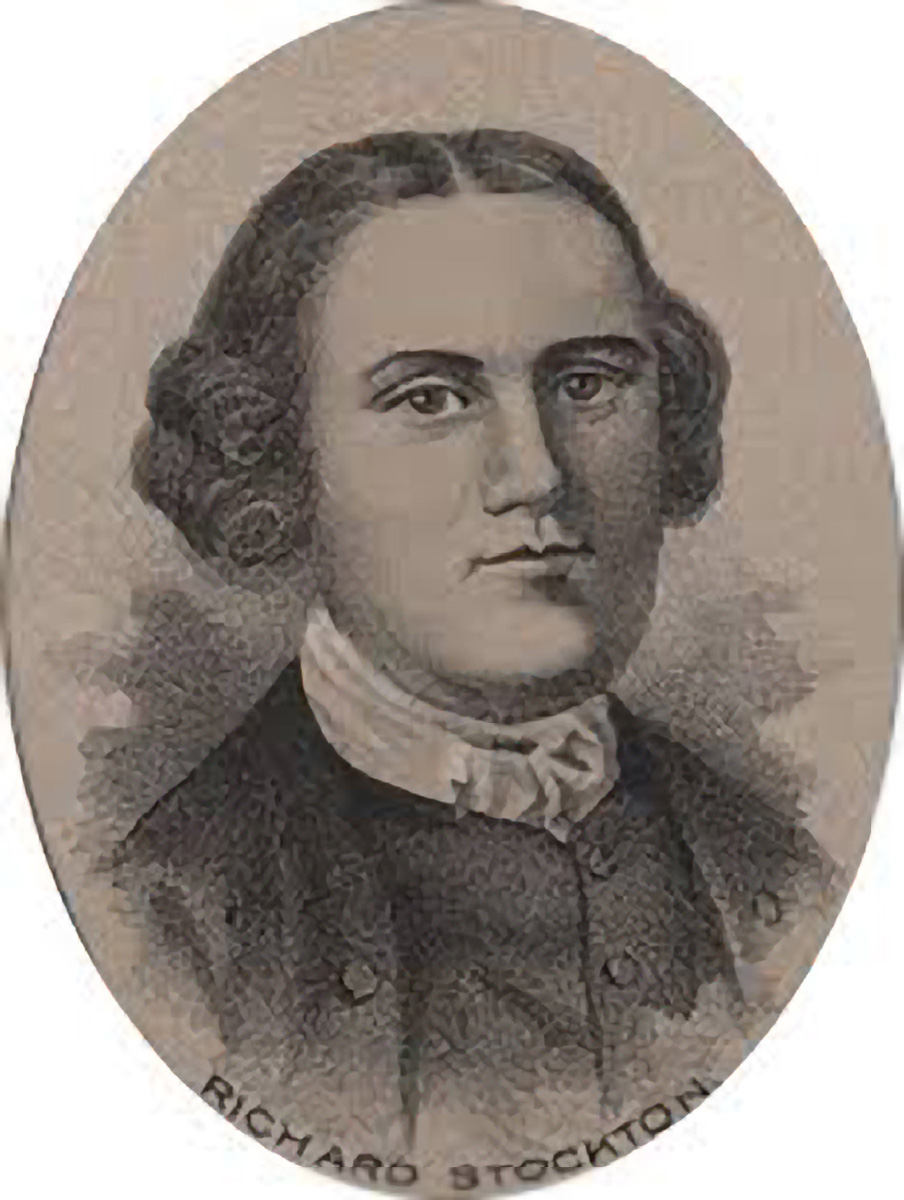
Richard Stockton, a lawyer from Princeton, New Jersey, became the only downloadsigner of the Declaration of Independence to recant his support of the revolution. On November 30, 1776, the hapless delegate was captured by the British and thrown in jail. After months of harsh treatment and meager rations, Stockton repudiated his signature on the Declaration of Independence and swore his allegiance to King George III. A broken man when he regained his freedom, he took a new oath of loyalty to the state of New Jersey in December 1777.

6. There was a 44-year age difference between the youngest and oldest signers.

The oldest signer was Benjamin Franklin, 70 years old when he scrawled his name on the parchment. The youngest was Edward Rutledge, a lawyer from South Carolina who was only 26 at the time. Rutledge narrowly beat out fellow South Carolinian Thomas Lynch Jr., just four months his senior, for the title.

7. Two additional copies have been found in the last 25 years.

In 1989, a Philadelphia man found an original Dunlap Broadside hidden in the back of a picture frame he bought at a flea market for $4. One of the few surviving copies from the official first printing of the Declaration, it was in excellent condition and sold for $8.1 million in 2000. A 26th known Dunlap broadside emerged at the British National Archives in 2009, hidden for centuries in a box of papers captured from American colonists during the Revolutionary War. One of three Dunlap broadsides at the National Archives, the copy remains there to this day.

8. The Declaration of Independence spent World War II in Fort Knox.

On December 23, 1941, just over two weeks after the Japanese attack on Pearl Harbor, the signed Declaration, together with the Constitution, was removed from public display and prepared for evacuation out of Washington, D.C. Under the supervision of armed guards, the founding document was packed in a specially designed container, latched with padlocks, sealed with lead and placed in a larger box. All told, 150 pounds of protective gear surrounded the parchment. On December 26 and 27, accompanied by Secret Service agents, it traveled by train to Louisville, Kentucky, where a cavalry troop of the 13th Armored Division escorted it to Fort Knox. The Declaration was returned to Washington, D.C., in 1944.

9. There is something written on the back of the Declaration of Independence.

In the movie “National Treasure,” Nicholas Cage’s character claims that the back of the Declaration contains a treasure map with encrypted instructions from the founding fathers, written in invisible ink. Unfortunately, this is not the case. There is, however, a simpler message, written upside-down across the bottom of the signed document: “Original Declaration of Independence dated 4th July 1776.” No one knows who exactly wrote this or when, but during the Revolutionary War years the parchment was frequently rolled up for transport. It’s thought that the text was added as a label.

Thursday, June 20, 2013

Happy 225th Anniversary

“We the people of the United States, in order to form a more perfect union, establish justice, insure domestic tranquility, provide for the common defense, promote the general welfare, and secure the blessings of liberty to ourselves and our posterity, do ordain and establish this Constitution for the United States of America.” — Preamble to the Constitution of the United States of America, 1787

225 years ago on this date in 1788 New Hampshire became the ninth and last necessary state to ratify the Constitution of the United States, thereby making the document the organic law of the land.

By 1786, defects in the post-Revolutionary War Articles of Confederation were apparent, such as the lack of central authority over foreign and domestic commerce. Congress endorsed a plan to draft a new constitution, and on May 25, 1787, the Constitutional Convention convened at Independence Hall in Philadelphia. On September 17, 1787, after three months of debate moderated by convention president George Washington, the new U.S. Constitution, which created a strong federal government with an intricate system of checks and balances, was signed by 38 of the 41 delegates present at the conclusion of the convention. As dictated by Article VII, the document would not become binding until it was ratified by nine of the 13 states.

Beginning on December 7, five states — Delaware, Pennsylvania, New Jersey, Georgia, and Connecticut — ratified it in quick succession. However, other states, especially Massachusetts, opposed the document, as it failed to reserve undelegated powers to the states and lacked constitutional protection of basic political rights, such as freedom of speech, religion, and the press. In February 1788, a compromise was reached under which Massachusetts and other states would agree to ratify the document with the assurance that amendments would be immediately proposed. The Constitution was thus narrowly ratified in Massachusetts, followed by Maryland and South Carolina. On June 21, 1788, New Hampshire became the ninth state to ratify the document, and it was subsequently agreed that government under the U.S. Constitution would begin on March 4, 1789. In June, Virginia ratified the Constitution, followed by New York in July.

On September 25, 1789, the first Congress of the United States adopted 12 amendments to the U.S. Constitution--the Bill of Rights--and sent them to the states for ratification. Ten of these amendments were ratified in 1791. In November 1789, North Carolina became the 12th state to ratify the U.S. Constitution. Rhode Island, which opposed federal control of currency and was critical of compromise on the issue of slavery, resisted ratifying the Constitution until the U.S. government threatened to sever commercial relations with the state. On May 29, 1790, Rhode Island voted by two votes to ratify the document, and the last of the original 13 colonies joined the United States. Today the U.S. Constitution is the oldest written constitution in operation in the world.

Under America's first governing document, the Articles of Confederation, the national government was weak and states operated like independent countries. At the 1787 convention, delegates devised a plan for a stronger federal government with three branches--executive, legislative and judicial--along with a system of checks and balances to ensure no single branch would have too much power. The Bill of Rights — 10 amendments guaranteeing basic individual protections such as freedom of speech and religion, the right to bear arms, and the rights of the states — became part of the Constitution in 1791. To date, there have been a total of 27 constitutional amendments.

America's first constitution, the Articles of Confederation, was ratified in 1781, a time when the nation was a loose confederation of states, each operating like independent countries. The national government was comprised of a single legislature, the Congress of the Confederation; there was no president or judicial branch. The Articles of Confederation gave Congress the power to govern foreign affairs, conduct war and regulate currency; however, in reality these powers were sharply limited because Congress had no authority to enforce its requests to the states for money or troops.

Soon after America won its independence from Great Britain with its 1783 victory in the American Revolution, it became increasingly evident that the young republic needed a stronger central government in order to remain stable. In 1786, Alexander Hamilton (1757-1804), a lawyer and politician from New York, called for a constitutional convention to discuss the matter. The Confederation Congress, which in February 1787 endorsed the idea, invited all 13 states to send delegates to a meeting in Philadelphia.

On May 25, 1787, the Constitutional Convention opened in Philadelphia atScene_at_the_Signing_of_the_Constitution_of_the_United_States the Pennsylvania State House, now known as Independence Hall, where the Declaration of Independence had been adopted 11 years earlier. There were 55 delegates in attendance, representing all 13 states except Rhode Island, which refused to send representatives because it did not want a powerful central government interfering in its economic business. George Washington, who'd become a national hero after leading the Continental Army to victory during the American Revolution, was selected as president of the convention by unanimous vote.

The delegates (who also became known as the "Framers" of the Constitution) were a well-educated group that included merchants, farmers, bankers and lawyers. Many had served in the Continental Army, colonial legislatures or the Continental Congress (known as the Congress of the Confederation as of 1781). In terms of religious affiliation, most were Protestants. Eight delegates were signers of the Declaration of Independence, while six had signed the Articles of Confederation

At age 81, Pennsylvania's Benjamin Franklin (1706-90) was the oldest delegate, while the majority of the delegates were in their 30s and 40s. Political leaders not in attendance at the convention included Thomas Jefferson (1743-1826) and John Adams (1735-1826), who were serving as U.S. ambassadors in Europe. John Jay (1745-1829), Samuel Adams (1722-1803) and John Hancock (1737-93) were also absent from the convention. Virginia's Patrick Henry (1736-99) was chosen to be a delegate but refused to attend the convention because he didn't want to give the central government more power, fearing it would endanger the rights of states and individuals.

Reporters and other visitors were barred from the convention sessions, which were held in secret to avoid outside pressures. However, Virginia's James Madison (1751-1836) kept a detailed account of what transpired behind closed doors. (In 1837, Madison's widow Dolly sold some of his papers, including his notes from the convention debates, to the federal government for $30,000.)

The delegates had been tasked by Congress with amending the Articles of Confederation; however, they soon began deliberating proposals for an entirely new form of government. After intensive debate, which continued throughout the summer of 1787 and at times threatened to derail the proceedings, they developed a plan that established three branches of national government — executive, legislative and judicial. A system of checks and balances was put into place so that no single branch would have too much authority. The specific powers and responsibilities of each branch were also laid out.

Among the more contentious issues was the question of state representation in the national legislature. Delegates from larger states wanted population to determine how many representatives a state could send to Congress, while small states called for equal representation. The issue was resolved by the Connecticut Compromise, which proposed a bicameral legislature with proportional representation of the states in the lower house (House of Representatives) and equal representation in the upper house (Senate).

Another controversial topic was slavery. Although some northern states had already started to outlaw the practice and the Continental Congress had passed the Northwest Ordinance forbidding slavery in the Northwest Territory, they went along with the southern states' insistence that slavery was an issue for individual states to decide and should be kept out of the Constitution. Many northern delegates believed that without agreeing to this, the South wouldn't join the Union. For the purposes of taxation and determining how many representatives a state could send to Congress, it was decided that slaves would be counted as three-fifths of a person. Additionally, it was agreed that Congress wouldn't be allowed to prohibit the slave trade before 1808, and states were required to return fugitive slaves to their owners.

By September 1787, the convention's five-member Committee of StylePhoto of the Constitution of the United States of America. A feather quill is included in the photo.The Constitution of the United States is the supreme law of the United States of America and is the oldest codified written national constitution still in force. It was completed on September 17, 1787. (Hamilton, Madison, William Samuel Johnson of Connecticut, Gouverneur Morris of New York, Rufus King of Massachusetts) had drafted the final text of the Constitution, which consisted of some 4,200 words. On September 17, George Washington was the first to sign the document. Of the 55 delegates, a total of 39 signed; some had already left Philadelphia, and three — George Mason (1725-92) and Edmund Randolph (1753-1813) of Virginia, and Elbridge Gerry (1744-1813) of Massachusetts — refused to approve the document. In order for the Constitution to become law, it then had to be ratified by nine of the 13 states.

James Madison and Alexander Hamilton, with assistance from John Jay, wrote a series of essays to persuade people to ratify the Constitution. The 85 essays, known collectively as "The Federalist" (or "The Federalist Papers"), detailed how the new government would work, and were published under the pseudonym Publius (Latin for "public") in newspapers across the states starting in the fall of 1787. (People who supported the Constitution became known as Federalists, while those opposed it because they thought it gave too much power to the national government were called Anti-Federalists.)

Beginning on December 7, 1787, five states — Delaware, Pennsylvania, New Jersey, Georgia and Connecticut — ratified the Constitution in quick succession. However, other states, especially Massachusetts, opposed the document, as it failed to reserve undelegated powers to the states and lacked constitutional protection of basic political rights, such as freedom of speech, religion and the press. In February 1788, a compromise was reached under which Massachusetts and other states would agree to ratify the document with the assurance that amendments would be immediately proposed. The Constitution was thus narrowly ratified in Massachusetts, followed by Maryland and South Carolina. On June 21, 1788, New Hampshire became the ninth state to ratify the document, and it was subsequently agreed that government under the U.S. Constitution would begin on March 4, 1789. George Washington was inaugurated as America's first president on April 30, 1789. In June of that same year, Virginia ratified the Constitution, and New York followed in July. On February 2, 1790, the U.S. Supreme Court held its first session, marking the date when the government was fully operative.

Rhode Island, the last holdout of the original 13 states, finally ratified the Constitution on May 29, 1790.

In 1789, Madison, then a member of the newly established U.S. House of Representatives, introduced 19 amendments to the Constitution. On September 25, 1789, Congress adopted 12 of the amendments and sent them to the states for ratification. Ten of these amendments, known collectively as the Bill of Rights, were ratified and became part of the Constitution on December 10, 1791. The Bill of Rights guarantees individuals certain basic protections as citizens, including freedom of speech, religion and the press; the right to bear and keep arms; the right to peaceably assemble; protection from unreasonable search and seizure; and the right to a speedy, public trial by an impartial jury, and powers not specifically (enumerated) to the federal government would be reverted (delegated) to the people and the states by the 9th and 10th amendments.. For his contributions to the drafting of the Constitution, as well as its ratification, Madison became known as "Father of the Constitution.”

To date, there have been thousands of proposed amendments to the Constitution. However, only 17 amendments have been ratified in addition to the Bill of Rights because the process isn't easy — after a proposed amendment makes it through Congress, it must be ratified by three-fourths of the states. The most recent amendment to the Constitution, Article XXVII, which deals with congressional pay raises, was proposed in 1789 and ratified in 1992.

In the 225 years since the Constitution was created, America has stretched across an entire continent and its population and economy have expanded more than the document's framers likely ever could have envisioned. Through all the changes, the Constitution has endured and adapted.

The framers knew it wasn't a perfect document. However, as Benjamin Franklin said on the closing day of the convention in 1787:

"I agree to this Constitution with all its faults, if they are such, because I think a central government is necessary for us. I doubt too whether any other Convention we can obtain may be able to make a better Constitution."

About a year ago, Taymour Karim, 31-year-old doctor in Syria was abducted and tortured for his protest against the government in Damascus.

His captors beat him so hard that they knocked out two of his teeth and broke three of his ribs, yet he refused to give up the names of his friends.

Despite his efforts, his computer had already told the men beating him everything they wanted to know.

“They knew everything about me,” he told Bloomberg. “The people I talked to, the plans, the dates, the stories of other people, every movement, every word I said through Skype. They even knew the password of my Skype account... my computer was arrested before me.”

To many Americans, Karim’s tragedy seems like an awful story of abuse in far off country, but this week, we learned that the United States government isn’t much different.

The NSA now has access to records of every call made on Verizon cell phones in America, and is separately authorized by the Patriot Act to conduct wiretaps.

We recently learned that the NSA is pulling our personal information, photos, and emails from the servers of popular websites like Google, Facebook, and YouTube, and that they’re tracking our credit card purchases as well.

While we don’t yet know what the Obama administration plans to do with the details of who we’re calling, how long we’re speaking to them, and where we’re calling from, that’s beside the point.

The real issue at stake is the growing chasm between the powers we granted to government in our Constitution, and the powers government has seized to create an administrate state that governs by rules and not our organic laws.

Law professor Jonathan Turley writes in the Washington Post of the administrative state, which he calls “the fourth branch of government.” He notes that, “in 2007, Congress enacted 138 public laws, while federal agencies finalized 2,926 rules, including 61 major regulations.” In this context, it is irrelevant who resides in the White House or holds the House speaker’s gavel. America is not a nation of laws, but of rules. Only a renewed cultural will to true reform, coupled with political leadership, can correct that.

As James Madison wrote in Federalist No. 51:

“But what is government itself, but the greatest of all reflections on human nature? If men were angels, no government would be necessary. If angels were to govern men, neither external nor internal controls on government would be necessary. In framing a government which is to be administered by men over men, the great difficulty lies in this: you must first enable the government to control the governed; and in the next place oblige it to control itself.”

Madison warned us of the masterminds and administrators when he wrote in Federalist No. 10:

“From this view of the subject it may be concluded that a pure democracy, by which I mean a society consisting of a small number of citizens, who assemble and administer the government in person, can admit of no cure for the mischiefs of faction. A common passion or interest will, in almost every case, be felt by a majority of the whole; a communication and concert result from the form of government itself; and there is nothing to check the inducements to sacrifice the weaker party or an obnoxious individual. Hence it is that such democracies have ever been spectacles of turbulence and contention; have ever been found incompatible with personal security or the rights of property; and have in general been as short in their lives as they have been violent in their deaths. Theoretic politicians, who have patronized this species of government, have erroneously supposed that by reducing mankind to a perfect equality in their political rights, they would, at the same time, be perfectly equalized and assimilated in their possessions, their opinions, and their passions.”

Civil liberties were at the core of the American founding, and the recognition of these liberties in our Constitution and Bill of Rights is supposed to separate us from the totalitarian dictatorships of the world. But these liberties are quickly eroding, and all Americans, regardless of their political leanings, should be deeply concerned about the gross abuses of power we’ve seen from both Democrat and Republican administrations in the past 100 years of progressivism.

Even politicians as different in their views as Vice President Al Gore and U.S. Senator Ted Cruz agree: the government has infringed too far on our personal lives and liberties, and it’s time to take a stand.

A thousand paper cuts can be as deadly as a single gunshot, and our civil liberties are bleeding out from the sheer volume of direct attacks by the Obama administration. Whether it’s the IRS auditing grandmothers who have worked with the Tea Party, or the EPA targeting conservative groups, or the Justice Department harassing reporters, or even HHS extorting funds from health insurance providers, every day we learn about a different department violating our rights.

What’s scariest of all is that each of these scandals continued for months or even years before they came to light.

It’s fair to wonder exactly how many other federal agencies are abusing power, targeting the administration’s foes, and invading our privacy under the cover of darkness. In fact, at this point, all areas of government deserve a healthy degree of suspicion.

In the era of the paternalistic surveillance state — where government gives itself permission to invade your privacy because it think it knows what is “best” for you — blind indifference is possibly the most dangerous threat to our freedoms.

Conservatives were roundly mocked for suggesting that ObamaCare authorized death panels, but after HHS Secretary Kathleen Sebelius spoke to Congress about choosing “when someone lives and someone dies,” it’s entirely reasonable to question whether placing so much power in a bureaucrat’s hands is such a wise idea.

We need to start viewing an attack by the government on one set of Americans as an attack on all Americans. When the IRS audits Tea Party organizations, or judges authorize the NSA to spy on all Verizon customers, we are all victims. The government could just as easily have chosen one of us to harass.

And with no end in sight to the rise of the powerful federal agencies, particularly with ObamaCare giving the bureaucracy even further control over health care decisions, there’s no reason to believe government will decide on its own to start upholding our civil liberties.

Upholding the Constitution is not a partisan issue, but rather an American issue, and if we don’t start standing up for our rights, there’s going to be no one left when the surveillance state comes for us.

Mark Levin in his 2012 bestseller “Ameritopia: The Unmaking of America”, wrote:

“In Liberty and Tyranny, I described the nature of individual liberty and the civil society in a constitutional republic, including the essential principles of America’s societal and political order. I also discussed the growing tyranny of government — statism, as I broadly labeled it — which threatens our liberty, the character of our country, and our way of life. At the time I warned that if we do not come to grips with the significance of this transformation, we will be devoured by it.

The symptoms of the tyranny that threatens liberty and republicanism have been acknowledged throughout time, including by iconic Americans. For example, Supreme Court associate justice Joseph Story, among America’s most prominent legal thinkers, explained in 1829, “governments are not always overthrown by direct and open assaults. They are not always battered down by the arms of conquerors, or the successful daring of usurpers. There is often concealed the dry rot, which eats into the vitals, when all is fair and stately on the outside. And to republics this has been the most common fatal disease. The continual drippings of corruption may wear away the solid rock…”

During the three years since the publication of Liberty and Tyranny, and despite growing alarm by an increasingly alert segment of the public, too many of our fellow citizens remain oblivious to the perilousness of their surroundings, not realizing or accepting the precariousness of their liberty and the civil society in the face of the federal government’s dramatic, albeit predictable, engorgement of power, This is the grave reality of our day.”

Levin was prophetic.

Levin noted in Ameritopia that the architects of what he correctly calls a “post-Constitutional America” are “too numerous to list” He focuses on President Woodrow Wilson, the progressive hero of the early twentieth century who was himself a liberal academic as professor and author before becoming president of Princeton. Levin notes of Wilson, who used his presidency to vastly increase the power of the federal government, that he “proved the insight of Madison’s fear — that is, without the Constitution’s limits on the federal government’s authority, an election could empower a temporary majority or faction to fundamentally alter the governmental structure in ways that threaten the individual’s liberty and rights.”

Other nations have attempted to emulate our Declaration of Independence, Revolution, and Constitution and failed. Most notably were the French Revolution (1789-1799) and the Russian Revolution of 1917-18. Both the French and Russian Revolutions began in the streets and escalated into a bloody civil war between the classes. Both issued declarations of rights based on what the government would give the people. Both failed because they did not recognize that rights were unalienable and emanated from God, not from government. Neither recognized that it was the role of government to protect those rights from the infringements of government not to define and modify those rights.

President Obama said in an interview prior to his election in 2008 that the Constitution was a document of “negative rights.” He said the Constitution did not go far enough in enumerating rights the people should have. In a sense he was right. Yes the Constitution does define the powers the federal government has — specifically in Article I, Section. But Obama neglected to mention that those powers not so enumerated belong to the people — not the government.

Our Founding Fathers did not trust big government. One of the main reasons that the Constitution was developed as it was and one of the main reasons the States agreed to confer authority on this new federal government while retaining most of their authority was to promote and secure liberty, private property rights, trade, commerce, a stable law, a transparent law, equal justice under the law and yes to secure the nation from foreign threats. But then they made certain that not only would they divide power within the federal government, not only would they enumerate powers, specific powers to certain branches of the federal government they would make it clear that the people under the Ninth Amendment, and the states under the Tenth Amendment, that their sovereignty would be preserved and all the other amendments in the Bill of Rights are intended to insure that the individual is protected. Otherwise the Constitution would not have been ratified by the Commonwealth of Massachusetts, by the Commonwealth of Virginia by the State of New York. Three of the big states that objected most and were concerned most about the centralization of power in the federal government. This is our history.