Search This Blog

Showing posts with label Progreaaives. Show all posts

Tuesday, July 23, 2013

Another Infringement From The Administrative State

“The most fundamental fact about the ideas of the political left is that they do not work. Therefore we should not be surprised to find the left concentrated in institutions where ideas do not have to work in order to survive.” — Thomas Sowell

The administrative state, the fourth branch of government, has struck again. Today the U.S. Department of Housing and Urban Development (HUD) has published a new “fair housing” regulation to ensure “every American is able to choose to live in a community they feel proud of.

The new guidelines are reportedly intended to help individual communities understand “fair housing barriers” and “establish clear goals” for “improving integrated living patterns and overcoming historic patterns of segregation.”

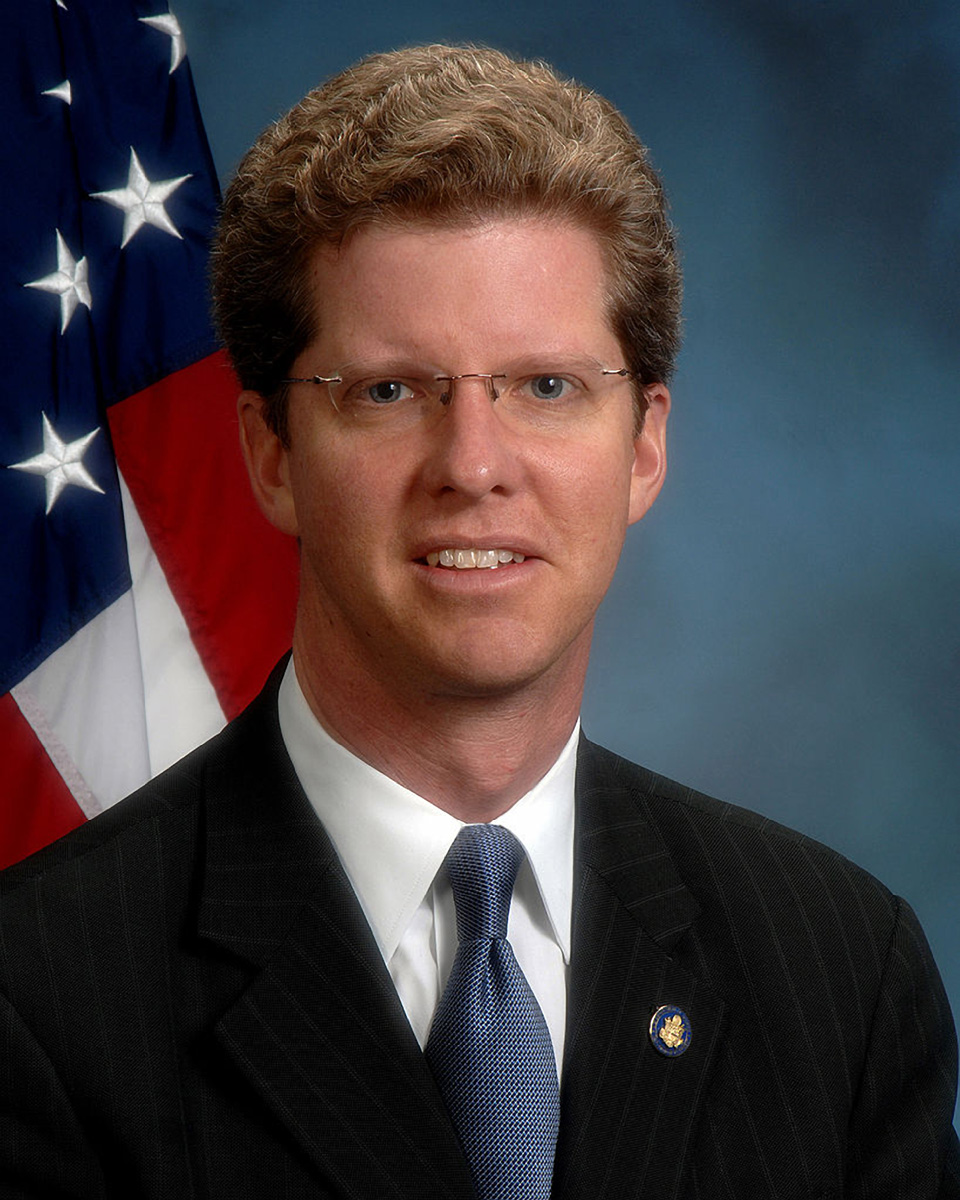
“This proposed rule represents a 21st century approach to fair housing, a819px-Shaun_Donovan step forward to ensuring that every American is able to choose to live in a community they feel proud of — where they have a fair shot at reaching their full potential in life,” HUD Secretary Shaun Donovan said.

Donovan continued: “For the first time ever, HUD will provide data for every neighborhood in the country, detailing the access African American, Latino, Asian, and other communities have to local assets, including schools, jobs, transportation, and other important neighborhood resources that can play a role in helping people move into the middle class.”

CNSNews.com reports:

“According to HUD, long-term solutions include “helping people gain access to different neighborhoods and channeling investments into under-served areas.” The mapping tool may guide development and zoning decisions, for example.

In a July 16 speech to the NAACP, Donovan said the American Dream still isn’t within equal reach of all communities. He lamented the lack of diversity in America’s boardrooms, schools, and the nation’s “strongest neighborhoods.”

“We have got to shape a future where ladders of opportunity are available for all Americans,” Donovan said. “For African Americans, this is critically important. Historically, for this community, the rungs on these ladders have been too far apart -– making it harder to reach the middle class.”

Donovan said HUD’s new neighborhood mapping tool, which uses Census data, will “expand access to high opportunity neighborhoods and draw attention to investment possibilities in under-served communities.”

HUD requires grantees, including cities, that receive federal housing funds to adhere to the Fair Housing Act, which means to “affirmatively further fair housing.”

HUD, under the proposed “fair housing” rule, will be able to evaluate patterns of so-called integration and segregation, racial and ethic concentrations of poverty and access “valuable community assets,” CNSNews.com elaborates.

This is nothing but another blatant example of social engineering by the federal government and an infringement on tour property rights

According to HUD, long-term solutions include "helping people gain access to different neighborhoods and channeling investments into under-served areas." The mapping tool may guide development and zoning decisions, for example.

In a July 16 speech to the NAACP, Donovan said the American Dream still isn't within equal reach of all communities. He lamented the lack of diversity in America's boardrooms, schools, and the nation's "strongest neighborhoods."

"We have got to shape a future where ladders of opportunity are availabledetroit.si for all Americans," Donovan said. "For African Americans, this is critically important. Historically, for this community, the rungs on these ladders have been too far apart —making it harder to reach the middle class."

Donovan said HUD's new neighborhood mapping tool, which uses Census data, will "expand access to high opportunity neighborhoods and draw attention to investment possibilities in under-served communities."

"Make no mistake, this is a big deal," Donovan said. "With the HUD budget alone, we are talking about billions of dollars. And as you know, decades ago, these funds were used to support discrimination. Now, they will be used to expand opportunity and bring communities closer to the American Dream."

Under the Fair Housing Act, HUD requires grantees, such as cities, that receive federal housing funds to "affirmatively further fair housing."

Under the proposed rule, the neighborhood data provided by HUD will be used to evaluate patterns of integration and segregation, racial and ethnic concentrations of poverty, and access to "valuable community assets." HUD wants to know if existing laws and policies — such as zoning, financing, infrastructure planning and transportation — create, perpetuate or alleviate segregation.

The proposed rule explicitly incorporates fair-housing decision-making into existing planning processes and other decision-making that influences how communities and regions grow and develop.

There is no enumerated power for Congress specified in Article I, Section 8 of the Constitution to interfere with local communities and how people decide to conduct their lives. Yet When Congress created HUD they gave them broad administrative and unchecked powers to put forth regulations that did exactly what Congress could not do according to Article I, section 8 and the Ninth and Tenth Amendments. This is the power of the administrative state.

Suppose you worked hard, saved your money, and bought your dream home in a beautiful gated community. You wanted to live here because you not only lover the amenities offered by the HOA, such as tennis courts, pools, and community meeting halls. You didn’t much care who your neighbors were and figured it they could afford to live in this community they had a right to be here and would make good neighbors. Perhaps some of your neighbors were Black or Hispanic. Perhaps they were Asian. It didn’t matter. You all had one thing in common. They qualified financially to live in the community.

I doubt if there would be any welfare recipients living in your community. Now HUD will map your community and discover that it is not “diverse” enough to suit some bureaucrat in Washington, D.C. They will notify your town council and mayor of this fact and impose sanctions if this condition is not changed to their model. They could do this through denial of block community grants and even civil rights law suits. Somehow the federal government will have to subsidize families to move in even if they have to use the power of eminent domain (see Kelo v. City of New London). Kelo was a case decided in 2005 by the Supreme Court of the United States involving the use of eminent domain to transfer land from one private owner to another private owner to further economic development. In a 5–4 decision, the Court held that the general benefits a community enjoyed from economic growth qualified private redevelopment plans as a permissible "public use" under the Takings Clause of the Fifth Amendment.

The case arose in the context of condemnation by the city of New London, Connecticut, of privately owned real property, so that it could be used as part of a “comprehensive redevelopment plan.” However, the private developer was unable to obtain financing and abandoned the redevelopment project, leaving the land as an empty lot, which was eventually turned into a temporary dump.

The big difference this time is that the land won’t be turned into a dump as HUD will provide the money for the welfare family to obtain the house next door and pay the association dues. This will be a direct infringement on your property rights.

This HUD ruling will affect every community in the United States. HUD will control decisions of local planning commissions. They will dictate who builds what and where they build it. Land developers and home builders will be mandated to provide “diversity” in the communities they create. HUD will make sure mortgage companies follow the diversity rules when they issue mortgages, even if the mortgagor can’t financially quality.

HUD will also further step up fair housing enforcement. In the past three over $54million in compensation has been awarded to 25,000 people who were wrongly discriminated against as a result of enforcement actions, Donovan noted.

By disseminating this information, HUD believes the original Fair Housing Act, signed into law in 1968, will be modernized for the 21st century,

This inequality comes from real estate agents showing fewer available properties to minorities than to equally qualified whites, Donovan explained, adding that ‘because of the subtle nature of this discrimination, often times, they don’t even know they have been subjected to this abuse.

If you think Detroit is bad wait until the central planners in Washington, D.C. come to your neighborhood.

Monday, May 28, 2012

Will Liberals Ever Grow Up?

“To act on the belief that we possess the knowledge and the power which enable us to shape the processes of society entirely to our liking, knowledge which in fact we do not possess, is likely to make us do much harm.” — Friedrich August von Hayek

I was driving along the one of the main roads in my own when I came up behind a new UV stopped for a traffic light. On the left side of the rear window was an Obama 2012 sticker and on the right side was a sticker proclaiming that the driver was a proud mom of a daughter in the United States Air Force.

As this was the first Obama bumper sticker I had seen in my neighborhood I just had to pull up alongside of the driver at the next light, which I managed to do without being too obvious. When I was next to the SUV I noticed it was almost brand new and was one of those big V-8 GMCs. The driver, a woman in her late 40s or early 50s was bedecked rings and bracelets and had a rosary hanging from the rear view mirror.

Upon seeing her I thought what a dichotomy. Here was an adult woman with a daughter in the military and member of a church that the very president she was supporting was trampling on its rights. How could this be possible? She was driving vehicle Obama was against, praying to a God whose church we was dictating polices against its beliefs, and honoring a daughter in a military he was trying to emasculate. I guess you just can’t figure out some liberals.

Ever wonder why conversations with adults often leave you feeling like you were arguing with teenagers? Take heart, you're not alone: author Diana West, in her latest book, The Death of the Grown-Up: How America's Arrested Development is Bringing Down Western Civilization, explains how and why America has become a nation overrun by adolescent minds disguised as mature adults. The brief description of the theme of the book states:

“WHERE HAVE ALL THE GROWN-UPS GONE?” That is the provocative question Washington Times syndicated columnist Diana West asks as she looks at America today. Sadly, here’s what she finds: It’s difficult to tell the grown-ups from the children in a landscape littered with Baby Britneys, Moms Who Mosh, and Dads too “young” to call themselves “mister.” Surveying this sorry scene, West makes a much larger statement about our place in the world: “No wonder we can’t stop Islamic terrorism. We haven’t put away our toys!” As far as West is concerned, grown-ups are extinct. The disease that killed them emerged in the fifties, was incubated in the sixties, and became an epidemic in the seventies, leaving behind a nation of eternal adolescents who can’t say "no," a politically correct population that doesn’t know right from wrong. The result of such indecisiveness is, ultimately, the end of Western civilization as we know it. This is because the inability to take on the grown-up role of gatekeeper influences more than whether a sixteen-year-old should attend a Marilyn Manson concert. It also fosters the dithering cultural relativism that arose from the “culture wars” in the eighties and which now undermines our efforts in the “real” culture war of the 21st century—the war on terror. With insightful wit, Diana West takes readers on an odyssey through culture and politics, from the rise of rock ‘n’ roll to the rise of multiculturalism, from the loss of identity to the discovery of “diversity,” from the emasculation of the heroic ideal to the “PC”-ing of “Mary Poppins,” all the while building a compelling case against the childishness that is subverting the struggle against jihadist Islam in a mixed-up, post-9/11 world. With a new foreword for the paperback edition, "The Death of the Grown-up," is a bracing read from one of the most original voices on the American cultural scene.”

Cindy Simpson writes in the American Thinker:

“Although West makes numerous compelling and superbly crafted observations, she intentionally offered no specific conclusions as to the impact of her thesis in the realm of politics, stating: "I'll leave it to someone else to argue whether being a grown-up is the same as being a conservative." But a look at the Obama '08 election and the 2012 campaign does reinforce this extension of her assertion: In general, juvenile minds vote liberal; mature minds lean conservative. (And I'll leave it to someone else to argue whether being a conservative is necessarily the same as being a Republican.)

Like the analogy of the kindergarten election where one candidate offers free ice cream in exchange for votes and the other valiantly campaigns on serious issues, the ice cream wins. Obama's enticing "blank slate" flavors, labeled with catchy bumper-sticker slogans, were full of hopey-changey ripples and fair-share chunks, served up in an unvetted waffling cone.

The problem for Obama, though, this time around, is that his concoction has melted into a sticky economic goo, and the media-protected cone of his narrative is starting to crumble. Not to worry, says Obama, urging his troops: "Forward!" while his straw men pass out napkins, blaming Bush and those nasty Republicans for the mess and offering yet more distracting delights in newly packaged flavors. The poor attendance at Obama's campaign kickoff in Ohio, however, may be a sign that the crowd's tummies are feeling the need for more than sweets.

It remains the job of party-pooper grown-ups to save the day: to truthfully evaluate the situation, take steps to clean up, and formulate solutions to prevent a recurrence.”

……

“Entrenched notions of moral and cultural relativism and relative truth have manifested into a mushy, adolescent thoughtlessness -- a superficial reasoning justified by chin-raised assertions of tolerance and "coexistence" -- an intellectual laziness wrapped in the deceptive guise of "multiculturalism" and "inclusiveness," reinforced by society's lack of barriers and boundaries and "embrace of nonjudgmentalism that create[s] a cocoon of unreality."

Such ideas have infected and arrested the mental maturation of adults in both political parties. Lately it seems the only major differences between party platforms relate to economic philosophy, with both Democrats and Republicans tiptoeing around implications of societal or cultural issues. Many Republicans have mothballed traditions that once defined The Conservative Mind and describe themselves as "economically conservative, socially liberal" -- which often seems to translate into a rather childish "I just want to keep what's mine" combined with a "whatever" on everything else. West warns, however, that much more than a healthy economy is at stake: Western civilization -- with its Judeo-Christian foundation and hallmarks of "liberty, prosperity, and human rights."

"Authority and reason," argues West, have given way to "novelty and feelings." Youthful minds assert "I feel, therefore I am moral," creating an "ersatz morality." Emotional appeals, such as Biden's "who you love," sound more like lyrics to a rap song instead of a trailhead marking the slippery slope away from a thousands-year-old foundation of Western culture. Obama's new pro-gay-marriage rainbow, besides yielding a huge pot-o-gold from mega-donors, was drawn to encourage young voters to the polls -- with the revelation that his evolutionary views were shaped by recent conversations with his teenage daughters.”

Generally, liberals and progressives tend to rely upon emotion to push their agenda, while conservatives tend to rely more on pragmatism. Raising the minimum wage to theoretically provide a "living wage" to the poor sounds good, but the reality has generally been higher unemployment of the lower-wage-earners. And if raising the minimum wage is such a great thing why not raise it to 40 or 50 thousand per year?

Take the OWS gang that wants forgiveness of their college loans — loans they willing took to pay for in many cases a useless education. Now they expect the taxpayers to pay off these loans. So how do they go about this? They protest in the streets against the banks that made the loans not against the colleges that overcharged for their substandard education.

The president's re-election strategy is another example. Normally, an incumbent seeks re-election based upon his record and accomplishments. Not this time, apparently. Instead, the focus is to tap into people's emotions by trying to portray Gov. Romney as a cold-hearted businessman who enjoys firing people. The ads to this effect have thus far been based upon the emotional outpourings from former workers at one particular steel plant who lost their jobs under Bain Capital management when the steel plant went bankrupt. The reality is that Gov. Romney left Bain to oversee the Olympics two years before the bankruptcy in question; further, the facts are clear that Bain, under Romney, invested private funds in other steel companies that have thrived, even to this day. Even some liberals have come out in defense of Bain and private equity firms in general. Bain Capital's function was to make money for its investors and shareholders, not specifically to create jobs, and overall, the people at Bain did a good job of both. As in the private sector, there are sometimes companies and positions that just are not economically feasible to retain, and the same is likely very true of our bloated federal government. If Romney were president, the people would in effect be his investors and shareholders, and he should look at the government structure the same way. Upon which portrayal should voters view Romney: one based on limited emotional outpourings or a more complete, realistic review of the bigger picture?

Economist Walter Williams often writes about the analogy Bastiat’s Broken Window example something I have written about before. Williams states in a recent Townhall article:

“…It's not just disasters in Japan. After Florida's devastating 2004 hurricane, newspapers carried headlines such as "Storms create lucrative times." and "Economic growth from hurricanes could outweigh costs." Economist Steve Cochrane added, "It's a perverse thing ... there's real pain, but from an economic point of view, it is a plus."

Why might Japan's and Florida's devastation be seen as "pluses"? French economist Frederic Bastiat (1801-1850) explained it in his pamphlet "What is Seen and What is Not Seen," saying, "There is only one difference between a bad economist and a good one: the bad economist confines himself to the visible effect; the good economist takes into account both the effect that can be seen and those effects that must be foreseen."

Bastiat elaborated further in his "Broken Window Fallacy" parable where a vandal smashes a shopkeeper's window. A crowd forms, sympathizing with the shopkeeper. Soon, someone in the crowd suggests that instead of a tragedy, there might be a silver lining. Instead of the boy being a vandal, he was a public benefactor, creating economic benefits for everyone in town. Fixing the broken window creates employment for the glazier, who will then buy bread and benefit the baker, who will then buy shoes and benefit the cobbler and so forth.

Bastiat says that's what's seen. What is not seen is what the shopkeeper would have done with the money had his window not been smashed. He might have purchased a suit from the tailor. Therefore, an act that created a job for the glazier destroyed a job for the tailor. On top of that, had the property destruction not occurred, the shopkeeper would have had a suit and a window. Now he has just a window and as a result, he is poorer.”

This emotional portrayal of Gov. Romney is also a major campaign point, arguing that being a highly successful businessman is no qualification for being president. Gov. Romney, of course, also has executive experience as governor of a major state. he private sector is what drives our economy, and private-sector experience is logically a valuable asset. Yet if anyone dares to point out the reality that president Obama had lesser qualifications and no private-sector experience when elected in 2008 — his qualifications consisting of having been a community organizer in perhaps America's most corrupt city, state legislator in one of the most corrupt states, and a less than a one-term U.S. senator — such a person or entity is attacked as being focused on the past, hateful, or even racist.

Perhaps an even better insight into the tendency to use emotion as a political tool can be found in the political rhetoric based on focus groups. Words and phrases are chosen that are designed to appeal to people's emotions rather than their logic. For example, liberals no longer use the phrase "government spending," instead now calling it "investment." Instead of saying a budget proposal will raise taxes, they say it will be revenue-positive. In effect, revenue has become liberal code for taxes. This is part of an organized effort to disguise the reality of something most people oppose on a pragmatic level and make it more attractive on an emotional level. Is this just politics as usual? Yes, but it is essentially dishonest to the point of causing serious damage to our nation's economy.

Liberals and progressives like children live in cocoon. It's comfortable living in a cocoon — associating only with those who share your views, reading journalism and watching news that only reinforces them, avoiding those on the other side of the cultural divide.

Liberals have been doing this for a long time. In 1972, the movie critic Pauline Kael said it was odd that Richard Nixon was winning the election, because everyone she knew was for George McGovern.

Kael wasn't clueless about the rest of America. She was just observing that her own social circle was politically parochial and could see only one side of the political spectrum — the left. She could not fathom the thoughts, desires, and ambitions of those outside of her liberal, progressive circle in a part of the country liberals refer to as “fly over country.” In the mind of the progressive liberal these folks just don’t exist for anything more that feeding us and fighting our wars.

Michael Barone writes in Human Events that Cocooned liberals are unprepared for political debate:

“The rest of us have increasingly sought out comfortable cocoons, too. Journalist Bill Bishop, who lives in an Austin, Texas, neighborhood whose politics resemble Kael's, started looking at national data.

It inspired him to write his 2009 book "The Big Sort," which describes how Americans since the 1970s have increasingly sorted themselves out, moving to places where almost everybody shares their cultural orientation and political preference -- and the others keep quiet about theirs.

Thus professionals with a choice of where to make their livings head for the San Francisco Bay Area if they're liberal and for the Dallas-Fort Worth Metroplex (they really do call it that) if they're conservative. Over the years the Bay Area becomes more liberal and the Metroplex more conservative.

But cocooning has an asymmetrical effect on liberals and conservatives. Even in a cocoon, conservatives cannot avoid liberal mainstream media, liberal Hollywood entertainment and, these days, the liberal Obama administration.

They're made uncomfortably aware of the arguments of those on the other side. Which gives them an advantage in fashioning their own responses.

Liberals can protect themselves better against assaults from outside their cocoon. They can stay out of megachurches and make sure their remote controls never click on Fox News. They can stay off the AM radio dial so they will never hear Rush Limbaugh.

The problem is that this leaves them unprepared to make the best case for their side in public debate. They are too often not aware of holes in arguments that sound plausible when bandied between confreres entirely disposed to agree.”

Because liberals are unprepared for adult debate they fall back on emotional arguments and personal attacks. If you don’t believe me spend some time watching Fox News with their “fair and balanced” coverage and then watch MSNBC or CNN to see totally one-sided coverage of an issue with a panel of Pauline Kaels all agreeing with each other and attacking conservatives. Even it they do have a conservative on the show they will gang up on him or her in the manner of a gang of school yard bullies.

Simpson Continues:

“West referred to anthropologist Margaret Mead who described the "abdication of the adult": "When mothers cease to say, 'When I was a girl, I was not allowed...' and substitute the question, 'What are the other girls doing?' something fundamental has happened to the culture."

Peer approval greatly influences immature minds. It's the juvenile thinkers that call others names like "racist" and "birther" (and are especially fearful of being called such names themselves), protest with actual sticks and stones, and bully those who don't agree with them. Gray-haired ponytail types dominate college campuses, teaching groupthink to the next generation. Wrinkled fans esteem botoxed rock stars as political gurus, who twitter wisdom like: "If ROMNEY gets elected I don't know if I can breathe same air as Him & his Right Wing Racist Homophobic Women Hating Tea Bagger Masters."

Perpetual adolescents also feel entitled to believe that the world revolves around them instead of truth and reality. "Our first adolescent president" exemplified the value that lies are only bad when caught, and even then, supposedly grown-up Republicans accommodated childish arguments over the meaning of simple words and allowed Clinton to walk away unscathed. Incapable of rationally debating with adults, juvenile minds tend to react with emotional comebacks: "So why do you hate me?!" Sound familiar?

Saying "no" to children elicits the same responses as saying "no" in politics. And when conservatives say "no," their views are characterized as a "vast right-wing conspiracy," "hate," a "war against women," or flat-earth thinking. “

Today, of course, the mainstream media bewail how polarized the political landscape has become. They fret over the violent language, the dirty tricks, the lack of dialogue. But what they are fretting about is that there has over the past thirty years appeared a point of view that disagrees with the flocked ranks of Liberalism. It is the point of view held by 40 percent of the American people compared to their 21% with Republicans trending more conservative from 62 to 71 percent (according to a recent Gallup Poll). It is the point of view that has dominated politics since Ronald Reagan's election and gained emphasis since President Bill Clinton threw up his hands and said, "The era of big government is over." It was in retreat in the last years of George W. Bush and perhaps the first six months of President Obama, but now it is again gaining dominance throughout the land. The problem is, however, that no matter what the liberals decry the mainstream media has no place for conservative voices. For this you need to turn to print journalism or the Internet.

Ms. Simpson concludes:

“Tocqueville warned of the nanny state and the power of despotism as resembling "parental authority if, fatherlike, it tried to prepare its charges for a man's life but on the contrary, it only tries to keep them in perpetual childhood."

Grown-ups see beyond the distractions and are despised by those who, as Robert Knight noted, "openly wish their opponents were dead. In the Washington Post, the far-left cartoonist Tom Toles showed a man holding a book in front of two men. He says, 'If anyone here objects to the marriage of these two men, speak up now because opponents are aging and dying off and soon won't matter anymore.' In the lower right corner, a man at a desk says, 'Is it okay to yell "hurry up"?'"

Restless and tired of "austerity," France elected the ice cream socialist who promised to expand, as Thomas Lifson described, "the welfare state even beyond the generous cradle to grave cocoon in which the French state lovingly wraps its citizens." While the majority apparently voted in "favor of heading straight for the fiscal cliff, pedal to the metal," wealthy French citizens are planning to get off the bus and head elsewhere, leaving the kids behind to ultimately realize (to paraphrase Margaret Thatcher): Socialism is great until daddy's wallet is empty, he moves away, or he can no longer provide because Toles et al urged him to hurry up and die -- and take his old-fashioned ideas with him.

To paraphrase West: Grown-ups must put an end to being taken for a ride by the kids in the backseat, and station real adults behind the wheel of our government. More than "stand athwart history, yelling stop" -- we must shift -- not always into "forward," but even reverse at times, to find our way back to the road that leads to the shining city on the hill.”
Friday, April 6, 2012

Will We Have To Buy Broccoli?

"Socialism, like the ancient ideas from which it springs, confuses the distinction between government and society. As a result of this, every time we object to a thing being done by government, the socialists conclude that we object to its being done at all. We disapprove of state education. Then the socialists say that we are opposed to any education. We object to a state religion. Then the socialists say that we want no religion at all. We object to a state-enforced equality. Then they say that we are against equality. And so on, and so on. It is as if the socialists were to accuse us of not wanting persons to eat because we do not want the state to raise grain." — Frédéric Bastiat (The Law)

"Liberal commentators were shocked this past week when in three days of oral argument in the lawsuits challenging ObamaCare, five Supreme Court justices — a majority — asked questions strongly suggesting they think the legislation is unconstitutional. The justices are not the only federal officials who take an oath to uphold the Constitution. So do the president and vice president, Cabinet members and other appointees, and every member of Congress. That means that every federal official has an obligation to act in line with the Constitution as he or she understands it. And that doesn't necessarily mean obeying Supreme Court decisions. Clearly the two parties are divided on the constitutionality of the ObamaCare mandate. Polls have shown large majorities of voters (We The People) think the provision is unconstitutional, though one can wonder whether many have given the matter much thought. But they're certainly giving it more thought after this week and will likely give it more when the decision comes down. Voters can reasonably ask candidates for Congress their views on this and other constitutional issues and call on them to vote against measures they consider beyond Congress' constitutional powers.

Finding herself with a bit of time on her hands, Justice Ginsburg swung by Cairo last month to help out the lads from the Muslim Brotherhood building the new Egypt: 'I would not look to the United States Constitution if I were drafting a constitution in the year 2012,' she advised them. Instead, she recommended the Canadian Charter of Rights and Freedoms and the European Convention on Human Rights. That's why the fate of the republic will come down to a 5-4 vote. Because four-ninths of the constitutional court thinks the American constitutional order is as out dated as a 2006 BlackBerry. If the establishment wants to invent a new 'right' — i.e., yet another intrusion by government — it goes ahead and does so. If it happens to conflict with this year's constitution, they rewrite it. The United States is the only Western nation in which our rulers invoke the Constitution for the purpose of overriding it — or, at any rate, torturing its language beyond repair. Thus, in [the] debate on whether ObamaCare is merely the latest harmless evolution of the interstate-commerce clause, the most learned and highly remunerated jurists in the land chewed over the matter of whether a person, simply by virtue of being born, was participating in a 'market.' Had George III shown up at the Constitutional Convention to advance that argument with a straight face, the framers would have tossed aside the quill feathers and reached for their muskets."

Paul Krugman is no beginner when it comes to economic fallacies. From calling for a Federal Reserve-engineered housing bubble to bring the U.S. out of the dot-com recession to actually declaring that there is a free lunch to be enjoyed with money-printing, the Keynesian bulldog has proven himself totally ignorant of the concept of scarcity.

Scarcity, of course, is the sole reason why men economize and produce. It is the means to achieve food, water, shelter, and all other goods which allow the species to survive. If there is no scarcity, there is no market economy. Scarcity implies opportunity costs, as nothing comes without a cost in terms of time and quantity. Purchasing an ice cream cone on a hot day means that money spent can't be used for anything else. Going for a drive on a Friday afternoon means that time spent driving can't be spent enjoying other activities.

Scarcity is a simple concept with broad implications. When a Nobel Prize-winning economist appears incapable of understanding it, one must question the true intent of his writing or the value of a Nobel Prize.

There are examples abound in his recent New York Times column "Broccoli and Bad Faith." With the Supreme Court hearing arguments over the constitutionality of President Obama's keystone health care law, Krugman is worried that the high court may strike down the bill over its breaching of Constitutional authority by mandating U.S. citizens purchase health insurance.

But being a big-government cheerleader, Krugman has no qualms about whether the law is Constitutional or not. His only worry is the downtrodden being incapable of making their own decisions. He writes:

“Removing the mandate would make the law much less workable, while striking down the whole thing would mean denying health coverage to 30 million or more Americans.”

Striking down the law denies coverage? In non-Orwellian terms, what Krugman means to say is that by not forcing individuals to purchase health insurance, they are denied such coverage. To understand this claim, just apply Krugman's logic to any economic sphere. Say the government could force everyone to buy food under penalty of imprisonment or death in order to cease starvation. Regardless of the kinds of unintended consequences that would follow such legislation, Krugman could then argue that abolishing such a measure would deny millions from having a full stomach. I refer to Bastiat’s quote above …” It is as if the socialists were to accuse us of not wanting persons to eat because we do not want the state to raise grain." Perhaps Krugman should read something besides Moore’s Utopia of Hobbes’ Leviathan

This is an appropriate point in this blog to insert a little video clip of Milton Friedman taking the lefty progressive Phil Donohue to school. Click here to view this interesting and informative video/

Friedman was a giant. His arguments are simple and concise, which certainly are a requirement to help Liberals like Donahue understand that their thought processes are hopeless. Clearly the vitriol that spews out when they have no arguments left to justify their positions is standard procedure. Yes, every college student, Union Member & Teacher should read Friedman’s writing.

Back to Krugman

It's funny how reasoning works when applied to its full extent.

Krugman proceeds to try to differentiate between broccoli as a good and health insurance as some type of otherworldly service:

“Let's start with the already famous exchange in which Justice Antonin Scalia compared the purchase of health insurance to the purchase of broccoli, with the implication that if the government can compel you to do the former, it can also compel you to do the latter. That comparison horrified health care experts all across America because health insurance is nothing like broccoli.

Why? When people choose not to buy broccoli, they don't make broccoli unavailable to those who want it. But when people don't buy health insurance until they get sick — which is what happens in the absence of a mandate — the resulting worsening of the risk pool makes insurance more expensive, and often unaffordable, for those who remain. As a result, unregulated health insurance basically doesn't work, and never has.”

Pay attention to what Krugman is saying here. When someone buys broccoli from his local grocer, he in no way prevents others from buying broccoli. To believe this, one would also have to believe that broccoli is then in itself not scarce. After all, if Krugman's argument were true, you and I could both walk into the same grocery store, proceed to the produce section where broccoli is available and purchase the exact same piece of the vegetable at the same time. Only under that scenario would my purchasing broccoli not make it unavailable to you. Such is a fantasy ideal, and only possible in the utopia known as the Garden of Eden, where scarcity is nonexistent.

Broccoli, like all consumer goods, requires time, land, labor, and capital to produce. It does not fall from the sky. Farmers who grow broccoli can't in turn use their land to grow other produce. They can't invest their time in other endeavors. The whole market process is based on this state of affairs, where producers are sent signals via consumers by the pricing system so that investment goes into those industries or goods in high demand. This signaling process is necessary because of scarcity. It guides producers toward the most efficient use of resources.

Even an individual mandate for people to buy health insurance doesn't fix this problem. My getting treatment by a doctor means that same doctor is unavailable to offer treatment to you. However, this doesn't validate Marxism, which holds that a market economy is a struggle between exploiters and saps. The market ensures that those who need goods and services most urgently are able to get them through the pricing process and through bidding up the purchasing price. It is a peaceful process as long as private property rights are recognized and upheld. Consumers are free to pay what they will for goods and services, while producers are free to accept the price at their given preference level.

The absence of an uninhibited market is the true disease that plagues the health care industry. Krugman can't admit this, as it flies in the face of his pro-government and devoutly Keynesian ideology.

The individual mandate is ultimately a coercive measure which distorts the harmony of the market process. Try as he might, Krugman can't argue away scarcity with scare-mongering and illogical examples involving free broccoli for all.

Wednesday, December 7, 2011

Have a Heart, Give an Entitlement

In general, the art of government consists of taking as much money as possible from one party of the citizens to give to the other. Voltaire (1764)

There is a nursery rhyme that goes; there once was a lady who lived on a shoe, she had so many children she didn’t know what to do. Well last week there was a report out of Tampa, Florida of just such a lady.

Angel Adams a 37 year-old Tampa woman has 15 children and does know what to do. Unlike the lady who lived in the show Ms. Adams, an unmarried woman with 15 children from three different fathers, knows how to play a system that we have created to promote a sense of entitlement in this country. A woman with 15 kids (and no spouse) complains that people around aren’t doing enough to help her – even though her rent, food and furniture have all been covered by good Samaritans and the government. You have to hear it to believe it!

After watching this video I had a few questions for Ms. Adams. Lady, did you have your pants off maybe too many times in your life? Is that possible? Is it possible? What are you out doing? What are your children out doing? I’d like to know. How many of them are even mowing somebody’s lawn? How many of them are actually out trying to take any job, any job? Not a good job. Any job. What is it you have done? Have you thought about birth control? Here’s an idea. Have you thought about marrying a man? Have you thought about marrying a man or not having kids with a man who isn’t going to jail? Have you thought about, you know, maybe we should slow down on the sex thing? Accountable? I’m not accountable for your life. I am accountable for my life.

If, through my actions or the actions of my children, I break my neighbor’s window I am liable for its repair. In essence I am liable to my neighbor. If, on the other hand, someone else breaks his window I have no liability for it repair. I am not in his debt. If, however, I am a charitable person or have skills as a glazier I can choose to assist him in the repair of the window. That’s what good neighbors and charitable people do.

It quite another thing when government tells me I am responsible to repair is window. Government uses the coercion of its taxing power to force me to assist my neighbor.

Over the years people of charitable hearts and Christian values have elected and allowed politicians to use the coercion of government to help people they believe are in need, something that was once the province of churches and charitable institutions.

When churches and charitable organizations were looking after those members of their community in need there was direct accountability. But, as the politicians and government began to dole out the assistance things changed. Accountability waned and expectations waxed. People began to look to government for more and more entitlements. In a sense America was becoming a game show nation.

Democrats advocate Game Show Government. "Vote for us, and we'll give away cash and prizes. We'll send you a check!" On the other side, certain hardcore Republicans say, "Vote for us, and we'll cut your cash and prizes to the bone! No more checks for you!"

At the turn of the last century and even before, progressives saw children crawling through coal mines and working in factories, and women laboring a gazillion hours a day in sweatshops. And the progressives — both Republicans and Democrats — and the labor movement passed legislation to stop the abuse. Big government can bring about big change, says the standard storyline.

But the biggest game show came in the 1930s with the New Deal, surely named as a wink and a nod to Republican Teddy Roosevelt’s Square Deal. FDR (TR's fifth cousin) sent money, for example, into districts that traditionally did not vote Democrat, but they did after the money flowed their way. He set up Social Security, and people thought well of it, and still do. Never mind that Social Security regularly goes broke. And after several years of the Alphabet Soup, in 1938, according to the League of Nations, the U.S. unemployment rate was 19.8%. But at least FDR was doing something, say his devoted followers. "Vote for us; we'll send you a check!"

LBJ waged war on poverty under the aegis of the Great Society (Utopia, the Ultimate Game Show Government). He instituted Medicare and Medicaid. People felt good about themselves because they were helping the elderly and poor. Never mind that we still have the poor. Never mind that Medicare and Medicaid are broke. But the left will simply tweak and adjust the game show to eliminate poverty in our time. "We'll do it! Just wait and see! Vote for us; we'll send you a check!"

In 1970 Nixon started the EPA to wage war on pollution. In 1971 he imposed wage and price controls. Talk about government intervention, and from a Republican, no less! Never mind that the controls didn't work. Ford had to campaign on WIN: Whip Inflation Now! The EPA has now become oppressive by its overregulation. It now has a giant bureaucratic dictatorship drumming up regulations and enforcing something called “Environmental Justice.”

Liberals and social reformers and big-government believers of both parties capitalize on the game show, selectively recounting the mixed results. They proclaim, government can bring about positive change. We have child labor laws. Eight-hour workdays. The poor and elderly have government health insurance. The environment is cleaner now than before 1970. So, the private sector needs to work together with big government, and big government needs to work together with big business and big labor. Unify! Work together!"

The left cleverly markets its tactics to implement its long-term goals in today's political climate. "The rich must pay their fair share. It's economic justice. Conservatives will take away police officers! More rapes and murders will ensue! They're for unclean water and dirty air."

Thus, progressives and reformers have worked their magic in society for many decades, such that if a politician sounds anti-government, he (or she) can never win a national election. Which programs would hyper-conservatives eliminate or cut to the bone? Be specific. State-run programs like insane asylums or hospitals or FEMA? Small family clinics for the poor? A safety net for the genuinely needy? State universities and community colleges? Medicare and Medicaid? Would they send illegals back to Mexico, in armored buses?

The examples could go on, but the trend is clear. Never underestimate" the seductive power of Game Show Government, all in the name of social, economic, and environmental justice. It boils down to "Vote for us; we'll send you a check!" Now our checks are no good because our account is overdrawn.

In a poll released Nov. 7, 2011, Gallup reports that 42% of Americans call themselves conservative, while 21% say they're liberal. What about the rest? 37% identify themselves as moderates.

Who are the 37%? Hint: they don't belong to the Tea Party. They're not in the Occupy Wall Street movement. But they are the most powerful constituency in America. They decide elections. Conservatives overlook or scare them, to their own electoral peril.

Nonetheless, too many people still believe in the game show. The 21% do. Maybe a large number of the 37% does, too. Hyper-conservatives scare them. They could never defeat the billion-dollar, sold-out executive producer of the game show: Obama. This is a big reason why libertarians, who are just one class of hyper-conservatives, never come close to winning anything substantive.

Conservatives need strategies that factor in the long monotonous drumbeat of Game Show Government. We must unwind the magic spell over the long haul. We must articulate and sell a vision. Game Show Government is seductive because it offers cash and prizes. It may be here for good, but maybe it can be reduced.

Conservatives must explain why and how government and the private sector can still work together. Conservatives get confused about the differences between libertarianism and conservatism. You're a Republican and not a libertarian because, yes, you believe government has a role to play, and maybe a strong role to boot, but exactly how big or small is open to debate.

Then why do so many conservatives keep coming across as ruthlessly antigovernment? Why don't they articulate a vision for how limited (not emaciated) government has a role to play? Republicans need to advocate a government somewhere between a morbidly obese Uncle Sam and a figure who looks like he just got out of the Andersonville prison camp.

Where would conservatives draw the line on government cuts? What do they offer as an alternative to the game show? An attempted right-wing coup that frightens away the 37% after a hundred years of the game show? Austere self-denial? A mean old white guy who says, "Don't go for the cash and prizes!"? And it's not enough to say, "The Founders said so!" Or "We're broke!" Or "Big government is a tyranny!" However, those three points should be included in the message. Just look at Greece today.

The message needs to be presented — marketed — in a modern way that factors in the game show. Americans are comfortable, and comfortable people don't like sudden electoral changes. Even "centrist" Obama figured that out in Campaign '08. Change is done incrementally — but intelligently, deliberately, strategically, and methodically — in the American Republic in 2011. That's the reality today. Whoever wins the Republican primaries in 2012, conservatives must never underestimate" the magical power of Game Show Government, or they will face electoral defeat in November.

It will take decades to undo the spell, if it can be done. Move slowly, but surely.