Search This Blog

Showing posts with label Energy. Show all posts

Thursday, July 12, 2012

The Slow Demise of Coal

"To take from one, because it is thought his own industry and that of his fathers has acquired too much, in order to spare to others, who, or whose fathers, have not exercised equal industry and skill, is to violate arbitrarily the first principle of association, the guarantee to everyone the free exercise of his industry and the fruits acquired by it." — Thomas Jefferson

Obama stated during the 2008 presidential campaign his dislike of coal as a source of energy and his plans to destroy the coal industry. As part of his hope and change mantra he kept pushing “green energy” as part of his transforming America agenda. He said he did not care if energy costs doubled he wanted America to go green. In four years we have not even come close to going green even though the government has wasted billions of dollars on solar and wind power.

Recent news that President Obama's re-election web page on energy policy didn't include coal on the list of "all of the above" energy sources sparked outrage in coal-producing states like Kentucky, Virginia, West Virginia, Ohio and Pennsylvania. The website had listed oil, natural gas, bio-fuels, wind, solar power and nuclear power but omitted coal, a fossil fuel that left-wing environmental groups despise.

After criticism from members of Congress and conservative bloggers, the753px-2008_US_electricity_generation_by_source_v2 Obama campaign put "clean coal" back on the "all of the above" energy list. The Obama administration now says that coal is an "essential" part of the administration's energy strategy. Coal accounts for 44 percent of electricity production in the United States, and coal mining is a major source of union jobs. Even after the Obama campaign put clean coal back on the list, the attacks and controversy live on, and there is now speculation that Mr. Obama may have done his campaign real damage in battle ground states like Virginia and Ohio.

According to Wikipedia coal accounts for 44.9% of our electrical generation.

Energy Source

Percent

Coal

44.9

Natural Gas

23.4

Nuclear

20.3

Hydro-Electric

6.9

Other Renewables

3.6

Petroleum

1.0

The original decision to leave coal off of the list was exposed by Ed Whitfield, the Republican congressman from Kentucky, who called it a "glaring omission" and relentlessly attacked the Obama campaign for putting coal jobs at risk. Mr. Whitfield has made the case that Mr. Obama and the Environmental Protection Agency have been engaged in a "war on coal." He remains "skeptical" that Obama will "do anything to draw on this resource" and continues to fume at new EPA regulations that threaten to put many coal-burning fire plants out of business.

The Obama campaign gaffe, if it was one, has come at the worst possible time for the president. Republicans in the Senate have been ridiculing his "none of the above" energy strategy. They point to the decision not to build the Keystone pipeline; to the reduction in Interior Department leases for oil and natural gas drilling; to Solyndra-type scandals with renewable energy grants; and to high gas prices.

Even though Obama’s campaign staff has backtracked on their stand on coal the Obama administration, through draconian regulations from the EPA, have slowly been destroying the coal industry causing our costs for electrical energy to go up and displacing thousands of workers — workers who for generations have supported their families by working in the coal industry.

According to a recent report in Bloomberg Patriot Coal, one of the largest producers of coal in the United States, has filed for bankruptcy and terminated over 1,000 jobs. The report states that two of the reasons for Patriot’s actions were the declining cost of natural gas and the increasing cost of coal due to EPA regulations. The report states:

“Patriot Coal Corp. (PCX) sought bankruptcy protection after milder winters and a shift to natural gas sent coal demand to a 24-year low.

The St. Louis-based company’s Chapter 11 petition listed $3.57 billion in assets and $3.07 billion in debts. The filing in U.S. Bankruptcy Court in Manhattan said dozens of the company’s units would join in the filing.

“The coal industry is undergoing a major transformation and Patriot’s existing capital structure prevents it from making the necessary adjustments to achieve long-term success,” Chief Executive Officer Irl F. Engelhardt said in a statement that cited lower thermal coal prices, canceled customer contracts and rising costs for environmental liabilities for increasing pressure on the company in recent months.

Patriot already has a loan to finance operations in bankruptcy and expects its mining operations and customer shipments to continue through the case, the company said in its statement. The $802 million loan, which still requires court approval, is through Citigroup Global Markets Inc., Barclays Bank Plc and Merrill Lynch, Pierce, Fenner & Smith Inc. as joint lead arrangers.

The company intends to “emerge as a viable and strong competitor in the coal industry,” Chief Financial Officer Mark Schroeder said yesterday in court papers. Patriot needs to trim labor costs because of declining prices and demand for coal, along with regulations that will require the company to spend hundreds of millions of dollars on water-treatment facilities and pension benefits in coming years, he said.

The company will also seek court approval to pay employees and continue health-care and other benefits, according to the statement.

Patriot has 13 active mining complexes in Appalachia and the Illinois Basin and controls an estimated 1.9 billion tons of coal reserves, according to its website. It sells thermal coal to electricity generators and metallurgical coal to steel and coke producers.

Wilmington Trust Co., and U.S. Bank NA were among Patriot’s largest unsecured creditors, according to court papers. Wilmington is a trustee to $250 million in notes and U.S. Bank is a trustee to $200 million in notes. The filing listed BlackRock Inc. (BLK), State Street Corp. (STT) and Vanguard Group Inc. as entities that control 5 percent or more of the voting stock in the company.”

The Report continues:

“U.S. coal use in the first quarter was the lowest for that period since 1988, according to the Energy Information Administration. Utilities have switched some power plants to cheaper natural gas as regulations restricting emissions make coal costlier to burn. Gas fell to a decade low in April amid a surplus of the fuel.

This year, Patriot has reduced thermal coal production by more than 4 million tons, trimmed costs and laid off 1,000 employees or contractors, according to a May 9 filing with the U.S. Securities and Exchange Commission.”

In a companion report on energy Forbes reported that the Federal Energy Regulatory Commission (FERC) has filed a petition against the bank in the context of an investigation into the alleged manipulation of energy markets in California and the Midwest. The Forbes report states:

“A petition filed Monday at a federal court in Washington DC revealed that FERC is conducting an investigation into JPMorgan’s “abusive” bidding strategies in energy markets, possibly inflating prices by more than $73 million.

FERC has served JPMorgan with at least two subpoenas since April, as the bank headed by Jamie Dimon has refused to hand over at least 25 emails with potentially sensitive information. The regulator is now asking the court to force the bank to hand those over, while investigating the potential violation of JPMorgan’s “duty to make truthful and non-misleading communications to the Commission and regional energy market operators.”

The regulator is accusing JPMorgan of using at least four “abusive” bidding strategies that have helped it extract “exaggerated” payments from wholesale markets in the Midwest and California. Complaints coming from the California Independent System Operation (CAISO) and the Midwest Independent Transmission Operator (MISO) sparked an investigation into how JPMorgan was potentially gaming the system to its own benefit.”

Obama’s energy policy is a fraud at best. He is pandering to his radical left-wing environmental base. Every time the cost of energy increases it’s tantamount to a tax. Not only does the cost of you electricity go up but so does the costs for food stuffs, goods, and services you purchase that are dependent upon electricity. Supermarkets need electricity to refrigerate their perishable items. Hospitals need electricity to run all of their diagnostic equipment and monitors. In a recent heat wave on the east coast people had no air conditioning causing the deaths of babies and seniors.

Obama’s obsession with green energy, while placating his radical base, is killing the American people. It is causing rising prices and losses in jobs. How is this hope and change working out for you?

Tuesday, July 3, 2012

The Green Energy Agenda

“The latent causes of faction are thus sown in the nature of man; and we see them everywhere brought into different degrees of activity, according to the different circumstances of civil society.” — James Madison, Federalist Paper No. 10, November 22, 1787.

When the New Constitution was being debated by members of the Constitutional Convention in 1787 three leading advocates for the adoption of a new constitution based on a federal form of government based on republican principles were James Madison, Alexander Hamilton, and John Jay. To advance their arguments they published a series of essays, 85 in all, under the name of Publius. These Federalist Papers are used today, especially by the federal courts, to understand the intent of the framers of our Constitution. One of the most important of these Federalist Papers was Number 10 written by James Madison, considered by many to be one of the leading framers of our Constitution, decrying the dangers of factions that were existent in the Articles of Confederations.

In Federalist No. 10 Madison addresses the inherent dangers of “Factions.” He considered factions as a danger to a federalist form of republican government as they would be the basis of a tyranny of either the majority or minority depending how strong these factions were. In Federalist 10 Madison said:

“Among the numerous advantages promised by a well-constructed Union, none deserves to be more accurately developed than its tendency to break and control the violence of faction. The friend of popular governments never finds himself so much alarmed for their character and fate as when he contemplates their propensity to this dangerous vice. He will not fail, therefore, to set a due value on any plan which, without violating the principles to which he is attached, provides a proper cure for it. The instability, injustice, and confusion introduced into the public councils have, in truth, been the mortal diseases under which popular governments have everywhere perished, as they continue to be the favorite and fruitful topics from which the adversaries to liberty derive their most specious declamations. The valuable improvements made by the American constitutions on the popular models, both ancient and modern, cannot certainly be too much admired; but it would be an unwarrantable partiality to contend that they have as effectually obviated the danger on this side, as was wished and expected. Complaints are everywhere heard from our most considerate and virtuous citizens, equally the friends of public and private faith and of public and personal liberty, that our governments are too unstable, that the public good is disregarded in the conflicts of rival parties, and that measures are too often decided, not according to the rules of justice and the rights of the minor party, but by the superior force of an interested and overbearing majority. However anxiously we may wish that these complaints had no foundation, the evidence of known facts will not permit us to deny that they are in some degree true. It will be found, indeed, on a candid review of our situation, that some of the distresses under which we labor have been erroneously charged on the operation of our governments; but it will be found, at the same time, that other causes will not alone account for many of our heaviest misfortunes; and, particularly, for that prevailing and increasing distrust of public engagements and alarm for private rights which are echoed from one end of the continent to the other. These must be chiefly, if not wholly, effects of the unsteadiness and injustice with which a factious spirit has tainted our public administration.”

…….

“The latent causes of faction are thus sown in the nature of man; and we see them everywhere brought into different degrees of activity, according to the different circumstances of civil society. A zeal for different opinions concerning religion, concerning government, and many other points, as well as speculation as of practice; an attachment to different leaders ambitiously contending for pre-eminence and power; or to persons of other descriptions whose fortunes have been interesting to the human passions, have, in turn, divided mankind into parties, inflamed them with mutual animosity, and rendered them much more disposed to vex and oppress each other than to cooperate for their common good. So strong is this propensity of mankind to fall into mutual animosities that where no substantial occasion presents itself the most frivolous and fanciful distinctions have been sufficient to kindle their unfriendly passions and excite their most violent conflicts. But the most common and durable source of factions has been the various and unequal distribution of property. Those who hold and those who are without property have ever formed distinct interests in society. Those who are creditors, and those who are debtors, fall under a like discrimination. A landed interest, a manufacturing interest, a mercantile interest, a moneyed interest, with many lesser interests, grow up of necessity in civilized nations, and divide them into different classes, actuated by different sentiments and views. The regulation of these various and interfering interests forms the principal task of modern legislation and involves the spirit of party and faction in the necessary and ordinary operations of government.”

To mitigate the effects of factions of a federal republic Madison advocated a bicameral legislature where the lower house (House of Representatives) was more responsive to local and factional issues while the upper house (Senate) would be more responsive to the inserts of the various states and national as a whole. This why the members of the lower house were elected by direct popular vote in their various districts and served for a two-year term while members of the upper house were chosen by state legislatures, conventions or governors and serve for a six-year term. Members of the Senate could be recalled by their states. This changed when the Seventeenth Amendment to the Constitution was adopted in 1913. Now Senators are elected by direct popular vote in their respective states.

The Seventeenth Amendment states:

“The Senate of the United States shall be composed of two Senators from each state, elected by the people thereof, for six years; and each Senator shall have one vote. The electors in each state shall have the qualifications requisite for electors of the most numerous branch of the state legislatures.

When vacancies happen in the representation of any state in the Senate, the executive authority of such state shall issue writs of election to fill such vacancies: Provided, that the legislature of any state may empower the executive thereof to make temporary appointments until the people fill the vacancies by election as the legislature may direct.”

Critics of the Seventeenth Amendment claim that by altering the way senators are elected, the states lost any representation they had in the federal government and that this led to the gradual "slide into ignominy" of state legislatures, as well as an overextension of federal power and the rise of special interest groups (factions) to fill the power vacuum previously occupied by state legislatures. In addition, concerns have been raised about the power of governors to appoint temporary replacements to fill vacant senate seats, both in terms of how this provision should be interpreted and whether it should be permitted at all. Accordingly, noted public figures have expressed a desire to reform or even repeal the Seventeenth Amendment. The following states did not ratify the Seventeenth Amendment. It should be noted that Utah (explicitly rejected amendment). Florida, Georgia, Kentucky, Mississippi, Rhode Island, South Carolina, and Virginia did not ratify the Seventeenth Amendment due to the above stated reason.

You might consider that if we did not have the Seventeenth Amendment the Patient Protection and Affordable Care Act (ObamaCare) might not have passed the Senate. Two borderline Senators were Mary Landau of Louisiana and Ben Nelson of Nebraska. Both Senators were from states with Republican dominated legislatures with Republican governors opposed to the PPACA.

Today we are living in a nation controlled by factions. These factions, unlike in Madison’s day, are promulgated from the offices of lawyers, lobbyists, and political activists groups in Washington, D.C. with offices located on “K” Street. Some of the most influential and well financed of these factional groups are the environmentalists, pharmaceutical firms, manufactures, agribusiness, communications, and public service unions. These factions have brought us ObamaCare, Cable TV monopolies, the Environmental Protection Agency, Ethanol, and financial institutions to name a few. They supply the money and political muscle to elect politicians that will advance their cause to the detriment of the nation.

One of the most powerful of these groups is the environmentalist. Over the past 40 years, since the creation of the Environmental Protection Agency (EPA) in 1970, these groups have morphed from conservationists concerned with conserving our natural resources to radical left-wing groups bent on pushing an agenda that is more red than green. They have been able to ban DDT causing the deaths of millions of African children to the effects of Malaria and Dengue fever due to the inability to kill mosquitos, their primary carrier. They have destroyed the coal industry. They have even dictated the light bulbs you can use in your home.

One of the most egregious of their radical agenda is the “Green Energy” movement. We have all heard of scandalous boondoggles of Solyndra and their $500 billion dollar bankrupted solar panel facility. But how many of you have heard of the Ivanpah Solar Panel Facility and their $1.6 billion government investment from the Department of Energy or the brewing scandal over government financed wind farms?

The Ivanpah Solar Electric Generating System will consist of three separate solar thermal power plants in south-eastern California. The facility willIvanpah Solar Electric Generating System consist of fields of heliostat mirrors focusing sunlight on receivers located on centralized solar power towers. The receivers will generate steam to drive specially adapted steam turbines. For the first plant, the largest ever fully solar-powered steam turbine-generator set was ordered, using a 123 MW Siemens SST-900 dual-casing reheat turbine. Final approval was gained in October 2010. On October 27, 2010, California Governor Arnold Schwarzenegger, Interior Secretary Ken Salazar, and other dignitaries gathered in the Mojave Desert to officially break ground on the project.[2] The first phase of the Ivanpah facility is scheduled to be finished in 2013.[8] The project has generated controversy because of BrightSource's decision to build it on ecologically intact desert habitat. Project construction was temporarily halted in the spring of 2011 due to the impacts on desert tortoises, although construction resumed.

The project will occupy about 4,000 acres near Interstate 15 near the California–Nevada border, north of Ivanpah, California, and will be visible from the adjacent Mojave National Preserve, Mesquite Wilderness, and Stateline Wilderness.

The project has received a $1.6 billion loan guarantee from the U.S. Department of Energy. The total cost of the project is about $2,180 million. BrightSource has contracts to sell about two-thirds of the power generated at Ivanpah to PG&E, and the rest to SCE.

The largest investor in the project is NRG Energy, a generating company based in Princeton, N.J., that has put in $300 million. The project has also received an investment of $168 million from Google, but in November 2011, Google announced that they would no longer invest in CSP due to the rapid price decline of photovoltaics, and stopped its research on the project.

Ivanpah Solar Electric Generating SystemWhile solar generated energy may be a very good thing — in fact I have solar panels on my roof — I should be left up to the private sector and utilities to make the investment as they have done coal-fired and natural gas generating plants. Why should the people in Arkansas or Nebraska contribute to federal dollars to guarantee loans for the generation of expensive and perhaps unreliable electricity for California and Nevada? This is really no different that the people of California and Nevada putting their as tax monies into a highway trust fund that finances the building of bike trails in Virginia or Delaware. If the states of California and Nevada want to invest in solar power the people of those states should have a say in the matter.

Wind Farms are another brewing scandal. You may have heard about the controversial Cape Wind project, the country’s first planned offshore wind farm off of the coast of Massachusetts. There are a lot of interests involved — fishermen, environmentalists, residents, aviation, the wind lobby, etcetera — and while the project has been digging around for some federal funding for some time, they did recently get at least the full permitting go-ahead from the Obama administration.

Opponents of the project, however, claim to have evidence that the Obama administration applied undue political “pressure” to the Federal Aviation Administration to get the project green-lighted. Their complaints have garnered the notice of Rep. Cliff Stearns, chairman of the House Energy and Commerce Committee’s Oversight Subcommittee of Solyndra-crackdown fame. Fox News reports:

“The emails that came from the FAA that I have seen obviously shows the White House is pushing the FAA for political reasons,” said Rep. Cliff Stearns, R-Florida.

Audra Parker, the president of the Alliance to Protect Nantucket Sound, an organization that’s working to prevent the wind farm’s development, said her organization has obtained documents she believes are proof the Federal Aviation Administration fast-tracked the project despite safety concerns for local aviation.

A PowerPoint presentation given in 2010 states: “The Secretary of the Interior has approved this project. The Administration is under pressure to promote green energy production. It would be very difficult politically to refuse approval of this project.”

“I think the Cape Wind project is something similar to Solyndra in the sense there’s a lot of pressure from the White House,” the congressman said.

The Fox report continues:

“The White House dismissed Stearns' latest accusations. And Cape Wind spokesman Mark Rodgers said that despite the concerns raised by opponents, the project has been heavily vetted.

"Cape Wind has been through the most comprehensive review of any power facility in the history of the Northeast U.S., and so if we're on any kind of fast track I'd hate to see the slow track," said Rodgers.

In fact, the FAA is again reviewing the project after a federal appeals court overturned the agency's ruling that 130 proposed turbines posed "no hazard" to aviation. Rodgers believes the FAA will once more rule in Cape Wind's favor despite political pressure from opponents.

"We know in the early years there was a lot of political pressure by project opponents to try to prevent the FAA from ever approving Cape Wind. But despite that negative political pressure the FAA has approved this three times after reviewing the full record -- twice during the Bush years, once now in the Obama years, and we're confident when they have this one more decision to make that we'll be approved again," Rodgers said.

Despite the latest efforts to fight the project, Cape Wind hopes to begin building next year. But they are facing multiple lawsuits and the possibility of further delays as both sides -- for and against the development -- charge that politics is playing a role in the battle.”

If you have ever driven across the country, especially in the Mohave DesertFXP_1472 near Palm Springs, California you will see thousands of electric-generating wind farms with many of the wind mill blades not turning. In fact Palm Springs generates much of its electrical power from these wind farms. They stand like silent sentinels to a new age of environmentalism. Most of them were built by private investors who revived tax breaks for the construction. They were considered a capital investment — like any other investment in capital equipment and allowed accelerated depreciation. This is fine as the money was put up by investors that have since bailed out after their depreciation allowance ended and they became a maintenance burden with a negative return on the original investment and were sold to utilities and cities such a Palm Springs.

A few years ago T. Bone Pickens touted the advantages of wind farms across the central plains of Oklahoma, Texas, Nebraska, Wyoming, and Colorado – the “Wind Belt” where once duct storms raved the landscape. Since then Pickens has bailed out of the wind farm technology for energy generation due to the lack of capital investment and the problems in obtaining rights of way for the construction of hundreds of miles of power lines. Pickens has now thrown his financial resources behind natural gas

On July 8, 2009, The Wall Street Journal reported that T. Boone Pickens has postponed plans to build his Texas wind farm. He said the project was stopped partly because existing transmission line capacity wasn't available. His company had planned to build new lines, but couldn't get financing. On the same date, The New York Times, reported that Pickens is committed to purchasing 667 wind turbines and will develop wind projects for them. On his Mesa Power Group website, Pickens said he expected to continue development of the Pampa project, but not at the pace originally expected.

Traveling west on I-80 near Lyman, WY. Note the wind farm in the area of constant wind.<br /><br />http://maps.google.com/maps?q=41.35454000,-110.36963500&spn=0.001,0.001&t=k&hl=enOn December 15, 2010, Nathanael Baker, in an article for www.theenergycollective.com, wrote that Pickens has scrapped plans for wind farms and will instead focus exclusively on natural gas. According to the article, on December 10, 2010, MSNBC reported that "Pickens said low natural gas prices have made utility companies view wind power as too expensive." There are thousands of miles of existing natural gas pipelines across the nation and it is less expensive to build new ones than wind farms and their needed transmission lines. Also natural gas pipelines are underground and do clutter the landscape with thousands of giant windmills. Natural gas is also a clean, plentiful, and cheap fuel to fire electrical generating plants. The environmentalists should love this, but for some reason they do not.

I often bemoan the federal government’s green-energy agenda, not because I take any umbrage with the idea of non-conventional sources of energy, but because the federal government should not be in the business of choosing what those new forms of energy are going to be. The free market is perfectly capable of coming up with viable, affordable, efficient substitutes on its own, thank you very much (think about it — the car was initially an alternative to the horse, you know, and cars are a heck of a lot more environmentally friendly than horses).

The government is not a dispassionate bystander, but rather an entity with both political ambitions and ‘unlimited’ cash at its disposal — it’s too risky that they’ll just waste our money while aiding and abetting a form of energy that doesn’t hold real promise, or isn’t ready for mass production. Which, as we’ve seen with the Obama administration, they frequently do.

What’s worse, going full-on big-government to accomplish your political green agenda only sets up an environment for rent-seeking and crony capitalism, messing with market signals and leading to lord only knows what kinds of corruption. Given that the pro-wind movement has a notoriously powerful lobby, I wouldn’t say no to Rep. Stearns’ suggestion of a federal investigation.

Friday, March 16, 2012

The North Dakota Oil Boom

"The collection of any taxes which are not absolutely required, which do not beyond reasonable doubt contribute to the public welfare, is only a species of legalized larceny. The wise and correct course to follow in taxation is not to destroy those who have already secured success, but to create conditions under which everyone will have a better chance to be successful." — Calvin Coolidge inaugural address, March 4, 1925.

Recently Barack Obama mocked his critics on the issue of gas prices. In his speech last week responding to high gas prices, President Barack Obama insisted that "we can't just drill our way out of" our energy woes. Actually, we can—and if the president wants proof, he should travel to boomtown USA: Williston, North Dakota.

He stated there was no silver bullet and that we were producing more oil than we have in recent years. What Obama did not say was that we were producing this oil on private and state-owned lands where the federal government had no authority to prevent the drilling and fracking operations. This has led to a boom in North Dakota, a state with a population 672,000 (2010 Census).

North Dakota was explored in 1738–1740 by French Canadians led by Sieur de la Verendrye. In 1803, the U.S. acquired most of North Dakota from France in the Louisiana Purchase. Lewis and Clark explored the region in 1804–1806, and the first settlements were made at Pembina in 1812 by Scottish and Irish families while this area was still in dispute between the U.S. and Great Britain. In 1818, the U.S. obtained the northeast part of North Dakota by treaty with Great Britain and took possession of Pembina in 1823. However, the region remained largely unsettled until the construction of the railroad in the 1870s and 1880s.

bakken_shale_oil.topNorth Dakota is the most rural of all the states, with farms covering more than 90% of the land. North Dakota ranks first in the nation's production of spring and durum wheat; other agricultural products include barley, rye, sunflowers, dry edible beans, honey, oats, flaxseed, sugar beets, hay, beef cattle, sheep, and hogs.

For more than a decade, the state has had a strong economy, with unemployment lower than the national average, job and population growth, and low housing vacancies. Much of the growth has been based on development of the Bakken oil shale fields in the western part of the state, but it has also had growth in the technology and service sectors.

According to CNN Money “Thanks to hydraulic fracturing or "fracking" and high oil prices, oil production in the Bakken has exploded.”

“Nationwide there are a handful of shale oil fields that could contain as much as 17 billion barrels of oil, according to a recent study from IHS CERA. That's more than the country's largest oil field, Alaska's Prudhoe Bay.

"It's going to have a major impact on the United States reducing imports," Scott Sheffield, head of Pioneer Natural Resources Company, said Tuesday during a packed roundtable discussion on shale oil at CERA's annual energy conference in Houston.

Sheffield estimates that with the new technology, the country could produce an extra 2 million barrels a day from both the Bakken and from shale oil trapped in existing traditional oil fields.

"If we get 2 million barrels a day, that could have a major impact on world oil prices," said Guy Caruso, the former head of the EIA and now an advisor at the Center for Strategic and International Studies.

The quarter-million barrels a day currently being produced from the Bakken is already partly responsible for the glut of oil seen in Cushing, Okla., one of the United States' main oil storage and distribution hubs. The glut has helped distort U.S. oil prices in relation to the worldwide market.”

The average prices of a gallon of gas and a barrel of oil are near 150-year highs. Most pundits expect them to go higher. Are you ready for $5-per-gallon gasoline?

In a recent speech, President Barack Obama said: “We’re not going to be able to just drill our way out of the problem of high gas prices.” Actually, to a large extent, we can. For proof, let’s compare what’s been happening in California to the extraordinary accomplishments in North Dakota.

According to the Fraser Institute’s 2011 Global Petroleum Survey, California is the worst State in the Nation for its hostility to drilling. In fact, measured against the rest of the world, California ranks 91st.

Thanks to years of placating environmental extremists, California’s anti-drilling regulations make it almost impossible to drill for new oil anywhere in the State, onshore or off. As a result, its production of oil has fallen by nearly one-third in the past 20 years. As oil production has declined, so has tax revenue. Even with several gigantic tax increases during that period, oil revenues in the State are down.

That’s too bad, because California needs every penny of income it can get. It has one of the highest State sales taxes and personal income taxes in the country. Still, it’s not enough. The budget deficit for the coming fiscal year will top $9 billion — the fifth year in a row of billion-dollar deficits. Governor Jerry Brown’s proposed solution? Raise taxes even higher.

So you won’t be surprised to learn that wealthy Californians are fleeing the State as fast as they can. According to census data, almost one-third of its wealthiest residents — those earning $500,000 a year or more — fled the State between 2007 and 2009. On our Left Coast, they won’t drill for oil. And pretty soon, they won’t be able to drill many millionaires, either.

Let’s contrast the near-bankruptcy of the People’s Republic of California with what’s been happening in one of the most independent and entrepreneurial States in the union: North Dakota.

In 1995, the U.S. Geological Survey estimated that there were 150ED-AP008_ccmoor_G_20120309184516 million “technically recoverable barrels of oil” in an area of North Dakota known as the Bakken Shale. In 2008, the number had climbed to 4 billion barrels. Two years later, it had doubled to 8 billion barrels.

Today, thanks to vast improvements in recovery technology as well as the discovery of vast new oceans of underground oil, estimates of “recoverable” oil in the Bakken Shale have tripled to 24 billion barrels. That is more oil than is being produced anywhere else in the United States, including Alaska’s famed Prudhoe Bay. But it’s a small fraction of what is possible.

Experts say that current technology can extract only about 6 percent of the oil they know is underground in North Dakota. Total estimated oil reserves are thus around 500 billion barrels. And new discoveries are happening all of the time.

Let me include an interesting footnote on the subject of “reserves.” In 1980, the oil reserves in the United States were estimated at 30 billion barrels. Yet in the intervening 32 years, this country actually produced 77 billion barrels of oil. In other words, we produced more than 2.5 times more oil than the leading experts said there was 32 years earlier.

Today, the numbers are even more staggering. The amount of “technically recoverable” oil in the United States is estimated at 1.4 trillion barrels. (Please note that is “trillion,” with a “T.”) Unfortunately for us, most of that oil is located in areas Obama says we can’t search for it: in portions of Alaska and in waters off our shores.

Combined with known resources in Canada and Mexico, total recoverable oil in North America exceeds 1.7 trillion barrels. How much is that? Let me put it in perspective: It is more than all the oil the world has used since the first oil well was drilled in Titusville, Penn., 150 years ago.

So far, all I’ve discussed is oil. When natural gas and coal are added to the total, the numbers are clear: We have enough energy reserves in the United States to fuel all of our needs for 100 years, even if we never made another discovery.

Back to North Dakota for a moment. The effect of the bonanza there has been extraordinary. Stephen Moore, writes in the Wall Street Journal that what is happening in Williston, N.D., “is what the Gold Rush might have looked like had it happened in the time of McDonald’s, Wal-Mart and Home Depot.” Moore states in his report:

“When I ask how many people live in Williston, which had a population of 12,000 in 2005, longtime residents shrug and offer different answers: 20,000? 25,000? 30,000? Every night, hundreds of workers sleep in the hulls of their trucks or in temporary housing encampments like soldiers in a war zone. New homes are popping up at breakneck speed. McDonald's is offering workers $18 an hour plus a "signing bonus." In Williston, certainly, America remains the land of opportunity.

All this is thanks to the technological leap forward represented by hydraulic fracking, a process that allows drillers to blast through underground shale rock and pump out oil and natural gas. Projections of how much oil is here seem to grow every year.

In 1995, the U.S. Geological Survey estimated 150 million "technically recoverable barrels of oil" from the Bakken Shale. In April 2008 that number was up to about four billion barrels, and in 2010 geologists at Continental Resources (the major drilling operation in North Dakota) put it at eight billion. This week, given the discovery of a lower shelf of oil, they announced 24 billion barrels. Current technology allows for the extraction of only about 6% of the oil trapped one to two miles beneath the earth's surface, so as the technology advances recoverable oil could eventually exceed 500 billion barrels.”

The State has the lowest unemployment rate in the Nation, at just 3.3 percent. California’s, by contrast, is 11.1 percent. That doesn’t even count the unemployed people who have simply stopped looking for work. The true unemployment number is probably closer to 20 percent.

According to the Census Bureau, North Dakota led the Nation in job and income growth in 2011. While California is losing millionaires every day, North Dakota is creating them faster than anyplace else in the country. But even entry-level positions are benefiting. For example, a job flipping burgers at McDonald’s pays $18 an hour plus a “signing bonus” for new employees.

And while the State of California can’t begin to pay all of its bills — it even issued IOUs last year in place of tax refunds — the biggest argument in North Dakota’s State Capitol is how to spend all of the money that’s pouring in. Legislators in Bismarck have approved hundreds of “shovel ready” infrastructure projects, including roads, bridges, railroads and pipelines. But even while spending more on worthwhile projects, legislators also agreed to cut the State income tax.

What’s happening in North Dakota is a classic example of the one thing that would solve our energy problems everywhere — and most other problems in the economy, too. Unfortunately, it’s the one thing Obama and his team won’t even consider.

The solution is simple: Let the market work.

In his State of the Union address in January, Obama declared that “This country needs an all-out, all-of-the-above strategy that develops every available source of American energy.”

Like so much that comes out of our President’s mouth, the sentence was as misleading as his skilled staff of speechwriters could make it. What he meant was that his Administration would continue pouring billions of dollars into every wasteful alternative energy pipe dream they could think up, while continuing to slap higher taxes and more regulatory handcuffs on the businesses that can actually solve our energy needs and make money (and pay taxes) doing it.

Rather than foster energy independence, Obama wants to make us all dependent. Dependent on government, that is.

Want to reduce unemployment? Increase tax revenues? Get the economy humming again? Truly foster energy independence?

The answer to all of them is the same: Get government off our backs. Let the market work. The results will be amazing. Maybe next year God will grant us a government that’s willing to give it a try.

Tuesday, February 28, 2012

Will The Rising Price Of Gas Sink Obama?

"Excessive taxation will carry reason and reflection to every man's door, and particularly in the hour of election." — Thomas Jefferson

"With the average price of a gallon of gasoline rising 40 cents just last week, President Obama attacked Republicans [Thursday], trying to distract voters from his own failed energy policy. 'The American people aren't stupid,' Obama said. 'You know there are no quick fixes to this problem.' Obama has been in office for three years now. There is plenty the federal government can do to lower gas prices in three years. Problem is, everything Obama has done on energy has been designed to increase Americans' pain at the pump. Yes, oil and gas production is up in the United States. But this is happening in spite of Obama, not because of him. It is being driven entirely by increased production on state and private lands, areas where Obama has little power to shut down production. The reality is that Obama's goal has always been higher gas prices. His Energy Secretary Steven Chu famously told The Wall Street Journal in 2008, 'Somehow we have to figure out how to boost the price of gasoline to the levels in Europe.' And when Obama was asked by CNBC's John Harwood that same year if high gas prices actually 'helped' the United States, Obama said, 'I think that I would have preferred a gradual adjustment.' Americans aren't stupid. They remember Obama's words. They know that the only real regret Obama has about high gas prices is that he may get blamed for them at the ballot box." — Washington Examiner's Conn Carroll

President Barack Obama says there is no easy answer to the problem of rising energy prices, dismissing Republican plans to address the problem as little more than gimmicks. “We know there’s no silver bullet that will bring down gas prices or reduce our dependence on foreign oil overnight,” Obama said Saturday in his weekly radio and Internet address. Obama said Republicans have one answer to the oil pinch: Drill. “You know that’s not a plan, especially since we’re already drilling,” Obama said, echoing his remarks earlier in the week. “It’s a bumper sticker.”

Speaking of bumper stickers, remember “Yes We Can”, Mr. President? No one understands the concept better than the oil and gas industry. The main thing holding domestic energy companies back from making a stronger commitment to future domestic supplies is uncertainty. Capital hates uncertainty, avoids it like the plague. Your rhetoric may appease your radical environmental base, but it makes domestic energy producers hold back, fearful that you will punish their success, or that you will change the rules on them in the middle of the game.

Erasing uncertainty is the #1 thing you can do as a national leader if you truly desire to lower gasoline prices. Not only could it change the psychology of energy investing, there is still time for companies to change their 2012 investment plans.

Here is my humble 10-point plan: Things President Obama could (but won’t) do to reduce domestic gasoline prices by November 2012.

1. Commit to a strategic goal of North American energy security. That includes reasonable and responsible domestic drilling. That includes taking the lead on the Keystone XL Pipeline; we could find a way to make it happen while addressing the legitimate environmental concerns of Nebraskans. It includes a commitment to maintaining the Trans-Alaska Pipeline System and opening ANWR.

2. Ditch the anti-industry, anti-capitalist rhetoric. It is not the President’s or the government’s place to decide when an industry’s profitability is “high enough”. High oil company profits fund more drilling; more drilling means more future supply and lower prices. Besides, American oil companies are not owned by a cabal of wealthy executives, but by America’s pension funds, mutual funds and private investment accounts. “They” are “us”.

3. Stop targeting the oil industry for punitive tax treatment. States such as Texas and Louisiana have production tax abatement programs that have successfully encouraged new drilling. If you don’t believe that the threat of increased taxes discourages drilling, just ask Governor Perry or Governor Jindal.

4. Realize that Uncle Sam is in the energy business and is a partner in industry’s success. Oil and gas royalties are the federal government’s #2 source of revenue, after the income tax. Offshore slowdowns hurt not only industry and jobs, but government revenue.

5. Recognize that industry does not need to be led by government; industry needs to be unleashed and encouraged to innovate. The resurgence of the domestic energy sector was rooted in the private sector, not matter how much President Obama and Dr. Chu would like to take credit for it. The growth in North Dakota, Pennsylvania and Texas happened in spite of the federal government, not because of it.

6. Trust that no oil operator wants to be the “next BP”. The BP spill costthe-andy-griffith-show that company something on the order of $40 billion. Industry safety and environmental commitment is motivated more out of self-interest and less out of fear of the government. When it comes to federal regulation, the nation would be better served by Sheriff Taylor, not Barney Fife.

7. Return offshore permitting to the pre-Macondo pace. Your overreaction to the BP Spill has cost on the order of 500,000 barrels per day of domestic oil production from the Gulf of Mexico. The ridiculous “Worst Case Discharge” calculation as a routine part of offshore permitting is engineering malpractice, in my humble opinion. The professional staff of the Bureau of Safety and Environmental Enforcement is capable of reasoned regulation, but they currently operate in fear of their political masters.

8. Declare hydraulic fracturing & well design to be the regulatory domain of the states, not the EPA. Geology and environment vary widely; Pennsylvania is not Louisiana is not North Dakota is not California. It is insanity to think that one broadly-applied set of rules can be applied to regulate industry without suffocating development.

9. Rescind the recently-enacted royalty rate increase for new onshore Federal oil and gas leases. Secretary Salazar’s stated rationale for increasing the government’s take by a whopping 50% – from 12.5% to 18.75% of gross production – was to equate onshore royalties with the offshore royalty rate. That makes no sense. Higher royalties mean less drilling, poorer economics of production and premature abandonment of wells. Besides, an IHS-CERA Study recently showed that the federal government’s total take of offshore cash flows makes the Gulf of Mexico the second-most punitive fiscal regime in the world, after Hugo Chavez’s Venezuela. In keeping with the First Rule of Holes, rolling back the royalty rate increase may be the first thing the government should do if it is serious about reducing energy prices.

10. Encourage development of a nationwide distribution system of natural gas as a transportation fuel. Natural gas is clean, abundant and nearly 100% domestic. Its potential as a transportation fuel has scarcely been tapped.

Bonus #11: Get real about the promise of alternative fuels. Recently you said: “You’ve got a bunch of algae out there; If we can figure out how to make energy out of that, we’ll be doing alright.” Maybe so, but I will stick my neck out and say it ain’t gonna happen, at least not in my lifetime, not on a scale that will impact pump prices.

Let’s face it the industrialized world runs on petroleum. Fuel to power your SUV is not the only use of oil. There is petroleum in almost everything we use today — from aspirin to shoes and from clothing to road paving. Even my trash cans are made with petroleum. We use oil for almost everything.

Say we want to reduce our dependency on oil is nonsense. Yes, in time we may be able to find other viable sources of energy to power or transportation needs, but it won’t happen under government. Everything the government touches turns to crap — just look at Solyndra. As Herman Cain says, “how’s that working for you?”

As for Europe their gas prices are high due to the incredible amount of taxes they heap on the prices of a gallon or litter of gas. These taxes subsidize their “wonderful, cheap” public transportation and some of their social welfare programs. Do we want that? I don’t think so.

The radical environmentalists and progressive masterminds will tout public800px-Acela_old_saybrook_ct_summer2011 transportation. They will tell is to take the train, light rail or bus like the Europeans. This is another fantasy being promoted by uniformed people. Yesterday I was watching Fox News and saw Shepard Smith touting the ACELA Express Train from NYC to Washington, D.C. This is a train that travels a distance of 456 miles and carries 8,800 passengers per day. Wow, a real contribution to our transportation needs, and its operated by AMTRAK — a highly subsidized operation that lost $1.2 billion in 2010 and was deemed a failure by its founder.

Most private transportation companies have been forced to apply real world solutions in these difficult economic times, yet Amtrak rolls on, acting as if they were exempt from the problem.

An independent 2009 study of Amtrak’s operations and revenue offered some startling facts;

Forty-one of Amtrak’s 44 routes lost money in 2008 with losses ranging from nearly $5 to $462 per passenger depending upon the line, according to analysis by Pew’s Subsidyscope.

“The line with the highest per passenger subsidy—the Sunset Limited, which runs from New Orleans to Los Angeles—carried almost 72,000 passengers last year. The California Zephyr, which runs from Chicago to San Francisco, had the second-highest per passenger subsidy of $193 and carried nearly 353,000 passengers in 2008. Pew’s analysis indicates that the average loss per passenger on all 44 of Amtrak’s lines was $32, about four times what the loss would be using Amtrak’s figures: only $8 per passenger. (Amtrak uses a different method for calculating route performance).

The Northeast Corridor has the highest passenger volume of any Amtrak route, carrying nearly 10.9 million people in 2008. The corridor’s high-speed Acela Express made a profit of about $41 per passenger. But the more heavily utilized Northeast Regional, with more than twice as many riders as the Acela, lost almost $5 per passenger.”

According to the Pew report, only 3 of Amtrak’s 44 lines are making any money. That statement alone might inspire the CEO of the failing rail service to consider cuts and changes. Of course, having more than 20,000 union employees (85% of those folks are covered by collective bargaining) makes it difficult to change anything that might cause a job to be lost, or a benefit diminished.

I have written several articles about the folly of high-speed rail and how it is a waste of the taxpayer’s money. With the exception of long-haul freight America is not a train nation. We use roads — local, regional and interstates for our transportation. We have developed our standard of living around these highways. We live in suburbs and rural areas where we need to get around in our cars and SUVs. We do not. Like the Europeans, live in densely packed urban areas. Germany’s 85 million people live in an area smaller that Montana. Also, why should the people in Montana, Wyoming and Utah pay for a losing rail operation to transport people from NYC to Washington, D.C. or San Francisco to Corcoran?

As for alternative energy we are a long way from a real technological breakthrough. Obama wants algae others want solar, wind or broccoli. Ethanol takes more energy to make than it saves and causes an increase in the price of our food. As for electric cars we need coal or oil to generate the electricity to charge the batteries that will run the car for two hundred miles. There is no free lunch in energy. We run on oil and that’s a fact!

Energy policy will be a President Obama’s key vulnerability in November. His goal has always been to encourage alternative fuels by raising conventional energy prices. Alternative energy may poll well, but the average voter who fills his tank with $4+ gas on the way to the ballot box will certainly “Hope for Change”

Friday, January 27, 2012

Republicans Must Get The Keystone XL Pipeline Underway

"The essence of Government is power; and power, lodged as it must be in human hands, will ever be liable to abuse." — James Madison

Last night the Republicans had another one of those he said, she said useless debates. Romney and Gingrich spent most of the time throwing barbs as each other while Santorum and Paul stood by like wooden Indians. Once again policy and vision took a back seat.

One of the things that has been least addressed in these debates is the Keystone XL Pipeline. With the exception of a sentence by Newt Gingrich several debates one of Obama’s biggest failings is his squashing the approval of a 7 billion dollar project that will create 20,000 good paying jobs and will bring much needed Canadian oil to the refineries on the Gulf of Mexico.

With our campaigner-in-chief’s veto of the Keystone XL pipeline from Canada to sections of the United States, President Barack Obama made what left-wing columnist Joe Klein today called perhaps the worst political mistake of his entire presidency. After all, the scheduled pipeline meant, above all, the potential for perhaps 20,000 jobs immediately and many more in future years.

On January 19th Washington Post, economics columnist Robert Samuleson spelled out the many advantages of the Keystone pipeline. It will not have a major impact on global-warming emissions, as the environmental activist community claims would be the effect if the pipeline were to be approved. Indeed, should Canada instead build a pipeline to the Pacific for Asian export, eventually shipped by tanker to China, there will be even more emissions and the risk of oil spills.

Samuleson stated:

“President Obama’s rejection of the Keystone XL pipeline from Canada to the Gulf of Mexico is an act of national insanity. It isn’t often that a president makes a decision that has no redeeming virtues and — beyond the symbolism — won’t even advance the goals of the groups that demanded it. All it tells us is that Obama is so obsessed with his reelection that, through some sort of political calculus, he believes that placating his environmental supporters will improve his chances.”

But more importantly, rejection means worse relations with our nearby good neighbor, as well as perhaps the loss of thousands of new desperately needed jobs that would help rejuvenate the economy. As Samuleson writes, no matter whether there are less or more than the 20,000 some claim, “it’s in the thousands and thus important in a country hungering for work.” And the pipeline is exactly the type of infrastructure project Obama supposedly favors.

A January 18th editorial in the Washington Post stated:

“Environmentalists have fought Keystone XL furiously. In November, the State Department tried to put off the politically dangerous issue until after this year’s election, saying that the project, which had undergone several years of vetting, required further study. But Republicans in Congress unwisely upped the political gamesmanship by mandating that State make a decision by Feb. 21. Following Wednesday’s rejection, TransCanada promised to reapply — so the administration has again punted the final decision until after the election.

We almost hope this was a political call because, on the substance, there should be no question. Without the pipeline, Canada would still export its bitumen — with long-term trends in the global market, it’s far too valuable to keep in the ground — but it would go to China. And, as a State Department report found, U.S. refineries would still import low-quality crude — just from the Middle East. Stopping the pipeline, then, wouldn’t do anything to reduce global warming, but it would almost certainly require more oil to be transported across oceans in tankers.”

Moreover, by vetoing it, Obama helped our competitor China, which is wondering “how the crazy Americans could repudiate such a huge supply of nearby energy.” Yes, it means we are still going to be dependent upon oil. But let’s face it, Obama’s big green energy push has gone nowhere, as symbolized by the wasted heavy investment in Solyndra and the hype about the electric cars that Americans have ignored completely. Shouldn’t our country have more trade in oil with Canada, rather than have to turn to the Saudis, and to Venezuela, or to other potential and current enemies?

The editorial endorsement of Obama’s veto by the editors of the left-wing New York Times (I have purposefully called the paper “left-wing” rather than “liberal,” since it is a more accurate description of its editorial slant) provides some insight as to what lies behind the veto by Obama. Noting that the State Department has primary jurisdiction over the proposed 1700 mile pipeline, it notes that it would “cross through ecologically sensitive areas in the Midwest.” Thus it favors a new “comprehensive environmental review.”

Keep in mind that reviews and investigations had been carried out, and none of them had concluded that the pipeline posed any real danger. The editors also make charges answered effectively by Samuelson in his column, such as the false claim that it would “cause far more greenhouse gas emissions” than if it was not built. They also argue that much of the refined oil would “be destined for foreign export.” On this issue, Samuelson counters that “this would be a good thing.” The exports would go to Latin America, keep refining jobs in the U.S., and reduce our trade deficit in oil.

So what, then, explains the president’s veto of the project? Here are my thoughts on the answer to this conundrum.

Recall the article appearing a few weeks ago, noting that the Democratic Party has decided to write off the votes of the white working-class in the 2012 election, which it has judged is going to overwhelmingly go to the Republicans. Instead, it has decided to try and increase the vote of the suburban upper-middle class and coastal elites, as well as the vote of college students who had been so enthusiastic about Obama in 2008. Without such an increase to make up for the loss of working-class votes (once a Democratic mainstay), the Democratic policy wonks believe Obama will lose.

On the campuses, and among East and West coast types, environmental activism is the big cause of the day. Unlike working-class voters and even the unions that represent them and put jobs and the economy as their first concern, they like that their hero Al Gore puts nature and the environment first, and always paints a more deadly picture about the condition of the earth than is warranted by the facts. A prime example of this is the column on Huffington Post by the actor-activist Robert Redford, who praises Obama for “standing up” to Big Oil.

In Redford’s eyes, it’s all about Big Oil lobbyists paying off members of Congress to vote for the folly of an environmentally disastrous pipeline. The actor has not one word about the wide breadth of support for the pipeline, including from the AFL-CIO unions that support Obama on almost everything else. But Redford is precisely the kind of Obama supporter whose votes the administration is courting and that they deem as essential for a 2012 victory at the polls.

Killing the pipeline would be financially beneficial to billionaire Warren Buffett, a strong supporter of President Obama. Buffett’s holdings include Burlington Northern Santa Fe LLC, the railroad company that would transport oil through the region in the absence of the new pipeline. I have seen the BNSF trains hauling 100 tank cars loaded with refined oil and ethanol across Nebraska and Iowa.

So if the unions supported the pipeline, as they did, why are they so silent2012-01-20-digest-cartoon-2 now that the president has turned against a proposal they backed? The answer is that I suspect a private deal was made last week: The unions would downgrade their disappointment at the veto of Keystone XL, in return for the president unconstitutionally using his powers to override the Constitution and put in pro-labor recess appointments to the National Labor Relations Board (NLRB), the same board that tried to penalize Boeing for wanting to move its new facility to South Carolina from the state of Washington.

For the unions, a pro-left-wing NLRB is more important for Big Labor to attain all of its goals even if it hurts the spread of corporations to a more hospitable climate where new jobs would be created. This kind of clout as well as promises to support other labor demands that Congress might not sanction but which the president would try to implement by executive fiat are more important in their judgment than having the pipeline built at this moment.

And, in the process, Obama would try to energize the left-wing base in Hollywood and the campuses, which care little about the needs of the working-class and the unions, but respond with passion to the clarion calls of Al Gore, Robert Redford, and Laurie David.

So the president makes his move, and leaves the pipeline for the future while instead he makes his stand in an orchestrated speech to be given at Disney World’s “Main Street,” as far away as possible from any real American main street, and where the ghost of Walt Disney is turning over in his grave to learn what his beloved theme park is being used for.

The president, I think, will need a lot more to win next November than pandering to an invited Florida audience at the nation’s number one dream factory after those in Hollywood.

Mark Alexander writes in the Patriot Post:

“The interesting wrinkle is that Barack Obama, still firmly beholden to envirofascists, continues proving himself greasier than even the pipeline's oil, by giving Congress the Heisman stiff-arm (more accurately, the stiff finger) on its law requiring him to make a decision on Keystone. Since the rejection is technically a "rejection," the Executive Clown Act has technically "decided," fulfilling the letter of the law. However, since the door remains open for reapplication pending development of the alternate route, the rejection is really just semantics, not substance. In other words, Obama voted "present" yet again.

Of course, this Road Runner-vs-Wile-E-Coyote escape perfectly highlights how Republican leaders in Congress continually demonstrate their keen ability to never blow an opportunity to blow an opportunity. The vain hope that caving on the 60-day "payroll tax holiday" bill in exchange for a bill provision that would force the president to make an up-or-down call on Keystone XL proved once again how pathetically malleable these "leaders" are in Obama's hands. Now if Republicans want to force Obama into a decision on the new application, they will have to do so through yet another bill -- one unlikely to pass through both chambers and be signed by the president without more concessions and unchecked Democrat spending, if history is any guide.

All of these antics have underwhelmed a nonplussed Canadian Prime Minister Stephen Harper, who will travel to China next month to discuss "Northern Gateway" options to export oil to China in light of continued U.S. stall tactics (so Canadian oil will likely end up in China rather than America). Harper noted that the U.S. should prefer to deal with a "friendly neighbor" to help meet its energy needs and to create thousands of jobs. Meanwhile, it's obvious we're in an election year, as the administration just released a report touting its ardent support for natural gas "fracking" and fossil fuels. Apparently, however, the Hope-&-Changelings have lost their fracking minds, because for the past three years they have done nothing but try to destroy these industries, from $40 billion tax hikes to EPA over-regulation and meddling to Interior Department foot-dragging on permits. In any case, one thing is for sure: this is yet another Keystone Cop Out.”

This issue should be exploited by the Republican candidates in lieu of their constant bickering over who paid more of less taxes and who worked as a consultant for this firm or that organization.

Friday, December 9, 2011

Let’s Make a Deal — Oil for a Tax Cut

"We are either a united people, or we are not. If the former, let us, in all matters of general concern act as a nation, which have national objects to promote, and a national character to support. If we are not, let us no longer act a farce by pretending to it." — George Washington

Yesterday the Republicans in the House balked at allowing a freeze on Social Security payroll taxes unless Obama’s energy department would give the green light to the Keystone Pipeline. According to Fox News:

“House Republicans are on a collision course with the White House and potentially the Senate over an emerging proposal to extend the payroll tax cut, teeing up a protracted debate that could keep lawmakers in Washington for the holidays as they try to avert a Jan. 1 tax increase.

The Senate on Thursday afternoon rejected rival Democratic and GOP plans for extending the cut. The failure was expected, cueing the House to step in with a new plan.

Details of that proposal, expected to be unveiled in full on Friday, suggest its Republican authors are preparing for a showdown with President Obama. The bill includes a controversial provision to move along the construction of an oil pipeline from Canada to Texas — the Obama administration recently put that project on hold until after the 2012 election, citing environmental and safety concerns.

The provision pertaining to the Keystone pipeline helped sweeten the deal for House conservatives skeptical of a payroll tax extension.

Rep. Lee Terry, R-Neb., told Fox News that a number of Republicans who were on the fence said they would vote for the bill if it includes the Keystone pipeline provision.

House Speaker John Boehner said Thursday he's confident Republicans are ready to move on the proposal.

But Obama explicitly has said he will reject any effort to tie the Keystone pipeline construction to the tax extension. His allies echoed that message Friday.

It's a non-starter," House Democratic Leader Nancy Pelosi said.

Her top deputy, Rep. Steny Hoyer, D-Md., urged Republicans to "reconsider" the Keystone language.

White House Press Secretary Jay Carney warned Republicans not to include "extraneous attachments" in the bill.

"Whatever happened to Republicans being for tax cuts?" Carney asked. "Is it because this one goes to 160 million Americans, middle-class working Americans, that they're ambivalent or they're willing to oppose it if they don't get some political scalp? Is it because President Obama supports it, or Democrats support it?"

At stake is a cut in the Social Security tax valued at about $1,000 a year for the average family.”

Obama wants a $2.74 per day temporary tax reduction that he can tout as a tax cut but will not green light a pipe line that will increase our supply of oil from Canada, reduce our dependence on Middle-Eastern oils and provide 20,000 well-paying jobs for union and non-union workers, something Obama claims he works 24/7 to create.

We are staring into the face of $180-per-barrel oil. Under President Barack Obama, the Nation is not producing enough oil and is importing far too much of it from potential enemies. This is a reckless game engineered by the President, because oil is America’s economic lifeblood.

It recently become apparent that Obama either does not understand the danger the country is facing or, worse, is willing to ignore it because he has conspired with Arab oil exporters to give them dictatorial powers over America’s energy needs and economic future.

The United States is critically dependent on imported oil, consuming almost 10 million barrels of foreign crude every day. That is about three times more oil than the United States imported 25 years ago. With Obama’s restrictions on further oil exploration, especially offshore, the United States may import 18 million barrels per day by 2020.

Petroleum is essential for the United States. With so many hostile governments selling it to us, it would be easy to think that Canada would be America’s energy oasis. The two countries haven’t had so much as a skirmish in 200 years, and more than any other nation, Canada has stood shoulder to shoulder with the United States. So close are the two peoples that I can’t tell the difference between being in Montana or Alberta.

Both Nations have Judeo-Christian values and common law borne from the Magna Carta. American and Canadian men fought and died together during the two world wars.

On the surface it seems like a pretty simple equation: Canada has 180 billion barrels of reserves, second only to Saudi Arabia, the kingpin petroleum producer and de facto leader of the Organization of Petroleum Exporting Countries.

Canada has a democratically elected parliament. The House of Saud is a desert fiefdom run by a few dozen billionaire princes. Whereas Canada has combat troops stationed in Afghanistan killing Muslim militants, Saudi Arabia provides tens of millions of dollars to Islamic terrorists bent on killing Westerners.

Beyond this, Canada has been a rock-solid energy supplier to the United States. In fact, thousands of Americans work in the Canadian petroleum industry, and there are hundreds of U.S. corporations that have a large stake in further developing Canadian petroleum. Scores of Canadian corporations are traded on the New York Stock Exchange. Conversely, Saudi Arabia has nationalized its oil properties, and it implemented two oil embargoes against the United States in the 1970s.

It only makes sense that the United States would sign on to buy more Canadian crude. But with Obama, common sense is not at all common.

TransCanada Corporation is seeking Presidential authorization to build itsMK-BQ952_THEBIZ_NS_20111208185713 $7.5 billion Keystone XL pipeline. The line would transport tar sands crude oil from Alberta through Montana, South Dakota and Nebraska on its way to refineries on the Gulf Coast.

A number of groups, comprised mostly of environmentalists and liberals, have banded together to oppose its construction. Obama is leading the crusade against Canadian crude.

The President said last month: “Because this permit decision could affect the health and safety of the American people as well as the environment, and because a number of concerns have been raised through a public process, we should take the time to ensure that all questions are properly addressed and all the potential impacts are properly understood.”

The President doesn’t seem concerned that 1,661-mile pipeline would deliver 700,000 barrels per day of crude from the oil sands to the United States.

David H. Wilkins, U.S. ambassador to Canada from 2005-2009, wrote:

“The proposed Keystone XL Pipeline offers nothing but promise: tens of thousands of desperately needed jobs, and a big step toward ensuring North American energy security. But in mid-November, promise gave way to politics when President Obama punted on the pipeline permitting decision, delaying it until after the 2012 election. The Wall Street Journal called the decision a “Keystone Cop-Out.”

I call it a catastrophic cop-out, one with certain economic and diplomatic consequences. The decision on the KXL permit was expected before the end of this year and elected officials in both Canada and the United States rightly called it a “no-brainer.”

The project would reduce dependency on petroleum from the Middle East, a region that is rife with civil war. And what of the economic recovery that Obama promised three years ago? You would have to have been in a coma to see that things are no better and that, overall, the U.S. economy might be in worse shape than when he took office.

This gets me back to why the United States should be begging to sign this pipeline deal. It is estimated that the project would create a minimum of 20,000 well-paying U.S. jobs. That economic bonus would span far beyond all those families that could again have a wage earner and would spill over to every part of the economy, from Wal-Mart to mom-and-pop shops.

In fact, the pipeline deal will add more than $20 billion to the U.S. economy. An extra $5.2 billion in State property taxes would be collected.

The United States will have to deal with the consequences of turning its back on Canadian crude. First and foremost, Ottawa is building closer trade ties with Beijing with a great deal of emphasis on a possible blueprint that would deliver Alberta’s oil sands to the West Coast, where it could be delivered via tankers.

Last month, Canadian Prime Minister Stephen Harper met with Chinese President Hu Jintao about future Canadian oil exports to China.

Harper said: “This does underscore the necessity of Canada making sure that we are able to access Asia markets for our energy products.”

Canada is counting on China to be a key investor in Alberta’s oil sands projects and a big buyer of crude which would flow through a proposed Northern Gateway Pipeline if Canada encounters further opposition from the Obama Administration. This will make the United States all the more dependent on Arab oil. You would think Obama would understand this. The truth might be that he understands it all too well.

In a December 9th Op-Ed by John Bussey in the Wall Street Journal the construction of Keystone Pipeline is inevitable. Bussey writes:

“If the Prohibition Era taught us anything about business, it's that demand has a way of finding supply. That was true of whiskey. It will likely also be true of Canada's oil sands and the controversial Keystone XL pipeline.

Keystone XL, or a similar pipeline and set of worries, isn't just inevitable. It's something we should accept to prevent worse alternatives from coming to pass.

The 1,700-mile pipeline, proposed by TransCanada Corp. and blocked for the moment by the White House, is back in the news. Lawmakers in the U.S. Congress are seeking to override the administration and start construction of the pipeline, which would carry oil from the oil sands of Alberta to refineries in Houston. President Barack Obama and Canadian Prime Minister Stephen Harper discussed the matter on Wednesday.

Big corporate names have stakes in the Canadian oil sands: ConocoPhillips, Exxon, Shell, Chevron, Marathon, Statoil, Total, Sinopec and BP among many others.

Environmentalists say the pipeline is a bad idea: "It locks the U.S. into a high carbon form of energy," says Nathan Lemphers at the Pembina Institute in Calgary. "Until there's a national energy policy, these sorts of pipelines will become the surrogate battleground for the environmental movement."

Susan Casey-Lefkowitz of the National Resources Defense Council says the pipeline would promote a dirty and energy-intensive form of oil extraction, pipe that oil through environmentally sensitive areas and aquifers in the U.S., and ultimately keep the U.S. addicted to the wrong sort of fuel, speeding climate change.

Theirs is a compelling argument for abstinence: Until Washington stops dithering and charts a clear road to cleaner energy, remove the temptation to burn more oil by preventing access to supply.

Last month, the White House delayed a yes-or-no decision on the pipeline—conveniently until after the 2012 presidential election.

Markets, however, won't delay. Global demand for energy, driven by growth in developing countries, is expected to rocket 33% over the next 25 years, says the International Energy Agency. By 2035, China is likely to consume almost 70% more energy than the U.S.

Fossil fuels such as oil will still account for 75% of energy consumed in 2035, says the IEA. And these numbers assume positive steps toward conservation and the adoption of renewable and other fuels.

Where will the new energy come from? Globally, reliance will grow on a relatively small number of producers, mainly in the Middle East and North Africa, and the oil will be shipped along vulnerable supply routes, says the IEA. By 2035, the agency says, OPEC's share of global production will rise to above 50%.

If you wonder why China is currently running sea trials for its first aircraft carrier, these vulnerable supply routes and China's own energy insecurity provide an answer.

Frustrated with the U.S., Canada is talking with China about piping its oil west instead of south. Enbridge Inc. has proposed a pipeline to a port at Kitimat, British Columbia, where the oil would be loaded on ships bound for Asia. Native communities in the region are resisting the project.

Somehow, though, demand will eventually pull the oil to market. "That oil is going to get produced, it's going to get refined somewhere, and it's going to get consumed," says Larry Nichols, executive chairman of Devon Energy. Devon produces about 30,000 barrels a day in the oil sands now and plans to more than quintuple production by 2020.

Until cleaner energy sources are cheap, effective and available enough to supplant oil—until pipelines like Keystone are no longer needed—the options for the U.S. are difficult but clear:

The U.S. can continue to rely on dicey regimes in countries such as Saudi Arabia and Venezuela. Or it can buy more oil from its ally Canada and companies it knows, with the added short-term benefit of generating jobs to build new pipelines to U.S. refineries.

The U.S. can let oil-sands oil go to Asia with all the carbon emissions that entails: pollution from shipping, possible substandard refining, and use of the product in Chinese industries with weak emissions rules. Scientists have already found that mercury and other effluents from China's power plants and factories drift across the Pacific and contaminate North American waterways. Expect more.

Or the U.S. can pipe the oil to Houston where regulators scrutinize refiners over emissions, where ever-greater economies of scale help companies create best practices in refining, and where the U.S. can earn money exporting refined products to the rest of the world.”

One of the biggest political and policy winners for Republicans is their strong support for expeditious approval of the Keystone Pipeline. Their unified support for this favorable project has provided voters with a sharp contrast to Obama’s casual disregard for private-sector job creation and cheap energy for consumers. Hence, it is a no-brainer that the pipeline issue should be used as a rallying cry for all Republicans running for elected office in 2012.

In that vein, Nebraska Governor Dave Heineman would be wise to remain in Lincoln, and discard any aspirations to run for Senate.

Toward the end of the summer, amidst pressure from members of his own administration, Obama was on the verge of signing off on the deal. The State Department had published yet another favorable environmental impact study, and even Energy Secretary Steven Chu seemed to concede that opposition to the pipeline was indefensible. But then came the vociferous protestations from Obama’s base; greenies, hippies, Hollywood bimbos, and — Nebraska Governor Dave Heineman.

Late in August, the Nebraska Republican penned a letter to the President and Secretary of State requesting that they deny the permit for the pipeline. Heineman stated that he objected to the route of the pipeline for fear that an oil spill would affect that Ogallala Aquifer – an underground water table in western Nebraska.

Never mind that unlike oil tankers, pipelines are much safer, and in the rare event of a spill, the affected area is measured in tens of feet, not thousands. Never mind that the EPA and the State Department saw no concern with the proposed route of the pipeline. Disregard the fact that the only legitimate threat to the water supply comes from the ethanol production that is so blithely promoted by Nebraska’s Republicans, without any concern for the Ogallala Aquifer. Dave Heineman felt that he must convene a special session of the legislature and block the pipeline, granting Obama the vital bipartisan cover he needed to scuttle the project.

Two months later, buoyed by Republican Heineman’s moral support, Obama suspended the pipeline until after the 2012 elections. As they say, the rest is history.

I have driven across the part of Nebraska where the pipe line will cross andoil126_image seen the daily progression of Union Pacific trains hauling hundreds of tanker cars loaded with ethanol. If one of those trains were to derail and spill their contents onto the Nebraska soil and eventually permeate down to the aquifer the damage would be 100 times greater than any potential leak from the pipe line. This risk is much greater than a pipe line would create. As a surveyor I have worked on pipe line construction and seen how well they are constructed. Every weld is x-rayed and mapped by its precise geographic coordinates, including elevation, and those coordinates are entered into a geographic information system where the line can be monitored on a 24/7/365 basis. If a leak should occur maintenance crews can quickly respond to repair the line and mitigate any damage caused by the leak. On the other hand if an ethanol loaded train should derail and spill thousands of gallons of refined ethanol on the ground the damage could not be repaired anywhere as quickly and in addition there would be clouds of black smoke laden with carbon and other dangerous particulates filling the skies and drifting across the countryside.
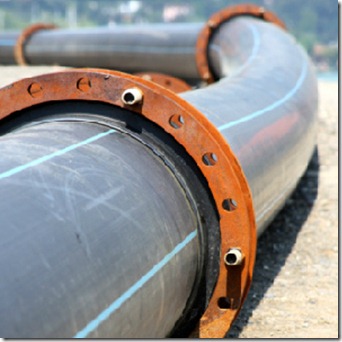
The opposition to the Keystone Pipeline is not based on science and engineering. It is based on politics and the constant desire of the statist environmentalist to change our behavior to conform to their view of the world. While they sit in their air conditioned offices in Washington and Berkley drinking their Kool-Aid and singing the same hymns to mother earth they believe they can enforce their world view on the rest of society through taxes and regulations.