Search This Blog

Showing posts with label Goverment. Show all posts

Sunday, November 16, 2014

We Have Been Grubered

"These socialist writers look upon people in the same manner that the gardener views his trees. Just as the gardener capriciously shapes the trees into pyramids, parasols, cubes, vases, fans, and other forms, just so does the socialist writer whimsically shape human beings into groups, series, centers, sub-centers, honeycombs, labor-corps, and other variations. And just as the gardener needs axes, pruning hooks, saws, and shears to shape his trees, just so does the socialist writer need the force that he can find only in law to shape human beings. For this purpose, he devises tariff laws, relief laws, and school laws." — Frederic Bastiat, The Law, 1848

Bastiat explains the call for laws that restrict peaceable, voluntary exchange and punish the desire to be left alone by saying that socialists1 want to play God. Socialists look upon people as raw material to be formed into social combinations. To them — the elite—“the relationship between persons and the legislator appears to be the same as the relationship between the clay and the potter.” And for people who have this vision, Bastiat displays the only anger I find in The Law when he lashes out at do-gooders and would-be progressive rulers of mankind, “Ah, you miserable creatures! You who think that you are so great! You who judge humanity to be so small! You who wish to reform everything! Why don’t you reform yourselves? That task would be sufficient enough.”

1. In 1848 Bastiat referred to socialist. If writing today he would no doubt change that reference to liberal/progressive. When reading The Law keep this change in mind and Bastiat’s words will ring current.

Bastiat was an optimist who thought that eloquent arguments in defense of liberty might save the day; but history is not on his side. Mankind’s history is one of systematic, arbitrary abuse and control by the elite acting privately, through the church, but mostly through government. It is a tragic history where hundreds of millions of unfortunate souls have been slaughtered, mostly by their own government. A historian writing 200 or 300 years from now might view the liberties that existed for a tiny portion of mankind’s population, mostly in the Western world, for only a tiny portion of its history, the last century or two, as a historical curiosity that defies explanation. That historian might also observe that the curiosity was only a temporary phenomenon and mankind reverted back to the traditional state of affairs—arbitrary control and abuse.

I came upon the writings of Frederick Bastiat about 10 years ago and they clarified many of my long held beliefs regarding progressives. Bastiat’s writing show how the liberal progressive mend works. It firmly believes that they are superior in the thinking and believe themselves to be members of an elite cadre that should be our rulers. This is a far cry from what our Founders believed and expressed in the Declaration of Independence and codified in our Constitution.

Last week this condition was demonstrated in spades when the media exposed the statements of Jonathan Gruber regarding his involvement in constructing and selling ObamaCare and was paid handsomely for it — $400,000 to be “a paid consultant to the Obama.

Much has been made of Jonathan Gruber insulting American voters by calling them stupid. Though worthy of contempt, that comment is one of the least interesting aspects of this short statement, which is otherwise chock-full of revelations with respect to the modern liberal mindset. Insulting the American voter is bad. Demonstrating altogether one's disregard for democratic principles is far worse.

First, Gruber says that the bill was written in a tortured way to make surejonathan_gruber_5 that the Congressional Budget Office did not score the mandate as a tax because, had it been scored as a tax, the bill would have died. The fact that the bill was written “in a tortured way” implies more than mere difficulty or complexity in the drafting process. When Gruber said “the bill was written in a tortured way,” he was saying that the drafters intentionally distorted or perverted the bill’s real meaning in order to fool the Congressional Budget Office.

Modern liberalism operates on expediency exclusively. Nothing matters but winning. The democratic process can be – must be – sacrificed to win. Gruber willingly proclaimed his disregard for the democratic process when he declared that “lack of transparency is a huge political advantage.” He demonstrated with perfect clarity that modern liberalism is indeed an “ends justifies the means” ideology driven by expediency when he said, “I wish that we could make it all transparent, but I’d rather have this law than not.” This is a perfect example of the elitist progressive view of the world. We know better and you, the people are stupid sheeple.

For one brief moment, videotaped for posterity, Jonathan Gruber personified the modern liberal mindset. In an instance of perfect irony, he pontificated on the political advantages of avoiding transparency while simultaneously shining the bright light of day on the black heart of modern liberalism in the most transparent way possible. His perspective would be no clearer had he said, it would be nice if we could tell the public the truth, but only if we get our way. If the only way we can get the bill passed is by perpetrating a fraud on the CBO and on the American people, so be it. Transparency and the democratic process be damned.

Because modern liberalism as reflected by the actions of its establishment flag bearers is entirely policy driven and has no regard for our constitutional rule of law, the democratic process, or the truth, it is bankrupt of any guiding principle other than expediency. It is the pure reflection of the tyranny of the administrative state. Its approach to governance and the acquisition of power is ultimately tyrannical because it seeks to impose its policies and obtain the political power necessary to do so by whatever means possible, without regard for any of the fundamental principles of our founding; principles which they no doubt deem outdated the democratic process, limited government constrained by a constitution created by a sovereign people, and the unalienable rights of free individuals.

Since the Wilson administration this administrate state has grown. Experts now replace the peoples representatives, something our Founders were fearful of. There have been a few curbs on this growth such as the Coolidge administration where Silent Cal was criticized for not being an active president. It should be noted that during his administration the United States experienced phenomenal growth, prosperity, and personal liberty.

Since Coolidge’s tenure the U.S. has seen a gradual growth of a government by bureaucrats and experts. Liberal progressives love to claim that government by the “best and the brightest” is the way to rule the American people. All that is required is for them to use any means, including deception and lies, to retain their power.

Our Founders wanted three branches of government beset with checks and balances on each. They wanted an executive to enforce laws passed by Congress and a Congress to pass laws that the people who elected them wanted. They wanted a Supreme Court to settles disputes between states and make sure laws passed by Congress were in step with the Constitution — not to make new laws. Our Founders wanted a bicameral Congress consisting of a lower house responsible for the nation’s purse strings and an upper house (Senate) to take a longer view and be responsible for treaties and government appointments. As Madison stated the lower house with its two year terms would be subject to the passions of the day and the Senate would take a longer view and curb the passions of the lower house.

Jonathan Gruber certainly never intended to expose modern liberalism’s tyrannical approach so completely – but expose it he did. The revelations he provided should be often remembered and never forgotten. He has now added a new word to our lexicon — “Grubered” to be deceived by someone.

Saturday, November 8, 2014

The Laboratories of Democracy are Growing Stronger and More Republican

“It is one of the happy incidents of the federal system that a single courageous state may, if its citizens choose, serve as a laboratory; and try novel social and economic experiments without risk to the rest of the country. — U.S. Supreme Court Justice Louis Brandeis in New State Ice Co. v. Liebmann, March 21, 1932.

I use the Brandeis quote to begin my comments of the new powers of the state legislatures after the 2014 election. I must, however, temper Brandeis’ comments in his dissent in New State Ice Co. v. Liebmann with a commentary by Michael S. Greve in his 2001 article in American Enterprise Institute. After all Brandeis was a liberal progressive and statist.

“Louis D. Brandeis favored federalist “experimentation in things social and economic” as a means to progressive, statist ends. Even his hagiographers concede that Brandeis would have held a very different view of state economic experimentation and its judicial review had those experiments run against, say, trade unions.

Modern justices have tended to overlook, or perhaps ignore, the instrumental and ultimately half-hearted nature of Brandeis’s federalist commitment. For example, they have quoted the “laboratory” dictum in the course of celebrating federalism’s virtues of diversity and attentiveness to local circumstances. Brandeis’s view of state experimentation, however, was entirely disconnected from those notions and instead emphasized its value as a step toward federal legislation. Similarly, profederalist justices have quoted the New State Ice dissent in opinions that reject, on Tenth Amendment grounds, federal impositions on state governments. Brandeis, as seen, did not believe in Tenth Amendment or any other constitutional federalism constraints.

One could easily live with an occasional out-of-context quotation. What distresses is the modern Supreme Court’s sustained Brandeisian tendency of subordinating federalism to progressive dictates and statist presumptions. The Court has empowered and protected state governments through creative interpretations of the Tenth and Eleventh Amendments. It has, however, refrained from resurrecting constitutional doctrines—foremost, a robust enumerated powers doctrine—that would discipline state governments by forcing them to compete for productive citizens. On the rare occasions that the Court has limited enumerated powers, it first reassured itself that the states can and will in fact regulate the problem at hand—gun possession on school grounds or sexual violence.

On issues that we now call “social,” the Court acts as a superintendent of experimentation. Untoward experiments, such as operating an all-male college, are verboten. Experiments of the right kind are not; in a way they are affirmatively required. If states fail to liberalize, with sufficient speed, laws governing sexual and life-and-death matters, the Supreme Court will move them along; witness Roe v. Wade.”

This “Laboratories of Democracy” concept explains how within the federal framework, there exists a system of state autonomy where state and local governments act as social “laboratories,” where laws and policies are created and tested at the state level of the democratic system, in a manner similar (in theory, at least) to the scientific method.

The Tenth Amendment of the United States Constitution provides that “all powers not delegated to the United States by the Constitution, nor prohibited by it to [from] the States, are reserved to the States respectively, or to the people.” This is a basis for the "Laboratories of Democracy" concept, because the Tenth Amendment assigns most day-to-day governance responsibilities, including general "police power", to the state and local governments. Because there are 50 semi-autonomous states, different policies can be enacted and tested at the state level without directly affecting the entire country. As a result, a diverse patchwork of state-level government practices is created. If any one or more of those policies are successful, they can be expanded to the national level by acts of Congress. For example, Massachusetts established a health care reform law in 2006 that became the model for the subsequent Affordable Care Act at the national level in 2010.

Since the 1930s, and more so in the following decades, the "laboratories of democracy" concept has been undercut somewhat by the growth of federal power under expansive interpretations of the Interstate Commerce Clause, which grants the federal government the power to regulate interstate commerce. See, for example, Wickard v. Filburn, 317 U.S. 111 (1942) and Gonzales v. Raich, 545 U.S. 1 (2005).

The Tenth Amendment may be stated as the cornerstone of Federalism. It was added to the Bill of Rights by our Founders. James Madison was not in favor of the Tenth Amendment as he believed the enumerated powers expressed in Article I, Section 8 of the Constitution would suffice to curb the power of the federal government. Madison finally succumbed to the wishes of the state conventions when he stated:

“I find, from looking into the amendments proposed by the State conventions, that several are particularly anxious that it should be declared in the Constitution, that the powers not therein delegated should be reserved to the several States. Perhaps words which may define this more precisely than the whole of the instrument now does, may be considered as superfluous. I admit they may be deemed unnecessary: but there can be no harm in making such a declaration, if gentlemen will allow that the fact is as stated. I am sure I understand it so, and do therefore propose it.”

The states decided to ratify the Tenth Amendment, and thus declined to signal that there are unenumerated powers in addition to unenumerated rights The amendment rendered unambiguous what had previously been at most a mere suggestion or implication.

This brings me to the focus of this blog — the growing power of the Republican Party in state legislatures and how this may begin to tamper the coercive and over reaching power of the federal government.

Today after last Tuesday’s election there are ninety-eight partisan state legislative chambers in our nation. (Nebraska has a unicameral and nonpartisan legislature.) Not all state legislative chambers had elections this November, but of the seventy-seven state legislative chambers that did have elections, Republicans gained seats in sixty-one, while losing seats in only ten.

This translated into shifting control of ten legislative chambers from Democrat to Republican and included: the State Senate in Washington, Colorado, Nevada, Maine, and New York and the State House of Representatives in New Mexico, Nevada, Minnesota, West Virginia, and New Hampshire. Republican power in state legislatures is at the highest point in a century, both in the number of chambers controlled and also in the number of Republicans in state legislature — important facts that tend to be submerged in higher profile races.

Looking at particular regions, the impact of these elections takes new meaning. In the five-state “Great Lakes” region of Michigan, Wisconsin, Illinois, Ohio, and Indiana, Republicans made gains in state legislative chambers of each state and did not lose seats in any of the ten chambers. In the five legislative chambers in neighboring Minnesota, Iowa, and Missouri that faced voters this midterm, Republicans made gains in all five.

In the Rocky Mountain purple states of Nevada, Colorado, and New Mexico, Republicans gained the Colorado Senate, the New Mexico House, the Nevada Senate, and the Nevada House without losing seats in any of the state legislative chambers. Those gains matter. Governor Martinez will have one house of the New Mexico legislature to help her push her conservative agenda; Governor Sandoval in Nevada goes from working with two Democrat houses of the legislature to a Republican legislature; and Colorado’s Democrat governor, who won a close race, now has to work with a Republican Colorado House.

In the South, in red states thought to be trending purple — Florida, North Carolina, and Georgia — Republicans gained seats in three legislative chambers and lost a seat in one, and the other two were unchanged. Despite the hopes Democrats have expressed of becoming competitive in the South, Republicans now control virtually every state legislative chamber there. Eight of those states had state legislative elections, and in those sixteen legislative chambers, Republicans gained seats in twelve chambers and lost seats in one.

The long-term impact of Republican power in the South and Rocky Mountain areas is enhanced by the fact that these are also the two fastest-growing areas of the country. These are the states that will have more congressmen after the next census, and Republican legislatures will be drawing the new congressional districts.

But even in the Democrat stronghold of the Northeast, Republicans did well. Republican governor Corbett of Pennsylvania lost re-election, but Republicans increased their existing majorities in both houses of the Pennsylvania legislature. Republicans came close to winning the governor’s race in New Hampshire, the only purple state in New England, but Republicans actually did capture the New Hampshire lower legislative chamber and increased the existing majority in the upper chamber.

Republicans now, for the first time in a while, have the power to stop Democrats in states like New York (which now has a Republican Senate) and Maryland, where the unexpected victory of Republican Larry Hogan in the gubernatorial race was complemented by the gain of eight seats in the Maryland House, enough to sustain a veto by Hogan. Republican gains in the Illinois Senate mean that incoming Republican Governor Rauner will now have both houses able to sustain his veto. Governor Dayton will have to work with a Republican Minnesota House.

Perhaps the most important consequence will be in those states where Republicans in state government have shown real gumption. Scott Walker, of course, tops the list. Increased Republican majorities in both houses of his legislature, along with his own re-election open the door for even more revolutionary reforms, which will no doubt include public sector pensions and school choice.. Re-elected Republican governors in Michigan, Ohio, and Florida have bigger Republican legislative majorities, which ought to embolden these governors to push hard reforms of public employee unions, educational systems, and voter integrity, as well as tort reform and other vital issues.

It also should be noted that the state houses (31) and state legislatures controlled by Republicans will no doubt play a major role in the 2016 presidential elections. If these governors and legislatures do good work for the people of their states they will have a great deal of influence in deciding 2016 presidential vote. Their focus should be on balanced budgets, eliminated deficits, increasing employment with business friendly policies and regulations, and repairing infrastructure. Scott Walker of Wisconsin, Susanna Martinez of New Mexico, Nikki Haley of South Carolina, and John Kasich of Ohio are showing the way.

Finally I think that there are a few points that can be made about the 2014 midterms.

After repeatedly putting off any action on immigration until after the election, Obama announced just prior to the election that he would use his pen to enact immigration reform. This served to motivate the Hispanic vote, but not in the way he intended. Exit polls show that 36% of Hispanics voted Republican. This is a huge change from 2012, when Hispanics voted Democrat at over 70%. It turns out that quite a few law-abiding conservative Hispanics are not fans of illegal immigration or late-term abortion.

Obama said in a speech on Oct. 2, "Make no mistake: my policies are on the ballot." I believe he thought that he could motivate that same base that re-elected him in 2012 to go to the polls by making the election about himself. Think about it. Up to that point in the election cycle, he had stayed in the background. His national poll numbers were dipping below 40%. The Democrat incumbents had run away from him and were trying their best to disassociate themselves from their voting records. Why would Obama, at that point, reinsert himself into the race? Because he was convinced that he could motivate his base to go to the polls to vote Democrat by making the election about him.

This turned out to be a huge miscalculation. It handed the Republicans powerful ammunition just 30 days prior to the election.

In his press conference Wednesday, Obama implied that since two thirds of the electorate didn't vote, he still had a mandate from the 2012 electorate to execute his vision. I disagree. Let's look at who didn't vote. Obama's black base didn't vote. Why? I think his black base is angry with him. They can't bring themselves to vote Republican, so what is the alternative? How has the black community expressed their dissatisfaction in previous elections? They stay home. So Obama's claim that he still has a mandate is hogwash. Everyone is mad, including his base.

The combined shift of the Hispanic vote and the unhappy black community is a real problem for the Democrats. Do you think that the black vote will show up for Hillary? I don't think so. They're mad. They're mad enough to not show up for Obama, even though he told them that he was on the ballot. If the Democrats can't figure out a way to regain the lost Hispanic vote and convince their black base that they need to vote, then 2016 will be another tough year for them.

There will doubtless be more “gridlock” in Washington. Obama is just too arrogant and ideological for anything else. But the chance for dramatic change — something to show America in 2016 — is in Republican hands in many states now. Surely the only counsel now to these Republicans is stay united and be bold.

Thursday, November 6, 2014

Is Mr. Smith Truly Going To Washington

"Let each citizen remember at the moment he is offering his vote that he is not making a present or a compliment to please an individual -- or at least that he ought not so to do; but that he is executing one of the most solemn trusts in human society for which he is accountable to God and his country." — Samuel Adams, in the Boston Gazette, 1781

In my last blog, “Will This Election Matter?”, I predicted the high probability that the Republicans would gain control of the United States Senate and the low turnout of the electorate. Both prediction of the low turnout was not too difficult as this is the historical number for mid-term elections. The prediction of control of the Senate was a bit more risky, but most pollsters were predicting this. I was, however, more that a bit surprised at the success of Republicans in gaining control of statehouses. Scott Walker of Wisconsin staved off the third attempt to unseat him. Massachusetts, Maryland, Illinois, and Arkansas, all blue states, elected Republican governors for a net gain of +3 (Pennsylvania Republican governor lost to his Democrat challenger). Now there are 31 Republican controlled statehouses and 17 occupied by Democrats with 2 races undecided. This was no doubt the largest surprise of the night.

On the Senate and House races the Republicans had a net gain of 7 seats to take control of the Senate 52 to 45 with two races still undecided (Alaska and Louisiana) Alaska will probably go to the Republican Dan Sullivan. With 100% of the precincts reporting Sullivan leads his Democrat opponent Mark Begich 48.96% to 45.34%. In Louisiana Mary Landrieu will face a runoff with her Republican challenger Bill Cassidy next month. The total for the two republicans in the race is 54.72% and Landrieu’s is 42.08%. Louisiana is becoming a Red state it is not to risky to say the Cassidy will win this seat. Also it is doubtful the Democratic Party will pour any money to support a losing candidate. If these two Senate seats are claimed by the Republicans their majority will increase to 54 to 45 with one independent.

For the House of representatives the Republicans picked up 3 seats to increase their majority to 243 to 179. There are still several undecided races but they will probably be split so there will not be much of a difference. This is the largest Republican majority in the House of Representatives since 1946.

So now what comes next? 31 (or 32) statehouses are now occupied by Republicans and 27 state legislatures are controlled by Republicans with 4 states with split control. States such as Ohio, Wisconsin, Michigan, New Mexico, Florida, and Virginia (all states that went for Obama in 2014) have Republican controlled statehouses and legislatures. That bodes well for the nation as the states can play a dominant role in the Republic.

Republicans made historic gains in state legislatures in 2010. They held on in many states in 2012, or made up for losses in one state with gains in another — even though Democrats won the national election. And they won even more in 2014. This isn't an accident — it's the result of strategic fundraising from national Republicans, beginning in 2010, aimed at engineering statehouse takeovers. Out-of-state contributions were shuffled to states where they would make a difference, particularly as congressional partisanship and gridlock made policymaking in Washington increasingly unlikely.

And at a time of national gridlock, state legislatures have done an immense amount of legislating. Since 2010, 30 states, most controlled by Republicans, have passed a total of 205 new abortion restrictions. That's more restrictions than were passed in the entire first decade of the 2000s, according to the Guttmacher Institute:

Twenty-two states, 18 with Republican majorities, have passed laws making it more difficult for people to vote.

After the Newtown shootings, most new state laws surrounding guns actually eased restrictions on owning and carrying firearms. Seventy new laws loosening gun control were passed, 49 in states with Republican legislative majorities and Republican governors, compared to three in Democratically controlled states.

Then there was the fiscal experiment in Kansas, where Republican Gov. Sam Brownback and a Republican majority in the legislature slashed income taxes. State revenue came in well below projections and threatened Brownback's re-election — but he won, and has promised to accelerate the tax cuts in the future.

It should be noted that in 2020, state legislatures will redraw congressional district lines. That will mean that the GOP will have an opportunity to carve out districts favorable to their candidates. For those who cry "gerrymandering," I would gently point out that both parties do it and that almost every state's redistricting is subject to judicial review.

Republican wins at the state legislative level underscore just how complete their vanquishing of the Democrats on Tuesday was.

Now that the Senate and House will be under the control of the Republicans it will be time for them to begin lying out an agenda for the next two years. This is a moment when a meaningful change could be made to our nation’s downward trajectory.

When politicians on the Left win, they quickly abandon all man-of-the-people pretensions and reveal their true ideological devotion, which has to do with making democracy safe for activists, abortionists and the NEA.

As for conservatives, the old joke, oft repeated, is sadly applicable: They come to Washington believing it’s a cesspool, but soon discover it’s really a Jacuzzi.

Republicans are noted for, shall we say, losing their reformist edge. The combined influence of well-connected lobbyists, well-financed pressure groups, and well-ensconced party leaders tends to stoke the appetite for higher office and dampen enthusiasm for being tagged a loose cannon by standing on principle.

Whether GOPers can break old habits remains to be seen. But it’s never been more urgent that they do so. This country is in trouble. Serious trouble. And everybody knows it.

There’s a feeling abroad in the land that things are cracking apart. Barack Obama didn’t create the cracks, but the policies, decisions and actions of the last six years have pried them much, much wider.

What’s needed at this moment in history is more than mere tinkering around the edges of policies in place. We must reexamine the philosophical assumptions that have taken over our system of government and come to dominate our public life. We must ask some fundamental questions, like…

What happened to the notion that citizenship is a privilege involving both rights and duties — and for those seeking it, qualifications?

Where are the clear lines of legal jurisdiction and fiscal responsibility that once distinguished the various levels of government and kept power from becoming too concentrated?

When did the concept of civil liberty turn into a license for conduct unrestrained — or, for that matter, a mandate that everyone must accept any behavior, no matter how destructive, all in the name of personal autonomy?

Why is it we can no longer assume the protection of certain basic freedoms of conscience, opinion and expression?

How did the humane desire to help people caught in tough straits become an expectation of unlimited support?

Can they curb the vast influence over our state and local run public education system from Washington?

Will they curb the over regulations from the EPA and the rest of the administrative state.

Those are just a few on the domestic side. Let’s throw in some with a global scope, like…

How can we regain respect in a hostile world that sees us as increasingly irrelevant?

When will we reassert our territorial integrity, affirm our legitimate national interests, and recapture our status as the center of economic and technological leadership?

Can we ever achieve true strategic independence — in terms of both freedom from extreme overseas financial obligation and self-sufficiency in domestic energy resources?

Are there rational plans and realistic methods for beating back the latest waves of totalitarian revival and religious barbarity — which is to say, of securing our children’s freedom and spiritual patrimony?

All hold vast implications for policy development, which means there will be plenty of debate and — let’s hope — honest analysis. But more than that, they demand vision, courage, unity, steadfastness, and no small measure of moral courage.

Are Republicans up to the job?

Do they have the wherewithal to devise logical, comprehensive approaches to addressing our numerous problems? Can they build the necessary party discipline, restrain their individual ambitions, achieve the long-term perspective required for the daunting tasks of restoration and renewal?

Will they be able to craft a coherent message and develop means of communication sufficient to overcome media resistance and rally the people behind them?

Can they hold together solidly enough to oppose a radical administration unfettered by reelection concerns? Will they be confident in withstanding the accusations of “racism,” “misogyny,” “homophobia,” “exploitation,” and all the other contrived charges that have provided life-support to a failed ideology and a corrupt political cabal?

Then, beyond all that, are they prepared to defend their policies and actions in staunch defiance of Hillary’s inevitable onslaught?

Yes, I know this is the GOP we’re talking about — the party that hasn’t been able to save the 100-watt incandescent light bulb.

Many people are deeply disillusioned with the politics of our day. They’ve watched the demolition derby that’s gone on in Washington over the last few decades — since the end of the Reagan era, really — and they’ve concluded that there’s “not a dime’s worth of difference” between the parties.

I understand their feelings, but we now have an opportunity to find out whether their assumption is correct.

According to President Obama and his minions in the media Tuesday was not a reflection on his policies or lack of policy on his part. It was the fault of electorate who did not turn out. Most intelligent people know this is pure spin and balderdash. He will never move from ideological progressive/socialist roots. McConnell and Boehner will have to hold a firm line to get anything past his magic pen. This will require unity and public support. The public support will have to come from a unified message frequently delivered to the American people.

This past Tuesday might have been a turning point. Might have been. Now we shall see.

Sunday, June 15, 2014

This Really Makes Me Angry

“The eyes of the world being thus on our Country, it is put the more on its good behavior, and under the greater obligation also, to do justice to the Tree of Liberty by an exhibition of the fine fruits we gather from it.” — James Madison letter to James Monroe — 1824

Yesterday (June 14) in 1777, during the American Revolution, the Continental Congress adopted a resolution stating that "the flag of the United States be thirteen alternate stripes red and white" and that "the Union be thirteen stars, white in a blue field, representing a new Constellation."

The national flag, which became known as the "stars and stripes," was based on the "Grand Union" flag, a banner carried by the Continental Army in 1776 that also consisted of 13 red and white stripes. According to legend, Philadelphia seamstress Betsy Ross designed the new canton for the flag, which consisted of a circle of 13 stars and a blue background, at the request of General George Washington. Historians have been unable to conclusively prove or disprove this legend.

With the entrance of new states into the United States after independence, new stripes and stars were added to represent new additions to the Union. In 1818, however, Congress enacted a law stipulating that the 13 original stripes be restored and that only stars be added to represent new states.

On June 14, 1877, the first Flag Day observance was held on the 100th anniversary of the adoption of the American flag. As instructed by Congress, the U.S. flag was flown from all public buildings across the country. In the years after the first Flag Day, several states continued to observe the anniversary, and in 1949 Congress officially designated June 14 as Flag Day, a national day of observance.

The American flag has gone through many changes since it was adopted 237 years ago by the Second Continental Congress. As the adoption of the Stars and Stripes is commemorated this Thursday on Flag Day, find out more about Old Glory’s mysterious origins and its rise to iconic prominence.

In June 1775, the Second Continental Congress, meeting in Philadelphia, created a united colonial fighting force known as the Continental Army. Some historians claim that George Washington, the army’s commander-in-chief, ordered that a flag called the Continental Colors be raised the following New Year’s Day during a siege of British-occupied Boston. But David Martucci, past president of the North American Vexillological Association, the world’s largest group dedicated to the study of flags, believes Washington likely raised a British Union Jack instead. The Continental Colors, which contained 13 alternating red and white stripes with a Union Jack in the upper left-hand corner, was only used by the navy and perhaps at forts, according to Martucci. “It was sort of a compromise between the radicals who wanted to see a separate nation and the people who were more conciliatory and wanted to see some accommodation with the crown,” he said.

Either way, Washington realized soon after that it probably wasn’t a good idea to fly a flag resembling that of the enemy. The Second Continental Congress was busy drafting a constitution known as the Articles ofbetsy-ross-flag Confederation, seeking an alliance with France and supplying the war effort. But on June 14, 1777, it took time from its schedule to pass a resolution stating that “the flag of the United States be 13 stripes, alternate red and white” and that “the union be 13 stars, white in a blue field, representing a new constellation.” To this day, no one knows who designed the flag or why that particular color combination and pattern were chosen. Although legend holds that Betsy Ross made the first American flag in 1776 after being asked to do so by Washington, primary sources backing up that assertion are scarce although Ross’ ancestors claim to have documentary evidence it was Betsy.

Be that as it may during the remainder of the Revolutionary War, the Stars and Stripes was mainly used for naval purposes, but afterwards it took on a national role. By 1794 two new states had been added to the Union, and Congress passed an act declaring that the flag would henceforth contain 15 stripes and 15 stars. More states kept joining, including Tennessee in 1796, Ohio in 1803, Louisiana in 1812, Indiana in 1816 and Mississippi in 1817. Nonetheless, the flag featured 15 stripes and 15 stars until 1818, when Congress passed a new act providing for 13 stripes in honor of the 13 original colonies and one star for each state.

It was almost unheard of for individuals to fly the U.S. flag until the Civil War broke out in 1861, at which time the Stars and Stripes suddenly became a popular symbol in the North. This was the beginning of what some people call the cult of the flag, the almost religious feeling that many Americans have for the red, white and blue. In 1870 the Betsy Ross legend took off when her grandson held a press conference touting her possible role in sewing the first flag, and the earliest flag protection laws appeared not long after. Meanwhile, in 1885, Wisconsin teacher Bernard Cigrand originated the idea for a national flag day.

In 1912, President William Howard Taft signed an executive order that, for the first time, clarified what the flag should look like. Up until then, some flags were oddly proportioned or even had six — or eight-pointed stars. Fouramerican-flags-waving years later, President Woodrow Wilson issued a proclamation officially establishing a nationwide observance of Flag Day on June 14, the anniversary of the Flag Resolution of 1777. And in 1949, President Harry Truman signed legislation designating June 14 of each year as National Flag Day. Though Flag Day is not a federal holiday, the U.S. government encourages its citizens to display Old Glory outside of their homes and businesses. The tradition is not widely observed, however. To most folks, unfortunately, Flag Day is not on their radar screen today.

While the 1777 resolution establishing a national flag was the impetus for the national holiday known as Flag Day, that date also holds great significance for the U.S. Army. Two years earlier, just weeks after the Battles of Lexington and Concord kicked off the American Revolution, the Congress formally authorized the enlistment of soldiers to fight in what became known as the Continental Army. So Flag Day is also celebrated as the birthday of the U.S. Army.

It’s the Textile Color Card Association of the United States (TCCA) that2012-05-24-alexander-6 creates the palate of colors used for both private and public institutions, and the U.S. Army that issues a reference guide of acceptable shades to be used in local, state and national flags. So if you’re trying to produce a truly authentic American flag, you’ll need to use the exact shades of white, “Old Glory Red” and “Old Glory Blue,” specified in the guide. Although mass-market flag manufacturers have been known to fudge a bit and use the more-easily processed Pantone Matching Shades of Dark Red (193 C) and Navy Blue (281 C).

While the battle over perceived desecration of the flag remains a hot button issue today, some of the first anti-desecration measures had little to do with flag burning or other destructive measures. In fact, 19th century lawmakers were more concerned with the already rampant use of the flag as a promotional tool by advertisers, which they considered treating the banner with “contempt.” Many of the first statues passed by state and local governments aimed to restrict use of the flag’s image on commercial products. In 1907, the Supreme Court upheld these laws in the case of Halter v. Nebraska, and many of them remain on the books today.

On September 13, 1814 Francis Scott Key penned a poem which was later set to music and in 1931 it became America's national anthem, "The Star-Spangled Banner." The poem, originally titled "The Defence of Fort McHenry," was written after Key witnessed the Maryland fort being bombarded by the British during the War of 1812. Key was inspired by the sight of a lone U.S. flag still flying over Fort McHenry at daybreak, as reflected in the now-famous words of the "Star-Spangled Banner": "And the rocket's red glare, the bombs bursting in air, Gave proof through the night that our flag was still there."

On June 18, 1812, America declared war on Great Britain after a series of trade disagreements. In August 1814, British troops invaded Washington, D.C., and burned the White House, Capitol Building and Library of Congress. Their next target was Baltimore.

After one of Key's friends, Dr. William Beanes, was taken prisoner by the British, Key went to Baltimore, located the ship where Beanes was being held and negotiated his release. However, Key and Beanes weren't allowed to leave until after the British bombardment of Fort McHenry. Key watched the bombing campaign unfold from aboard a ship located about eight miles away.

Key knew that his flag held deep symbolic meaning as he stepped aboard the British flagship of Admiral Alexander Cochrane on September 7, 1814. Cochrane invited Key and Skinner to dine with him. Though he and another British officer agreed to free Dr. Beanes, they wouldn’t let Key, Skinner, or Beanes depart until after the British attacked Baltimore. “Ah, Mr. Skinner, after discussing so freely our preparation and plans, you could hardly expect us to let you go on shore in advance of us?” Cochrane explained.

Surrounded by Union Jacks for days, Key, Skinner, and Beanes stayed with the British fleet. Key was worried about Baltimore. “To make my feelings still more acute, the admiral had intimated his fears that Baltimore must be burned, and I was sure that if taken it would have been given up to plunder. It was filled with women and children.”

Starting on September 13, for more than twenty-four hours, Key watched the British Navy bombard Fort McHenry, which guarded Baltimore’s harbor. The staccato sound of rockets and bombs suddenly stopped the morning of September 14. Gone from the fort was its small storm flag.

Through his spyglass, Key must have held his breath during the silence as he wondered what would happen next. Would the Union Jack or a white flag of surrender appear at the top of Fort McHenry? Relief swept through him as he saw the giant thirty by forty-two foot U.S. flag soar to the top of Fort McHenry. While the men at the fort played Yankee Doodle, Key’s emotions took flight. Phrases such as “O say can you see” and “by the dawn’s early light” pulsed through his heart and pen. By the time he returned to Baltimore two days later, he’d written lyrics for a poem, The Star-Spangled Banner. Key’s genius is that his words were so inspirational, they could be applied to many generations and situations, not only to Fort McHenry and Baltimore. Though he didn’t know it at the time, Key had given the land of the free its anthem for the ages.

The poem was printed in newspapers and eventually set to the music of a popular English drinking tune called "To Anacreon in Heaven" by composer John Stafford Smith. People began referring to the song as "The Star-Spangled Banner" and in 1916 President Woodrow Wilson announced that it should be played at all official events. It was adopted as the national anthem on March 3, 1931.

Now we come to the part that really makes me angry.

Fox News reported on this Flag Day a desecration of our national flag beyond the pale. This desecration was not done by some Islamic radicals of left-wing nuts burning our flag. It was carried out by our ambassador to Israel — a representative of the U.S. Government and We The People.

“TEL AVIV – The U.S. Embassy broke new ground and raised a few eyebrows by flying the rainbow-colored gay pride flag below the Stars and Stripes in a show of support for the city’s week long Gay Pride week, not to mention a rare example of tolerance in the wider Middle East.

“Proudly flying the colors!" read a dual-language post on thegayprideflag Facebook page of U.S. Ambassador Dan Shapiro’s office. "For the first time in history, the U.S. Embassy in Tel Aviv has raised the Pride flag together with our American flag. We are proud to join with the municipality of Tel Aviv-Yafo and its residents in celebrating LGBT [Lesbian, Gay, Bisexual and Transsexual] Pride Week.”

The Tel Aviv embassy gesture to the local gay community is not the first of its kind though. Last month, according to Spanish media reports, the gay pride flag flew over U.S. Ambassador James Costos’ official residence in Madrid, and last September, the flag was unfurled by Ambassador Theodore Sedgwick at the U.S. Embassy in Bratislava, in Slovakia.

Reaction from outside of the gay community to the sight of the American flag being accompanied by the rainbow banner was mixed.

“I see that it is OK to put up a gay pride flag over an embassy but not ok for military members to espouse their religious beliefs in God," read a post on the Embassy's page, attributed to Grant Hix Jones. "I am ashamed to see those flags side by side.”

“How is this "gay pride flag" representative of all Americans?" wrote a poster named James Brown. "This flag needs to come down.”

While most people posting messages on the embassy Facebook page expressed various shades of disapproval, on the other side of the debate there were those in favor of hoisting the gay flag, with “Way to go!” and “Proud” being among the posted comments.

An embassy official told FoxNews.com all the responses were appreciated.

“We are glad to see our Facebook page utilized as a forum for free speech,” the official said.

Shapiro announced late last month that the flag would fly above the building, noting "the United States’ strong support for the LGBT community at home and abroad."

I am sick and tired of the LGBT community forcing its beliefs on me. I really don’t care what they have to say or what their behavior is. It’s their business. But for the U.S. Government to sanction it is a travesty against the First Amendment. We are not allowed bibles in government buildings and1200px-Gadsden_flag.svg shows such as the Duck Dynasty are sanctioned for expressing their views on homosexuality. If you fly the symbol of the Tea Party (the Gadsden Flag) you are considered by the Department of Homeland Security to be a potential terrorist. Schools will not permit kids to wear patriotic T-shirts and the Ten Commandments are removed from public buildings. Christian Christmas displays are banned from the public square and even flying Old Glory has been banned by some homeowner’s associations. But our government — in our name can fly the LGBT flag with impunity on a government building.

Not many news associations have covered this event. This is no doubt due to their reluctance to report news that would infuriate their viewers and in some case is new they would rather not report as it might prove to be a negative to their narrative.

The LGBT community can do want they wish in their bedrooms and communities but don’t do it in my name. What’s next — flying the Planned Parenthood banner.

Saturday, May 31, 2014

Obama’s Buildup of Military Forces In the Civilian Sector

“No person shall be held to answer for a capital, or otherwise infamous crime, unless on a presentment or indictment of a grand jury, except in cases arising in the land or naval forces, or in the militia, when in actual service in time of war or public danger; nor shall any person be subject for the same offense to be twice put in jeopardy of life or limb; nor shall be compelled in any criminal case to be a witness against himself, nor be deprived of life, liberty, or property, without due process of law; nor shall private property be taken for public use, without just compensation.” — Fifth Amendment to the U.S. Constitution.

The Fifth Amendment creates a number of rights relevant to both criminal and civil legal proceedings. In criminal cases, the Fifth Amendment guarantees the right to a grand jury, forbids “double jeopardy,” and protects against self-incrimination. It also requires that “due process of law” be part of any proceeding that denies a citizen “life, liberty or property” and requires the government to compensate citizens when it takes private property for public use.

Our Founders believed that private property was an essential component of Life, Liberty, and the Pursuit of Happiness. The concept of “Happiness” was defined by our Founders as Property. As James Madison stated in his1792 Essay on Property;

“… In a word, as a man is said to have a right to his property, he may be equally said to have a property in his rights.

Where an excess of power prevails, property of no sort is duly respected. No man is safe in his opinions, his person, his faculties, or his possessions.

Where there is an excess of liberty, the effect is the same, tho' from an opposite cause.

Government is instituted to protect property of every sort; as well that which lies in the various rights of individuals, as that which the term particularly expresses. This being the end of government, that alone is a just government, which impartially secures to every man, whatever is his own….”

The Fifth Amendment is the logical extension of the Fourth Amendment:

“The right of the people to be secure in their persons, houses, papers, and effects, against unreasonable searches and seizures, shall not be violated, and no warrants shall issue, but upon probable cause, supported by oath or affirmation, and particularly describing the place to be searched, and the persons or things to be seized.”

The Fourth Amendment originally enforced the notion that “each man’s home is his castle”, secure from unreasonable searches and seizures of property by the government. It protects against arbitrary arrests, and is the basis of the law regarding search warrants, stop-and-frisk, safety inspections, wiretaps, and other forms of surveillance, as well as being central to many other criminal law topics and to privacy law.

Both of these Amendments are pertinent to this blog post and should be taken into consideration when reading it. They are a part of our basic rights under the Constitution!

President Barack Obama considered deploying the U.S. military during the Cliven Bundy Ranch standoff in Nevada under the approbation of a Pentagon directive on military support to civilian authorities signed in 2010.

The Department of Defense directive provides U.S. commanders with the emergency authority to use military support to quell domestic disturbances where needed to “prevent significant loss of life or wanton destruction of property” and when “necessary to restore government function and public order.” A second condition is when Federal, State or local authorities “are unable or decline to provide adequate protection for federal property or federal governmental functions.”

The military assistance can include loans of arms, ammunition, vessels and aircraft, and also authorizes the use of drones in operations against domestic unrest, though it prohibits the use of armed drones.

The directive and information that Obama considered deploying the U.S. military in Nevada were revealed by Bill Gertz of The Washington Times last Wednesday and famously ignored by the rest of the corporate establishment media. Deploying the military in a domestic law enforcement scenario is a violation of Posse Comitatus.

According to Gene Healy of The Cato Institute — a Libertarian Think-tank writes:

“The Posse Comitatus Act is no barrier to federal troops providing logistical support during natural disasters. Nor does it prohibit the president from using the Army to restore order in extraordinary circumstances — even over the objection of a state governor.

What it does is set a high bar for the use of federal troops in a policing role. That reflects America’s traditional distrust of using standing armies to enforce order at home, a distrust that’s well-justified.

There are good reasons to resist any push toward domestic militarization.

As one federal court has explained: “Military personnel must be trained to operate under circumstances where the protection of constitutional freedoms cannot receive the consideration needed in order to assure their preservation. The Posse Comitatus statute is intended to meet that danger.”

Army Lt. Gen. Russell Honore, commander of the federal troops helping out in New Orleans, seemed to recognize that danger when he ordered his soldiers to keep their guns pointed down: “This isn’t Iraq,” he said.

Soldiers are trained to be warriors, not peace officers — which is as it should be. But putting full-time warriors into a civilian policing situation can result in serious collateral damage to American life and liberty.

It can also undermine military readiness, because when soldiers are forced into the role of police officers, their war-fighting skills degrade. That’s what the General Accounting Office concluded in a 2003 report looking at some of the homeland security missions the military was required to carry out after Sept. 11, 2001.

According to the report, “While on domestic military missions, combat units are unable to maintain proficiency because these missions provide less opportunity to practice the varied skills required for combat and consequently offer little training value.”

The GAO also concluded that such missions put a serious strain on a military already heavily committed abroad.

American law calls for civilian peace officers to keep the peace, or, failing that, National Guard troops under the command of their state governors. So perhaps we should stop treating the National Guard as if it’s no different than the Army Reserve.

As Katrina made landfall, there were 7,000 Louisiana and Mississippi Guard troops deployed in Iraq. Among them were 3,700 members of Louisiana’s 256th Mechanized Infantry Brigade, who took with them high-water vehicles and other equipment that could have been put to better use in New Orleans.”

Gertz stated in his May 28, 2014 article:

“A 2010 Pentagon directive on military support to civilian authorities details what critics say is a troubling policy that envisions the Obama administration’s potential use of military force against Americans.

The directive contains noncontroversial provisions on support to civilian fire and emergency services, special events and the domestic use of the Army Corps of Engineers.

The troubling aspect of the directive outlines presidential authority for the use of military arms and forces, including unarmed drones, in operations against domestic unrest.

“This appears to be the latest step in the administration’s decision to use force within the United States against its citizens,” said a defense official opposed to the directive.

Directive No. 3025.18, “Defense Support of Civil Authorities,” was issued Dec. 29, 2010, and states that U.S. commanders “are provided emergency authority under this directive.”

“Federal military forces shall not be used to quell civil disturbances unless specifically authorized by the president in accordance with applicable law or permitted under emergency authority,” the directive states.

“In these circumstances, those federal military commanders have the authority, in extraordinary emergency circumstances where prior authorization by the president is impossible and duly constituted local authorities are unable to control the situation, to engage temporarily in activities that are necessary to quell large-scale, unexpected civil disturbances” under two conditions.

The conditions include military support needed “to prevent significant loss of life or wanton destruction of property and are necessary to restore governmental function and public order.” A second use is when federal, state and local authorities “are unable or decline to provide adequate protection for federal property or federal governmental functions.”

“Federal action, including the use of federal military forces, is authorized when necessary to protect the federal property or functions,” the directive states.

Military assistance can include loans of arms, ammunition, vessels and aircraft. The directive states clearly that it is for engaging civilians during times of unrest.”

A defense official opposed to the directive told Gertz, “This appears to be the latest step in the administration’s decision to use force within the United States against its citizens.”

Actually it’s not the latest, though it may be the latest revealed. The regime has been arming alphabet soup agencies at an alarming rate, even as it works in nefarious and extra-legal ways to disarm law-abiding Americans and propagandizes against them. All the while, the regime is arming al-Qaida-linked terror groups in Libya, Syria and elsewhere, demonstrating exactly who the regime considers “terrorists.”

According to Gertz, defense analysts say there has been a buildup of military units within non-security-related Federal agencies, notably the creation of Special Weapons and Tactics (SWAT) teams. “The buildup raises questions about whether the regime is undermining civil liberties under the guise of counterterrorism and counter narcotics efforts,” according to Gertz.

Agencies with SWAT teams include the Department of Agriculture, the Railroad Retirement Board, the Tennessee Valley Authority, the Office of Personnel Management, the Consumer Product Safety Commission, the U.S. Fish and Wildlife Service, the Bureau of Land Management, and the Education Department.

Gertz continues in his May 28th Article:

The militarization of federal agencies, under little-known statues that permit deputization of security officials, comes as the White House has launched verbal attacks on private citizens’ ownership of firearms despite the fact that most gun owners are law-abiding citizens.

President Obama stated at the National Defense University a year ago: “I do not believe it would be constitutional for the government to target and kill any U.S. citizen — with a drone or with a shotgun — without due process, nor should any president deploy armed drones over U.S. soil.”

A Pentagon official who defended the directive said it was signed in December 2010 after four years of thorough consultations within the Pentagon and with other federal agencies The 2010 directive replaced several previously published directives in 1980, 1991, and 1993. The last time military forces were used to quell civil unrest was 1906 following the San Francisco earthquake to protect the federal mint and restore order in the city.

The official said: “I suppose that in a very extreme case, one can imagine a combination of natural and man-made disasters that result in the cascading failure of communication infrastructure, or some electro-magnetic pulse that shuts down all electronic communication.”

“In the event that it should happen in today’s day and age, we would want our senior military leaders in the field to do all they can to assist their fellow Americans to prevent significant loss of life or malicious destruction of property and to protect federal property or federal governmental functions,” the official said.”

So not only has the regime assumed the authority to disappear Americans without trial or Habeas Corpus under the Congress-passed National Defense Authorization Act, it has assumed under a simple DoD secretary’s signature the authority — and granted it to military commanders — to attack Americans with wanton force if it determines they are a threat. And the second most powerful man in American government, Senate Majority Leader Harry Reid, has called Bundy supporters “domestic terrorists,” which crosses the threshold needed by the NDAA and the directive to deploy force against Americans standing up to government abuse and overreach.

We have come a long way distant from the basic concepts of our Founders belief in life, liberty and the pursuit of happiness. Over the years presidents and Congress have been chipping away at our basic rights. In the last 100 years under the egis of Woodrow Wilson’s administrative state. Today the Department of the Interior’s Bureau of Land Management (once the General Land Office staffed by land surveyors and cartographers) now has SWAT teams and the EPA has the power to control the use of your land if they consider the puddle in your back yard should be environmentally protected as a wetland. This is the totality of the fourth branch of our government — the Administrative State.

Wednesday, July 24, 2013

Which State Has The Worst Roads

“I do not think it is an exaggeration to say history is largely a history of inflation, usually inflations engineered by governments for the gain of governments.” — Friedrich August von Hayek

When I moved to California from Ohio in 1962 construction on the Interstate Highway System was in full bloom. States across the land were building bridges, buy rights of way, and laying down miles of concrete roadway.

Upon arrival in California I accepted a position as a highway engineering technician for the California Division of Highways (now Caltrans) and began working on the Santa Monica Freeway (I-10) in Los Angeles. We were building eight lanes of concrete roadway from downtown Los Angeles to the Coast Highway in Santa Monica. We were excited over what we were doing and thought this superhighway would solve much of the traffic problems in getting from Los Angeles to Santa Monica.

At the time we were building the Santa Monica Freeway there were hundreds of miles on freeway being built in Los, Angels, Ventura, and Orange counties the area covered by the district I worked for.

At the same time other states were building their interstates and as always when a massive undertaking such as the Interstate Highway System is underway there will be those who will take advantage of the program. Two examples come to mind. The first was the construction of the Tampa Bay causeway where the contractor used sea water to mix his concrete. The salt in the sea water weakens the strength of the concrete and will shorten its life. When this was discovered by inspectors from the Bureau of Public Roads (now the Department of Transportation) the project was stopped, the weaken concrete removes and replaces and the contractor ended up in jail.

The second example was discovered just east of my home town of Cleveland Ohio on the newly constructed I-90. When the roadway was opened a reporter to the Cleveland Plain Dealer was driving along the road just after a heavy rain storm. He noticed large puddles of water (birdbaths in the lexicon of highway engineers) and thought that this should not be happening. He began to write a series of articles about the condition of the roadway. These article brought attention to the Ohio Highway Department and they began an investigation as to why the roadway was sinking in spots. When they conducted test borings they discovered that the sub-base rather than being the required 8 inches thick was only 4 inches. It seems as the contractor has cheated on the sub-base charging for 8 inches while only delivering 4 inches. This amounts to 3097.6 cubic yards per mile for a dual roadway. As you can see if the contract was for a 10 mile section your about talking 31,000 cubic yards of expensive sub base material.

There were other scandals involving the Interstate program including interchanges to nowhere in the desert except dirt roads leading to ranches bids going to friends of local politicians.

Not all states were involved in these scandals and California was considered a model for the building of the Interstate System. This lead NBC’s Huntley-Brinkley Report to do a special on the Great Interstate Scandal where they exposed all of the shenanigans going on across the nation. They also closed their report with a segment on how to do it right. For that segment they brought their camera crews to the project I was working on. Of course they had Governor Pat Brown, the highway department’s chief engineer and our district engineer on site for the filming. They even took shots of my survey crew doing some work and interviewed one of the members.

In 1963 California was considered a model for all states to follow when building their highways. The Golden State was ranked as number one in the nation.

But all of that has changed. Now California is ranked number 47 for their roads. Even with the highest motor fuel taxes in the nation California is at the bottom of the list only ahead of Hawaii. Rhode Island, and Alaska.

The Libertarian Think Tank Reason Foundation has just released their annual report on the condition of our national highways. Their report states:

“The nation’s road conditions show slight improvement; North Dakota, Kansas and Wyoming have the best, most cost-effective highway systems and that Alaska, Rhode Island, Hawaii and California have the worst highway systems in study of pavement condition, congestion, deficient bridges, fatalities and cost-effectiveness.”

Reason Foundation’s Annual Highway Report measures the condition and cost-effectiveness of state-owned roads in 11 categories, including pavement condition on urban and rural Interstates, urban traffic congestion, deficient bridges, unsafe narrow lanes, traffic fatalities, total spending per mile of state roads and administrative costs per mile. The study’s rankings are based on data that states reported to the federal government for 2009, the most recent year with full spending statistics available.

Nationwide there was small progress in every category except for pavement condition on rural arterial roads. These improvements were achieved at a time when per-mile expenditures dropped slightly. Despite receiving stimulus funding from the federal government in 2009, spending on state roads decreased slightly, by 0.6%, in 2009 compared to 2008.

“It’s hard to believe it when you hit a pothole or see a bridge in Washington collapse, but the nation’s roads have been getting better,” said David Hartgen, author of the study and emeritus transportation professor at the University of North Carolina at Charlotte. “There are still several states struggling and plenty of problem areas but progress continues to be made.

Among the states plagued with problems are New Jersey and California. New Jersey spends $1.2 million per mile on its state-controlled roads. That’s nearly twice as much as the $679,000 per mile that the next biggest spending state—California—spends. North Carolina, home to the nation’s largest state highway system, spends $44,000 per mile on its roads. South Carolina spends just $31,000, the lowest per mile rate in the nation, according to a Reason Foundation study of all 50 state-controlled road systems.

Drivers in California and New Jersey may be wondering what they are getting in return for that money. More than 16 percent of urban Interstate pavement in each of those states is in poor condition. Only Hawaii ranks worse, with 27 percent of its urban Interstate pavement rated as poor.

Not only are California’s Interstates full of potholes, they are also jammed —smog.p0416.per.jpg80 percent of the state’s urban Interstates are congested. Minnesota has the next highest percentage of gridlocked Interstates, with 78 percent of urban Interstates deemed congested.

In terms of overall road conditions and cost-effectiveness, North Dakota has the country’s top ranked state-controlled road system, followed by Kansas (2nd), Wyoming (3rd), New Mexico (4th) and Montana (5th), according to Reason Foundation’s Annual Highway Report.

Alaska’s state-controlled road system is the lowest quality and least cost-effective in the nation. Rhode Island (49th), Hawaii (48th), California (47th), New Jersey (46th) and New York (45th) also perform poorly.

Vermont’s roads showed the most improvement in the nation, improving from 42nd in the previous report to 28th in the new overall rankings. New Hampshire (27th) and Washington (24th) both improved nine spots in the rankings.

Minnesota system plummeted 17 spots in the rankings, from 25th to 42nd and Delaware dropped nine spots to 20th.

Massachusetts had the lowest traffic fatality rate, while Montana had the highest.

Here is the Reason Foundation’s ranking for all 50 states:

1. North Dakota

2. Kansas

3. Wyoming

4. New Mexico

5. Montana

6. Nebraska

7. South Carolina

8. Missouri

9. South Dakota

10. Mississippi

11. Texas

12. Georgia

13. Oregon

14. Kentucky

15. Virginia

16. Nevada

17. Idaho

18. New Hampshire

19. North Carolina

20. Delaware

21. Tennessee

22. Indiana

23. Arizona

24. Washington

25. Ohio

26. Utah

27. Alabama

28. Vermont

29. Maine

30. Michigan

31. Wisconsin

32. West Virginia

33. Iowa

34. Illinois

35. Louisiana

36. Arkansas

37. Florida

38. Oklahoma

39. Pennsylvania

40. Maryland

41. Colorado

42. Minnesota

43. Massachusetts

44. Connecticut

45. New York

46. New Jersey

47. California

48. Hawaii

49. Rhode Island

50. Alaska

I can’t speak for all 49 states, but I can comment on a few of the reasons California’s roads have gotten so bad over the past few decades.

Bloated Caltrans civil service workforce.

It is estimated that Caltrans employs about 23,000 full-time civil service employees. this includes engineers, surveyors, mappers, maintenance workers, administrators, and clerical staff. Unlike other highway departments across the country Caltrans outsources less than 10% of its work to the private sector. Other states outsource between 30% to 70% of their engineering and maintenance services to the private sector on a competitive basis. This means that even when there is a reduced workload there is no reduction in Caltrans’ staff. This bloated staff is due to the political power of the public service unions in California, namely the Professional Engineers in California Government (PECG). This union dictates how much of Caltrans’ work is outsourced. This causes inefficiencies in balancing the work load and creates a larger demand for future pension liabilities

Increasing costs of health care for retired Caltrans employees.

Today about one-third of the money Caltrans collects from gas taxes and other motor vehicle fees are paid out to retirees for health care. Even with the highest gas taxes in the nation Caltrans is getting less money for maintenance of California’s roads and bridges and less and less money that should be reimbursed to local counties and cities for the maintenance of local streets. Also there has been very little new construction financed by the state. Most of the new construction is financed by counties through voter-approved sales tax measures.

The state raiding into the highway trust fund.

Until recently due to a voter approved initiative forbidding the state of California to raid the highway trust fund for the purpose of bolstering the general fund the state used money intended for maintenance of roads and bridges to be used to support the giant social welfare programs in California. After the passage of the initiative this was no longer allowed, but the state can still “borrow” highway money at the discretion of the Democrat controlled legislature. No matter how you cut it these highway funds do not end up maintaining the state’s roads and bridges.

In 50 years of mismanagement and union control the State of California has gone from no.1 in highway construction and management to no. 47.

Tuesday, July 23, 2013

Another Infringement From The Administrative State

“The most fundamental fact about the ideas of the political left is that they do not work. Therefore we should not be surprised to find the left concentrated in institutions where ideas do not have to work in order to survive.” — Thomas Sowell

The administrative state, the fourth branch of government, has struck again. Today the U.S. Department of Housing and Urban Development (HUD) has published a new “fair housing” regulation to ensure “every American is able to choose to live in a community they feel proud of.

The new guidelines are reportedly intended to help individual communities understand “fair housing barriers” and “establish clear goals” for “improving integrated living patterns and overcoming historic patterns of segregation.”

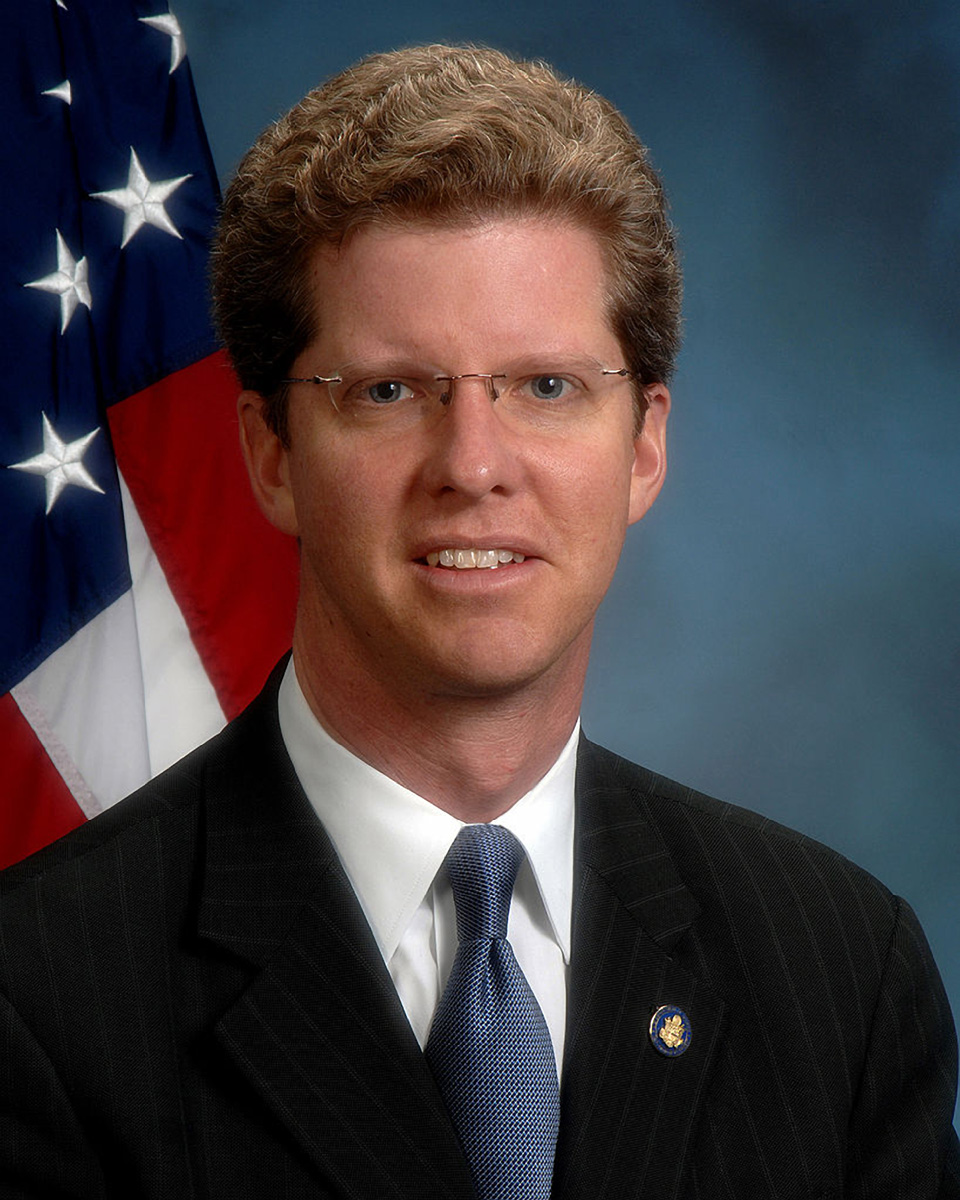
“This proposed rule represents a 21st century approach to fair housing, a819px-Shaun_Donovan step forward to ensuring that every American is able to choose to live in a community they feel proud of — where they have a fair shot at reaching their full potential in life,” HUD Secretary Shaun Donovan said.

Donovan continued: “For the first time ever, HUD will provide data for every neighborhood in the country, detailing the access African American, Latino, Asian, and other communities have to local assets, including schools, jobs, transportation, and other important neighborhood resources that can play a role in helping people move into the middle class.”

CNSNews.com reports:

“According to HUD, long-term solutions include “helping people gain access to different neighborhoods and channeling investments into under-served areas.” The mapping tool may guide development and zoning decisions, for example.

In a July 16 speech to the NAACP, Donovan said the American Dream still isn’t within equal reach of all communities. He lamented the lack of diversity in America’s boardrooms, schools, and the nation’s “strongest neighborhoods.”

“We have got to shape a future where ladders of opportunity are available for all Americans,” Donovan said. “For African Americans, this is critically important. Historically, for this community, the rungs on these ladders have been too far apart -– making it harder to reach the middle class.”

Donovan said HUD’s new neighborhood mapping tool, which uses Census data, will “expand access to high opportunity neighborhoods and draw attention to investment possibilities in under-served communities.”

HUD requires grantees, including cities, that receive federal housing funds to adhere to the Fair Housing Act, which means to “affirmatively further fair housing.”

HUD, under the proposed “fair housing” rule, will be able to evaluate patterns of so-called integration and segregation, racial and ethic concentrations of poverty and access “valuable community assets,” CNSNews.com elaborates.

This is nothing but another blatant example of social engineering by the federal government and an infringement on tour property rights

According to HUD, long-term solutions include "helping people gain access to different neighborhoods and channeling investments into under-served areas." The mapping tool may guide development and zoning decisions, for example.

In a July 16 speech to the NAACP, Donovan said the American Dream still isn't within equal reach of all communities. He lamented the lack of diversity in America's boardrooms, schools, and the nation's "strongest neighborhoods."

"We have got to shape a future where ladders of opportunity are availabledetroit.si for all Americans," Donovan said. "For African Americans, this is critically important. Historically, for this community, the rungs on these ladders have been too far apart —making it harder to reach the middle class."

Donovan said HUD's new neighborhood mapping tool, which uses Census data, will "expand access to high opportunity neighborhoods and draw attention to investment possibilities in under-served communities."

"Make no mistake, this is a big deal," Donovan said. "With the HUD budget alone, we are talking about billions of dollars. And as you know, decades ago, these funds were used to support discrimination. Now, they will be used to expand opportunity and bring communities closer to the American Dream."

Under the Fair Housing Act, HUD requires grantees, such as cities, that receive federal housing funds to "affirmatively further fair housing."

Under the proposed rule, the neighborhood data provided by HUD will be used to evaluate patterns of integration and segregation, racial and ethnic concentrations of poverty, and access to "valuable community assets." HUD wants to know if existing laws and policies — such as zoning, financing, infrastructure planning and transportation — create, perpetuate or alleviate segregation.

The proposed rule explicitly incorporates fair-housing decision-making into existing planning processes and other decision-making that influences how communities and regions grow and develop.

There is no enumerated power for Congress specified in Article I, Section 8 of the Constitution to interfere with local communities and how people decide to conduct their lives. Yet When Congress created HUD they gave them broad administrative and unchecked powers to put forth regulations that did exactly what Congress could not do according to Article I, section 8 and the Ninth and Tenth Amendments. This is the power of the administrative state.

Suppose you worked hard, saved your money, and bought your dream home in a beautiful gated community. You wanted to live here because you not only lover the amenities offered by the HOA, such as tennis courts, pools, and community meeting halls. You didn’t much care who your neighbors were and figured it they could afford to live in this community they had a right to be here and would make good neighbors. Perhaps some of your neighbors were Black or Hispanic. Perhaps they were Asian. It didn’t matter. You all had one thing in common. They qualified financially to live in the community.

I doubt if there would be any welfare recipients living in your community. Now HUD will map your community and discover that it is not “diverse” enough to suit some bureaucrat in Washington, D.C. They will notify your town council and mayor of this fact and impose sanctions if this condition is not changed to their model. They could do this through denial of block community grants and even civil rights law suits. Somehow the federal government will have to subsidize families to move in even if they have to use the power of eminent domain (see Kelo v. City of New London). Kelo was a case decided in 2005 by the Supreme Court of the United States involving the use of eminent domain to transfer land from one private owner to another private owner to further economic development. In a 5–4 decision, the Court held that the general benefits a community enjoyed from economic growth qualified private redevelopment plans as a permissible "public use" under the Takings Clause of the Fifth Amendment.

The case arose in the context of condemnation by the city of New London, Connecticut, of privately owned real property, so that it could be used as part of a “comprehensive redevelopment plan.” However, the private developer was unable to obtain financing and abandoned the redevelopment project, leaving the land as an empty lot, which was eventually turned into a temporary dump.

The big difference this time is that the land won’t be turned into a dump as HUD will provide the money for the welfare family to obtain the house next door and pay the association dues. This will be a direct infringement on your property rights.

This HUD ruling will affect every community in the United States. HUD will control decisions of local planning commissions. They will dictate who builds what and where they build it. Land developers and home builders will be mandated to provide “diversity” in the communities they create. HUD will make sure mortgage companies follow the diversity rules when they issue mortgages, even if the mortgagor can’t financially quality.

HUD will also further step up fair housing enforcement. In the past three over $54million in compensation has been awarded to 25,000 people who were wrongly discriminated against as a result of enforcement actions, Donovan noted.

By disseminating this information, HUD believes the original Fair Housing Act, signed into law in 1968, will be modernized for the 21st century,

This inequality comes from real estate agents showing fewer available properties to minorities than to equally qualified whites, Donovan explained, adding that ‘because of the subtle nature of this discrimination, often times, they don’t even know they have been subjected to this abuse.

If you think Detroit is bad wait until the central planners in Washington, D.C. come to your neighborhood.