Search This Blog

Showing posts with label Welfare. Show all posts

Monday, May 27, 2013

Are the Europeans Finally Getting the Message?

“This multicultural approach, saying that we simply live side by side and live happily with each other has failed. Utterly failed.” — Angela Merkel, the Chancellor of Germany, 2010

Two things happened last week. One made the news big-time on the mainstream media, the other bore scarcely a mention. Both incidents are indicative of the laissez-faire policy that West European nations have had towards immigration for the past 30 years. With the exception of Germany these nations have accepted immigrants from the Muslim world on almost an unrestricted basis in the name of human rights. Most of these immigrants come from third-world Muslim countries such as Bangladesh, Nigeria, Somalia, and the Sudan. Most claim refugee status to obtain entrée to these European countries and are usually granted it.

Once in the country of their choice or a country that will take them they gravitate to ghettos of their peers and settle in. they rarely learn the language of their new host country and bring all of their cultural baggage with them. This includes food, dress, treatment of women, honor killings, Islamic (Sharia) law, and disrespect for the host nations laws, police, and courts.

They suck off the teat of the host nation taking advantage of the nation’s generous welfare and healthcare systems. They pay little or no taxes and mostly live in public housing. The ghettos they live are run by some group of strong men and the Imams and clerics. The youth are unemployed and radicalized by the Imams

In July of 2001 the city of Bradford in West Yorkshire, England suffered 2 nights of rioting. It occurred as a result of heightened tension between the large and growing ethnic minority communities and the city's white majority, stoked by confrontation between the Anti-Nazi League and far right groups such as the British National Party and the National Front. According to a report in the Guardian:

“Racial violence erupted on the streets of Bradford yesterday as hundreds of Asian youths fought white extremists and police in some of the worst rioting yet seen in a summer of disturbances in northern towns and cities.

Two people were stabbed and three seriously injured after a protest march against the National Front turned violent. At the height of the trouble, police in Bradford were pelted with petrol bombs, bricks, bottles and road signs and two city centre pubs had their windows smashed. At least 17 people were arrested.

Last night, the trouble spread to the mainly Asian suburb of Manningham, an area of sprawling and deprived terraced housing estates.

A group of about 1,000 Asian youths set fire to barricades on the area's White Abbey Road and tore up bricks and concrete paving stones to hurl at the police.

Thick smoke and fumes drifted down a half-mile length of the road as police tried to beat the rioters back. Youths set fire to several cars and through petrol bombs at buildings, briefly setting the roof of one alight, as mounted police and officers in full riot gear charged the groups of rioters gathered behind a burning wreck.

Fire engines advanced to tackle the blazes behind a tight cordon of riot police. However, under a hail of stones and bricks they were several times forced to retreat. Shortly after 9pm a delegation of community leaders, including local Tory councillor Mohammed Riaz, went through police lines to talk to rioters and calm tensions, but their efforts had little effect.

'What is happening here is terrible. Businesses are being attacked, cars set on fire and I cannot believe these scenes are taking place in a city in England,' said Riaz. 'There's no logic to this. Where is the protest, where are the National Front? There is no justification for this - they are setting back Bradford 10 years.”

Note the use of the politically correct euphemism “Asian” for Muslims.

Two years ago the Guardian reported “A decade after the riots, Bradford is still uneasy about race relations:”

“Ten years ago today Bradford witnessed race riots that lasted three days and brought the issue of race relations in the city to the country's attention. Bradford became known as a "racial tinderbox" where the city's large Asian community was estranged and at odds with the white working class.

You could see the troubles coming as rioting spread across theriots-Bradford-007 north from towns on the other side of the Pennines such as Burnley and Oldham. There were the largely forgotten riots of 1995, which should have acted as a warning signal. After those disturbances, Asian residents complained about a lack of opportunities and growing unease about relationships with the police and the white working class. Those calls were mostly ignored, the National Front took advantage and six years later tensions boiled over again.

I was a 17-year-old student at the time, and like many people in the city was shocked to see Manningham turned into a battleground. I remember picking up the Telegraph and Argus and seeing the faces of young men I'd played against in a football semi-final a few months earlier on the front page as wanted troublemakers. Harsh sentences followed for the Asian offenders and the city woke up to the fact that it had been sleepwalking into segregation for more than 30 years.

There was a definite change in the city as the initial shock of the riots turned to disgust and even hatred as people surveyed what "they" had done to "our" city. The fallout continued with the BNP gaining council seats in predominantly white areas like Queensbury and Keighley as far-right groups took advantage of the troubles to reinforce the "them and us" attitude. Lord Ouseley's report and the Cantle report followed and laid out the drastic action that needed to be taken to counteract the effects of segregation in the city and others like it.”

The British have been the most lenient with the immigration policies and until this past week they have been turning a blind eye to the changes in culture this policy is inflecting on the natural British citizens. They believe they are doing God’s work in allowing these “Asians” to dominate their politics and through political correctness have been reluctant to change the policies and take measures, as France and the Netherlands did, to restrict the immigration and begin deporting the radical Muslims.

Islam is London's largest and most significant minority religion. There were 607,083 Muslims reported in the 2001 census in the Greater London area. 40% of England's Muslims live in London, where they make up 8.5% of the population. According to the 2011 census 2.8 million Muslims live in the U.K. (4.8% of the populations of England and Wales).

article-1218934-06C170F6000005DC-242_634x540

(Click on the above chart to view a larger image)

According to 2011 report in the Mail Online the Muslim population in the UK will almost double to 5.5million within 20 years:

“Immigration and high birth rates will mean nearly one in ten Britons will be Muslim by 2030, according to a worldwide study about the spread of Islam.

And the forecasts mean Britain will have more Muslims than Kuwait.

From 1990 to 2010 the number of followers of the Islamic faith around the world increased at an average rate of 2.2 per cent annually. Last year there were 1.57billion around the world.

The British increase in the Muslim population from the current 2.8 million will be mainly driven by immigration, according to figures prepared by a Washington think tank.

Projections by the respected Pew Research Centre said the 40 years between 1990 and 2030 will see a fivefold rise in Britain.

In 1990 there were 1.1million Muslims in Britain, representing two per cent of the population.

By last year that figure had risen to 2.8million, or four per cent. By 2030 the number will hit 5.5 million - eight per cent of an estimated 68 million population, Pew researchers said.”

Britain is paying a high price for this nonsensical, liberal progressive social immigration policy.

Last Wednesday, Drummer Lee Rigby of the Royal Regiment of Fusiliers, a man who had served Queen and country honorably in the hell of Helmand Province in Afghanistan, emerged from his barracks on Wellington Street, named after the Duke thereof, in southeast London. Minutes later, he was hacked to death in broad daylight and in full view of onlookers by two men with machetes who crowed “Allahu Akbar!” as they dumped his carcass in the middle of the street like so much road kill.

As grotesque as this act of savagery was, the aftermath was even morepic_giant_052413_London-Attack unsettling. The perpetrators did not, as the Tsarnaev brothers did in Boston, attempt to escape. Instead, they held court in the street gloating over their trophy, and flagged down a London bus to demand the passengers record their triumph on film. As the crowd of bystanders swelled, the remarkably urbane savages posed for photographs with the remains of their victim while discoursing on the iniquities of Britain toward the Muslim world. Having killed Drummer Rigby, they were killing time: It took 20 minutes for the lethargic British constabulary to show up. And so television viewers were treated to the spectacle of a young man, speaking in the vowels of south London, chatting calmly with his “fellow Britons” about his geopolitical grievances and apologizing to the ladies present for any discomfort his beheading of Drummer Rigby might have caused them, all while drenched in blood and still wielding his cleaver.

If you’re thinking of getting steamed over all that, don’t. Simon Jenkins, the former editor of the Times of London, cautioned against “mass hysteria” over “mundane acts of violence.”

That’s easy for him to say. Woolwich is an unfashionable part of town, and Sir Simon is unlikely to find himself there of an afternoon stroll. Drummer Rigby had less choice in the matter. Being jumped by barbarians with machetes is certainly “mundane” in Somalia and Sudan, but it’s the sort of thing that would once have been considered somewhat unusual on a sunny afternoon in south London — at least as unusual as, say, blowing up eight-year-old boys at the Boston Marathon. It was “mundane” only in the sense that, as at weddings and kindergarten concerts, the reflexive reaction of everybody present was to get out their cell phones and start filming.

there is a disturbing passivity to this scene: a street full of able-bodied citizens being lectured to by blood-soaked murderers who have no fear that anyone will be minded to interrupt their diatribes. In fairness to the people of Boston, they were ordered to “shelter in place” by the governor of Massachusetts. In Woolwich, a large crowd of Londoners apparently volunteered to “shelter in place,” instinctively. Consider how that will play when these guys’ jihadist snuff video is being hawked around the bazaars of the Muslim world. Behold the infidels, content to be bystanders in their own fate.

This passivity set the tone for what followed. In London as in Boston, the politico-media class immediately lapsed into their political correct multi-culture blabber that seems to be a chronic side effect of excess diversity-celebrating: No Islam to see here, nothing to do with Islam, all these body parts in the street are a deplorable misinterpretation of Islam. The BBC’s Nick Robinson accidentally described the men as being “of Muslim appearance,” but quickly walked it back lest impressionable types get the idea that there’s anything “of Muslim appearance” about a guy waving a machete and saying “Allahu Akbar.” A man is on TV dripping blood in front of a dead British soldier and swearing “by Almighty Allah we will never stop fighting you,” yet it’s the BBC reporter who’s apologizing for “causing offence.” To David Cameron, Drummer Rigby’s horrific end was “not just an attack on Britain and on the British way of life, it was also a betrayal of Islam. Perhaps it will eventually be labeled as “workplace violence.”

In the above video clip note the woman casually pulling her shopping cart as she approaches terrorist and the crowd of sheeple standing by and casually watching. I can guarantee this would not have been the case in Oklahoma or Texas. Also note how the ITV commentator refers to another act of violence when describing that the armed police shot the SOB machete-wielding killer.

The suburbs of the Swedish capital were engulfed in a fourth night of rioting early last Thursday in the country's worst civil unrest in years, leaving locals shaking their heads and wondering when calm would return to their usually tranquil city. A report in USA Today states:

“Since Sunday, hundreds of young residents of the suburbs of Husby, Jakobsberg, Hagsatra, Skarholmenset and others set dozens of cars on fire, damaged buildings — including schools and a police station — and battled with police. There were about 10 arrests, and one police officer was reported injured.

Police spokesman Kjell Lindgren says at least 30 cars were set ablaze across western and southern Stockholm early Thursday. Firefighters said they have "never before seen so many fires raging at the same time."

Fire also destroyed a restaurant in Skogas, south of Stockholm.

stockholm-riotGovernment officials have called for calm while the rioters say they won't stop until there is a full investigation into the shooting death of a 69-year-old mentally ill Husby man last week who, police say, was swinging a machete as police attempted a house search.

"Everyone must work to restore calm," said Prime Minister Fredrik Reinfeldt.

On Wednesday night and into Thursday, hundreds of residents walked the streets to answer the appeal for calm.

The unrest in poor, immigrant suburbs is only the latest to break out in Europe over the past decade following riots in Paris in 2005 and in London in 2011. But it has shocked both locals and those outside the rich northern country famous for its tolerance and generous welfare system known as the 'Swedish model,' a country also synonymous for its commitment to societal equality and justice.

Now, locals are wondering if Sweden has done any better than its European neighbors in assimilating its immigrant population, especially as administrations in the past two decades have been slowly dismantling the cradle-to-grave welfare benefits. That has led to rising income inequality that has hit the young and immigrants the hardest with unemployment running at 7% for the general population, and 16% among residents of foreign origin.”

In a related report from The Guardian:

“What began in Husby last Sunday has spread to more than a dozen of the city's other suburbs. And on Friday night, while police reported a quieter night in the capital, fires and stone-throwing were also reported in Uppsala, Södertälje, and even further afield in Linköping and Örebro, in central Sweden.

The morning after the truck-burning, however, Husby seems idyllic.images (2) There's a busy vegetable stall in the main square and a group of elderly men sipping beer in the sun. The rows of seven-storey blocks, built in the 1960s and 1970s as part of Sweden's "million homes" project, are all freshly painted, the gardens and playgrounds well-tended. At the local school, the windows broken the previous night are already being fixed.

"If you have broken windows and they see it, they will crack other windows, so we must fix it immediately," says Christer Svensson, who has come in to do the work. "I don't care, I make money out of this."

Outside the new library, which opened last month, another white, ethnically Swedish handyman is busy painting. "This place behind me, they've just spent 40m kronor [£4m] on it," he grumbles. "They don't talk about that when they talk to the TV, do they? They talk about the problems, they don't talk about everything people are doing for them.

"These people, they should integrate in this society and just try a little bit more to be like Swedish citizens."

Scratch beneath the surface and this is a sentiment shared by many in a country that arguably has the world's most generous asylum policies. Sweden has taken in more than 11,000 refugees from Syria since 2012, more per head than any other European country, and it has absorbed more than 100,000 Iraqis and 40,000 Somalis over the past two decades. About 1.8 million of its 9.5 million people are first- or second-generation immigrants.

"This is one of the countries that treats immigrants the best," says Mohammed Hassan, a Bangladeshi studying in Husby's new library, who previously lived in Brick Lane in east London. "It's much, much better than any other European country in which I've travelled."

The nightly rioting in Stockholm that establishment media ascribes merely to “youths,” is being carried out by Muslim immigrants.

A report from the Russia-based RT.com is one of the few which dared to print the M-word -- "Muslim" -- and even its author waited until the 21st of 25 paragraphs to mention it. But the report's headline and content deserve credit for properly framing the "segregation" problem:

‘They don’t want to integrate’: Fifth night of youth rioting rocks Stockholm

Youth gang riots in the Swedish capital Stockholm have entered fifth straight night. Hundreds of mostly immigrant teenagers tore through the suburbs, smashing windows and burning cars in the country’s worst outbreak of violence in years.

The night before, the fire brigades were called to some 90 different blazes. On the fourth night of violence, youths torched over 30 cars in 15 neighborhoods along with a restaurant in Skogas, south of Stockholm. Three law enforcement officers were injured, police spokesperson Kjell Lindgren reported.

Stockholm firefighters were busy throughout the night, saying they had “never before seen so many fires raging at the same time.” Some 90 blazes were reported in total, most of them reportedly caused by the rioters. Still, the fourth night of violence was relatively quiet compared to the previous three, RT's Peter Oliver reported from Stockholm.

Community leaders insist that a main reason for the violence is the high rate of unemployment in immigrant communities, particularly in the suburb of Husby near central Stockholm, one of the worst affected by the nighttime violence, Peter Oliver reported.

“In Sweden you’ve got welfare, access to the educational system – up to university level, you got access to public transport, libraries, healthcare – to everything. And still they feel that they [immigrants] need to riot through stones and Molotov cocktails. It’s ridiculous and a bad excuse,” Swedish Democrats MP Kent Ekeroth told RT.

For years, Sweden – one of Europe’s most tranquil countries, famous for its attractive immigration policies and generous welfare system – has been accepting an influx of immigrants, which now make up about 15 per cent of its population. These migrants have failed to integrate into Swedish society, and are only in the country to enjoy the country’s social benefits system, Swedish journalist Ingrid Carlqvist told RT.

“The problem is not from the Swedish government or from the Swedish people,” the editor in chief of Dispatch International said. “The last 20 years or so, we have seen so many immigrants coming to Sweden that really don’t like Sweden. They do not want to integrate, they do not want to live in [Swedish] society: Working, paying taxes and so on.”

Young Muslims who enjoy tolerance, social institutions and welfare while living in Sweden nevertheless refuse to integrate into the West, Gerolf Annemans told RT. Annemans is the parliamentary leader of Vlaams Belang (‘Flemish Interest’), a Belgian far-right nationalist political party.

“It’s always the same problem. There is a massive refusal by Muslim youngsters of the basics of Western society... and they take any excuse whatsoever to show that with violence – that is where the problem is,” he said.

Muslim immigrants in Sweden now total slightly more than 6 percent of thearticle-1351251-053BF13A0000044D-321_634x558 population, providing additional support for the maxim that a Muslim population of 5 percent is a tipping point for political turmoil. In other countries, Muslim immigrants at that point have begun to seek concessions, including, typically, the right to govern themselves by Sharia, or Islamic law.

In Sweden, the Muslim population has doubled in the last 14 years, with Muslims now accounting for over 41 percent of Sweden’s total population growth. The growth reflects not only increasing Islamic immigration but also a disproportionately high birth rate in a nation in which the native birth rate is trending toward zero-growth.

According to European Union statistics, an estimated 574,000 Muslims lived in Sweden in 2012, making up 6.05 percent of the population, compared to 1998, when there were 284,000 Muslims, or 3.21 percent of the total population.

The EU currently estimates that at current rates of growth, the Muslim population will reach 40 percent of the total population in Sweden by 2030.

While Sweden does not keep welfare statistics specifically for Muslims, experts estimate from available government welfare statistics on the foreign-born that somewhere between 70 and 80 percent of Sweden’s welfare payments go to Muslims, with the percentage on the rise.

In Stockholm, the rioting in recent days has centered on Husby, a low-income suburb of Stockholm with some 12,000 residents. Approximately 80 percent are first- or second-generation Muslim immigrants from Turkey, the Middle East and Somalia.

Swedish police estimated that about 200 Muslim youths were responsible for the violence last week that set hundreds of cars and several buildings on fire with Molotov cocktails, including a parking garage fire that forced the evacuation of residents of an adjacent apartment block.

After setting cars on fire, masked Muslim youths waited to pelt with rocks any police responding to calls.

Reports indicate Megafonen, a “youth activist group” funded by the city, planned the Husby riots. Police in riot gear scuffled with Muslim gangs roaming freely in Husby. Some 200 organized Muslim youth rioters armed with rocks and Molotov cocktails stood near the burning cars awaiting to pelt with rocks and Molotov cocktails police and fire departments responding.

The Muslim riots in the suburbs outside Stockholm bear a strong resemblance to the Muslim riots that began Oct. 27, 2005, in suburbs outside Paris.

Several common elements between the rioting in France in 2005, and again in 2012, with the rioting currently occurring in Stockholm:

Unemployed Muslim youth immigrants from welfare families relocated from Africa to Europe begin the riot in early evening by tossing Molotov cocktails to set parked cars on fire;

The violence is intensified and spread by mobs of Muslim gangs running wild through the suburb streets, spreading to the area in which cars and buildings are torched;

When police and fire department units respond, the Muslim rioters lie in wait to pelt them with rocks, sticks and Molotov cocktails.

In February, the Economist reported that in Sweden, only 51 percent of non-Europeans have a job, compared with over 84 percent of native Swedes.

“The Nordic countries need to persuade their citizens that they are getting a good return on their taxes,” the Economist noted, “but mass immigration is creating a class of people who are permanently dependent upon the state.”

In Sweden, 26 percent of all prisoners and 50 percent of prisoners serving more than five years are foreigners, the Economist detailed.

Nor is the conflict limited to social-demographic characteristics and economics; it also extends to cultural differences.

“Nordics fervently believe in liberal values, especially sexual equality and freedom of speech, but many of the immigrants come from countries where men and women are segregated and criticizing the prophet Muhammad is a serious offense.”

The Economist report concluded:

“The biggest battle is within the Nordic mind. Is it more progressive to open the door to refugees and risk overextending the welfare state, or to close the door and leave them to languish in danger zones? Is it more enlightened to impose secular values on devout Muslims or to dilute liberal values in the name of multiculturalism? Trying to reconcile these contradictions can lead to strange results. Alarmed by reports of female genital mutilation, Nyamko Sabuni, a Swedish cabinet minister, suggested compulsory gynaecological examinations for all young girls in Sweden.

Liberals are increasingly on the defensive. The number of immigration-related attacks is rising. In 2010 Taimour Abdulwahab al-Abdaly blew himself up in the middle of a crowd of Christmas shoppers in central Stockholm; remarkably, he managed to injure only a couple of people. In Sweden median household incomes of non-European immigrants are now 36% lower than for native-born Swedes, whereas in 1991 they were only 21% lower. But Denmark’s much-vilified immigration reforms may be paying off: the employment gap between native Danes and non-Western immigrants has declined to 24 percentage points, compared with 42 in the mid-1990s.

Sweden is now allowing in more skilled workers, having previously combined highly restrictive policies for this group with the world’s most generous policies for refugees. Trade unions used to have a veto over who was admitted and repeatedly used it. This may calm the immigration debate, but it may equally well increase the pressure to open the doors even wider for skilled immigrants while closing them for refugees.

A 20-minute drive from Rosengard to the western harbour takes the visitor to the Turning Torso, a high-rise, high-spec block that twists like a lithe athlete and commands spectacular views over the Oresund bridge linking Malmö to Copenhagen. Directly opposite its entrance is an establishment calling itself a “facelift centre”. Designer houses cluster around its base. Green’s supermarket sells local organic food and advertises yoga classes and tango lessons on the beach.

Thirty years ago Malmö was the capital of working-class Sweden, a no-nonsense city dominated by solid citizens who worked in the Kockums shipyard and voted for the Social Democratic Party. Then the global economy turned against it. The shipyards contracted and the local factories and textile mills closed. The once-dominant working class shrank to near-invisibility and the population split between professionals living in designer lofts and refugees living in Rosengard’s high-rises. The giant Kockums crane that had become the city’s symbol in 1974 was dismantled and sent to South Korea in 2002. In 2005 the Turning Torso became the city’s new landmark.

The decline of the working class and the increasing polarisation of professionals and immigrants is being repeated across the region. The Nordic countries are still among the world’s most equal, and in one important respect they are becoming more so. In 2010-11 around 60% of university graduates in Finland and Sweden were women. Sweden has almost as many female as male MPs. In Denmark the prime minister and a raft of other ministers are women.

But in other respects money is making the Nordics less equal. As a proportion of the economy, Sweden’s private-equity industry is second only to Britain’s in Europe, and Norway is awash with oil money. Some of the new rich are splashing out on Porsches and big houses, but most prefer to spend their money in subtler and less conspicuous ways. Even so, they live in a different world from the immigrants stuck in Rosengard.”

In a May 26th report from The Independent:

“So is there something rotten in the state of Sweden? The scale of the riots cannot be compared to Paris in 2005 or to London two years ago, which eventually took hold far outside the capital. No one has been killed, and almost no one injured. The little suburb of Husby is a pretty place, built for rich white Swedes who have almost all left. It is incomparable to Tottenham’s Broadwater Farm estate, the ground zero of the London riots.

But even so, 80 per cent of the population are immigrants, who have for the most part fled from the troubled corners of the world - Iraq, Iran, Afghanistan, Somalia, Kurdistan and more recently Syria - lured by Sweden’s traditionally welcoming attitude towards asylum seekers. But youth unemployment is high, at least by Swedish standards - 6 per cent.”

In February of 1993 I spent three days in Stockholm on a business trip. The first thing I noticed was the cab ride from the airport to my hotel. I had a Pakistani driver with a new Volvo. Next at the hotel I noticed many “Asian” staff working the restaurant and room cleaning service. When I asked my Swedish hosts about this they looked distressed as the politely attempted to excuse the increase in immigration of Muslims into “their” country. They were concerned about the increasing strain these poor and uneducated immigrants were putting on their social welfare system — a system these businessmen were not very happy about paying high taxes for. They were also concerned that these immigrants were not learning Swedish and assimilating into their culture. Sound familiar?

After a British soldier wearing a Help for Heroes charity T-shirt was run over, stabbed and slashed with machetes and a meat cleaver, and beheaded, the Tory government advised its soldiers that it is probably best not to appear in uniform on the streets of their capital.

Both murderers were wounded by police. One was photographed and recorded. His message:

“There are many, many (verses) throughout the Quran that says we must fight them as they fight us. An eye for an eye and a tooth for a tooth. I apologize that women had to witness this today, but in our land women have to see the same. Your people will never be safe.”

According to ITV, one murderer, hands dripping blood, ranted, “We swear by almighty Allah we will never stop fighting you.”

Both killers are Muslim converts of African descent, and both are British born.

Wednesday also, Stockholm and its suburbs ended a fourth night of riots, vandalism and arson by immigrant mobs protesting the police shooting of a machete-wielding 69-year-old.

“We have institutional racism,” says Rami Al-khamisi, founder of a group for “social change.”

Sweden, racist?

Among advanced nations, Sweden ranks fourth in the number of asylum seekers it has admitted and second relative to its population.

Are the Swedes really the problem in Sweden?

The same day these stories ran, The Washington Post carried a front-page photo of Ibrahim Todashev, martial arts professional and friend of Tamerlan Tsarnaev, who, with brother Dzhokhar, set off the bombs at the Boston Marathon massacre.

Todashev, another Chechen, had been shot to death by FBI agents, reportedly after he confessed to his and Tamerlan’s role in a triple murder in Waltham, Mass.

Though Tamerlan had been radicalized and Moscow had made inquiries about him, he had escaped the notice of U.S. authorities. Even after he returned to the Caucasus for six months, sought to contact extremists, then returned to the U.S.A., Tamerlan still was not on Homeland Security’s radar.

His father, granted political asylum, went back to the same region he had fled in fear. His mother had been arrested for shoplifting. Yet none of this caused U.S. officials to pick up Tamerlan, a welfare freeloader, and throw the lot of them out of the country.

One wonders if the West is going to wake up to the new world we have entered, or adhere to immigration policies dating to a liberal era long since dead.

It was in 1965, halcyon hour of the Great Society, that Ted Kennedy led Congress into abolishing a policy that had restricted immigration for 40 years, while we absorbed and Americanized the millions who had come over between 1890 and 1920.

The “national origins” feature of that 1924 law mandated that ships arriving at U.S. ports carry immigrants from countries that had provided our immigrants in the past. We liked who we were.

Immigration policy was written to reinforce the Western orientation and roots of America, 90 percent of whose population could by 1960 trace its ancestry to the Old Continent.

But since 1965, immigration policy has been run by people who detest that America and wanted a new nation that looked less like Europe and more like a continental replica of the U.N. General Assembly.

They wanted to end America’s history as the largest and greatest of Western nations and make her a nation of nations, a new society and a new people, more racially, ethnically, religiously and culturally diverse than any nation on the face of the earth. This is called multiculturalism.

Behind this vision lies an ideology, an idée fixe, that America is not a normal nation of blood and soil, history and heroes, but a nation erected upon an idea, the idea that anyone and everyone who comes here, raises his hand, and swears allegiance to the Declaration of Independence and Bill of Rights becomes, de facto, not just a legal citizen but an American.

But that is no more true than to say that someone who arrives in Paris from Africa or the Middle East and raises his hand to declare allegiance to the Rights of Man thereby becomes a Frenchman.

What is the peril into which America and the West are drifting?

Ties of race, religion, ethnicity and culture are the prevailing winds among mankind and are tearing apart countries and continents. And as we bring in people from all over the world, they are not leaving all of their old allegiances and animosities behind.

Many carry them, if at times dormant, within their hearts.

And if we bring into America — afflicted by her polarized politics, hateful rhetoric and culture wars — peoples on all sides of every conflict roiling mankind, how do we think this experiment is going to end?

The immigration bill moving through the Senate, with an amnesty for 11 to 12 million illegals already here, and millions of their relatives back home, may write an end to more than just the Republican Party.

When a people abandon their language, culture, and borders it is no longer a sovereign nation. It becomes a polyglot assembly of peoples adhering to their native language and culture in the manner of the old Austro-Hungarian Empire — it was neither Austrian, Hungarian nor an Empire. It was a multilingual, multiethnic, and multicultural assemblage with vague borders that ended with a gunshot by in Gavrilo Princip in Sarajevo on June 28, 1914.

Our Founders’ vision of the republic they had created was a nation open to immigrants willing to come to this new land and live under our organic laws.

It was James Madison who stated in a speech at Federal Convention, August 13, 1787: ”America was indebted to immigration for her settlement and prosperity. That part of America which had encouraged them most had advanced most rapidly in population, agriculture and the arts.” Their intent was not for immigrants to come to America and bring their old world baggage with them and see how much they could take from their fellow taxpayers.

The inscription on the Statue of Liberty, standing above New York Harbor, by Emma Lazarus reads”

“Give me your tired, your poor,
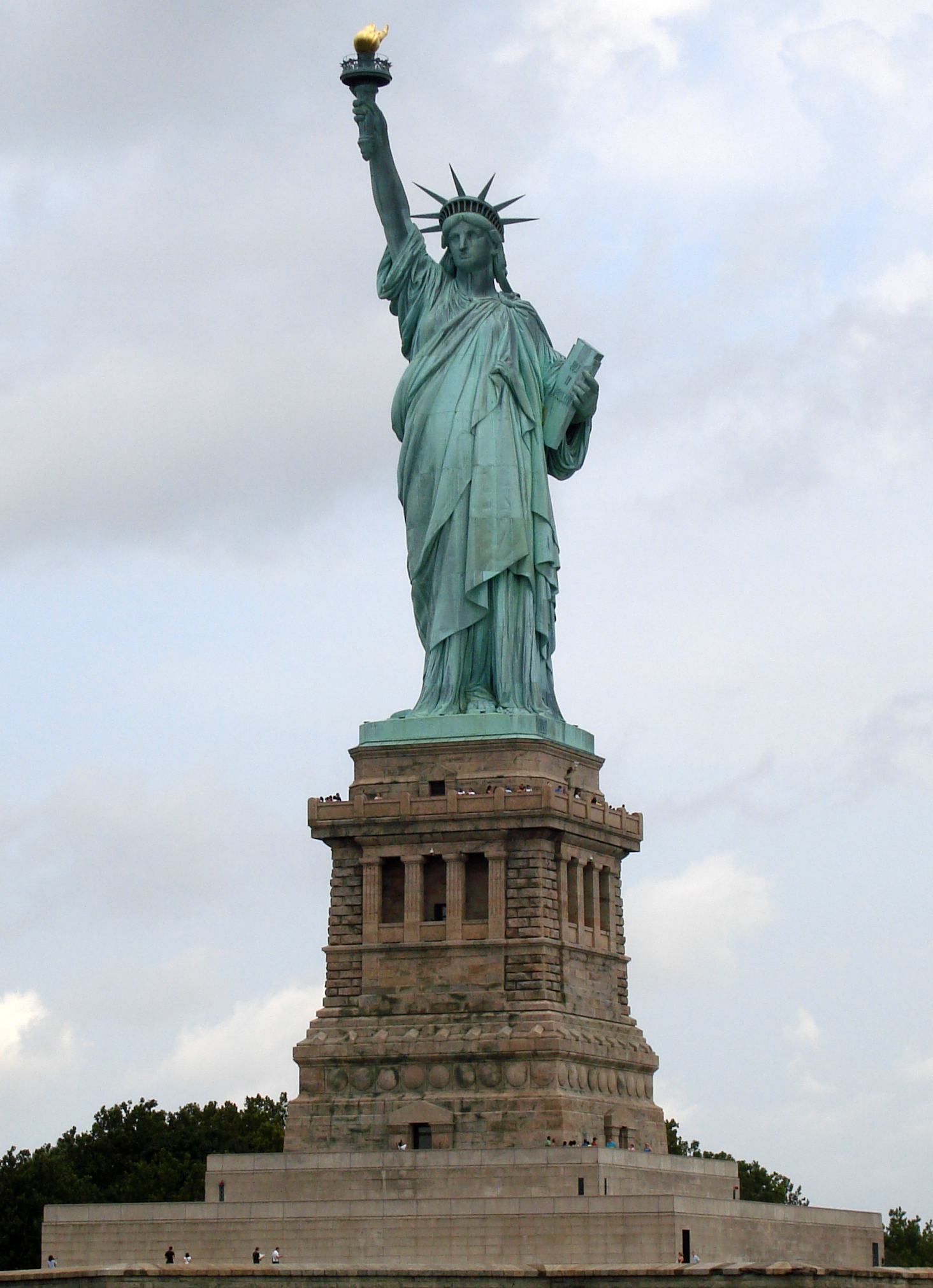
Your huddled masses, yearning to breathe free,

The wretched refuse of your teeming shore,

Send these, the homeless, tempest tost to me,

I lift my lamp beside the golden door.”

It does not say:

Give me your tired, your poor, your disenchanted, and those wishing a better life,

Your huddled masses, yearning to breathe free and realize the benefits of plunder,

The wretched refuse of your teeming shore, those who see the streets paved with gold,

Send these, the homeless, tempest tost to me to enjoy the bounty of our social welfare system, and wish for a land of multiculturalism,

I lift my lamp beside the golden door, be you legal or illegal, so you may enjoy your happiness in the generosity of the American taxpayer while retaining your language, culture, and customs.

With the exploding population in the Muslim world and the increasing poverty and civil unrest more and more poor and uneducated Muslims will be looking for refugee status in Europe, Canada, and the United States. The same holds true with our own southern neighbors with the exception of the civil unrest. The twenty years will see a dramatic change in the European welfare states as more and more of these immigrants tax their social welfare systems and there will be more takers than makers. Their liberal progressive social policies will become increasingly unpopular with the native born as the influence of these Muslim immigrants not only drain their government’s coffers, but also change their culture. As Angela Merkel, the Chancellor of Germany stated in October 2010: “This multicultural approach, saying that we simply live side by side and live happily with each other has failed. Utterly failed.”

Tuesday, February 12, 2013

The Recipient Class

“Now since man is naturally inclined to avoid pain—and since labor is pain in itself—it follows that men will resort to plunder whenever plunder is easier than work. History shows this quite clearly. And under these conditions, neither religion nor morality can stop it. — Frederick Bastiat, The Law.

Alexis-Charles-Henri Clérel de Tocqueville (July 29, 1805 – April 16, 1859) was a French political thinker and historian best known for his Democracy in America (appearing in two volumes: 1835 and 1840) and The Old Regime and the Revolution (1856). In both of these works, he explored the effects of the rising equality of social conditions on the individual and the state in western societies.

In 1831 Alexis de Tocqueville, a young French aristocrat and ambitious civil servant, made a nine-month journey throughout America. The result was Democracy in America, a monumental study of the life and institutions of the evolving nation. Tocqueville looked to the flourishing democratic system in America as a possible model for post-revolutionary France, believing that the egalitarian ideals it enshrined reflected the spirit of the age and even divine will. His insightful work has become one of the most influential political texts ever written on America and an indispensable authority on democracy.

Several things de Tocqueville stated in his Democracy in America book are more relevant today than ever:

“The American Republic will endure until the day Congress discovers that it can bribe the public with the public's money.”

“Democracy extends the sphere of individual freedom, socialism restricts it. Democracy attaches all possible value to each man; socialism makes each man a mere agent, a mere number. Democracy and socialism have nothing in common but one word: equality. But notice the difference: while democracy seeks equality in liberty, socialism seeks equality in restraint and servitude.”

“When the taste for physical gratifications among them has grown more rapidly than their education the time will come when men are carried away and lose all self-restraint. It is not necessary to do violence to such a people in order to strip them of the rights they enjoy; they themselves willingly loosen their hold. They neglect their chief business which is to remain their own masters.”

“Society will develop a new kind of servitude which covers the surface of society with a network of complicated rules, through which the most original minds and the most energetic characters cannot penetrate. It does not tyrannize but it compresses, enervates, extinguishes, and stupefies a people, till each nation is reduced to nothing better than a flock of timid and industrious animals, of which the government is the shepherd.”

Alexis de Tocqueville, like another French classical liberal (now called conservatives not to be confused with today’s progressive liberals) Frederick Bastiat saw the dangers of the nanny state and how citizens would be willing to trade freedom for government handouts. It was Bastiat who said in his 1850 book, The Law, stated:

“…But, generally, the law is made by one man or one class of men. And since law cannot operate without the sanction and support of a dominating force, this force must be entrusted to those who make the laws.

This fact, combined with the fatal tendency that exists in the heart of man to satisfy his wants with the least possible effort, explains the almost universal perversion of the law. Thus it is easy to understand how law, instead of checking injustice, becomes the invincible weapon of injustice. It is easy to understand why the law is used by the legislator to destroy in varying degrees among the rest of the people, their personal independence by slavery, their liberty by oppression, and their property by plunder. This is done for the benefit of the person who makes the law, and in proportion to the power that he holds.”

Bastiat recognized that the greatest single threat to liberty is government. Notice the clarity he employs to help us identify and understand evil government acts such as legalized plunder. Bastiat says, “See if the law takes from some persons what belongs to them, and gives it to other persons to whom it does not belong. See if the law benefits one citizen at the expense of another by doing what the citizen himself cannot do without committing a crime.” With such an accurate description of legalized plunder, we cannot deny the conclusion that most government activities, including ours, are legalized plunder, or for the sake of modernity, legalized theft.

If Bastiat or de Tocqueville were alive today, they would be disappointed with our failure to keep the law within its proper domain. Over the course of a century and a half, we have created more than 50,000 laws. Most of them permit the state to initiate violence against those who have not initiated violence against others.

Bastiat explains the call for laws that restrict peaceable, voluntary exchange and punish the desire to be left alone by saying that socialists want to play God. Socialists look upon people as raw material to be formed into social combinations. To them— the elite—“the relationship between persons and the legislator appears to be the same as the relationship between the clay and the potter.” And for people who have this vision, Bastiat displays the only anger I find in The Law when he lashes out at do-gooders and would-be rulers of mankind, “Ah, you miserable creatures! You who think that you are so great! You who judge humanity to be so small! You who wish to reform everything! Why don’t you reform yourselves? That task would be sufficient enough.”

In essence we have created a state where there exists a permanent recipient class — a class that is dependent on government for its sustenance. This is today’s definition of equality.

Last week, Jonah Goldberg wondered why Republicans are doing so well at the local and state level but striking out at the federal level of politics. His answer to the question is simple: state and local government is about nuts and bolts; the federal government is all about religion. Goldberg stated in his Townhall column:

“Our presidents, Republican and Democrat alike, talk about their "visions" for America, as if being a president requires you to impose some quasi-religious vision on the country.

But the Democrats are simply better at talking about government in spiritual terms. Indeed, such testifying is Obama's one indisputable gift. They talk about the federal government doing things we'd want God to do if God dabbled in public policy.”

Here is reason good enough for President Jefferson to call for a "wall of separation" between church and state: to keep the vision thing a safe distance away from government and its enforcement officers. Because, as I like to say, government is force, and it is always a good idea to keep that in mind as soon as someone starts talking about "the children", “investment” or "inequality."

Yes, inequality: that's how liberals are justifying their expansion of government these days. That's what President Obama was talking about in his Osawatomie speech in December 2011,

In a recent Pew Research Organization poll the top four issues for Hispanic voters were; the economy (jobs), health care, the deficit, and foreign policy. The Democrats did a better job of convincing these voters that they would give them more than Romney — it was the traditional Democrat offerings of more stuff from government. Immigration was very low on the list and gun control was not even mentioned. (See: Another Round of Immigration Reform)

Today it is estimated that 47% of Americans are living off of some sort of federal, state, or local subsistence programs. These programs include:

  • 99 weeks unemployment insurance
  • Food stamps (SNAP). Ten years ago 19.5 million Americans were on food stamps, today the number exceeds 47 million which is equivalent to 15% of the population.
  • Special Supplemental Nutrition Program for Women, Infants and Children (WIC)
  • Earned Income Tax Credits (EITC)
  • Medicaid — a program that is jointly funded by the state and federal government.
  • Aid to dependent children (TANF)
  • Farm subsidies
  • Stimulus programs, also known as corporate welfare
  • Government workers and teachers pensions and health care plans creating trillions of dollars in unfunded liability for future taxpayers.
  • Subsidized college loans
  • School breakfast and lunch programs

This list could go on and on, but these are just a few of the more costly forms of legal plunder. Also note that not one of these programs is in the scope of the federal government as that scope is defined by the enumerated powers listed in Article I, Section 8 of the U.S. Constitution.

In Entitlement America, the head of a household of four making minimum wage has more disposable income than a family making $60,000 a year According to Wyatt Emerich as shown on Zero Hedge. Click here for the chart that tells a sad tale of plunder:

Emerich analyzes disposable income and economic benefits among several key income classes and comes to the stunning (and verifiable) conclusion that "a one-parent family of three making $14,500 a year (minimum wage) has more disposable income than a family making $60,000 a year." And that excludes benefits from Supplemental Security Income disability checks. America is now a country which punishes those middle-class people who not only try to work hard, but avoid scamming the system. Not surprisingly, it is not only the richest and most audacious thieves that prosper - it is also the penny scammers at the very bottom of the economic ladder that rip off the middle class each and every day, courtesy of the world's most generous entitlement system.

As Bastiat stated:

“Man can live and satisfy his wants only by ceaseless labor; by the ceaseless application of his faculties to natural resources. This process is the origin of property.

But it is also true that a man may live and satisfy his wants by seizing and consuming the products of the labor of others. This process is the origin of plunder. Now since man is naturally inclined to avoid pain—and since labor is pain in itself—it follows that men will resort to plunder whenever plunder is easier than work. History shows this quite clearly. And under these conditions, neither religion nor morality can stop it.”

Right now, the liberals are all agreed that "inequality" requires more government. In ten years, they will come up with something else.

Monday, December 3, 2012

What Was the Value of the CCC and WPA

“An old English judge once said: “Necessitous men are not free men.” Liberty requires opportunity to make a living—a living decent according to the standard of the time, a living which gives man not only enough to live by, but something to live for.” — Franklin Roosevelt, 1936 Democratic Convention.

In his speech to the Democratic Convention in 1936 presidential candidate Franklin Roosevelt stated:

“Here, and in every community throughout the land, we are met at a time of great moment to the future of the Nation. It is an occasion to be dedicated to the simple and sincere expression of an attitude toward problems, the determination of which will profoundly affect America.

I come not only as a leader of a party, not only as a candidate for high office, but as one upon whom many critical hours have imposed and still impose a grave responsibility.

For the sympathy, help and confidence with which Americans have sustained me in my task I am grateful. For their loyalty I salute the members of our great party, in and out of political life in every part of the Union. I salute those of other parties, especially those in the Congress of the United

States who on so many occasions have put partisanship aside. I thank the Governors of the several

States, their Legislatures, their State and local officials who participated unselfishly and regardless of party in our efforts to achieve recovery and destroy abuses. Above all I thank the millions of Americans who have borne disaster bravely and have dared to smile through the storm.

America will not forget these recent years, will not forget that the rescue was not a mere party task. It was the concern of all of us. In our strength we rose together, rallied our energies together, applied the old rules of common sense, and together survived.”

Roosevelt made this speech in defense of the numerous policies he and Congress had instituted during his last four years in office. These policies were enacted as measures to mitigate the effects of the Great Depression and the Dust Storms that plagued the Great Plains and farmers.

In my last blog post, Reflections on the Dust Bowl, I made brief mention of the Works Progress Administration (renamed during 1939 as the Work Projects Administration; WPA) and the Civilian Conservation Corps (CCC). Both of these programs were instituted during the early years of the Roosevelt Administration with the support of Congress as federal government funded and managed programs to mitigate the effects of the Great Depression.

Both Roosevelt and his powerful advisor Harry Hopkins did not believe in handouts without work and wanted programs that would not only provide money for the millions of unemployed, but that would provide dignity through useful work. Hopkins argued that although the work relief program was more costly than direct relief payments, it was worth it. He asserted, "Give a man a dole, and you save his body and destroy his spirit. Give him a job and you save both body and spirit."

Before I get into the subject of the value of the CCC and WPA let me tell a personal story of my association with the CCC and how it may have affected my life.

Upon my graduation from high school I took a full time job as a surveyor’s assistant. After working for the firm that had allowed me part-time work while in high school I was induces to take on a position with a civil engineering and land surveying firm closer to my home. The firm was owned by three partners and had a staff of about 25 persons working in the office and field. The person who managed the field staff, Otto Slabe, was the professionally registered land surveyor in the State of Ohio.

Otto told in interesting story about his entry into the profession of land surveying. According to Otto he grew up in a very rough neighborhood on the southwest side of Cleveland and was in involved in gang activities. One day, in 1938, after a gang shooting Otto was arrested and charged as a member of the gang, but not a part of any shooting activity. Otto stated that his part of the crime was hiding the gun for the gang.

At his sentencing the judge gave Otto a choice to do jail time or enlist in the CCC. Of course Otto elected for the second choice. Within a few days Otto, with his suitcase, boarded a train at the Cleveland terminal and was headed west. In a few days he disembarked from the train in Jackson Hole, Wyoming where he was assigned as a brush cutter for a survey crew doing surveys for telephone lines over the mountains to the state of Washington. According to Otto he enjoyed the work in the wide open spaces and took advantage of the opportunity to learn surveying. When World War Two broke out Otto joined the Navy and was assigned as a surveyor to the Navy’s Construction Battalion (Seabees) where he served out the duration of the war. After his discharge from the Navy he took a position with the Cuyahoga County’s surveyor’s office. After several years working for the county Otto and two other partners founded their own civil engineering and land surveying firm of Burden, Slabe, and McKay, a firm the is still in existence to this day.

Otto was not only my boss, but in many respects a mentor to me. He taught me much about the surveying profession, encouraged me to go to night school for the education I needed, and gave me the opportunity to grow in my profession.

After eight years I moved to California where I eventually, along with two partners, founded my own civil engineering and land surveying firm. Over the ensuing years my firm grew and was merged with another similar firm to where, when I retired several years ago we employed 850 persons on a global basis.

I tell this tale because in a way I am indebted to how Otto turned his life around by enlisting in the CCC and how what he did eventually affected my growth and career.

America was in the grip of the Great Depression when Franklin Roosevelt was inaugurated in March of 1933. More than twenty-five percent of the population was unemployed, hungry, and without hope. The New Deal programs instituted bold changes in the federal government that energized the economy and created an equilibrium that helped to bolster the needs of citizens.

Out of this economic chaos emerged the Civilian Conservation Corps (CCC). Its purpose was two-fold — conservation of our natural resources and the salvage of our young men. The CCC is recognized as the single greatest conservation program in America and it served as a catalyst to develop the very tenets of modern conservation. The work of America's young men dramatically changed the future and today we still enjoy a legacy of natural resource treasures that dot the American landscape.

Eighty years ago the nation was plunged into the Depression when the excesses of the 1920s caught up with society. Like the current recession, the economic bubble and collapse was the result of excessive debt spending by consumers and excessive risk taken on by investors. At the worst depths of the Depression 25% of the workforce was unemployed.

With such high unemployment and people with jobs suffering major pay cuts, many across the country suffered. Out in the Plains States years of poor farming practices, coupled with a severe drought, led to massive soil erosion and the Dust Bowl, leaving millions of fertile acres a wasteland.

The depression hurt young men especially. They had the fewest skills and the lowest earnings and savings, and many found themselves coming of age in a decade with high unemployment. They were at the greatest risk for poverty and starvation. Any sociologist will tell you that restless young men without a purpose will usually lead to social instability and skyrocketing crime rates.

President Franklin Roosevelt saw all these problems and sought ways to fix them. One of his “100 Days” programs he passed was the Emergency Conservation Work Act (ECW), a temporary program that would become the Civilian Conservation Corps (CCC). Roosevelt described the goals of the CCC when he introduced the legislation:

“I propose to create a civilian conservation corps to be used in simple work, not interfering with normal employment, and confining itself to forestry, the prevention of soil erosion, flood control, and similar projects. I call your attention to the fact that this type of work is of definite practical value, not only through the prevention of great present financial loss but also a means of creating future national wealth…More important, however, than the material gains will be the moral and spiritual value of such work. The overwhelming majority of unemployed Americans, who are now walking the streets and receiving private or public relief, would infinitely prefer to work. We can take a vast army of these unemployed out into healthful surroundings.”

Formed in March 1933, the Civilian Conservation Corps, CCC, was one of theccc.crew.2.285 first New Deal programs. It was a public works project intended to promote environmental conservation and to build good citizens through vigorous, disciplined outdoor labor. Close to the heart of President Franklin D. Roosevelt, the CCC combined his interests in conservation and universal service for youth. He believed that this civilian “tree army” would relieve the rural unemployed and keep youth “off the city street corners.”

The American public made the CCC the most popular of all the New Deal programs. Principal benefits of an individual's enrollment in the CCC included improved physical condition, heightened morale, and increased employability. Of their pay of $30 a month, $25 went to their parents. Implicitly, the CCC also led to a greater public awareness and appreciation of the outdoors and the nation's natural resources; and the continued need for a carefully planned, comprehensive national program for the protection and development of natural resources’

During the time of the CCC, volunteers planted nearly 3 billion trees to help reforest America, constructed more than 800 parks nationwide and upgraded most state parks, updated forest fire fighting methods, and built a network of service buildings and public roadways in remote areas.

CCC camps in Michigan; the tents were soon replaced by barracks built by Army contractors for the enrollees.

The CCC operated separate programs for veterans and Native Americans.

Despite its popular support, the CCC was never a permanent agency. It depended on emergency and temporary Congressional legislation for its existence. By 1942, with the war industries booming and the draft in operation, need declined and Congress voted to close the program.

The CCC operated under the army's control. Camp commanders had disciplinary powers and corpsmen were required to address superiors as “sir.” By September 1935 over 500,000 young men had lived in CCC camps, most staying from six months to a year. The work focused on soil conservation and reforestation. Most important, the men planted millions of trees on land made barren from fires, natural erosion, or lumbering—in fact, the CCC was responsible for over half the reforestation, public and private, done in the nation's history. Corpsmen also dug canals and ditches, built over thirty thousand wildlife shelters, stocked rivers and lakes with nearly a billion fish, restored historic battlefields, and cleared beaches and campgrounds.

Although professing a nondiscriminatory policy, the CCC failed to give a fair share of work to blacks, especially in the South where local selection agents held sway. But in spite of rigid segregation and hiring quotas, black participation reached 10 percent by 1936.

In all, nearly 3 million young men participated in the CCC The army's experience in managing such large numbers and the paramilitary discipline learned by corpsmen provided unexpected preparation for the massive call-up of civilians in World War II.

A few of the notable alumni of the CCC are:

  • Hyman G. Rickover, 4-star Admiral, former Corps Area Commander
  • Raymond Burr, actor, former enrollee
  • Archie Moore, the Light Heavyweight Boxing Champion of the World, former enrollee
  • Robert Mitchum, actor, former enrollee
  • Edward R. Roybal, politician, former enrollee
  • Chuck Yeager, test pilot (first human to break the sound barrier), former enrollee
  • Stan Musial, baseball player, former enrollee
  • Walter Matthau, actor, former enrollee
  • Red Schoendienst, baseball player/manager, former enrollee
  • Conrad L. Wirth, U.S. administrator, National Park Service supervisor of CCC Program.

A sample of the accomplishments CCC are:

  • Between 2 and 3 billion Trees Planted,
  • 800 State Parks Developed,
  • 52,000 acres of Public Campground Developed,
  • 125,000 of Miles of Roads Built,
  • 89,000 miles of Telephone Lines Strung,
  • 13,100 Miles of Foot Trails Built,
  • 40 Million Acres of Farmlands Benefited from Erosion Control Projects,
  • 154 Million Square Yards Stream and Lake Bank Protection,
  • 814,000 Acres of Range Re-vegetation
  • More than 8 million Firefighting Days

For its brief period of existence the CCC not only served the nation by providing conservation and public works, it also served those who took advantage of the opportunities it offered. Unlike today, where everyone believes they have a right to go to college and accumulate thousands of dollars in debt for an education that in many cases is not worth the money spent the youth who enrolled in the CCC were given the opportunity to learn through working and develop habits and skills that would last the rest of their lives.

The CCC taught discipline and personal responsibility, and generated the type of camaraderie that is only found in the military today. It is estimated that the CCC was responsible for a 55% decline in crime during this period. When Pearl Harbor happened, most of the workers of the CCC joined up and found that they already had most of the training they needed.

On May 6, 1933, President Franklin D. Roosevelt signed an executive order creating the Works Progress Administration (WPA). The WPA was just one of many Great Depression relief programs created under the auspices of the Emergency Relief Appropriations Act, which Roosevelt had signed the month before. The WPA, the Public Works Administration (PWA) and other federal assistance programs put unemployed Americans to work in return for temporary financial assistance. Out of the 10 million jobless men in the United States in 1935, 3 million were helped by WPA jobs alone.

The Great Depression stands as an event unique in American history due to both its length and severity. With the unprecedented economic collapse, the nation faced an emergency some said more serious than war. The Depression was a time of tremendous suffering and at its worst, left a quarter of the workforce unemployed. During the twentieth century, the annual unemployment rate averaged double-digit levels in just eleven years. Ten of these occurred during the Great Depression.

A confused and hungry nation turned to the government for assistance. With the inauguration of Franklin Roosevelt on March 4, 1933, the federal government’s response to the economic emergency was swift and massive. The explosion of legislation — which came to be collectively called the “New Deal” — was designed, at least in theory, to bring a halt to the human suffering and put the country on the road to recovery. The president promised relief, recovery and reform.

Of all of Roosevelt’s New Deal programs, the Works Progress Administration (WPA) is the most famous, because it affected so many people’s lives. Roosevelt’s vision of a work-relief program employed more than 8.5 million people. For an average salary of $41.57 a month, WPA employees built bridges, roads, public buildings, public parks and airports.

Although the Civil Works Administration (CWA), the Civilian Conservation Corps (CCC), and the National Recovery Administration (NRA) were all begun two years earlier, the Works Progress Administration (latter renamed the Work Projects Administration) became the best known of the administration’s alphabet soup agencies. Although the CWA provided much employment there were many taxpayers who saw leaves being raked but nothing of permanent value. Roosevelt told his cabinet that this criticism moved him to end the program and replace it with the WPA which would have long-term value for the society, in addition to short-term benefits for the unemployed.

Indeed, for many the works program is synonymous with the entire New Deal. Roosevelt devoted more energy and more money to the WPA than to any other agency. The WPA would provide public employment for people who were out of work. The administration felt that the creation of make-work jobs for the jobless would restore the human spirit, but dignity came with a price tag — an appropriation of almost $5 billion was requested. From 1936 to 1939 expenditures totaled nearly $7 billion ($124 billion in today’s dollars). Annual figures are shown below:

  • 1936 $1,295,459,010
  • 1937 $1,879,493,595
  • 1938 $1,463,694,664
  • 1939 $2,125,009,386

The legislation that created the WPA, the Emergency Relief Appropriation Act of 1935 sailed through the House, passing by a margin of 329 to 78 but bogged down in the Senate where a vocal minority argued against the measure. Despite the opposition, the legislation passed in April of 1935.

Harry Hopkins headed the new organization. Hopkins became, after Roosevelt, the most powerful man in the administration. All WPA administrators, whether assigned to Washington or to the agency’s state and local district offices, were employees of the federal government and all WPA workers’ wages were distributed directly from the U.S. Treasury. The WPA required the states to provide some of their own resources to finance projects but a specific match was never stipulated — a fact that would later become a source of contentious debate.

The agency prepared a “Guide to Eligibility of WPA Projects” which was made available to the states. Nineteen types of potentially fundable activities were described ranging from malaria control to recreational programs to street building.

Hopkins and Roosevelt proposed that WPA compensation be based on a “security wage” which would be an hourly amount greater than the typical relief payment but less than that offered by private employers. The administration contended that it was misleading to evaluate the programs’ effects solely on the basis of wages paid — more important were earnings through continuous employment. Thus, wages were reported in monthly amounts.

Wages differed widely from region to region and state-to-state. Senator Richard Russell of Georgia explained, “In the State of Tennessee the man who is working with a pick and shovel at 18 cents an hour is limited to $26 a month, and he must work 144 hours to earn $26. Whereas the man who is working in Pennsylvania has to work only 30 hours to earn $94, out of funds which are being paid out of the common Treasury of the United States”. Recurring complaints of this nature led to adjustments in the wage rate that narrowed regional differentials to more closely reflect the cost of living in the state.

The WPA employed far many more men than women, with only 13.5 percentCWA_6000_men of WPA employees being women in the peak year of 1938. Although the decision had been made early on to pay women the same wages as men, in practice they were consigned to the lower-paying activities of sewing, bookbinding, caring for the elderly, school lunch programs, nursery school, and recreational work. Ellen Woodward, director of the women’s programs at the WPA, successfully pushed for women’s inclusion in the Professional Projects Division. In this division, professional women were treated more equally to men, especially in the federal art, music, theater, and writers’ projects.

While FDR believed in the elementary principles of justice and fairness, he also expressed disdain for doling out welfare to otherwise able workers. So, in return for monetary aid, WPA workers built highways, schools, hospitals, airports and playgrounds. They restored theaters — such as the Dock Street Theater in Charleston, S.C. — and built the ski lodge at Oregon's Mt. Hood. The WPA also put actors, writers and other creative arts professionals back to work by sponsoring federally funded plays, art projects, such as murals on public buildings, and literary publications. FDR safeguarded private enterprise from competition with WPA projects by including a provision in the act that placed wage and price controls on federally funded products or services.

When federal support of artists was questioned, Hopkins answered, “Hell! They’ve got to eat just like other people.” The WPA supported tens of thousands of artists, by funding creation of 2,566 murals and 17,744 pieces of sculpture that decorate public buildings nationwide. The federal art, theater, music, and writing programs, while not changing American culture as much as their adherents had hoped, did bring more art to more Americans than ever before or since. The WPA program in the arts led to the creation of the National Foundation for the Arts and the National Endowment for the Humanities.

Opponents of the New Deal in Congress gradually pared back WPA appropriations in the years leading up to World War II. By 1940, the economy was roaring back to life with a surge in defense-industry production and, in 1943, Congress suspended many of the programs under the ERA Act, including the WPA.

On 27 May 1935, in the court case of Schechter Poultry Corp. v. United States, the Supreme Court held the mandatory codes section of NIRA unconstitutional, because it attempted to regulate commerce that was not interstate in character, and that the codes represented an unacceptable delegation of power from the legislature to the executive. Chief Justice Charles Evans Hughes wrote for a unanimous Court in invalidating the industrial "codes of fair competition" which the NIRA enabled the President to issue. The Court held that the codes violated the United States Constitution's separation of powers as an impermissible delegation of legislative power to the executive branch. The Court also held that the NIRA provisions were in excess of congressional power under the Commerce Clause.

The Court distinguished between direct effects on interstate commerce, which Congress could lawfully regulate, and indirect, which were purely matters of state law. Though the raising and sale of poultry was an interstate industry, the Court found that the "stream of interstate commerce" had stopped in this case: Schechter's slaughterhouses bought chickens only from intrastate wholesalers and sold to intrastate buyers. Any interstate effect of Schechter was indirect, and therefore beyond federal reach.

Specifically, the Court invalidated regulations of the poultry industry promulgated under the authority of the National Industrial Recovery Act of 1933, including price and wage fixing, as well as requirements regarding a whole shipment of chickens, including unhealthy ones, which has led to the case becoming known as "the sick chicken case." The ruling was one of a series which overturned some New Deal legislation between January 1935 and January 1936, and which ultimately caused Roosevelt to attempt to pack the Court with judges that were in favor of the New Deal.

As an aside; in Philadelphia, Pennsylvania in 1933, DeBenneville "Bert" Bell formed a new National Football League franchise to replace the defunct Frankford Yellow Jackets, naming this team the Eagles in recognition of the NRA (a name the team retains to the present).

Liquidated on June 30, 1943 as a result of high employment due to the industry boom of World War Two, the WPA had provided millions of Americans with jobs for 8 years.

The WPA should not be confused with the Public Works Administration (PWA). While similar in its nature to put people back to work the PWA was focused on large projects built by private contractors with government financing in a more traditional manner.

The Public Works Administration, part of the New Deal of 1933, was a large-scale public works construction agency in the United States headed by Secretary of the Interior Harold L. Ickes. It was created by the National Industrial Recovery Act in June 1933 in response to the Great Depression. It built large-scale public works such as dams, bridges, hospitals, and schools. Its goals were to spend $3.3 billion in the first year, and $6 billion in all, to provide employment, stabilize purchasing power, and help revive the economy. Most of the spending came in two waves in 1933-35, and again in 1938. Originally called the Federal Emergency Administration of Public Works, it was renamed the Public Works Administration in 1939 and shut down in 1943.

The PWA spent over $6 billion in contracts to private construction firms that did the actual work. It created an infrastructure that generated national and local pride in the 1930s and remains vital seven decades later. The PWA was much less controversial than its rival agency with a confusingly similar name, the Works Progress Administration, headed by Harry Hopkins, which focused on smaller projects and hired unemployed unskilled workers.

In essence the PWA should not be confused with its great rival the WorksFort_Peck_Dam_(Fort_Peck_Montana)_Spillway_01 Progress Administration (WPA), though both were part of the New Deal. The WPA, headed by Harry Hopkins, engaged in smaller projects in close cooperation with local governments — such as building a city hall or sewers or sidewalks. The PWA projects were much larger in scope, such as giant dams. The WPA hired only people on relief who were paid directly by the federal government. The PWA gave contracts to private firms who did all the hiring on the private sector job market just as governmental contracting is done to this day. The WPA also had youth programs (the NYA), projects for women, and arts projects that the PWA did not have.

When President Roosevelt moved industry toward war production, the PWA was abolished and its functions were transferred to the Federal Works Agency in June 1943.

During the Great Depression (1929-1942) the nation had an unemployment rate that averaged around 18%. In 1929 it was 3.2% and the rate peaked in 1933 at 25%. By 1939 it had it had dropped to 17% and at the onset of WWII the rate had plummeted to less than 6% due to shift to defense spending and the induction of millions into the military.

800px-1939PineCityVillageHallDuring this period the nation had major programs to provide work for the millions of unemployed. The PWA was a traditional program to provide “stimulus” dollars for major infrastructure projects. It infused money into the private sector for the construction of large-scale public works such as dams, bridges, hospitals, and schools. Of all the New Deal programs it was the least controversial. It’s the way federal, state, and local projects are funded and constructed today.

The CCC was a program to restore and protect or natural environment, build minor civil works projects such as irrigation lines, trails, and wind-breaks. They planted 3 billion tress, built trails and roadways in our national parks, and constructed telephone and power lines in rural America. The program was designed to get unskilled (and in many cases uneducated) youth off the streets and into military-like camps where they would earn some money for their families, learn a work ethic, and provide some lasting benefit to the nation, especially in the Dust Bowl region. While having critics, such as the unions and those fearing it to become a Fascist type of government controlled organization similar to what was happening on Italy and Nazi Germany, the CCC did a great deal of good for the monies spent. Otto Slabe was the perfect example of a CCC success story.

The WPA was the most controversial of Roosevelt’s alphabet soup. While putting unskilled workers (like my uncle) to work building civil works projects such as roads and sewers the program, in many cases, put too many people working on make-work projects. When the WPA began to hire artists, actors, and writers the controversy became intense. (Click here for a gallery of images of the WPA)

The strongest attacks were that it was the prelude for a national political machine on behalf of Roosevelt. Reformers secured the Hatch Act of 1939 that largely depoliticized the WPA.

Others complained that far Left elements played a major role, especially in the New York City unit (which was independent of the New York State unit). Representative Martin Dies, Jr. went so far as to call the WPA a “seedbed for communists”. Exaggeration was rife—such as a false report circulating in 1936 that the cost of killing a single rat in one extermination endeavor was $2.97 (over $49 in current dollars).

Much of the criticism of the distribution of projects and funding allotment is a result of the view that the decisions were politically motivated. The South, as the poorest region of the United States, received 75 percent less in federal relief and public works funds per capita than the West. Critics would point to the fact that Roosevelt’s Democrats could be sure of voting support from the South, whereas the West was less of a sure thing; investing in the West was a way of swaying voters.

There was a perception that WPA employees were not diligent workers. Employers said the "WPA is bad for people since it gives them poor work habits. They believe that even if a man is not an inefficient worker to begin with, he gets that way from being on WPA." Having been on the WPA made it harder for alumni to get a job because employers said they had "formed poor work habits" on the WPA.

A Senate committee reported that:

"To some extent the complaint that WPA workers do poor work is not without foundation. Poor work habits and incorrect techniques are not remedied. Occasionally a supervisor or a foreman demands good work."

The WPA and its workers were ridiculed as lazy. The organization's initials were said to stand for "We Poke Along", "We Piddle Around", "We Putter Along", "Working Piss Ants", or the "Whistle, Piss and Argue gang". These were sarcastic references to WPA projects that sometimes slowed down deliberately because foremen had an incentive to keep going, rather than finish a project. My uncle along with a supervisor at my first full-time job as a surveyor’s assistant, both having worked for the WPA, stated that for the most part it was an organization more intent on prolonging the work than completing an a well-constructed, efficient project.

There are those today who argue for the return of some form of the CCC and WPA. Programs like the Job Corps have demonstrated the failures of these programs. With today’s governmental regulations regarding the workplace and the involvement of unions it would be near impossible to take unemployed, unskilled, and uneducated youth of the streets and put them to work planting trees, cleaning up oil spills, or picking up the trash off the highways.

These programs worked at the time they were instituted because the culture of the nation was much different than it is today. Every youth did not believe they had a right to a college education and looked down on those who worked with their hands. People were more comfortable with work than with government handouts. They wanted a job, not a free TV, cell phone, or a vacation. Governmental relief without work was a sign of failure to most Americans. If you watch any “man on the street” interviews with today’s college students you might believe it would be much better for them and our country if they were planting trees and building trails than running up thousands of dollars in debt for a college education with dubious benefits.