Search This Blog

Showing posts with label Capitalism. Show all posts

Saturday, May 25, 2013

Why Nations Fail

“The rights of persons, and the rights of property, are the objects, for the protection of which Government was instituted.” — James Madison, Essay on Property, National Gazette, March 29, 1792.

Some countries fail spectacularly, with a total collapse of all state institutions, as in Afghanistan after the Soviet withdrawal and the hanging of President Mohammad Najibullah from a lamppost, or during the decade-long civil war in Sierra Leone, where the government ceased to exist altogether.

Most countries that fall apart, however, do so not with a bang but with a whimper. They fail not in an explosion of war and violence but by being utterly unable to take advantage of their society's huge potential for growth, condemning their citizens to a lifetime of poverty. This type of slow, grinding failure leaves many countries in sub-Saharan Africa, Asia, and Latin America with living standards far, far below those in the West.

What's tragic is that this failure is by design. These states collapse because120613_SOMALIA 2 they are ruled by what we call "extractive" economic institutions, which destroy incentives, discourage innovation, and sap the talent of their citizens by creating a tilted playing field and robbing them of opportunities. These institutions are not in place by mistake but on purpose. They're there for the benefit of elites who gain much from the extraction — whether in the form of valuable minerals, forced labor, or protected monopolies -- at the expense of society. Of course, such elites benefit from rigged political institutions too, wielding their power to tilt the system for their benefit.

States don't fail overnight. The seeds of their destruction are sown deep within their political institutions. States built on exploitation inevitably fail, taking an entire corrupt system down with them and often leading to immense suffering. Each year the Failed States Index charts the tragic stats of state failure. Here are a few major reasons these states fail.

According to Foreign Policy.com the number one reason nations fail is the lack of property rights:

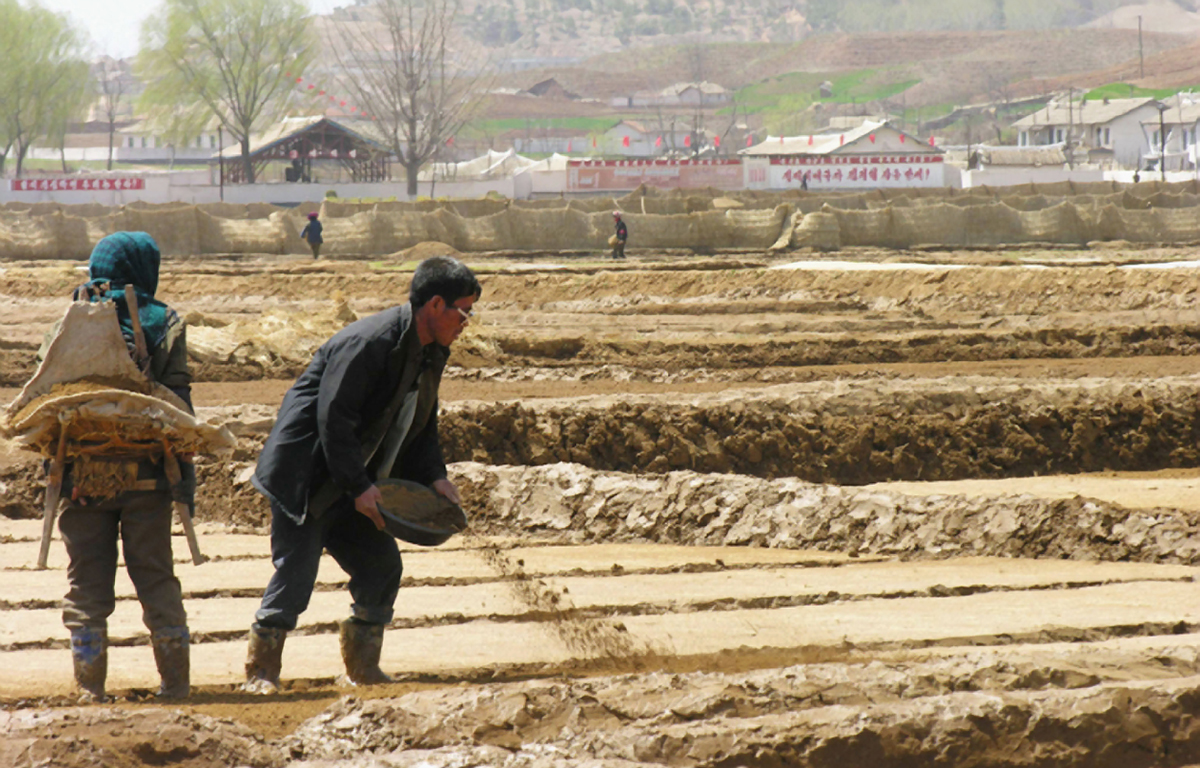
“North Korea's economic institutions make it almost impossible for people to own property; the state owns everything, including nearly all land and capital. Agriculture is organized via collective farms. People work for the ruling Korean Workers' Party, not themselves, which destroys their incentive to succeed.

North Korea could be much wealthier. In 1998, a U.N. mission found that many of the country's tractors, trucks, and other farm machinery were simply unused or not maintained. Beginning in the 1980s, farmers were allowed to have their own small plots of land and sell what they grew. But even this hasn't created much incentive, given the country's endemic lack of property rights. In 2009, the government introduced a revalued currency and allowed people to convert only 100,000 to 150,000 won of the old currency into the new one (equivalent to about $35 to $40 at the black-market exchange rate). People who had worked and saved up stocks of the old currency found it to be worthless.

Not only has North Korea failed to grow economically -- while South Korea has grown rapidly -- but its people have literally failed to flourish. Trapped in this debilitating cycle, North Koreans are not only much poorer than South Koreans but also as much as 3 inches shorter on average than the neighbors from whom they have been cut off for the last six decades.”

While FP cites North Korea as a prime example of this factor I believe their view is far too narrow. The lack of protected property rights is a malady that affects almost 2 billion people on earth. Most of them live as serfs on the lands of their feudal lords.

Three years ago I posted a blog on “What Separates the Rich from the Poor” that preceded an article for American Surveyor Magazine. In the article I stated:

“Of the 6 billion people on Earth, 2 billion try to survive on a few dollars a day. They don't build businesses, or if they do, they don't expand them. Unlike people in the United States, Europe and Asian countries like Japan, South Korea, Hong Kong, etc., they don't lift themselves out of poverty. Why not? What's the difference between them and us? Is it that we are smarter or better bred? Is it race or genetics? Or is it something else that these people have that the 2 billion poor do not?

When I was working as a contractor for the World Bank in Sri Lanka I was introduced to the writings of Hernando de Soto, a Peruvian economist through his book; The Mystery of Capital: Why Capitalism Triumphs in the West and Fails Everywhere Else.

In 1999 Time magazine chose de Soto as one of the five leading Latin American innovators of the century. Forbes magazine highlighted him as one of 15 innovators "who will re-invent your future." The New York Times Magazine wrote, "To the leaders of poor countries, de Soto's economic gospel is one of the most hopeful things they have heard in years." The Economist magazine identified his Institute for Liberty and Democracy as one of the top two think tanks in the world.

It's become clear by now the fall of the Berlin Wall and the collapse of communism in most places around the globe hasn't ushered in an unequivocal flowering of capitalism in the developing and post-communist world. Western thinkers have blamed this on everything from these countries' lack of sellable assets to their inherently non-entrepreneurial "mindset." In his book de Soto proposes and argues another reason: it's not that poor, post-communist countries don't have the assets to make capitalism flourish. As de Soto points out by way of example, in Egypt, the wealth the poor have accumulated is worth 55 times as much as the sum of all direct foreign investment ever recorded there, including that spent on building the Suez Canal and the Aswan Dam.

The real problem is that such countries have yet to establish and normalize the invisible network of laws that turns assets from "dead" into "liquid" capital. In the West, standardized laws allow us to mortgage a house to raise money for a new venture, permit the worth of a company to be broken up into so many publicly tradable stocks, and make it possible to govern and appraise property with agreed-upon rules that hold across neighborhoods, towns, or regions. This invisible infrastructure of "asset management" — so taken for granted in the West, even though it has only fully existed in the United States for the past 225 years — is the missing ingredient to success with capitalism, insists de Soto. But even though that link is primarily a legal one, he argues that the process of making it a normalized component of a society is more a political or attitude-changing challenge than anything else.

De Soto states that roughly 4 billion people in the world actually build their homes and own their businesses outside the legal system. But due to the lack of rule of law (and) the definition of who owns what, and because they don't have addresses, they can't get credit (for investment loans) nor pass their ownership on to their heirs or assignees."

In 1792 James Madison, considered to be the architect of our Constitution wrote an essay on property for the National Gazette. In that essay Madison wrote:

“This term in its particular application means “that dominion which one man claims and exercises over the external things of the world, in exclusion of every other individual.”

In its larger and juster meaning, it embraces every thing to which a man may attach a value and have a right; and which leaves to every one else the like advantage.

In the former sense, a man’s land, or merchandize, or money is called his property.

In the latter sense, a man has property in his opinions and the free communication of them.

He has a property of peculiar value in his religious opinions, and in the profession and practice dictated by them.

He has a property very dear to him in the safety and liberty of his person.

He has an equal property in the free use of his faculties and free choice of the objects on which to employ them.

In a word, as a man is said to have a right to his property, he may be equally said to have a property in his rights.”

Not only did Madison believe man had unalienable of life and liberty, but in property. Our Declaration of Independence stated this certainty with the words “We hold these truths to be self-evident, that all men are created equal, that they are endowed by their Creator with certain unalienable Rights, that among these are Life, Liberty and the pursuit of Happiness.--That to secure these rights, Governments are instituted among Men, deriving their just powers from the consent of the governed…”

The term “Happiness”, in the view of the signers of the Declaration was not the joyful happiness of a child on Christmas morning, but the happiness as defined by John Locke as meaning “property.” As Madison stated:

“Government is instituted to protect property of every sort; as well that which lies in various rights of individuals, as that which the term particularly expresses. This being the end of government, that alone is a just government, which impartially secures to every man, whatever is his.”

“If the United States mean to obtain or deserve the full praise due to wise and just governments, they will equally respect the rights of property, and the property in rights: they will rival the government that most sacredly guards the former; and by repelling its example in violating the latter, will make themselves a pattern to that and all other governments.”

Our Declaration of Independence stated this principle and our Constitution codified it in our organic law. Without eternal laws to protect one’s property rights on nation can prevail.

Forced Labor

Coercion is a surefire way to fail. Yet, until recently, at least in the scope of human history, most economies were based on the coercion of workers — think slavery, serfdom, and other forms of forced labor. In fact, the list of strategies for getting people to do what they don't want to do is as long as the list of societies that relied on them. Forced labor is also responsible for the lack of innovation and technological progress in most of these societies, ranging from ancient Rome to the U.S. South.

Modern Uzbekistan is a perfect example of what that tragic past looked like.120613_KOREA 2 Cotton is among Uzbekistan's biggest exports. In September, as the cotton bolls ripen, the schools empty of children, who are forced to pick the crop. Instead of educators, teachers become labor recruiters. Children are given daily quotas from between 40 to 120 pounds, depending on their age. The main beneficiaries of this system are President Islam Karimov and his cronies, who control the production and sale of the cotton. The losers are not only the 2.7 million children coerced to work under harsh conditions in the cotton fields instead of going to school, but also Uzbek society at large, which has failed to break out of poverty. Its per capita income today is not far from its low level when the Soviet Union collapsed — except for the income of Karimov's family, which, with its dominance of domestic oil and gas exploration, is doing quite well.
The Big Men get Greedy

When elites control an economy, they often use their power to create monopolies and block the entry of new people and firms. This was exactly Par2305856how Egypt worked for three decades under Hosni Mubarak. The government and military owned vast swaths of the economy -- by some estimates, as much as 40 percent. Even when they did "liberalize," they privatized large parts of the economy right into the hands of Mubarak's friends and those of his son Gamal. Big businessmen close to the regime, such as Ahmed Ezz (iron and steel), the Sawiris family (multimedia, beverages, and telecommunications), and Mohamed Nosseir (beverages and telecommunications) received not only protection from the state but also government contracts and large bank loans without needing to put up collateral.
Together, these big businessmen were known as the "whales." Their stranglehold on the economy created fabulous profits for regime insiders, but blocked opportunities for the vast mass of Egyptians to move out of poverty. Meanwhile, the Mubarak family accumulated a vast fortune estimated as high as $70 billion.

Many in the west believed and told us that he “Arab Spring was about democracy. This was a delusion. It was more about the cost of a bag of wheat for the Egyptian family than democracy. Once they got their wheat they voted in the Muslim Brotherhood and Sharia Law.

Elites Block New Technologies

New technologies are extremely disruptive. They sweep aside old business models and make existing skills and organizations obsolete. They redistribute not just income and wealth but also political power. This gives elites a big incentive to try to stop the march of progress. Good for them, but not for society.

Consider what happened in the 19th century, as railways were spreading across Britain and the United States. When a proposal to build a railway was put before Francis I, emperor of Austria, he was still haunted by the specter of the 1789 French Revolution and replied, "No, no, I will have nothing to do with it, lest the revolution might come into the country." The same thing happened in Russia until the 1860s. With new technologies blocked, the tsarist regime was safe, at least for a while. As Britain and the United States grew rapidly, however, Austria and Russia failed to do so. The track tells the tale: In the 1840s, tiny Britain was undergoing a railway mania in which more than 6,000 miles of track were built, while only one railway ran in vast continental Russia. Even this line was not built for the benefit of the Russian people; it ran 17 miles from St. Petersburg to the tsar's imperial residences at Tsarskoe Selo and Pavlovsk.

This was also the case in the United States with electricity. As America began to electrify with Edison’s new light bulbs John D. Rockefeller’s monopoly on kerosene used for oil lamps began to fade. The difference was that Rockefeller’s Standard Oil foresight and saw many other uses for oil, including gasoline. This was due to Rockefeller’s entrepreneurial spirit, vision and his freedom to succeed.

No Law and Order

One must-have for successful economies is an effective centralized state. Without this, there is no hope of providing order, an effective system of laws, mechanisms for resolving disputes, or basic public goods.

Yet large parts of the world today are still dominated by stateless societies. Although countries like Somalia, Afghanistan or the new country of South120613_SOMALIA (2) Sudan do have internationally recognized governments, they exercise little power outside their capitals, and maybe not even there. Both countries have been built atop societies that historically never created a centralized state but were divided into clans or tribes where decisions were made by consensus among adult males. No clan was ever able to dominate or create a set of nationally respected laws or rules. There were no political positions, no administrators, no taxes, no government expenditures, no police, no lawyers — in other words, no government.

This situation persisted during the colonial period in Somalia, when the British were unable even to collect poll taxes, the usual fiscal basis for their African colonies. Since independence in 1960, attempts have been made to create an effective central state, for example, during the dictatorship of Mohamed Siad Barre, but after more than five decades it's fair and even obvious to say they have failed. Call it Somalia's law: Without a central state, there can be no law and order; without law and order, there can be no real economy; and without a real economy, a country is doomed to fail.

Our Founders realized this when the wrote and adopted our Constitution that gave us a form of federalism where they instituted a central government with limited enumerated powers and left the rest to the people and the states. No other nation on this planet has been able to replicate this form of government and probably never will. This is why we are unique and exceptional.

A Weak Central Government

Colombia isn't Somalia. All the same, its central government is unable or unwilling to exert control over probably half the country, which is dominated by left-wing guerrillas, most famously the FARC, and, increasingly, right-wing paramilitaries. The drug lords may be on the run, but the state's absence from much of the country leads not only to lack of public services such as roads and bridges, but also to lack of well-defined, institutionalized property rights.

Thousands of rural Colombians have only informal titles or titles lacking any legal validity. Although this does not stop people from buying and selling land, it undermines their incentives to invest — and the uncertainty often leads to violence. During the 1990s and early 2000s, for example, an estimated 12 million acres of land were expropriated in Colombia, typically at gunpoint. The situation got so bad that in 1997, the central government allowed local authorities to ban land transactions in rural areas. The result? Many parts of Colombia essentially fail to take part in modern economic activities, instead languishing in poverty, not to mention proving to be fertile havens for armed insurgents and paramilitary forces of both the left and right.

Bad or Non-existent Public Services

Calca and nearby Acomayo are two Peruvian provinces. Both are high in the120619_peru mountains, and both are inhabited by the Quechua-speaking descendants of the Incas. Both grow the same crops, yet Acomayo is much poorer, with its inhabitants consuming about one-third less than those in Calca. The people know this. In Acomayo, they ask intrepid foreigners, "Don't you know that the people here are poorer than the people over there in Calca? Why would you ever want to come here?"
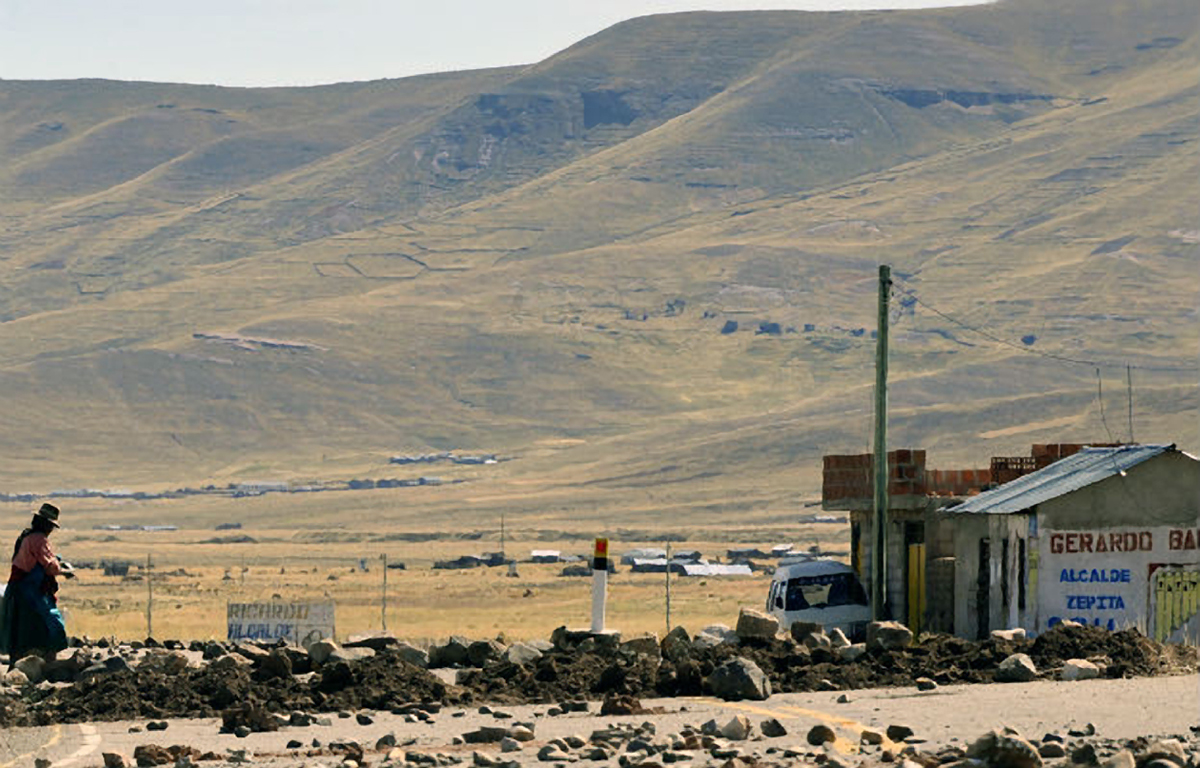
Indeed, it is much harder to get to Acomayo from the regional capital of Cusco, the ancient center of the Inca Empire, than it is to get to Calca. The road to Calca is paved, while the one to Acomayo is in terrible disrepair. To get beyond Acomayo you need a horse or a mule — not due to any differences in topography, but because there are no paved roads. In Calca, they sell their corn and beans on the market for money, while in Acomayo they grow the same crops for their own subsistence. Acomayo's people are one-third poorer than Calca's as a result. Infrastructure matters.

Political Exploitation

Bolivia has a long history of extractive institutions dating back to Spanish times — a history that has brewed resentment over the years. In 1952, Bolivians rose up en masse against the traditional elite of land and mine owners. The leaders of this revolution were mostly urbanites excluded from power and patronage under the previous regime. Once they seized power, the revolutionaries expropriated most of the land and the mines and created a political party, the Revolutionary Nationalist Movement (MNR). Inequality fell sharply at first as a result of these land seizures, as well as the MNR's educational reforms. But the MNR set up a one-party state and gradually rescinded the political rights it had extended in 1952. By the late 1960s, inequality was actually higher than it had been before the revolution.

For the great mass of rural Bolivians, one elite had simply replaced another in what German sociologist Robert Michels called the "iron law of oligarchy." Rural people still had insecure property rights and still had to sell their votes for access to land, credit, or work. The main difference was that instead of providing these services to the traditional landowners, they now provided them to the MNR.

Fighting Over the Spoils

Intense extraction breeds instability and failure because, consistent with the iron law of oligarchy, it creates incentives for others to depose the existing elites and take over.

This is exactly what happened in Sierra Leone. Siaka Stevens and his All People's Congress (APC) party ran the country from 1967 until 1985 as their personal fiefdom. Little changed when Stevens stepped aside, passing the baton to his protégé, Joseph Momoh, who just continued the plunder.

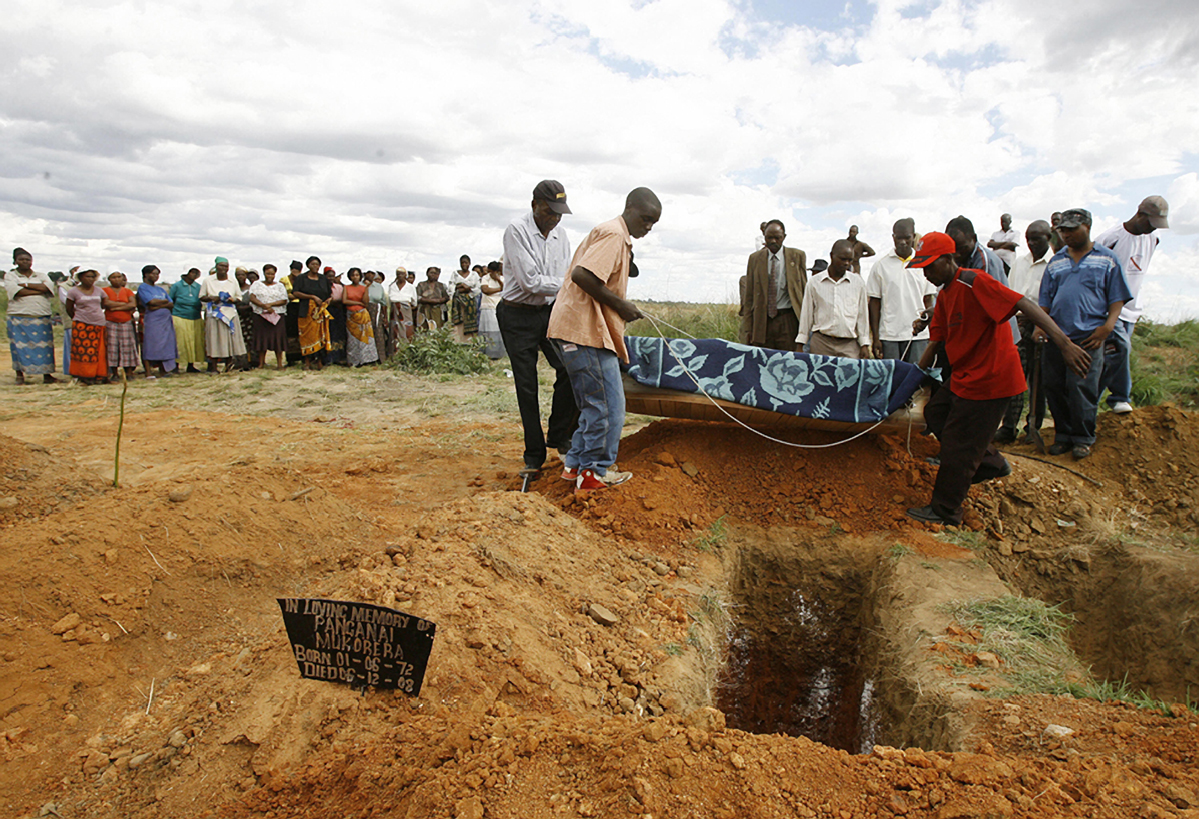
The trouble is that this sort of extraction creates deep-seated grievances and invites contests for power from would-be strongmen hoping to get their hands on the loot. In March 1991, Foday Sankoh's Revolutionary United Front, (RUF) with the support and most likely the command of Liberian dictator Charles Taylor, crossed into Sierra Leone and plunged the country into a vicious, decade-long civil war. Sankoh and Taylor were interested in only one thing: power, which they could use, among other things, to steal diamonds, and they could do so because of the regime that Stevens and his APC had created. The country soon descended into chaos, with the civil war taking the lives of about 1 percent of the population and maiming countless others. Sierra Leone's state and institutions totally collapsed. Government revenues went from 15 percent of national income to practically zero by 1991. The state, in other words, didn't so much fail as disappear entirely.

As is evident by these examples the root cause of these failed states if the lack of rights to your property and property in your rights. No matter the amount of foreign aid or technical assistance provided these states they will continue to fail and people will fall ill, starve, and die. They will suffer at the hands of their own governments as the serfs in the middle ages did at the hands of heir feudal lords and masters. Many are no more than tenant farmers seeking out sustenance on land belonging to the rich, powerful, and armed.

No matter what the UN does or how many small arms treaties are signed Ak-47s and RPGs will continue to flow into these countries an fall into the hands of those who want to rule. Tyranny is their goal and the AK-47 is their means.

As long a Mexico, while not a failed state certainly is a failing state. From Villa and Zapata to Juarez and Diaz revolutionaries have promised the Mexican people autonomy of their property rights. Yet none delivered when they reached the Zócalo in Mexico City. As long the iron law of oligarchy and the drug cartels rule Mexico PEMEX’s oil revenues will never trickle down to the peasants who occupy the lands. This will force the continuation of the migration of unskilled and uneducated to cross our southern border looking for prosperity and the benefits of our social welfare system. Without secure property rights this will never change.

Can You Believe the Brooklyn Bridge is 130 Years Old?

“Business is not just doing deals; business is having great products, doing great engineering, and providing tremendous service to customers. Finally, business is a cobweb of human relationships. — Ross Perot

As a child I was always interested in civil engineering and its related fields of land, engineering, and geodetic surveying. In fact I had dreams of attending the Colorado School of Mines. It didn’t quite work out the way I had envisioned so I had to do it the hard way by working in the field beginning as summer worker at the ripe age of 16 and continuing on with night school and correspondence education for the next 55 years. Throughout this period I never lost my love of civil engineering and surveying and was able to practice this profession on a global basis.

When I relocated to California in 1962 began 10 years of experience working as a highway engineer for the California Division of Highways (now Caltrans) where I learned a great deal about highway and bridge planning, design, and construction. One of the major bridge projects I worked on was the Vincent Thomas Suspension Bridge linking San Pedro, Los Angeles, with Terminal Island. It was while working on this project that I learned a great deal about bridge design and construction and increased my respect for those responsible designing and managing the construction of these magnificent transportation arteries.

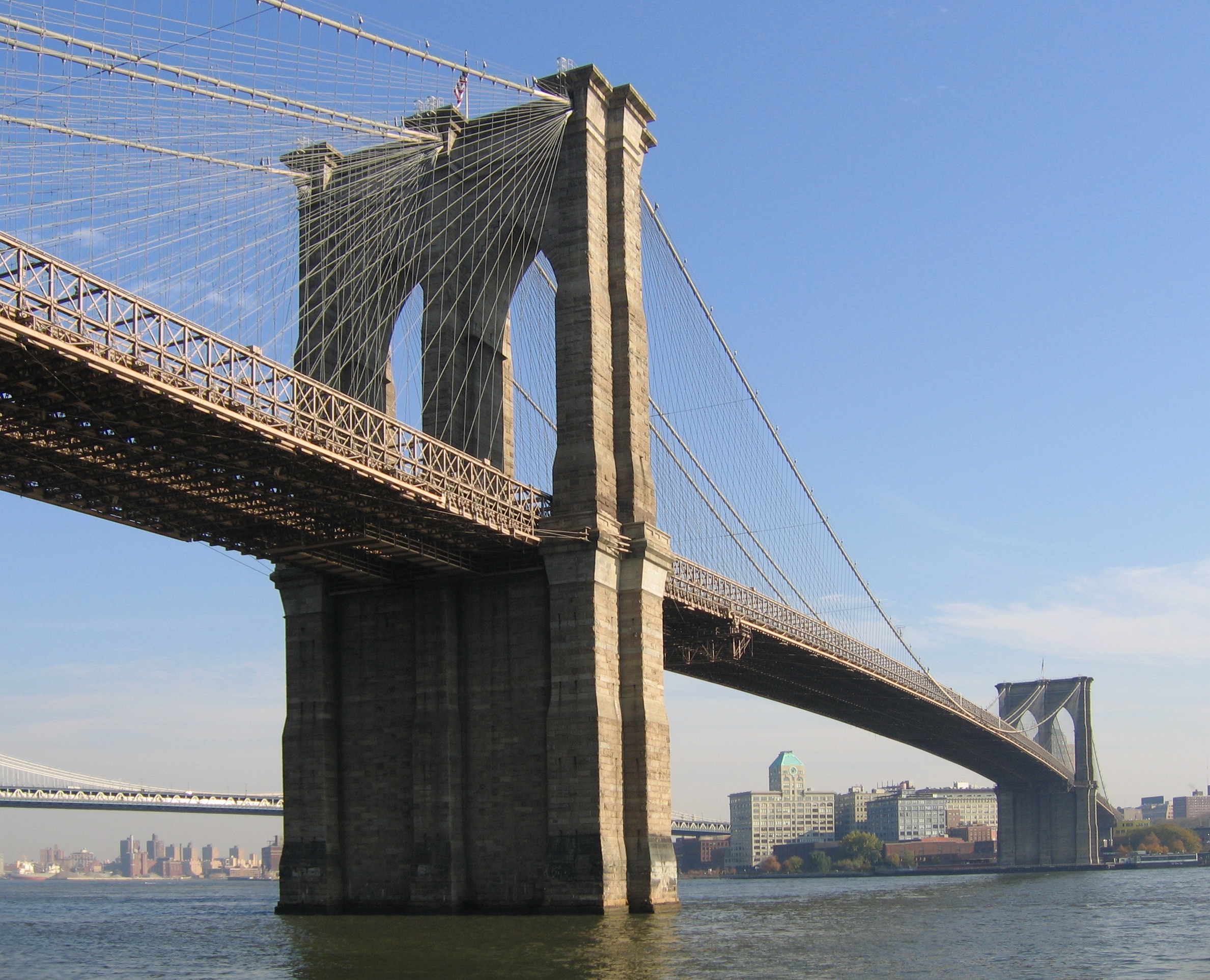
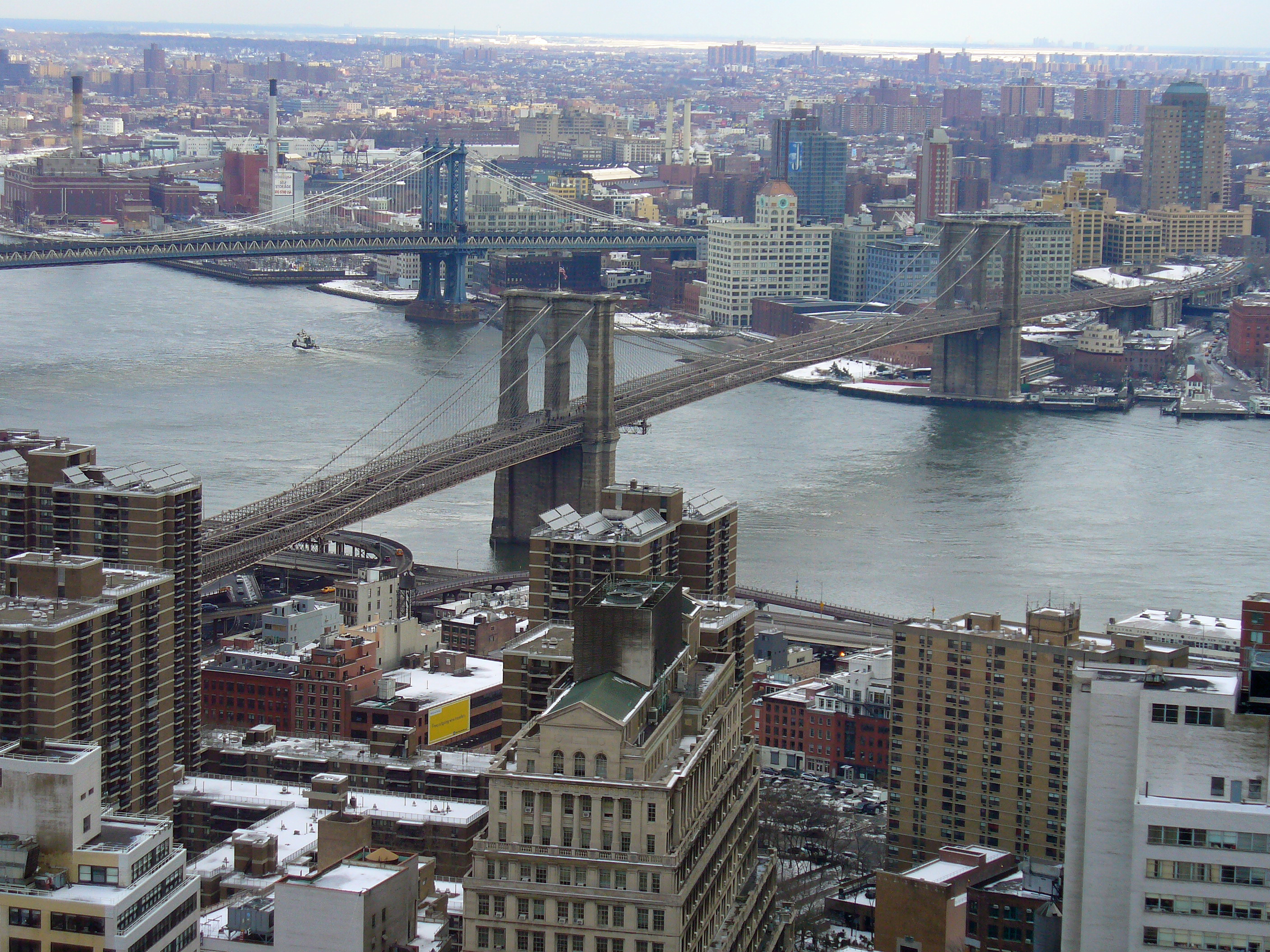
On May 24, 1883 after 14 years and 27 deaths while being constructed, the Brooklyn Brooklyn_Bridge_by_David_ShankboneBridge over the East River was opened, connecting the great cities of New York and Brooklyn for the first time in history. Thousands of residents of Brooklyn and Manhattan Island turned out to witness the dedication ceremony, which was presided over by President Chester A. Arthur and New York Governor Grover Cleveland. Designed by the late John A. Roebling, the Brooklyn Bridge was the largest suspension bridge ever built to that date.

John Roebling, born in Germany in 1806, was a great pioneer in the design of steel suspension bridges. He studied industrial engineering in Berlin and at the age of 25 immigrated to western Pennsylvania, where he attempted, unsuccessfully, to make his living as a farmer.

John Roebling and his brother arrived in the United States at an interesting time. TheRoebling nation was in the later stages of an economic boom, which ended in the Panic of 1837. Farmers were deeply affected by it. A dominant mode of thought in America would be called manifest destiny by the 1840s. Transportation between eastern industrial hubs and frontier farming markets had become a matter of both national and popular interest. Many transportation projects were underway near the location he chose for his colony, but instead of continuing an engineering profession, he took up farming.

Agrarian work was unsatisfactory to John Roebling, and the colony attracted very few settlers. In 1837, after the death of his brother and the birth of his first child, he returned to engineering as a vocation.

Roebling's first engineering work in America was devoted to improving river navigation and canal building. He spent three years surveying for railway lines across the Allegheny Mountains, from Harrisburg to Pittsburgh, for the state of Pennsylvania. In 1840 he wrote to suspension bridge designer Charles Ellet, Jr., offering to help with the design of a bridge near Philadelphia:

“The study of suspension bridges formed for the last few years of my residence in Europe my favourite occupation. Let but a single bridge of the kind be put up in Philadelphia, exhibiting all the beautiful forms of the system to full advantage, and it needs no prophecy to foretell the effect which the novel and useful features will produce upon the intelligent minds of the Americans.”

He later moved to the state capital in Harrisburg, where he found work as a civil engineer. He promoted the use of wire cable and established a successful wire-cable factory.

Roebling began producing “wire rope” in 1841. At that time canal boats from Philadelphia were transported over the Allegheny Mountains on railroad cars to access waterways on the other side of the mountains, so that the boats could continue to Pittsburgh. The system of inclines and levels that moved the boats and conventional railroad cars was a state-owned enterprise, the Allegheny Portage Railroad. The railroad cars were pulled up and down the inclines by a long loop of thick hemp rope, up to 2-1/2 inches thick. The hemp ropes were expensive and had to be replaced frequently. Roebling remembered an article he read about wire ropes. Soon after, he started developing a 7-strand wire rope at a ropewalk that he built on his farm.

In 1844 Roebling won a bid to replace the wooden canal aqueduct across the Allegheny River with the Allegheny Aqueduct. His design encompassed seven spans of 163 feet, each consisting of a wooden trunk to hold the water supported by a continuous cableTrentonmakesnight made of many parallel wires, wrapped tightly together, on each side of the trunk. This was followed in 1845 by building a suspension bridge over the Monongahela River at Pittsburgh. In 1848 Roebling undertook the construction of four suspension aqueducts on the Delaware and Hudson Canal. During this period, he moved to Trenton, New Jersey. In Trenton, Roebling built a large industrial complex for wire production. This complex inspired the Trenton, New Jersey motto of Trenton Makes – The World Takes” on Trenton's Lower Trenton Bridge.

Roebling's next project, starting in 1851, was a railroad bridge connecting the New York Central and Great Western Railway of Canada over the Niagara River, which would take four years. The bridge, with a clear span of 825 feet, was supported by four, ten-inch wire cables, and had two levels, one for vehicles and one for rail traffic.

Meanwhile, he earned a reputation as a designer of suspension bridges, which at the time were widely used but known to fail under strong winds or heavy loads. Roebling is credited with a major breakthrough in suspension-bridge technology: a web truss added to either side of the bridge roadway that greatly stabilized the structure. Using this model, Roebling successfully bridged the Niagara Gorge at Niagara Falls, New York, and the Ohio River at Cincinnati, Ohio. On the basis of these achievements, New York State accepted Roebling's design for a bridge connecting Brooklyn and Manhattan--with a span of 1,595 feet--and appointed him chief engineer. It was to be the world's first steel suspension bridge.

Unfortunately just before construction began in 1869, Roebling was fatally injured while taking a few final compass readings across the East River. A boat smashed the toes on one of his feet, and three weeks later he died of tetanus. He was the first of more than two dozen people who would die building his bridge. His 32-year-old son, Washington A. Roebling, took over as chief engineer. Roebling had worked with his father on several bridges and had helped design the Brooklyn Bridge.

From mid-1865 to 1867, Roebling worked with his father on the Cincinnati-Covington Bridge (now the John A. Roebling Suspension Bridge). While traveling in Europe to research bridges and caisson foundations, his only son, John A. Roebling, II, was born. After returning in 1868, Washington became assistant engineer on the Brooklyn Bridge, and was named chief engineer after his father's death in mid-1869. He made several important improvements on the bridge design and further developed bridge building techniques. Thus, he designed the two large pneumatic caissons that became the foundations for the two towers. In 1870, fire broke out in one of the caissons; from within the caisson, Roebling directed the efforts to extinguish the flames. Working in compressed air in these caissons under the river caused him to get decompression sickness ("the bends") shattering his health and rendering him unable to visit the site, yet he continued to oversee the Brooklyn project to successful completion in 1883. Besides the bends, he may have had additional afflictions, possible neurasthenia, side effects of treatments, and secondary drug addiction. His wife, Emily Warren Roebling, who had taken it upon herself to learn bridge construction, became his nurse, companion, and confidant and took over much of the chief engineer's duties including day-to-day supervision and project management. Although husband and wife jointly planned the bridge's continued construction, Emily successfully lobbied for formal retention of Washington as chief engineer. David McCullough, in his book The Great Bridge, remarked that "nowhere in the history of great undertakings is there anything comparable to Roebling conducting the largest and most difficult engineering project ever in absentia".

Roebling would battle the after-effects from the caisson disease and its treatment the rest of his life.

The two granite foundations of the Brooklyn Bridge were built in timber caissons, or watertight chambers, sunk to depths of 44 feet on the Brooklyn side and 78 feet on the New York side. Compressed air pressurized the caissons, allowing underwater construction. At that time, little was known of the risks of working under such conditions, and more than a hundred workers suffered from cases of compression sickness. Decompression sickness, or the "bends," is caused by the appearance of nitrogen bubbles in the bloodstream that result from rapid decompression. Several died. Other workers died as a result of more conventional construction accidents, such as collapses and a fire.

After his falling to decompression sickness Roebling continued to direct construction operations from his home, and his wife, Emily, carried his instructions to the workers. In 1877, Washington and Emily moved into a home with a view of the bridge. Roebling's health gradually improved, but he remained partially paralyzed for the rest of his life. On May 24, 1883, Emily Roebling was given the first ride over the completed bridge, with a rooster, a symbol of victory, in her lap. Within 24 hours, an estimated 250,000 people walked across the Brooklyn Bridge, using a broad promenade above the roadway that John Roebling designed solely for the enjoyment of pedestrians.

The Brooklyn Bridge, with its unprecedented length and two stately towers, was dubbedBrooklyn_Bridge_Postdlf the "eighth wonder of the world." The connection it provided between the massive population centers of Brooklyn and Manhattan changed the course of New York City forever. In 1898, the city of Brooklyn formally merged with New York City, Staten Island, and a few farm towns, forming Greater New York.

Some facts about the Brooklyn Bridge:

  • Carries Motor vehicles (cars only)
  • Elevated trains (until 1944)
  • Streetcars (until 1950)
  • Pedestrians and bicycles
  • Crosses East River
  • Locale New York City (Manhattan–Brooklyn)
  • Maintained by New York City Department of Transportation
  • Designer John Augustus Roebling
  • Design Suspension/Cable-stay Hybrid
  • Total length 5,989 feet (1825 m)[1]
  • Width 85 feet (26 m)
  • Height 276.5 ft. (84.3 m) above mean high water[2]
  • Longest span 1,595 feet 6 inches (486.3 m)
  • Clearance below 135 feet (41 m) at mid-span
  • Opened May 24, 1883; 130 years ago
  • Toll Free both ways
  • Daily traffic 123,781 (2008)[4]
  • Coordinates 40.70569°N 73.99639°

Since its opening 4,194 people have jumped from the Brooklyn Bridge. The first person to jump from the bridge was Robert Emmet Odlum, brother of women's rights activist Charlotte Odlum Smith, on May 19, 1885. He struck the water at an angle and died shortly thereafter from internal injuries. Steve Brodie was the most famous jumper, or self-proclaimed jumper (in 1886). Cartoonist Otto Eppers jumped and survived in 1910, and was then tried and acquitted for attempted suicide.

Currently about every 15 days someone has committed suicide by jumping off Brooklyn Bridge. They have been trying to make a suicide barrier but they couldn't because of cost and engineering difficulties.

And of course on of the most famous quips when debating someone unclear or ignoring the facts of the argument is: “there is a bridge in Brooklyn that I can sell you.”

I’ve written blogs about The Men who Built America and The Greatest Generations but have not included John Roebling in either. There are many more men and women who built this great nation. Some had formal technical educations while others were self-educated. But the four things they all had in common was their entrepreneurial spirit, a no quit attitude, the ability to get up and dust themselves off after set-backs and the love of this country. They all saw America as a land of great opportunity based on liberty where a person cold pursue their dream regardless of class or heritage of birth. This is something that our current generations should be made more aware of.

(Please note that all pictures may be enlarged by clicking on the image)

Wednesday, March 27, 2013

The Men Who Built America

“It is not the employer who pays the wages. Employers only handle the money. It is the customer who pays the wages.” — Henry Ford

In recent years there has been an increasing scorn for capitalism in this country and around the world. Movements like Occupy caught a great deal attention last year as they staged protests and occupied parks in New York City and Oakland. Their beef was with the greed of capitalists and bankers. They wanted government to provide more and more assistance for those who could not find satisfying jobs.

There is a great series playing on the History Channel about the Men Who Built America. The series profiles John D. Rockefeller, Cornelius Vanderbilt, Andrew Carnegie, Henry Ford, and J.P. Morgan and shows how they turned ideas into millions of dollars and in the process they built this nation.

mwba2_480x250

John D. Rockefeller, Cornelius Vanderbilt, Andrew Carnegie, Henry Ford and J.P. Morgan rose from obscurity and in the process built modern America. Their names hang on street signs, are etched into buildings and are a part of the fabric of history. These men created the American Dream and were the engine of capitalism as they transformed everything they touched in building the oil, rail, steel, shipping, automobile, and finance industries. Their paths crossed repeatedly as they elected presidents, set economic policies and influenced major events of the 50 most formative years this country has ever known. From the Civil War to the Great Depression and World War I, they led the way.

Using state of the art computer generated imagery that incorporates 12 million historical negatives, many made available for the first time by the Library of Congress, this series brings back to life the world they knew and the one they created. The event series shows how these men created the greatest superpower the world has ever seen. In the series we see how their historic achievements came to create the America of today.

The series begins with the life and achievements of Cornelius Vanderbilt. Shipping and railroad tycoon Cornelius Vanderbilt (1794-1877) was a self-made multi-millionaire who became one of the wealthiest Americans of the 19th century. As a boy, he worked with his father, who operated a boat that ferried cargo between Staten Island, New York, where they lived, and Manhattan. After working as a steamship captain, Vanderbilt went into business for himself in the late 1820s, and eventually became one of the country’s largest steamship operators. In the process, the Commodore, as he was publicly nicknamed, gained a reputation for being fiercely competitive and ruthless. In the 1860s, he shifted his focus to the railroad industry, where he built another empire and helped make railroad transportation more efficient. When Vanderbilt died, he was worth more than $100 million ($2.6 billion in today’s dollars).

In the early 1850s, during the California Gold Rush, a time before449px-Cornelius_Vanderbilt_Daguerrotype2 transcontinental railroads, Vanderbilt launched a steamship service that transported prospectors from New York to San Francisco via a route across Nicaragua. His route was faster than an established route across Panama, and much speedier than the other alternative, around Cape Horn at the southern tip of South America, which could take months. Vanderbilt’s new line was an instant success, earning more than $1 million (about $26 million in today’s money) a year.

In the 1860s, Vanderbilt shifted his focus from shipping to the railroad industry, which was entering a period of great expansion. He gained control of a number of railway lines operating between Chicago and New York and established an interregional railroad system. According to T.J. Styles, author of “The First Tycoon: The Epic Life of Cornelius Vanderbilt”: “This was a major transformation of the railroad network, which previously had been fragmented into numerous short railroads, each with its own procedures, timetables, and rolling stock. The creation of a coherent system spanning several states lowered costs, increased efficiency, and sped up travel and shipment times.”

Unlike the Gilded Age titans who followed him, such as steel magnate Andrew Carnegie (1835-1919) and oil mogul John Rockefeller (1839-1937), Vanderbilt did not own grand homes or give away much of his vast wealth to charitable causes. In fact, the only substantial philanthropic donation he made was in 1873, toward the end of his life, when he gave $1 million to build and endow Vanderbilt University in Nashville, Tennessee. (In a nod to its founder’s nickname, the school’s athletic teams are called the Commodores.)

John D. Rockefeller (1839-1937), founder of the Standard Oil Company, became one of the world’s wealthiest men and a major philanthropist. BornJohn_D._Rockefeller_1885 into modest circumstances in upstate New York, he entered the then-fledgling oil business in 1863 by investing in a Cleveland, Ohio, refinery. In 1870, he established Standard Oil, which by the early 1880s controlled some 90 percent of U.S. refineries and pipelines. Critics accused Rockefeller of engaging in unethical practices, such as predatory pricing and colluding with railroads to eliminate his competitors, in order to gain a monopoly in the industry. In 1911, the U.S. Supreme Court found Standard Oil in violation of anti-trust laws and ordered it to dissolve. During his life Rockefeller donated more than $500 million to various philanthropic causes

In 1865, Rockefeller borrowed money to buy out some of his partners and take control of the refinery, which had become the largest in Cleveland. Over the next few years, he acquired new partners and expanded his business interests in the growing oil industry. At the time, kerosene, derived from petroleum and used in lamps, was becoming an economic staple. In 1870, Rockefeller formed the Standard Oil Company of Ohio, along with his younger brother William (1841-1922), Henry Flagler (1830-1913) and a group of other men. John Rockefeller was its president and largest shareholder.

Standard Oil gained a monopoly in the oil industry by buying rival refineries and developing companies for distributing and marketing its products around the globe. In 1882, these various companies were combined into the Standard Oil Trust, which would control some 90 percent of the nation’s refineries and pipelines. In order to exploit economies of scale, Standard Oil did everything from build its own oil barrels to employ scientists to figure out new uses for petroleum by-products.

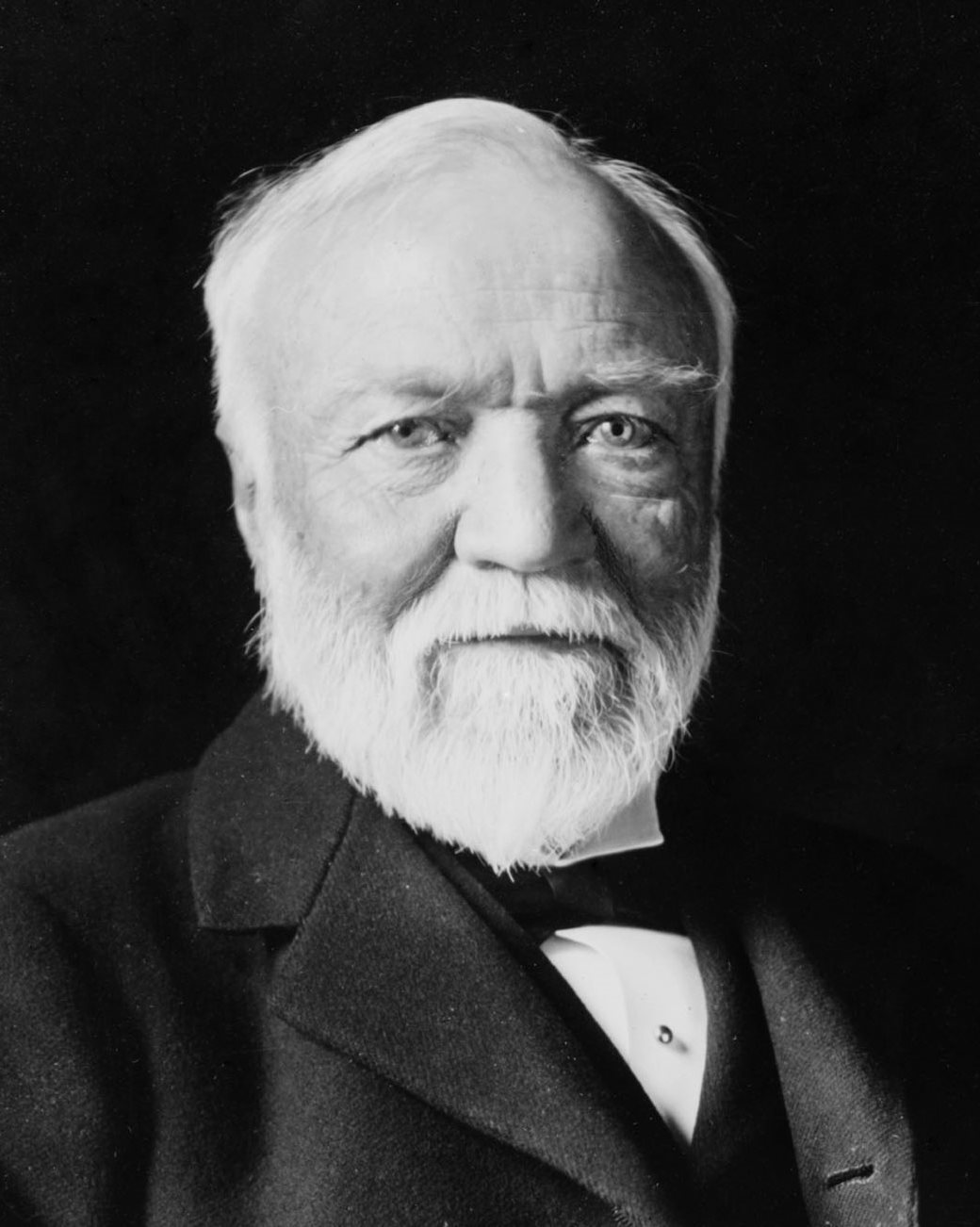
Scottish-born Andrew Carnegie (1835-1919) was an American industrialist who amassed a fortune in the steel industry then became a major philanthropist. Carnegie worked in a Pittsburgh cotton factory as a boy before rising to the position of division superintendent of the Pennsylvania Railroad in 1859. While working for the railroad, he invested in various ventures, including iron and oil companies, and made his first fortune by the time he was in his early 30s. In the early 1870s, he entered the steel business, and over the next two decades became a dominant force in the industry. In 1901, he sold the Carnegie Steel Company to banker John Pierpont Morgan for $480 million. Carnegie then devoted himself to philanthropy, eventually giving away more than $350 million.

Ambitious and hard-working, he went on to hold a series of jobs, including479px-Andrew_Carnegie,_three-quarter_length_portrait,_seated,_facing_slightly_left,_1913-crop messenger in a telegraph office and secretary and telegraph operator for the superintendent of the Pittsburgh division of the Pennsylvania Railroad In 1859, Carnegie succeeded his boss as railroad division superintendent. While in this position, he made profitable investments in a variety of businesses, including coal, iron and oil companies and a manufacturer of railroad sleeping cars.

After leaving his post with the railroad in 1865, Carnegie continued his ascent in the business world. With the U.S. railroad industry then entering a period of rapid growth, he expanded his railroad-related investments and founded such ventures as an iron bridge building company and a telegraph firm, often using his connections to win insider contracts. By the time he was in his early 30s, Carnegie had become a very wealthy man.

In the early 1870s, Carnegie co-founded his first steel company, near Pittsburgh. Over the next few decades, he created a steel empire, maximizing profits and minimizing inefficiencies through ownership of factories, raw materials and transportation infrastructure involved in steel-making. In 1892, his primary holdings were consolidated to form Carnegie Steel Company.

The steel magnate considered himself a champion of the working man; however, his reputation was marred by a violent labor strike in 1892 at his Homestead, Pennsylvania, steel mill. After union workers protested wage cuts, Carnegie Steel general manager Henry Clay Frick (1848-1919), who was determined to break the union, locked the workers out of the plant. Andrew Carnegie was on vacation in Scotland during the strike, but put his support in Frick, who called in some 300 Pinkerton armed guards to protect the plant. A bloody battle broke out between the striking workers and the Pinkertons, leaving at least 10 men dead. The state militia then was brought in to take control of the town, union leaders were arrested and Frick hired replacement workers for the plant. After five months, the strike ended with the union’s defeat. Additionally, the labor movement at Pittsburgh-area steel mills was crippled for the next four decades.

In 1901, banker John Pierpont Morgan (1837-1913) purchased Carnegie Steel for some $480 million, making Andrew Carnegie one of the world’s richest men. That same year, Morgan merged Carnegie Steel with a group of other steel businesses to form U.S. Steel, the world’s first billion-dollar corporation.

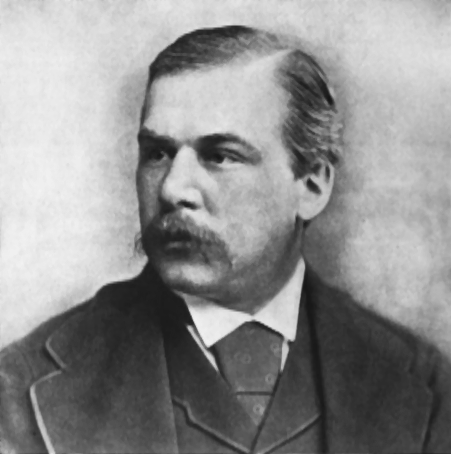
One of the most powerful bankers of his era, J.P. (John Pierpont) MorganJPMorgan-Young (1837-1913) financed railroads and helped organize U.S. Steel, General Electric and other major corporations. The Connecticut native followed his wealthy father into the banking business in the late 1850s, and in 1871 formed a partnership with Philadelphia banker Anthony Drexel. In 1895, their firm was reorganized as J.P. Morgan & Company, a predecessor of the modern-day financial giant JPMorgan Chase. Morgan used his influence to help stabilize American financial markets during several economic crises, including the panic of 1907. However, he faced criticism that he had too much power and was accused of manipulating the nation’s financial system for his own gain. The Gilded Age titan spent a significant portion of his wealth amassing a vast art collection.

During the late 19th century, a period when the U.S. railroad industry experienced rapid overexpansion and heated competition (the nation’s first transcontinental rail line was completed in 1869), Morgan was heavily involved in reorganizing and consolidating a number of financially troubled railroads. In the process, he gained control of significant portions of these railroads’ stock and eventually controlled an estimated one-sixth of America’s rail lines.

By the start of the 20th century, Morgan’s focus had shifted from railroads to other industries. In 1901, he bought the Carnegie Steel Company from Andrew Carnegie (1835-1919) for some $480 million then merged it with a group of other steel companies to create U.S. Steel, the world’s first billion-dollar corporation. Morgan also helped engineer the deals that established General Electric, International Harvester, American Telephone & Telegraph and other industrial giants. In 1902, he was instrumental in the formation of International Mercantile Marine (IMM), a conglomeration of transatlantic shipping companies. A decade later, the Titanic, owned by one of the IMM companies, White Star, sank on its maiden voyage after hitting an iceberg. Morgan, who attended the ship’s christening in 1911, was booked on the ill-fated April 1912 voyage but had to cancel.

During Morgan’s era, the United States had no central bank so he used his influence to help save the nation from disaster during several economic crises. In 1895, Morgan assisted in rescuing America’s gold standard when he headed a banking syndicate that loaned the federal government more than $60 million. In another instance, the financial panic of 1907, Morgan held a meeting of the country’s top financiers at his New York City home and convinced them to bail out various faltering financial institutions in order to stabilize the markets.

While working as an engineer for the Edison Illuminating Company in Detroit,Henry_ford_1919 Henry Ford (1863-1947) built his first gasoline-powered horseless carriage, the Quadricycle, in the shed behind his home. In 1903, he established the Ford Motor Company, and five years later the company rolled out the first Model T. In order to meet overwhelming demand for the revolutionary vehicle, Ford introduced revolutionary new mass-production methods, including large production plants, the use of standardized, interchangeable parts and, in 1913, the world's first moving assembly line for cars. Enormously influential in the industrial world, Ford was also outspoken in the political realm. Ford drew controversy for his pacifist stance during the early years of World War I and earned widespread criticism for his anti-Semitic views and writings.

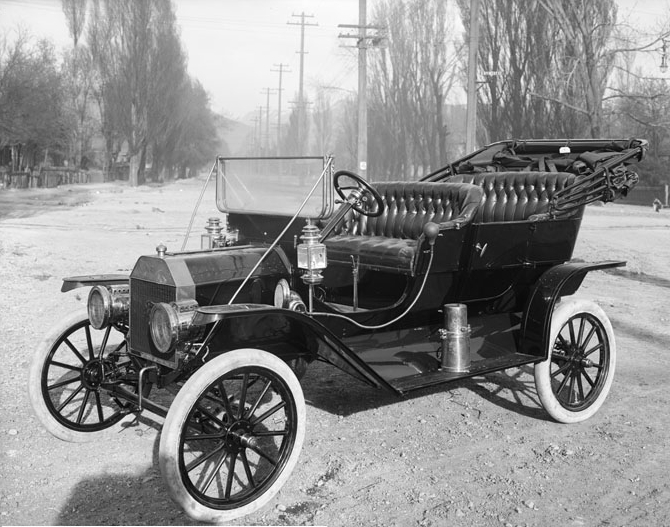
A month after the Ford Motor Company was established, the first Ford car—the two-cylinder, eight-horsepower Model A—was assembled at a plant on Mack Avenue in Detroit. At the time, only a few cars were assembled per day, and groups of two or three workers built them by hand from parts that were ordered from other companies. Ford was dedicated to the production of an efficient and reliable automobile that would be affordable for everyone; the result was the Model T, which made its debut in October 1908.

The "Tin Lizzie," as the Model T was known, was an immediate success, and1910Ford-T Ford soon had more orders than the company could satisfy. As a result, he put into practice techniques of mass production that would revolutionize American industry, including the use of large production plants; standardized, interchangeable parts; and the moving assembly line. Mass production significantly cut down on the time required to produce an automobile, which allowed costs to stay low. In 1914, Ford also increased the daily wage for an eight-hour day for his workers to $5 (up from $2.34 for nine hours), setting a standard for the industry. The mass production techniques Henry Ford championed allowed the Ford Motor Company to turn out one Model T every 24 seconds.

So during this great age of industrial expansion from the end of the Civil War to the end of the First World War what bound these giants of industry together? Firstly these men had fierce completive and entrepreneurial spirits. With the exception of J.P. Morgan they came from modest working-class roots and were not high-born. Second is that they wanted to win and would not take no for an answer. They hated competition and would take whatever measures needed to defeat that competition. Thirdly they all had a vision of what their efforts could achieve. Fourth is that they were not afraid of long hours and hard work and expected such from those around them. Fifth is that when they saw an opportunity they were quick to take action and if that opportunity did not pan out they were equally as quick to move on to other opportunities that would arise, especially from the work of others. And sixth, and perhaps the most important is that they realized the needs and wants of their customers and did all they could to keep them well feed.

In 1862, the Pacific Railroad Act chartered the Central Pacific and the Union Pacific Railroad Companies, and tasked them with building a transcontinental railroad that would link the United States from east to west. Over the next seven years, the two companies would race toward each other from Sacramento, California on the one side and Omaha, Nebraska on the other, struggling against great risks before they met at Promontory, Utah, on May 10, 1869.

By the 1880s the nation was overbuilt of railroads and many were losing money — including those owned by Vanderbilt. He was looking for new customers willing to ship goods on his lines. At the same time John D. Rockefeller was attempting to corner the market on kerosene — the fuel used to light homes and businesses across the nation. He needed a secure and cheap method of shipping his kerosene from his refineries to market. He also renamed his company Standard Oil implying that his kerosene was the standard on which all others should be compared with.

To insure his shipping Rockefeller struck a deal with Vanderbilt to ship exclusively on his railroads — namely the New York Central Railroad. Both men were wary of each other, but kerosene was making both Rockefeller and Vanderbilt rich. Starting in 1853, Thomas A. Scott of the Pennsylvania Railroad Company employed Andrew Carnegie as a secretary/telegraph operator at a salary of $4.00 per week. At age 18, the precocious youth began a rapid advancement through the company, becoming the superintendent of the Pittsburgh Division. His employment by the Pennsylvania Railroad Company would be vital to his later success. The railroads were the first big businesses in America, and the Pennsylvania was one of the largest of them all.

This did not sit well with Rockefeller. He was fearful that the cabal of Vanderbilt’s NYCRR and Scott’s PRRC would raise their prices and damage Standard Oil. So what did Rockefeller do — he built a pipeline and cancelled his exclusive deals with Vanderbilt and Scott.

In 1877, Standard clashed with the Pennsylvania Railroad, its chief hauler. Rockefeller had envisioned the use of pipelines as an alternative transport system for oil and began a campaign to build and acquire them. The railroad, seeing Standard’s incursion into the transportation and pipeline fields, struck back and formed a subsidiary to buy and build oil refineries and pipelines. Standard countered and held back its shipments, and with the help of other railroads, started a price war that dramatically reduced freight payments and caused labor unrest as well. Rockefeller eventually prevailed and the railroad sold all its oil interests to Standard. But in the aftermath of that battle, in 1879 the Commonwealth of Pennsylvania indicted Rockefeller on charges of monopolizing the oil trade, starting an avalanche of similar court proceedings in other states and making a national issue of Standard Oil’s business practices. Rockefeller was creating vertical and horizontal monopolies — but he was serving the public with cheap kerosene to light their homes.

Standard Oil added its own pipelines, tank cars, and home delivery network. It kept oil prices low to stave off competitors, made its products affordable to the average household, and to increase market penetration, sometimes sold below cost if necessary. It developed over 300 oil-based products from tar to paint to Vaseline petroleum jelly to chewing gum. By the end of the 1870s, Standard was refining over 90% of the oil in the U.S. Rockefeller had already become a millionaire.

Now enter Thomas Edison and Nikola Tesla.

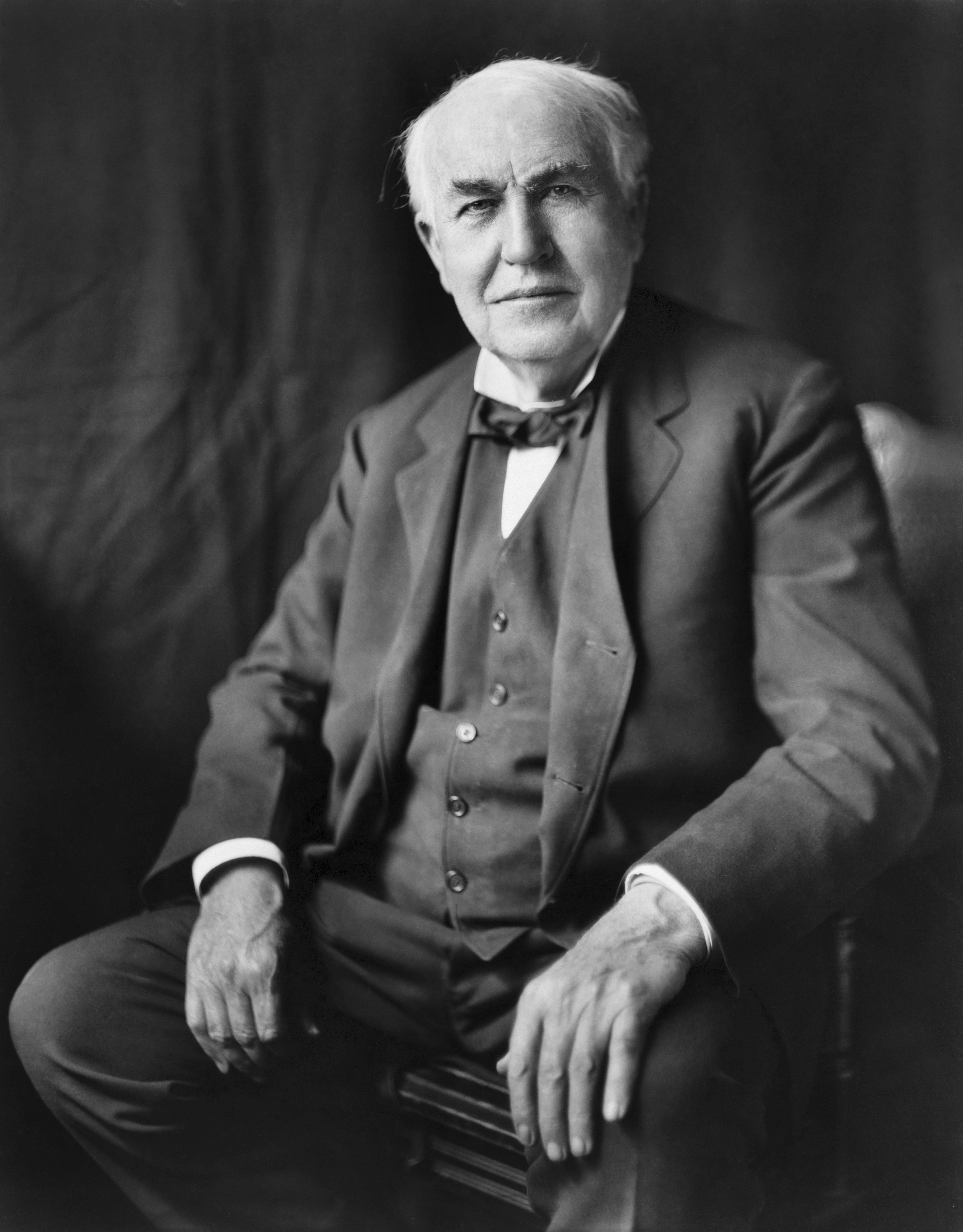
In his 84 years, Thomas Edison acquired a record number of 1,093 patentsThomas_Edison2 (singly or jointly) and was the driving force behind such innovations as the phonograph, the incandescent light bulb and one of the earliest motion picture cameras. He also created the world's first industrial research laboratory. Known as the "Wizard of Menlo Park," for the New Jersey town where he did some of his best-known work, Edison had become one of the most famous men in the world by the time he was in his 30s. In addition to his talent for invention, Edison was also a successful manufacturer and businessman who was highly skilled at marketing his inventions — and himself — to the public.

Serbian-American engineer and physicist Nikola Tesla (1856-19Tesla_aged_3643) made dozens of breakthroughs in the production, transmission and application of electric power. He invented the first alternating current (AC) motor and developed AC generation and transmission technology. Though he was famous and respected, he was never able to translate his copious inventions into long-term financial success — unlike his early employer and chief rival, Thomas Edison.

Edison not only invented the electric light bulb he also developed a means of transmission of electricity — direct current (DC). His assistant at the time was a 29-year old Serbian immigrant named Nikola Tesla. In 1885, Tesla claimed that he could redesign Edison's inefficient motor and generators, making an improvement in both service and economy. According to Tesla, Edison remarked, "There's fifty thousand dollars in it for you — if you can do it" — this has been noted as an odd statement from an Edison whose company was stingy with pay and who did not have that sort of cash on hand. After months of work, Tesla fulfilled the task and inquired about payment. Edison, claiming that he was only joking, replied, "Tesla, you don't understand our American humor." Instead, Edison offered a $10 a week raise over Tesla's $18 per week salary; Tesla refused the offer and immediately resigned.

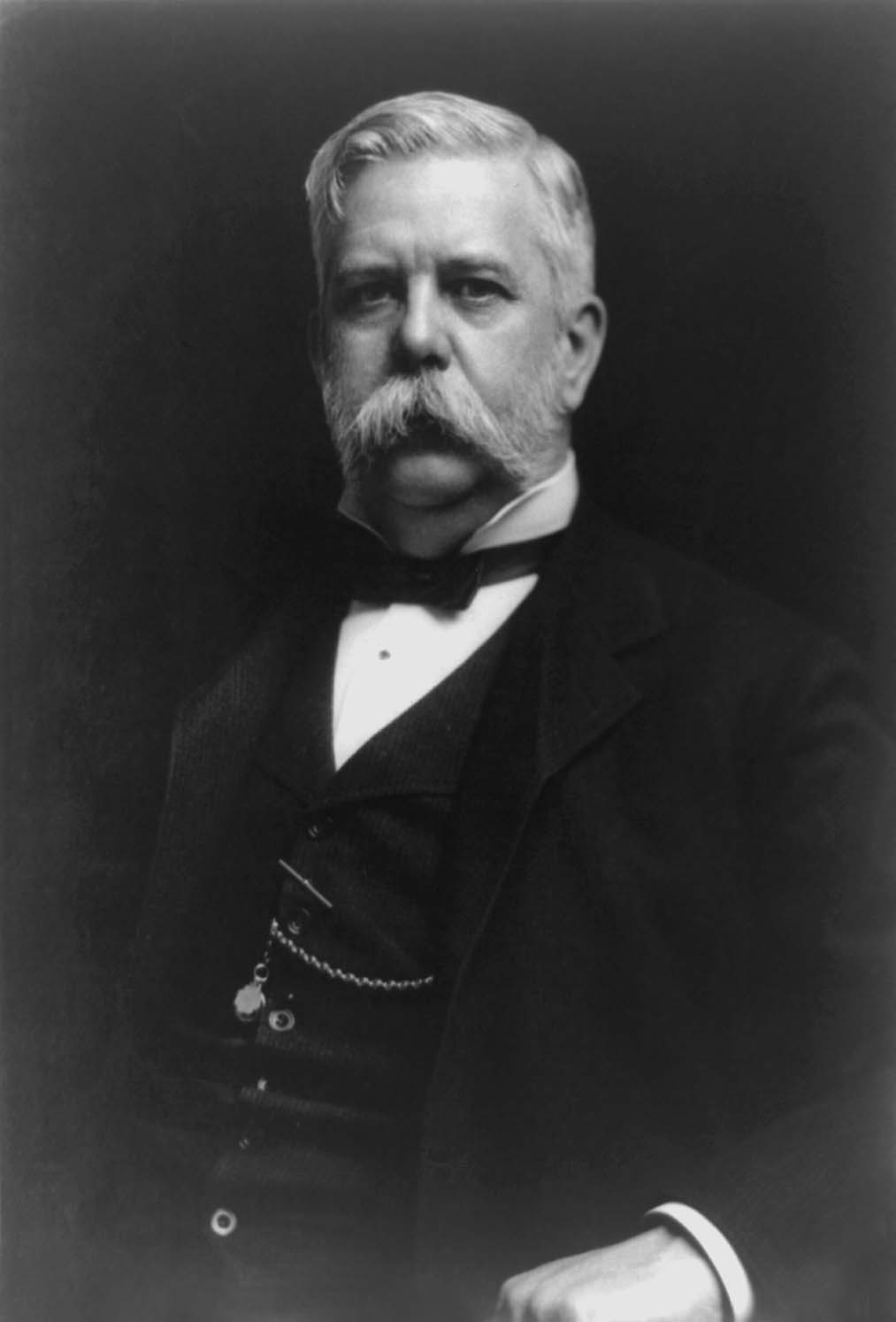
Tesla immediately teamed up with George Westinghouse who was famous for his development for air brakes on train cars. And now the current war began. Edison, who had partnered with J.P. Morgan were pushing DC whileGeorge_Westinghouse Westinghouse was pushing Tesla’s alternating current (AC). When Sing-Sing prison in New York was looking for a more “humane” method of executing prisoners they developed an electric chair using AC. The first trial was a botched failure and Edison and Morgan immediately began a nasty public relations campaign hyping the dangers of AC. This set Westinghouse back and in order avoid bankruptcy and convince investors to buy into AC Tesla signed all of his patent rights over to Westinghouse. At this time the Niagara Falls Power Company was building a massive hydro-electric generating plant to service the entire Northeast. They were taking bids from companies to provide the generators and were considering Westinghouse’s AC system and the Edison/Morgan DC system. The bidding war had begun.

In order to convince the public of the safety and efficiency of AC Westinghouse and Tesla worked feverishly to wire the 1893 World's Columbian Exposition (AKA Chicago World’s Fair) with thousands of lights. The Morgan/Edison (now General Electric) bid was $1.8 million and later reduced to $554,000. The Westinghouse/Tesla bid was $399,000. Westinghouse won the bid and had invent their own light bulb as General Electric refused them the rights to use the Edison bulb.

When the exposition opened and the great illumination was viewed by the public it convinced the Niagara Power to select the AC generators. Westinghouse had won the battle of the currents.

Meanwhile John Rockefeller was looking on from the sidelines wondering what would happen to his kerosene business now that electricity was beginning to light the nation. Rockefeller urged his scientists to come up with new ways to use petroleum and they did. One of the waste products from the refining of kerosene — a substance that was being dumped into the fields — was something called gasoline. But there was little use for gasoline until the emergence of the auto industry and Henry Ford.

With the introduction of the Model T Ford in 1908 the public was beginning to drive gasoline powered vehicles. Rockefeller’s Standard Oil empire was not only saved it was expanded through his vertical monopolies of owing the wells producing the oil and the refineries to owning the pipelines carrying his products and the service stations dispensing gasoline to the ultimate customer. With the widespread growth of the electrical industry a door had closed to Rockefeller, but with the growth of the automobile industry another door had opened.

Even though Morgan had lost the current war it did not take him long to dump Edison and buy into AC making General Electric one of world’s largest corporation.

Meanwhile with the PRR suffering setbacks in the Railroad business causing Carnegie and Scott to part ways it did not take the Scotsman long to jump head first into the steel business. The Bessemer process for making steel was not only a technical success it was also a great business success. Carnegie’s Homestead plant began turning out steel on a massive scale. With the development of Otis’s elevator taller and taller buildings became possible. The demand for Carnegie’s steel grew and grew as skyscrapers began to dot the cities of the nation. It was not only steel for buildings but steel for bridges, automobiles, and ships.

Carnegie built Pittsburgh's Carnegie Steel Company, which he sold to J.P. Morgan in 1901 for $480 million, creating the U.S. Steel Corporation. Carnegie devoted the remainder of his life to large-scale philanthropy, with special emphasis on local libraries, world peace, education and scientific research. With the fortune he made from business, he built Carnegie Hall, and founded the Carnegie Corporation of New York, Carnegie Endowment for International Peace, Carnegie Institution for Science, Carnegie Trust for the Universities of Scotland, Carnegie Hero Fund, Carnegie Mellon University and the Carnegie Museums of Pittsburgh, among others. His life has often been referred to as a true "rags to riches" story.

These men, while not perfect by any means and sometimes unethical, created whole industries supporting other businesses. Edison’s light bulb gave rise to the lamp industry with companies like Tiffany making lamps for the wealthy — lamps that sell for thousands of dollars at auctions today. Henry Ford’s auto plants created thousands of small, entrepreneurial enterprises supplying the auto industry — even to today’s Auto Zone. The cheap availability of steel brought forth the home appliance industry and gasoline not only fueled millions of automobiles but also allowed two brothers and bicycle makers in Dayton, Ohio to make a successful flight of something called an airplane on the wind-swept dunes of Kitty Hawk, North Carolina. Two high school dropouts who pioneered a trillion dollar aviation industry — an industry that transports billions of passengers safely each year around the globe.

Today many of our K-12 students learn virtually nothing of these giants and what they do learn is biased away from capitalism and towards something call social justice, They learn of the purported “evils” of the capitalistic system and the virtues of the collective. They learn that government is the source of all technology and invention. They have no idea of why the lights go on in their homes or classrooms when the flip a switch on the wall. They go into a high-rise building not knowing how steel and elevators were responsible for the construction of those buildings. And they ride in mom’s SUV or school bus with no idea of how the fuel that runs that vehicle got there. Even musicians who perform at Carnegie Hall probably don’t realize how this magnificent edifice came to be. It was not government who built it but the money from Carnegie’s steel. Yes, Mr. Obama, they did build it — not government.

We owe a great deal to these capitalist who were willing to risk everything of their visions and efforts. Yes, they made profits for without profits nothing would have happened. The next time you flip a light switch or ride an elevator give some thought to the men who built America.

Tuesday, February 12, 2013

The Recipient Class

“Now since man is naturally inclined to avoid pain—and since labor is pain in itself—it follows that men will resort to plunder whenever plunder is easier than work. History shows this quite clearly. And under these conditions, neither religion nor morality can stop it. — Frederick Bastiat, The Law.

Alexis-Charles-Henri Clérel de Tocqueville (July 29, 1805 – April 16, 1859) was a French political thinker and historian best known for his Democracy in America (appearing in two volumes: 1835 and 1840) and The Old Regime and the Revolution (1856). In both of these works, he explored the effects of the rising equality of social conditions on the individual and the state in western societies.

In 1831 Alexis de Tocqueville, a young French aristocrat and ambitious civil servant, made a nine-month journey throughout America. The result was Democracy in America, a monumental study of the life and institutions of the evolving nation. Tocqueville looked to the flourishing democratic system in America as a possible model for post-revolutionary France, believing that the egalitarian ideals it enshrined reflected the spirit of the age and even divine will. His insightful work has become one of the most influential political texts ever written on America and an indispensable authority on democracy.

Several things de Tocqueville stated in his Democracy in America book are more relevant today than ever:

“The American Republic will endure until the day Congress discovers that it can bribe the public with the public's money.”

“Democracy extends the sphere of individual freedom, socialism restricts it. Democracy attaches all possible value to each man; socialism makes each man a mere agent, a mere number. Democracy and socialism have nothing in common but one word: equality. But notice the difference: while democracy seeks equality in liberty, socialism seeks equality in restraint and servitude.”

“When the taste for physical gratifications among them has grown more rapidly than their education the time will come when men are carried away and lose all self-restraint. It is not necessary to do violence to such a people in order to strip them of the rights they enjoy; they themselves willingly loosen their hold. They neglect their chief business which is to remain their own masters.”

“Society will develop a new kind of servitude which covers the surface of society with a network of complicated rules, through which the most original minds and the most energetic characters cannot penetrate. It does not tyrannize but it compresses, enervates, extinguishes, and stupefies a people, till each nation is reduced to nothing better than a flock of timid and industrious animals, of which the government is the shepherd.”

Alexis de Tocqueville, like another French classical liberal (now called conservatives not to be confused with today’s progressive liberals) Frederick Bastiat saw the dangers of the nanny state and how citizens would be willing to trade freedom for government handouts. It was Bastiat who said in his 1850 book, The Law, stated:

“…But, generally, the law is made by one man or one class of men. And since law cannot operate without the sanction and support of a dominating force, this force must be entrusted to those who make the laws.

This fact, combined with the fatal tendency that exists in the heart of man to satisfy his wants with the least possible effort, explains the almost universal perversion of the law. Thus it is easy to understand how law, instead of checking injustice, becomes the invincible weapon of injustice. It is easy to understand why the law is used by the legislator to destroy in varying degrees among the rest of the people, their personal independence by slavery, their liberty by oppression, and their property by plunder. This is done for the benefit of the person who makes the law, and in proportion to the power that he holds.”

Bastiat recognized that the greatest single threat to liberty is government. Notice the clarity he employs to help us identify and understand evil government acts such as legalized plunder. Bastiat says, “See if the law takes from some persons what belongs to them, and gives it to other persons to whom it does not belong. See if the law benefits one citizen at the expense of another by doing what the citizen himself cannot do without committing a crime.” With such an accurate description of legalized plunder, we cannot deny the conclusion that most government activities, including ours, are legalized plunder, or for the sake of modernity, legalized theft.

If Bastiat or de Tocqueville were alive today, they would be disappointed with our failure to keep the law within its proper domain. Over the course of a century and a half, we have created more than 50,000 laws. Most of them permit the state to initiate violence against those who have not initiated violence against others.

Bastiat explains the call for laws that restrict peaceable, voluntary exchange and punish the desire to be left alone by saying that socialists want to play God. Socialists look upon people as raw material to be formed into social combinations. To them— the elite—“the relationship between persons and the legislator appears to be the same as the relationship between the clay and the potter.” And for people who have this vision, Bastiat displays the only anger I find in The Law when he lashes out at do-gooders and would-be rulers of mankind, “Ah, you miserable creatures! You who think that you are so great! You who judge humanity to be so small! You who wish to reform everything! Why don’t you reform yourselves? That task would be sufficient enough.”

In essence we have created a state where there exists a permanent recipient class — a class that is dependent on government for its sustenance. This is today’s definition of equality.

Last week, Jonah Goldberg wondered why Republicans are doing so well at the local and state level but striking out at the federal level of politics. His answer to the question is simple: state and local government is about nuts and bolts; the federal government is all about religion. Goldberg stated in his Townhall column:

“Our presidents, Republican and Democrat alike, talk about their "visions" for America, as if being a president requires you to impose some quasi-religious vision on the country.

But the Democrats are simply better at talking about government in spiritual terms. Indeed, such testifying is Obama's one indisputable gift. They talk about the federal government doing things we'd want God to do if God dabbled in public policy.”

Here is reason good enough for President Jefferson to call for a "wall of separation" between church and state: to keep the vision thing a safe distance away from government and its enforcement officers. Because, as I like to say, government is force, and it is always a good idea to keep that in mind as soon as someone starts talking about "the children", “investment” or "inequality."

Yes, inequality: that's how liberals are justifying their expansion of government these days. That's what President Obama was talking about in his Osawatomie speech in December 2011,

In a recent Pew Research Organization poll the top four issues for Hispanic voters were; the economy (jobs), health care, the deficit, and foreign policy. The Democrats did a better job of convincing these voters that they would give them more than Romney — it was the traditional Democrat offerings of more stuff from government. Immigration was very low on the list and gun control was not even mentioned. (See: Another Round of Immigration Reform)

Today it is estimated that 47% of Americans are living off of some sort of federal, state, or local subsistence programs. These programs include:

  • 99 weeks unemployment insurance
  • Food stamps (SNAP). Ten years ago 19.5 million Americans were on food stamps, today the number exceeds 47 million which is equivalent to 15% of the population.
  • Special Supplemental Nutrition Program for Women, Infants and Children (WIC)
  • Earned Income Tax Credits (EITC)
  • Medicaid — a program that is jointly funded by the state and federal government.
  • Aid to dependent children (TANF)
  • Farm subsidies
  • Stimulus programs, also known as corporate welfare
  • Government workers and teachers pensions and health care plans creating trillions of dollars in unfunded liability for future taxpayers.
  • Subsidized college loans
  • School breakfast and lunch programs

This list could go on and on, but these are just a few of the more costly forms of legal plunder. Also note that not one of these programs is in the scope of the federal government as that scope is defined by the enumerated powers listed in Article I, Section 8 of the U.S. Constitution.

In Entitlement America, the head of a household of four making minimum wage has more disposable income than a family making $60,000 a year According to Wyatt Emerich as shown on Zero Hedge. Click here for the chart that tells a sad tale of plunder:

Emerich analyzes disposable income and economic benefits among several key income classes and comes to the stunning (and verifiable) conclusion that "a one-parent family of three making $14,500 a year (minimum wage) has more disposable income than a family making $60,000 a year." And that excludes benefits from Supplemental Security Income disability checks. America is now a country which punishes those middle-class people who not only try to work hard, but avoid scamming the system. Not surprisingly, it is not only the richest and most audacious thieves that prosper - it is also the penny scammers at the very bottom of the economic ladder that rip off the middle class each and every day, courtesy of the world's most generous entitlement system.

As Bastiat stated:

“Man can live and satisfy his wants only by ceaseless labor; by the ceaseless application of his faculties to natural resources. This process is the origin of property.

But it is also true that a man may live and satisfy his wants by seizing and consuming the products of the labor of others. This process is the origin of plunder. Now since man is naturally inclined to avoid pain—and since labor is pain in itself—it follows that men will resort to plunder whenever plunder is easier than work. History shows this quite clearly. And under these conditions, neither religion nor morality can stop it.”

Right now, the liberals are all agreed that "inequality" requires more government. In ten years, they will come up with something else.