"Where you find the laws most numerous, there you will find also the greatest injustice." — Arcesilaus
In my previous blog I touched on the philosophy of Frederic Bastiat. In this post I would like to tell you something about the life and philosophy of Bastiat and why you should read his writings if you believe in freedom and the natural rights of man as our Founders did.
Claude Frederic Bastiat was born on June 30, 1801, in Bayonne, France, the son of a prominent merchant. His mother died when he was seven years old, and his father passed away two years later, when Frederic was only nine. He was brought up by an aunt, who also saw to it that he went to the College of Sorèze beginning when he was 14. But at 17 he left without finishing the requirements for his degree and entered his uncle’s commercial firm in Bayonne. Shortly afterward he came across the writings of the French classical-liberal economist Jean- Baptiste Say, and they transformed his life and thinking. He began a serious study of political economy and soon discovered the works of many of the other classical-liberal writers in France and Great Britain.
In 1825 he inherited a modest estate in Mugron from his grandfather and remained there until 1846, when he moved to Paris. During these 20 years Bastiat devoted almost all his time to absorbing a vast amount of literature on a wide variety of subjects, sharing books and ideas with his friend Félix Coudroy. It seems that Coudroy had socialist leanings, and Bastiat began to refine his skills in clear thinking and writing by formulating the arguments that finally won over his friend to a philosophy of freedom.
In the late 1820s and 1830s he began writing monographs and essays on a variety of economic topics. But his real reputation as a writer began in 1844, when he published a lengthy article in defense of free trade and then a monograph on Cobden and the League: The English Movement for Free Trade. While writing these works Bastiat began a correspondence with Richard Cobden, one of the primary leaders of the British Anti-Corn Law League, the association working for the repeal of all barriers to free trade. The two proponents of economic freedom became fast friends, supporting each other in the cause of liberty.
The success of these writings, and the inspiration from the success of Cobden’s free-trade activities in bringing about the end of agricultural protectionism in Great Britain in 1846, resulted in Bastiat’s moving to Paris to establish a French free-trade association and to start Le Libre Échange, a newspaper devoted to this cause. For two years Bastiat labored to organize and propagandize for free trade. At first he was able to attract a variety of people in commerce and industry to support his activities, including delivering speeches, designing legislation for the repeal of French protectionism, and preparing writings to change public opinion. But it was to no avail. There were too many factions benefiting from privileges and favors given by the government, and he was unable to arouse a sustained interest in his cause among the general public. It appeared that Adam Smith had been right in lamenting the prejudices of the public and the power of the factions, at least in France. This is what Madison feared most when writing in support of the Constitution in Federalist 10.
Following the revolution of February 1848, Bastiat began a career in politics,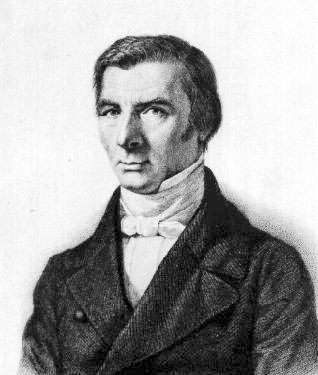
Bastiat made his last appearance in the Assembly in February 1850. By spring of that year his health had declined so dramatically that he was forced to step down from his legislative responsibilities and spend the summer in the Pyrenees Mountains in the south of France. He returned to Paris in September and visited his friends in the cause for free trade, before setting out for Italy in search of a cure for his tuberculosis. He died in Rome on December 24, 1850, at the age of 49 — much too soon.
Frederic Bastiat’s intellectual legacy in the fight for economic freedom is contained in three volumes. Two of them are collections of some of his most biting, witty, and insightful essays and articles, and are available in English under the titles Economic Sophisms and Selected Essays on Political Economy. In his last years, Bastiat devoted part of his time to a general work of social philosophy and economic principles, published under the name Economic Harmonies.
As Henry Hazlitt rightly emphasized, the central idea in much of Bastiat’s writings is captured in his essay “What Is Seen and What Is Not Seen,” which was the last piece he wrote before his death in 1850. He points out that the short-run effects of any action or policy can often be quite different from its longer-run consequences, and that these more remote consequences in fact may be the opposite from what one had hoped for or originally planned.
Bastiat was able to apply the principle of the seen and the unseen to taxes and government jobs. When government taxes, what is seen are the workers employed and the results of their labor: a road, a bridge, or a canal. What is unseen are all the other things that would have been produced if the tax money had not been taken from individuals in the private sector and if the resources and labor employed by the government had been free to serve the desires of those private citizens. Government, Bastiat explained, produces nothing independent from the resources and labor it diverts from private uses.
This simple but profoundly important insight is the theoretical weapon through which Bastiat is able to demonstrate the errors and contradictions in the ideas of both protectionists and socialists. Thus in such essays as “Abundance and Scarcity,” “Obstacle and Cause,” and “Effort and Result,” he shows that barriers and prohibitions to freedom of trade only lead to poverty.
He points out that each of us is both a consumer and a producer. To consume a good we must either make it ourselves or make some other good that we think someone else will take in exchange for the good we want. As consumers we desire as many goods as possible at the lowest possible prices. In other words, we want abundance. But as producers we want a scarcity of the goods we bring to market. In open competition, in which all exchanges are voluntary, the only way to “capture” customers and earn the income that enables each of us, in turn, to be a consumer is to offer better, cheaper, and more goods than our competitors. The alternative to this method, Bastiat warns, is for each of us as a producer to turn to the government to gain from our neighbors what we are unable to obtain through peaceful, nonviolent trade on the market. Consider that you own a pizza shop and the government takes five dollars out of your till in taxes and then gives that five dollars to people to purchase a pizza from you. What would you have gained? Of course this does not take into consideration the 50 cents the government would keep for administrative costs. This is what government does when it takes money from person “A” to give to person “B” and claims this action is helping the economy and creating jobs. Bastiat saw 150 years ago that this was a false assertion — one that the progressives and socialists have rammed down our throats for years.
Herein lays Bastiat’s famous distinction between illegal and legal plunder, which is at the center of his analysis in The Law. The purpose of government, he says, is precisely to secure individuals in their rights to life, liberty, and property. Without such security men are reduced to a primitive life of fear and self-defense, with every neighbor a potential enemy ready to plunder what another has produced. If a government is strictly limited to protecting men’s rights, then peace prevails, and men can go about working to improve their lives, associating with their neighbors in a division of labor and exchange. This is what Jefferson meant when he said that your rights ended at the tip of his nose.
But government can also be turned against those whom it is meant to protect in their property. There can arise legal plunder, in which the powers of government are used by various individuals and groups and factions to prevent rivals from competing, to restrict the domestic and foreign trading opportunities of other consumers in the society, and therefore to steal the wealth of one’s neighbors. This, Bastiat argues, is the origin and basis of protectionism, regulation, and redistributive taxation.
But the consequences of legal plunder are not only the political legitimizing of theft and the breakdown of morality through the blurring of the distinction between right and wrong—however crucially important and dangerous these may be for the long-term stability and well-being of society. Such policies also, by necessity, reduce the prosperity of the society.
Every trade protection, every domestic regulatory restriction, every redistributive act of taxation above that minimal amount necessary to secure the equal protection of each individual’s rights, Bastiat insisted, reduces production and competition in society. Scarcity replaces abundance. Limiting competition reduces the supply of goods available to all members of the society. Imposing protectionist barriers on foreign trade or domestic regulations on production decreases the general availability of goods and makes them more expensive. Everyone is, in the end, made worse off. And thus Bastiat reached his famous conclusion that the state is the great fiction through which everyone tries to live at the expense of everyone else.
Why does legal plunder come about? Bastiat saw its origin in two sources. First, as we have just seen, some people see it as an easier means of acquiring wealth than through work and production. They use political power to redistribute from others what they are unwilling or unable to obtain from their neighbors through the voluntary exchanges of the marketplace. One basis for legal plunder, in other words, is the misguided spirit of theft.
The second, and far more dangerous, source of legal plunder is the arrogant mentality of the social engineer or utopian mastermind. Through the ages, Bastiat showed, social and political philosophers have viewed the multitude of humanity as passive matter, similar to clay, waiting to be molded and shaped, arranged and moved about according to the design of an intellectually superior elite.
Bastiat writes in The Law:
"These socialist writers look upon people in the same manner that the gardener views his trees. Just as the gardener capriciously shapes the trees into pyramids, parasols, cubes, vases, fans, and other forms, just so does the socialist writer whimsically shape human beings into groups, series, centers, sub-centers, honeycombs, labor-corps, and other variations. And just as the gardener needs axes, pruning hooks, saws, and shears to shape his trees, just so does the socialist writer need the force that he can find only in law to shape human beings. For this purpose, he devises tariff laws, relief laws, and school laws."
With a timeless relevance, Bastiat points out that the political elite praises the ideal of democracy, under which “the people” select those who will hold political office. But once the electoral process is finished, those elected to high political office arrogate to themselves the planning, directing, and controlling of every aspect of social and economic life. The task of modern democracy, apparently, is to periodically appoint those who shall be our societal dictators and masterminds.
Is this the way men have to live? Was illegal and legal plundering the only form of social existence? Bastiat answered no. In Economic Harmonies he tried to explain the nature and logic of a system of peaceful human association through production and trade. Historians of economic thought and other critics of Bastiat have said this work demonstrates that, despite his brilliant journalistic talents, he failed as a serious economic theorist. They point to his use of a form of a labor theory of value or his .faulty theory of savings, capital, and interest.
But beyond these errors and limitations is an aspect of Economic Harmonies that still makes it insightful. Harmonies attempts to offer a grand vision of the causal relationships among work, the division of labor, voluntary exchange, and mutual improvement of men’s condition, as well as the importance of private property, individual freedom, and domestic and foreign free trade. In freedom there is social harmony, since each man sees his neighbor not as an enemy but as a partner in the ongoing processes of human improvement. Where relationships are based on consent and mutual agreement there can be no plunder, only reinforcing prosperity, as each works to trade with his neighbors and acquire all the things that make life better for each and all. This is exactly the way our Founders thought.
If one looks at the period during which Bastiat devoted his efforts to fight for freedom and free trade, the conclusion would appear to be that his life ended in failure. Both during his lifetime and following his death France remained in the grip of the protectionist and interventionist spirit, never achieving the degree of economic liberty enjoyed in Great Britain through the second half of the nineteenth century.
And yet Bastiat’s life should be seen as a glorious success. For the 150 years since his passing, each new generation of advocates of economic liberty has been inspired by his writings. His fables and essays read as fresh as if they were written yesterday, because they address the underlying nature of human association and the dangers from political encroachment on the social and market orders.
Today we live in a society where 50% of the people pay no taxes for the government benefits they receive. This means they are plundering the other 50% to pay for their needs. According to the Bureau of Labor Statistics there are 48 million people on food stamps. These 48 million are plundering the people paying taxes for their daily bread and other niceties of life. Government assistance in the form of various welfare programs are plunder of those not receiving welfare payments. The bailout of the auto industry was plunder of the taxpayers for the purpose of protecting two auto manufactures who were in financial trouble due to their lack of providing the consumer what he or she wanted and the mismanagement of the companies. Government sponsorship of student loans has allowed the colleges and universities to plunder students, their parents, and taxpayers with higher and higher tuition costs. The list of examples of plunder goes on and on.
One of Bastiat’s comments in The Law referring to socialist and progressive is particularly relative today with all of the talk of fairness and the equality of results. Bastiat states:
"Socialism, like the ancient ideas from which it springs, confuses the distinction between government and society. As a result of this, every time we object to a thing being done by government, the socialists conclude that we object to its being done at all. We disapprove of state education. Then the socialists say that we are opposed to any education. We object to a state religion. Then the socialists say that we want no religion at all. We object to a state-enforced equality. Then they say that we are against equality. And so on, and so on. It is as if the socialists were to accuse us of not wanting persons to eat because we do not want the state to raise grain."
Bastiat’s writings are timeless as they show us the tyranny of the elite and masterminds as they rule over us for their own purposes and use legal plunder as their political currency. They have influenced conservative economists and philosophers such as; Ludwig von Mises, Friedrich Hayek (who had a profound influence on Margaret Thatcher), Henry Hazlitt, .Nobel Prize winning Milton Friedman, Walter Williams, and Thomas Sowell.
The video shown below, produced by the Von Misses Institute, presents a good overview of the writings and philosophies Frederic Bastiat.If you are interested in learning more about Bastiat and French liberalism it is well wrth your time.

