Search This Blog

Showing posts with label Bastiat. Show all posts

Friday, March 15, 2013

Progressivism is Dangerous for Your Life, Liberty and Property

“In short, the way to wealth, if you desire it, is as plain as the way to market. It depends chiefly on two words; industry and frugality—that is, waste neither time nor money, but make the best use of both. Without industry and frugality nothing will do, and with them everything. He that gets all he can honestly, and saves all he gets (necessary expenses excepted), will certainly become rich, if that Being who governs the world, to whom all should look for a blessing on their honest endeavors, does not, in his wise providence, otherwise determine.” — Benjamin Franklin, Advice to a Young Tradesman, 1748

Benjamin Franklin was raised in a typical Puritan home in Boston, but migrated to Philadelphia as a teenager. In the freer atmosphere of the Quaker city he prospered; everything he touched became successful, including a printing business, the Pennsylvania Gazette, and the little almanac he named Poor Richard’s. He retired at forty-two, became famous for his scientific experiments and inventions, received an honorary doctorate from Oxford, and later somewhat reluctantly entered politics.

Franklin grew with Philadelphia. He was the great American success story and did more than any one person to show the world that America was the “Land of Opportunity.” He wrote this little occasional essay soon after his retirement from active management of his business affairs. It would be reprinted hundreds of times. Although much of its advice seems to later generations to be simple common sense, his ideas about time, money, and credit were new and wondrous to a world just awakening to entrepreneurial ways of thinking. The Way to Wealth reflects the celebration of material accumulation and concern for individual accomplishment that became culturally acceptable in the eighteenth century.

When it came to issues of the civil society, government, work, taxes, and finances Franklin was by today’s political labeling a Libertarian. But Franklin also expressed a belief in a Creator from which all rights emanated, He called these rights “unalienable” and suggested to Jefferson that he use this word in the Declaration of Independence.

James Madison, like Franklin, held these same beliefs and so states in his 1792 essay on Property where he states:

“This term in its particular application means "that dominion which one man claims and exercises over the external things of the world, in exclusion of every other individual." In its larger and juster meaning, it embraces every thing to which a man may attach a value and have a right; and which leaves to every one else the like advantage.

In the former sense, a man's land, or merchandize, or money is called his property.

In the latter sense, a man has property in his opinions and the free communication of them.

He has a property of peculiar value in his religious opinions, and in the profession and practice dictated by them.

He has a property very dear to him in the safety and liberty of his person.

He has an equal property in the free use of his faculties and free choice of the objects on which to employ them.

In a word, as a man is said to have a right to his property, he may be equally said to have a property in his rights.

Where an excess of power prevails, property of no sort is duly respected. No man is safe in his opinions, his person, his faculties, or his possessions.

Where there is an excess of liberty, the effect is the same, tho' from an opposite cause.

Government is instituted to protect property of every sort; as well that which lies in various rights

of individuals, as that which the term particularly expresses. This being the end of government, that alone is a just government, which impartially secures to every man, whatever is his.”

With the historical record of the last century and a half of political and social experimentation behind us, the fundamental question for Western civilization has come down to this: How free do people want to be? Partially free or completely free? Furthermore, is it even possible to be considered truly free if one is only partially free? Democratically based societies around the globe need to decide which they value more — liberal/Progressive equality or liberty. There is no happy medium that will sustain both. One need only observe the contention, the hyper-partisanship, and the social and economic decline of societies that have attempted to balance the two concepts to recognize that it is a fool's errand.

The concept of freedom used here means that each individual owns his or her own life (body and mind, including that which he produces with his body and mind) while existing in a condition in which voluntary courses of action can be chosen without physical compulsion, coercion, or interference from others.

It is obvious that freedom is meaningless in a society without rights to protect it. A right has, therefore, been defined as a moral principle defining and sanctioning a person's freedom in a social context. Past Supreme Court justice George Sutherland stated it eloquently when he said:

"The right to life, liberty and property are bound together to be essentially one right. To give a man his life but to deny him his liberty is to take from him all that makes life worth living. To give him liberty but to take from him the property which is the fruit and badge of his liberty is to still leave him a slave."

Both freedom and rights are futile without the principle of equality of rights. Though people possess a vast array of individual differences, all members of a free society should be treated equally in two respects: in the equality of their individual rights, and in their equality of treatment before the law. Freedom cannot exist for those whose rights are subordinated to the rights or objectives of others. Observing the equality of rights also means that any alleged "right" of one person, which necessitates the violation of the rights of another, is not and cannot be a right. For example, no person can have the "right" to impose an un-chosen obligation, an unrewarded duty, or involuntary servitude on another person. Armed with this understanding, we can begin to clear the fog of Progressivism and understand how its agenda of collectivism and redistribution is corrosive to freedom.

Another way to state this axiom was put forth by 150 years ago by Frederick Bastiat in his easy on the Law where he termed those un-chosen obligations as “plunder.” He stated:

“But how is this legal plunder to be identified? Quite simply. See if the law takes from some persons what belongs to them, and gives it to other persons to whom it does not belong. See if the law benefits one citizen at the expense of another by doing what the citizen himself cannot do without committing a crime. Then abolish this law without delay, for it is not only an evil itself, but also it is a fertile source for further evils because it invites reprisals. If such a law—which may be an isolated case—is not abolished immediately, it will spread, multiply, and develop into a system. The person who profits from this law will complain bitterly, defending his acquired rights. He will claim that the state is obligated to protect and encourage his particular industry; that this procedure enriches the state because the protected industry is thus able to spend more and to pay higher wages to the poor workingmen. Do not listen to this sophistry by vested interests. The acceptance of these arguments will build legal plunder into a whole system. In fact, this has already occurred. The present day delusion is an attempt to enrich everyone at the expense of everyone else; to make plunder universal under the pretense of organizing it.

Now, legal plunder can be committed in an infinite number of ways. Thus we have an infinite number of plans for organizing it: tariffs, protection, benefits, subsidies, encouragements, progressive taxation, public schools, guaranteed jobs, guaranteed profits, minimum wages, a right to relief, a right to the tools of labor, free credit, and so on, and so on. All these plans as a whole—with their common aim of legal plunder—constitute socialism.

Now, since under this definition socialism is a body of doctrine, what attack can be made against it other than a war of doctrine? If you find this socialistic doctrine to be false, absurd, and evil, then refute it. And the more false, the more absurd, and the more evil it is, the easier it will be to refute. Above all, if you wish to be strong, begin by rooting out every particle of socialism that may have crept into your legislation. This will be no light task.

This question of legal plunder must be settled once and for all, and there are only three ways to settle it:

1. The few plunder the many.

2. Everybody plunders everybody.

3. Nobody plunders anybody.

We must make our choice among limited plunder, universal plunder, and no plunder. The law can follow only one of these three.”

In order to be acceptable in a culture that valued individual liberty and self-reliance, Progressives realized that collectivism had to be cloaked in "the common good of society," and egalitarian redistribution disguised as "fairness" necessary to achieve "social justice." Unconcealed, these objectives are offensive to a free society in which individuals follow their own values and preferences and are not bound to follow someone else's. This principle is founded on the belief that adult individuals of sound mind are the ultimate judges of their own well-being and that their own views should be paramount in governing their actions.

The proponents of liberal/Progressive equality, on the other hand, want to govern the actions of others in order to organize society and its resources to achieve their specific objectives, which are often loosely defined as the "common good." The writings of many liberal/Progressive academics and thinkers have pointed out that, in a free society, the common good can mean only the sum of the various goods of all of the individuals involved. When the common good is regarded as something apart from and superior to the individual good of its members, it means that the good of some takes precedence over the good of others. A free society does not require the sacrifice of anyone's interests, be it to another powerful individual or even to a majority. It leaves no possibility for any person to serve his or her interests by subordinating the interests of others.

Herein is the equality paradox, the central contradiction of liberal/Progressive ideology. Though the Progressive version of equality is presented to society as "fairness," it paradoxically requires unequal treatment by the force of government to subordinate the rights of some to the dictates of others in order to facilitate the latter's aims. The objective rule of law is bent to accommodate preferential treatment of chosen groups who, in turn, reward their government benefactors with electoral support.

In this sense Bastiat might have added a fourth to his list of plunders; The many plunder the few.

Once established, a "system" such as this eventually becomes the inverse of the one prescribed by the Constitution and Bill of Rights. A democratically based, constitutionally limited republic is replaced with statism, where authoritarian government masterminds know few limitations and obedient citizens are cultivated through increasingly restricted freedom of action and a diminution in the protection of individual rights. The consequence, which is lost on many good-intentioned people who support Progressive policies, is that it matters not if individual rights and freedom of choice are subordinated to the arbitrary whims of a monarch, a dictator, or to a government under the banner of societal good — they are subordinated nonetheless.

Committed Progressives will often concede that the rights of some may be subordinated and freedoms abridged, but they defend this as necessary in the transformation into a fairer society. Once the transformation is complete, they say, everyone will enjoy equality and live in a society where material needs will be met through cooperative effort guided by benevolent government action. Their assertions demand an answer to these questions: Of all the societies that have attempted similar transformations, are there any examples where this has gone to successful completion? Furthermore, does the modern Progressive welfare state represent such a completion?

Interestingly, social scientist and author Charles Murray has referred to the last century of experimentation with collectivism and egalitarianism as modern civilization's era of adolescence -- an era when parental advice, based on the practical lessons learned through life experiences, is discounted as irrelevant to the "modern times" in which the adolescent and his or her cohorts live. Intellectual immaturity, hubris, naivety, and the youthful rebellious desire to be uninhibited by conventional standards eventually give way to an appreciation of the value of one's parents' timeless wisdom.

Will America mature in a parallel fashion through this Progressive-influenced phase of societal development and regain an appreciation for the timeless wisdom of her founding principles? Or will America venture farther away from freedom and down the path toward liberal/Progressive equality?

Committed Progressives will often concede that the rights of some may be subordinated and freedoms abridged, but they defend this as necessary in the transformation into a fairer society. Once the transformation is complete, they say, everyone will enjoy equality and live in a utopian society where material needs will be met through cooperative effort guided by benevolent government action. Their assertions demand an answer to these questions: Of all the societies that have attempted similar transformations, are there any examples where this has gone to successful completion? Furthermore, does the modern Progressive welfare state represent such a completion?

Interestingly, social scientist and author Charles Murray in his book “Coming Apart” has referred to the last century of experimentation with collectivism and egalitarianism as modern civilization's era of adolescence — an era when parental advice, based on the practical lessons learned through life experiences, is discounted as irrelevant to the "modern times" in which the adolescent and his or her cohorts live. Intellectual immaturity, hubris, naivety, and the youthful rebellious desire to be uninhibited by conventional standards eventually give way to an appreciation of the value of one's parents' timeless wisdom.

Will America mature in a parallel fashion through this Progressive-influenced phase of societal development and regain an appreciation for the timeless wisdom of her founding principles? Or will America venture farther away from freedom and down the path toward liberal/Progressive equality?

Sunday, August 12, 2012

The Intolerance and Bigotry of the Left

"Let us with caution indulge the supposition that morality can be maintained without religion. Whatever may be conceded to the influence of refined education on minds of peculiar structure, reason and experience both forbid us to expect that national morality can prevail in exclusion of religious principle." — George Washington (Farewell Address, 1796)

Today we live in a society where morality is considered relative to the times. In many cases there are no absolutes when it comes to morality and those who believe that religion and morality go hand in hand, as George Washington did, are considered to be either intolerant or racist. This is the mantra that the Left tosses around on a daily basis in the mainstream media and our TV and films.

The latest example of this appears in Salon Magazine in an article by Mary Elizabeth Williams writing about Olympic Gold Medalist Gabby Douglas and her expression of Christian faith. Rather than simply ignoring Ms. Douglas’ comments on her religious faith when she tweeted; “Let all that I am praise the LORD; may I never forget the good things he does for me” Ms. Williams felt compelled to write a negative article ridiculing Douglas’ expression of faith by stating:

“I’ve often wondered what it is about Christians like Douglas that unnerves me so. The closest I’ve been able to figure it is that Douglas and her ilk seem to espouse a faith based on what is commonly referred to as “The God of Parking Spaces.” It’s the deity that grants wishes to those who ask nicely. Douglas is a girl who has described God as the figure who’s “waking me up every morning and keeping me safe in the gym every day.”

There was no need for Williams to make such statements about a 16-year old girl who won a gold medal and expressed her believe in God and Jesus Christ. Williams could have written about numerous positive aspects of Douglas’ life but instead she had to take a whack at her Christian beliefs. Why?

Evidently, quite a few liberals amongst us are just as patriotic as the rest of us; unless our athletic avatars tarnish their medals with the stain of faith. According to Salon sourpuss Mary Elizabeth Williams. I understand the reasons for watching the Olympics extend well beyond the usual jingoistic expressions of sports fandom. Anyone who has seen Usain Bolt rocket through the 100 meters like a gazelle on amphetamines knows what I mean. Just as art can be appreciated for its own sake, so can athletic accomplishment.

So, who are these miserable curmudgeons like Williams? They’re the people who sneer at us for chanting “U-S-A,” but don’t bat an eyelid when the Europeans bellow their way through most of Wagner’s Ring Cycle while watching a 1-0 soccer match. They’re the people who just can’t bring themselves to be patriotic; even for a moment. We know who they are; we also know how they vote. To paraphrase Ms. Williams: they’re “commonly referred to as “liberals.”

I was raised in an extended family that voted for the Democrat no matter who he was. They considered themselves to be progressive and liberal and believed the Democratic Party was the party of the working people and would bring them the most benefits, especially when it came to unions. The exception to this was my father, who while professing to be a progressive did not like unions and was not a member of one.

These progressive family members and many of our middle-class neighbors who held similar beliefs were also intolerant of other nationalities, races, and ethnic heritages. Yet they considered themselves to be “liberal”.

Somewhere along the way I broke with this tradition of “liberalism” and progressive ideology and became a conservative — a Constitutional Conservative who was more in tune with the philosophy of our Founders, The Declaration of Independence, and the Constitution than the oft failed schemes of the progressives and their big government ideology. Perhaps this is due to the fact that I became a professional who was not beholden to a union and was an entrepreneur who started and successfully ran a professional engineering consulting business for over thirty years.

It was during this time that I was able to travel the world and see the damage done by progressives with their socialistic policies and the tyranny they imposed on the people. I was also able to develop some theories about liberals and progressives and how they group think. You can see is these theories have any validity by watching TV news shows, reading liberal publications and listening to liberals speak.

American progressives hold these truths to be self-evident:

All cultures and religions are equally meritorious (except for Christianity)

There is no objective truth (until and unless progressives declare the truth)

You cannot legislate morality, therefore everything is "moral" — except Christian morality.

Progressives celebrate diversity and are tolerant, inclusive, and accepting of all fellow humans — except conservative, white and Christian people)

Progressives are intelligent, thoughtful, reality-based, and benevolent

Objective? Diverse? Inclusive? Thoughtful? Reality-based? Benevolent? Not really. Progressives and liberals are the worst offenders of their own axioms when they talk about the "evils" of those who dispute liberal versions of facts, policy, or, especially, morality. The bigotry liberals direct toward those with whom they merely disagree is staggering.

Liberals believe in free speech, unless it offends someone's tender sensitivities (meaning only that liberals disagree with it). They protest the "wealthiest 1%," but exempt from their condemnations billionaire liberals and wealthy movie and rock stars, most of whom share the same ideology. Many liberals believe corporations and capitalism to be evil, even though the capitalist system and many of the corporations of which they disapprove have created the products and standard of living liberals enjoy.

But the American left reserves its ugliest bigotry for Christians. When liberals speak or write about practicing Christians, especially evangelical Christians and, in this presidential election year, Mormons, no slander is unacceptable and no religious custom is off-limits. America's most prominent liberal has condescendingly denigrated Christians as "bitter clingers" to guns and religion. Liberals have seriously asked: "Do All Evangelical Leaders Believe Gays Should Be Put to Death?" They worry about reports that evangelicals are voting in record numbers. And they invent scenarios which question whether religious convictions resonate in the political arena. Every Christian, of any age or gender, is fair game for liberal animosity — or left-wing redefinition. Liberals bash Christians with impunity; because Christians are Christian, and behave in a Christian manner from which liberals fear no reprisal. Ironic, huh? And opportunistic, too.

Thomas Jefferson believed in something called the “American Mind.” It was Jefferson who said, our Constitution was the product of “the American mind” and was made with the same purpose as the Declaration—to establish a regime where the people are sovereign, and the government protects the rights granted to them by their Creator.

The basis of Jefferson’s beliefs, and those of our founders, was the philosophy of classical liberalism (not to be mistaken for today’s liberal thinking) of economic and social writers such as John Locke, Montesquieu, Adam Smith, and Edmund Burke. They believed in small government, free markets and personal freedom. The classical liberals advocated policies to increase liberty and prosperity. They sought to empower the commercial class politically and to abolish royal charters, monopolies, and the protectionist policies of mercantilism so as to encourage entrepreneurship and increase productive efficiency. They also expected democracy and laissez-faire economics to diminish the frequency of war.

However, liberalism in the United States shifted between 1877 and 1937 from laissez-faire constitutionalism to New Deal statism, from classical liberalism to democratic social-welfarism. Another regularly asserted contrast between classical and modern liberals. Classical liberals tend to see government power as the enemy of liberty, while modern liberals fear the concentration of wealth and the expansion of corporate power. Classical liberalism has grown into two divergent philosophies since the beginning of the twentieth century: social liberalism and market liberalism.

So what do today’s liberals believe in if they do not subscribe to the ideology of tradition classical liberalism as expressed by John Locke and our Founders. After observing thousands of interviews with liberals over the years here is my take on the “Liberal Mind.”

Liberals believe they can change human nature.

Sure, human beings can be shaped and molded to a certain extent. Any parent who has spanked a child can tell you that. However, most people care more about what they're having for lunch today than an earthquake that kills ten thousand people on the other side of the world. We're just built that way and no amount of sensitivity training, preschool classes, or Michael Moore documentaries is going to "fix" it.

Our Founders knew that human nature was flawed and that the best way to counter the ambition of one group was to place it in opposition to the ambition of an opposing group or as James Madison stated to pit ambition against ambition. Madison stated in Federalist No. 10:

“The latent causes of faction are thus sown in the nature of man; and we see them everywhere brought into different degrees of activity, according to the different circumstances of civil society. A zeal for different opinions concerning religion, concerning government, and many other points, as well as speculation as of practice; an attachment to different leaders ambitiously contending for pre-eminence and power; or to persons of other descriptions whose fortunes have been interesting to the human passions, have, in turn, divided mankind into parties, inflamed them with mutual animosity, and rendered them much more disposed to vex and oppress each other than to cooperate for their common good.”

Madison wrote on Human Nature in Federalist No. 51:

It may be a reflection on human nature that such devices should be necessary to control the abuses of government. But what is government itself but the greatest of all reflections on human nature? If men were angels, no government would be necessary. If angels were to govern men, neither external nor internal controls on government would be necessary.”

No race or class of supermen, who can govern us, exits. There are no masterminds. There are no Philosopher Kings as Plato describes. Madison believed that man had a nature to abuse power: “If given the opportunity human beings will violate each other’s rights. The protection of individual rights is the primary purpose of government. Without government there is no effective security for our rights.

Liberals believe we can talk everything out with our enemies.

One of the weirder quirks of liberalism is their belief that many of our bitterest enemies have rational reasons for disliking us and that can easily be talked away if they realize we're good people. Hence, the common liberal refrain of, "Why do they hate us?" The reason this is a particularly odd belief is that liberals don't even believe this about conservatives in the United States. The average liberal thinks that if we're nice enough, we can reach an understanding with Hugo Chavez or Mahmoud Ahmadinejad, but Rush Limbaugh and Glenn Beck can't be reasoned with.

Throughout the last 100 years history liberals have been wrong. They have been wrong about Nazi Germany when Neville Chamberlain and his European ilk believed they could negotiate with Adolph Hitler over the fate of Europe only to find out that they were being used by the Nazi dictator. Liberals were wrong about Ronald Reagan when he took on the Soviet Union in a direct and powerful manner. Liberals were wrong when they felt Castro was a liberator of Cuba. In fact liberals have a problem dealing with problems head-on. They would rather talk than act. As most liberals are so closely tied with academia they would rather talk than. If today’s liberals (not the classical liberals of the sixteenth and seventh centuries) were in the majority in 1776 we would never had had the Declaration or Independence and we would still be subjects of the British Monarchy. Liberals just can’t face up to tyranny. If you don’t believe this just think about the masses of liberal European Jews that believed they could deal with Hitler and the Nazis.

Transforming questions of fact into questions of intent has been the great achievement of twentieth-century totalitarians. It is a dangerous achievement which has survived the collapse of both fascist and Communist empires and has become a hallmark of much of the Western intelligentsia.

Liberals have no respect for our culture and traditions.

To liberals, our cultural, economic, and political norms were formed by backwards troglodytes making arbitrary decisions based on superstition and racism. Unfortunately for them, as a general rule, that's not so and proceeding as if it is, will often lead to exactly the same difficulties that our ancestors already dealt with in times past. No matter how smart we are, as Thomas Sowell would say; "For the anointed, traditions are likely to be seen as the dead hand of the past, relics of a less enlightened age, and not as the distilled experience of millions who faced similar human vicissitudes before.”

The German composer Carl Orff once said; Tradition is the glue that holds a society together.” It is tradition that holds families, communities and nations together; it is also something liberals frown upon. To a liberal morality is relative to the times and not absolute. There are three things that make a people into a nation — borders, language and culture. Without these three items a nation cannot exist. Today’s liberals despise all three. They want open borders where anyone can cross with impunity. They don’t want one language in our schools, government, and businesses. And they believe in multiculturalism, something that the Europeans are drifting away from as they have found out the problems and class separation it has caused in nations like France, Germany, and The Netherlands.

Liberalism is a fundamentally immoral political philosophy.

Ironically, given all their talk about "shades of gray," liberals have a very moral dualism view of the world. They consider their fellow travelers to be on the side of the angels, while the people who disagree with them are treated as evil. This leads to an "anything goes" mentality when dealing with their foes: ignoring the law via a "living constitution," politically based prosecutions, shouting down opposing speakers, and treating lying about their agenda or opponents to be moral. On the other hand, liberals will support other libs, no matter how corrupt, sleazy, or vile they are as long as they're politically useful to the left. See Ted Kennedy, Barney Frank, John Murtha, and Robert Byrd for examples of that. In other words, as Margaret Thatcher has said of the Left, "For them, the end always seems to justify the means."

Today’s liberals believe there is no absolute morality. They believe morality is relative to the times and situations. Liberals believe that the killing of the unborn is not immoral when it comes to women’s rights, but they have a right to withhold baby formula from a new mother if she does not want to beast feed. They believe there are no sin and no judgment.

Fay Voshell writes provocative article in American Thinker about the mind of the progressive when it comes to religion and morality.

Liberals believe merely being liberal makes them good people.

Liberals who're obsessed with money think they're compassionate because they give away other people's tax dollars. They believe they care more about the earth than other people, even as they fly around in private jets, because they babble on about global warming. They can be dumb as a rock, but believe they're smarter than most other people because they're liberals. In other words, in the minds of most liberals, liberalism is an all-purpose substitute for actual virtue instead of just another political philosophy.

Liberals believe conservatives and free-market capitalists are evil because they believe in free-market solutions, individual freedom, and personal responsibility. I think Frédéric Bastiat said more eloquently then I could have when he stated in his treatise on the Law when talking about the mind of the socialist:

"Socialism, like the ancient ideas from which it springs, confuses the distinction between government and society. As a result of this, every time we object to a thing being done by government, the socialists conclude that we object to its being done at all. We disapprove of state education. Then the socialists say that we are opposed to any education. We object to a state religion. Then the socialists say that we want no religion at all. We object to a state-enforced equality. Then they say that we are against equality. And so on, and so on. It is as if the socialists were to accuse us of not wanting persons to eat because we do not want the state to raise grain."

You must remember that in Bastiat’s day “liberals” were of the classical type and socialist were considered those masterminds who believed in big government, as today’s liberals do.

Liberals have too much faith in government.

Even most liberals would admit that government regularly fails the people. If you don't believe that, just ask them about the Bush Administration and they'll give you an earful. However, liberals tend to believe that with the right person in charge and with enough of other people’s money, government won't be so slow, stupid, inefficient, and badly run. Human history proves that they're wrong about that deal.

Out of every hundred new ideas ninety-nine or more will probably be inferior to the traditional responses which they propose to replace. No one man, however brilliant or well-informed, can come in one lifetime to such fullness of understanding as to safely judge and dismiss the customs or institutions of his society, for those are the wisdom of generations after centuries of experiment in the laboratory of history.

The secret to the power and success of the United States has been in the family, entrepreneurs, and morality. Our Founders knew this from the get go. They believed government had only one purpose and that was to protect the rights and property of its citizens — not to become the nanny state the liberals so desire. People such as Henry Ford, the Wright Brothers, Thomas Edison, Alexander Graham Bell, Andrew Carnegie, and John D. Rockefeller did not rely on government for their success — they relied on their ideas and faith in those ideas. When they failed they simply tried again and again until they achieved success.

Once again as Sowell states:

"The presumed irrationality of the public is a pattern running through many, if not most or all, of the great crusades of the anointed in the twentieth century--regardless of the subject matter of the crusade or the field in which it arises. Whether the issue has been 'overpopulation,' Keynesian economics, criminal justice, or natural resource exhaustion, a key assumption has been that the public is so irrational that the superior wisdom of the anointed must be imposed, in order to avert disaster. The anointed do not simply happen to have a disdain for the public. Such disdain is an integral part of their vision, for the central feature of that vision is preemption of the decisions of others."

Liberals have minimal interest in whether the programs they support work or not.

To most liberals, whether a government program betters people's lives is completely irrelevant to whether they'll support it. A program that doesn't work and costs billions, but sounds compassionate and helps Democrats politically is a huge success in the eyes of the Left. Once you understand that liberals think this way, their baffling support for programs that make no "common sense" is much easier to understand. As Thomas Sowell stated:

“In their zeal for particular kinds of decisions to be made, those with the vision of the anointed seldom consider the nature of the process by which decisions are made. Often what they propose amounts to third-party decision making by people who pay no cost for being wrong--surely one of the least promising ways of reaching decisions satisfactory to those who must live with the consequences.”

How many liberal programs costing trillions of dollars have failed over the past century? The list is long. The New Deal failed. The War on Poverty failed. The onerous regulatory policies of the EPA have failed. Just consider how many African children have died from Malaria when DDT was banned by masterminds who did not consider or care about the consequences of their actions. They were playing to unfounded fears, flawed and biased academic reports and the media.

It was government intervention that was the root cause the crash of the housing bubble by forcing banks to make loans to people they knew would not be able to pay them back. Government intervention into the college loan business is the main contributor to the inflationary rise on the cost of college today.

In their haste to be wiser and nobler than others, the liberal anointed masterminds have misconceived two basic issues. They seem to assume (1) that they have more knowledge than the average member of the society and (2) that this is the relevant comparison. The real comparison, however, is not between the knowledge possessed by the average member of the educated elite versus the average member of the general public, but rather the total direct knowledge brought to bear though social processes (the competition of the marketplace, social sorting, etc.), involving millions of people, versus the secondhand knowledge of generalities possessed by a smaller elite group of academics and masterminds. A farmer in Nebraska has far more knowledge and a vested interest in the land they farm than any ten masterminds in Washington.

Why are the horrors of Nazism so well-known and widely condemned but not those of socialism and communism? What goes untaught — and possibly is covered up — is that socialist and communist ideas have produced the greatest evil in mankind's history. You say, what in the world are you talking about? Socialists, communists and their fellow travelers, such as the Wall Street occupiers supported by our president, care about the little guy in his struggle for a fair shake! They're trying to promote social justice." Let's look at some of the history of socialism and communism so touted by liberals.

What's not appreciated is that Nazism is a form of socialism. In fact, the term Nazi stands for the National Socialist German Workers' Party. The unspeakable acts of Adolf Hitler's Nazis pale in comparison to the horrors committed by the communists in the former Union of Soviet Socialist Republics and the People's Republic of China. Between 1917 and 1987, Vladimir Lenin, Josef Stalin and their successors murdered and were otherwise responsible for the deaths of 62 million of their own people. Between 1949 and 1987, China's communists, led by Mao Zedong and his successors, murdered and were otherwise responsible for the deaths of 76 million Chinese. The most authoritative tally of history's most murderous regimes is documented on University of Hawaii Professor Rudolph J. Rummel's website here, and in his book "Death by Government." According to Rummel 262 million people have been killed by government in the twentieth century with the bulk be exterminated by so called “liberal” socialist or communist regimes. Rummel states:

“Just to give perspective on this incredible murder by government, if all these bodies were laid head to toe, with the average height being 5', then they would circle the earth ten times. Also, this democide murdered 6 times more people than died in combat in all the foreign and internal wars of the century. Finally, given popular estimates of the dead in a major nuclear war, this total democide is as though such a war did occur, but with its dead spread over a century.”

How much hunting down and punishment have there been for these communist murderers? To the contrary, it's acceptable both in Europe and in the U.S. to hoist and march under the former USSR's red flag emblazoned with a hammer and sickle. Mao Zedong has long been admired by academics and leftists across our country, as they often marched around singing the praises of Mao and waving his little red book, "Quotations from Chairman Mao Tse-tung." President Barack Obama's communications director, Anita Dunn, in her June 2009 commencement address to St. Andrews Episcopal High School at Washington National Cathedral, said Mao was one of her heroes.

Whether it's the academic community, the media elite, stalwarts of the Democratic Party or organizations such as the NAACP, the National Council of La Raza, Green for All, the Sierra Club and the Children's Defense Fund, there is a great tolerance for the ideas of socialism — a system that has caused more deaths and human misery than all other systems combined.

Today's leftists, socialists and progressives would bristle at the suggestion that their agenda differs little from those of Nazi, Soviet and Maoist mass murderers. One does not have to be in favor of death camps or wars of conquest to be a tyrant. The only requirement is that one has to believe in the primacy of the state over individual rights.

Today's leftists, socialists and progressives would bristle at the suggestion that their agenda differs little from those of Nazi, Soviet and Maoist mass murderers. One does not have to be in favor of death camps or wars of conquest to be a tyrant. The only requirement is that one has to believe in the primacy of the state over individual rights.

The unspeakable horrors of Nazism didn't happen overnight. They were simply the end result of a long evolution of ideas leading to consolidation of power in central government in the quest for "social justice." It was decent but misguided earlier generations of Germans — who would have cringed at the thought of genocide — who created the Trojan horse for Hitler's ascendancy. Today's Americans are similarly accepting the massive consolidation of power in Washington in the name of social justice.

If you don't believe it, just ask yourself: Which way are we headed tiny steps at a time — toward greater liberty or toward more government control over our lives?

Monday, July 16, 2012

How Government Increases Prices

“Wherever the real power in a Government lies, there is the danger of oppression.” — James Madison

The other day I went to Costco, one of those big box discount stores, with my wife to buy some groceries and household sundries. One of the items I needed were some light bulbs — the type that go into those ceiling fixtures and can be controlled with a dimmer switch. There were three choices available. One was a plain 65 watt bulb with one of those curly-cue CFL, mercury-laden bulbs inside of the larger bulb. This type was the least expensive at $4.00 per bulb. I used to buy three of the “old fashion” incandescent bulbs that were dimmable for $10.00 at Lowes. To buy a CFL bulb that was dimmable the price escalated to $17.00 for three bulbs. The most costly were the new LED bulbs that were going for $27.00 each.

While I was deciding on the bulbs to buy another fellow walked up and began perusing the selection of bulbs. He commented on the high cost of the bulbs and queried as to the high cost. Naturally I had to enter a dialog with him and explained that whenever government passes a law that forces you to buy one type of a technology over another it creates a monopoly for the serving technology and the consumer loses his freedom to choose. This is exactly what Bastiat meant when he wrote:

“Now, legal plunder can be committed in an infinite number of ways. Thus we have an infinite number of plans for organizing it: tariffs, protection, benefits, subsidies, encouragements, progressive taxation, public schools, guaranteed jobs, guaranteed profits, minimum wages, a right to relief, a right to the tools of labor, free credit, and so on, and so on. All these plans as a whole—with their common aim of legal plunder—constitute socialism.”

In essence Bastiat was telling us that when a government regulates business it creates a monopoly thus causing prices to rise for the consumer. This caused inflation, which affects the value of your money and cannot be considered as anything else but legal plunder.

I ended up purchasing the least expensive bulbs and continued on with my shopping noticing how prices have risen on almost everything across the board. Oh, the fellow I was talking with seemed not to have the slightest clue as to what I was telling him. He must have been an Obama zombie.

This plundering, initiated by government affects everything; food, clothing, fuel, education, and health care. Suppose you own a fruit stand and your largest selling item is apples. You have the biggest, most tasty, and competitively priced apples on the block and your customers flock to your stand for the apples You are serving you customers well selling them the apples at a 30% margin and making a profit to cover your direct and indirect costs. The government steps in and issues food stamps or EBT cards for apples. Now people buying your apples are not as concerned over the price as they used to be as the government is subsidizing their food costs. It takes an angel not to increase the price of the apples and their margin to 40% knowing his customers will pay more for his apples with their government provided money — money they have taken from others including you. This is how plunder works. As Bastiat stated in his second rule of plunder; “Everybody plunders everybody”

Now we come to one of the most egregious examples of government sponsored to date — higher education.

Federal student financial assistance programs are costly, inefficient, byzantine, and fail to serve their desired objectives. In a word, they are dysfunctional, among the worst of many bad federal programs.

These programs are commonly rationalized on three grounds: on the grounds that assuring more young people a higher education has positive spillover effects for the country; on the grounds that higher education promotes equal economic opportunity (or, as the politicians say, that it is “a ticket to achieving the American Dream”); or on the grounds that too few students would go to college in the absence of federal loan programs, since private markets for loans to college students are defective.

All three of these arguments are dubious at best. The alleged positive spillover effects of sending more and more Americans to college are very difficult to measure. And as the late Milton Friedman suggested shortly before his death, they may be more than offset by negative spillover effects. Consider, for instance, the relationship between spending by state governments on higher education and their rate of economic growth. Controlling for other factors important in growth determination, the relationship between education spending and economic growth is negative or, at best, non-existent.

What about higher education being a vehicle for equal economic opportunity or income equality? Over the last four decades, a period in which the proportion of adults with four-year college degrees tripled, income equality has declined. (As a side note, I do not know the socially optimal level of economic inequality, and the tacit assumption that more such equality is always desirable is suspect; my point here is simply that, in reality, higher education today does not promote income equality.) Just look at the complaints from the Occupy crowd when it comes to finding jobs “commensurate” with their degrees. It just isn’t happening. After all how many firms have need of a person with an advanced degree in women’s studies, political science, or phycology?

Finally, in regards to the argument that capital markets for student loans are defective, if financial institutions can lend to college students on credit cards and make car loans to college students in large numbers—which they do—there is no reason why they can’t also make student educational loans.

Despite the fact that the rationales for federal student financial assistance programs are very weak, these programs are growing rapidly. The Pell Grant program did much more than double in size between 2007 and 2010. Although it was designed to help poor people, it is now becoming a middle class entitlement. Student loans have been growing eight to ten percent a year for at least two decades, and, as is well publicized, now aggregate to one trillion dollars of debt outstanding—roughly $25,000 on average for the 40,000,000 holders of the debt. Astoundingly, student loan debt now exceeds credit card debt.

Nor is it correct to assume that most of this debt is held by young people in their twenties and early thirties. The median age of those with loan obligations today is around 33, and approximately 40 percent of the debt is held by people 40 years of age or older. So when politicians talk about maintaining low interest loans to help kids in college, more often than not the help is going to middle-aged individuals long gone from the halls of academia.

With this as an introduction, let me outline eight problems with federal student grant and loan programs. The list is not exclusive.

In this month’s issue of Imprimis, the monthly newsletter from Hillsdale College Richard Vedder, Professor of Economics at Ohio University writes about the unintended consequences of federal student aid.

“(1) Student loan interest rates are not set by the forces of supply and demand, but by the political process. Normally, interest rates are a price used to allocate scarce resources; but when that price is manipulated by politicians, it leads to distortions in the use of resources. Since student loan interest rates are always set at below-market rates, too much money is borrowed for college. Currently those interest rates are extremely low, with a key rate of 3.4 percent—which, after adjusting for inflation, is approximately zero. Moreover, both the president and Governor Romney say they want to continue that low interest rate after July 1, when it is supposed to double. This aggravates an already bad situation, and provides a perfect example of the fundamental problem facing our nation today: politicians pushing programs whose benefits are visible and immediate (even if illusory, as suggested above), while their extraordinarily high costs are less visible and more distant in time.

(2) In the real world, interest rates vary with the prospects that the borrower will repay the loan. In the surreal world of student loans, the brilliant student completing an electrical engineering degree at M.I.T. pays the same interest rate as the student majoring in ethnic studies at a state university who has a GPA below 2.0. The former student will almost certainly graduate and get a job paying $50,000 a year or more, whereas the odds are high the latter student will fail to graduate and will be lucky to make $30,000 a year.

Related to this problem, colleges themselves have no “skin in the game.” They are responsible for allowing loan commitments to occur, but they face no penalties or negative consequences when defaults are extremely high, imposing costs on taxpayers.

(3) Perhaps most importantly, federal student grant and loan programs have contributed to the tuition price explosion. When third parties pay a large part of the bill, at least temporarily, the customer’s demand for the service rises and he is not as sensitive to price as he would be if he were paying himself. Colleges and universities take advantage of that and raise their prices to capture the funds that ostensibly are designed to help students. This is what happened previously in health care, and is what is currently happening in higher education.”

This is exactly like the example of the apple stand I previously stated above. Dr. Vedder continues:

“(4) The federal government now has a monopoly in providing student loans. Until recently, at least it farmed out the servicing of loans to a variety of private financial service firms, adding an element of competition in terms of quality of service, if not price. But the Obama administration, with its strong hostility to private enterprise, moved to establish a complete monopoly. One would think the example of the U.S. Postal Service today, losing taxpayer money hand over fist and incapable of making even the most obviously needed reforms, would be enough proof against the prudence of such a move. And remember: because of highly irresponsible fiscal policies, the federal government borrows 30 or 40 percent of the money it currently spends, much of that from overseas. Thus we are incurring long-term obligations to foreigners to finance loans to largely middle class Americans to go to college. This is not an appropriate use of public funds at a time of dangerously high federal budget deficits.

(5) Those applying for student loans or Pell Grants are compelled to complete the FAFSA form, which is extremely complex, involves more than 100 questions, and is used by colleges to administer scholarships (or, more accurately, tuition discounts). Thus colleges are given all sorts of highly personal and private information on incomes, wealth, debts, child support, and so forth. A car dealer who demanded such information so that he could see how badly he could gouge you would either be out of business or in jail within days or weeks. But it is commonplace in higher education because of federal student financial assistance programs.

(6) As federal programs have increased the number of students who enroll in college, the number of new college graduates now far exceeds the number of new managerial, technical and professional jobs—positions that college graduates have traditionally taken. A survey by Northeastern University estimates that 54 percent of recent college graduates are underemployed or unemployed. Thus we currently have 107,000 janitors and 16,000 parking lot attendants with bachelor’s degrees, not to mention bartenders, hair dressers, mail carriers, and so on. And many of those in these limited-income occupations are struggling to pay off student loan obligations.

Connected to this is the fact that more and more kids are going to college who lack the cognitive skills, the discipline, the academic preparation, or the ambition to succeed academically. They simply cannot or do not master well much of the rather complex materials that college students are expected to learn. As a result, many students either do not graduate or fail to graduate on time. I have estimated that only 40 percent or less of Pell Grant recipients get degrees within six years—an extremely high dropout or failure rate. No one has seriously questioned that statistic—a number, by the way, that the federal government does not publish, no doubt because it is embarrassingly low.

Also related is the fact that, in an attempt to minimize this problem, colleges have lowered standards, expecting students to read and write less while giving higher grades for lesser amounts of work. Surveys show that students spend on average less than 30 hours per week on academic work—less than they spend on recreation. As Richard Arum and Josipa Roksa show in their book “Academically Adrift: Limited Learning on College Campuses”, critical thinking skills among college seniors on average are little more than among freshmen.

(7) As suggested to me a couple of days ago by a North Carolina judge, based on a case in his courtroom, with so many funds so readily available there is a temptation and opportunity for persons to acquire low interest student loans with the intention of dropping out of school quickly to use the proceeds for other purposes. (In the North Carolina student loan fraud case, it was to start up a t-shirt business.)

(8) Lazy or mediocre students can get greater subsidies than hard-working and industrious ones. Take Pell Grants. A student who works extra hard and graduates with top grades after three years will receive only half as much money as a student who flunks several courses and takes six years to finish or doesn’t obtain a degree at all. In other words, for recipients of federal aid there are disincentives to excel.”

If the Law of Unintended Consequences ever applied, it is in federal student financial assistance. Programs created with the noblest of intentions have failed to serve either their customers or the nation well. In the 1950s and 1960s, before these programs were large, American higher education enjoyed a Golden Age. Enrollments were rising, lower-income student access was growing, and American leadership in higher education was becoming well established. In other words, the system flourished without these programs. Subsequently, massive growth in federal spending and involvement in higher education has proved counterproductive.

Bastiat wrote about the Law of Untended Consequences in his 1850 easy on the “That Which is Seen, and That Which is Not Seen”:

“In the economy, an act, a habit, an institution, a law, gives birth not only to an effect, but to a series of effects. Of these effects, the first only is immediate; it manifests itself simultaneously with its cause—it is seen. The others unfold in succession—they are not seen: it is well for us if they are foreseen. Between a good and a bad economist this constitutes the whole difference—the one takes account of the visible effect; the other takes account both of the effects which are seen and also of those which it is necessary to foresee. Now this difference is enormous, for it almost always happens that when the immediate consequence is favorable, the ultimate consequences are fatal, and the converse. Hence it follows that the bad economist pursues a small present good, which will be followed by a great evil to come, while the true economist pursues a great good to come, at the risk of a small present evil.”

In summary the federal government with the support of the colleges, universities, and banks, have created a monopoly for the colleges and universities. As in any monopoly the institutions benefiting from the monopoly can do what they will to the consumer. In this case the consumers are the students and their parents. With ample government money available for student loans the colleges and universities have grown way beyond their rational size and scope. They construct new buildings and hire staff that for most cases are not needed to provide a liberal arts or technical education. They offer degrees in subjects that have meaning only if the graduate can work in some boutique organization or return to academia to teach the same courses to some other foolish students.

Today we need trained technical workers. Workers trained and skilled in auto and aircraft maintenance, computer aided design and drafting, manufacturing processes, and computer technology. These people can come from a variety sources including trade and vocational schools, for profit technical universities, and community colleges at a much lower cost than the 4-year university.

For the past 30 years the colleges and universities, with the encouragement of the federal government have been tipping off the consumer. With the ratio of debt to GDP rising nationally, and the federal government continuing to spend more and more taxpayer money on higher education at an unsustainable long-term pace, a re-thinking of federal student financial aid policies is a good place to start in meeting America’s economic crisis.

Obama’s New Marxism

"If the natural tendencies of mankind are so bad that it is not safe to permit people to be free, how is it that the tendencies of these organizers are always good? Do not the legislators and their appointed agents also belong to the human race? Or do they believe that they themselves are made of a finer clay than the rest of mankind?" — Frédéric Bastiat (The Law)

It is a lie premised on Marxism. It really is. It is not hyperbole to say it. Prior to Marx, people did not think of economics as class divided and did not think of the collective overriding the individual. Certainly the thinking was there sociologically, but not crystalized in economics. In my recent posts regarding the economic philosophies of Frederic Bastiat and other clear thinking economists I covered this issue in great detail. Class warfare does not create jobs or grow an economy. On the contrary it brings it down to a government imposed tyranny.

As Daniel Henninger noted in the Wall Street Journal recently, “There is no theory anywhere in non-Marxist economics that says growth’s primary engine is a social class. A middle class is the result of growth, not its cause. Barack Obama not only believes in class-based growth but has built his whole growth strategy around it.”

Thus we arrive at President Obama’s very troubling statement in Roanoke on Friday. He told the crowd:

“There are a lot of wealthy, successful Americans who agree with me — because they want to give something back. They know they didn’t — look, if you’ve been successful, you didn’t get there on your own. You didn’t get there on your own. I’m always struck by people who think, well, it must be because I was just so smart. There are a lot of smart people out there. It must be because I worked harder than everybody else. Let me tell you something — there are a whole bunch of hardworking people out there.

If you were successful, somebody along the line gave you some help. There was a great teacher somewhere in your life. Somebody helped to create this unbelievable American system that we have that allowed you to thrive. Somebody invested in roads and bridges. If you’ve got a business — you didn’t build that. Somebody else made that happen. The Internet didn’t get invented on its own. Government research created the Internet so that all the companies could make money off the Internet.”

This begs the question: does the President think government policies got him where he is?

The implication of Barack Obama’s statement is that we owe something to the government. The implication is that people succeed because of the collective conducting its actions via government. Most entrepreneurs would tell you they succeed in spite of the government. Barack Obama views it differently.

He clearly believes we all owe our success to government.

Does he not attribute his success to his parents and, more particularly, his grandparents? What about teachers at his private school? Or was it government policies?

Few people would ever acknowledge it. Most people know intrinsically that it was, contrary to what the President believes, their hard work and ideas that got them were they were. No one denies that others played roles in their lives, but the people who played roles were, in fact, people. Mentorship and obtaining assistance and guidance depends on two factors and two factors only. One is that person “A” the person wishing to learn and be mentored must seek out and convince person “B” the mentor that he or she is worthy of person B’s time and effort and is willing to provide some value to person “B”. Second person “B”, the mentor or teacher, must want see a value in person “A” worthy of his or her time and effort. This is an arrangement between two people — government or the collective have no role to play in this process.

The President clearly believes that individuals give back to society by paying into government. But people give back all the time through volunteerism, charitable contributions, raising families, and their own individual work product. Government’s whole responsibility is protect your rights and allow you to live in a free society where you can pursue life, liberty, and happiness. This means you are free to succeed and you are free to fail. It’s up to you, not some mastermind in Washington, D.C.

No one denies there is a role government plays, but most people — the President notwithstanding — are more likely to view their lives as their lives, not the government’s. They view their accomplishments as their accomplishments while acknowledging others who helped them.

The President seems to have taken Oscar acceptance speeches literally. Everyone thanks their agents, parents, directors, etc. But it was the actor’s hard work that won them the award. The President seems to think the Oscar needs to be chopped into bits and divided between everyone who played a role or, better yet, handed over to the government to be redistributed.

Henry Ford did not rely on the government. The first roads built in the nation were roads built of necessity, not by government. Many were toll roads built by private persons or companies. When more and more roads were built cities and counties used the money from property taxes to fund them just as they use property taxes to maintain other city services. When the Interstate Highway System was built it was funded through the collection gas taxes, license, and other user fees — all paid by those who used the roads.

The Model-T, the airplane, or the electric light bulb did not come out of DARPA, but a man’s mind. And that man then put his idea to work, employing other people, who made and sold a product, generated a profit, and paid taxes into the system.

President Obama believes the rich should pay more in taxes because, in his mind, they have benefited more from society. The reality is the opposite. Society has benefited because of these people. They have profited not by pillaging society, but by providing good to society. They have given back.

Throughout human history, the pattern repeats itself — men live in squalor and government is corrupt. Good society does not come from good government, but that is the essence of what Barack Obama is saying. He reflects the elite in Washington, DC. He wants individuals to give to government so, as he has practiced, government can give to its choice of winners and losers, with the winners being campaign donors. This is nothing more than legal plunder.

Barack Obama’s statement, in fact his whole campaign speech in Roanoke, suggests good society is derived from good government. Truthfully, it is that good government is derived from a good society — our Founders believed this and crafted a form of government to allow society to be free from a tyrannical government of masterminds and those who express that they know what is best for us. As I mentioned above governments sole purpose is to protect our natural and God given rights and defend our shores. It is not to find us a job, educate, feed, or cloth us. This is pure Marxist thinking that has resulted in tyrannical government after tyrannical government — and all have eventually failed.

History shows us that the best societies, generating the best governments, are those societies that value private property. Societies founded on a private property rights are far more stable than others. (See: What Separates the Rich from the Poor) What Barack Obama suggests when he says, “If you’ve got a business — you didn’t build that. Somebody else made that happen,” is that you owe more than your exchange of your private property to another for them building your business — you owe government too.

And the net conclusion is the most dangerous bit of government — allowing government, via politicians; to decide what more you must be forced to exchange.

Barack Obama wants to be the arbiter of fairness. And no society long remains either moral or uncorrupt when it lets its leaders arbitrate fairness. They might decide fairness means giving money to Solyndra, General Motors, or some other business or faction drawing favor from the government at the expense of others. In essence this is government plunder of the first class.

Just like the good old apparatchiks of the Former Soviet Union the Obamas have a predilection for luxury travel; Barack Obama has an addiction to golf and enjoys pick- up basketball games — sometimes with NBA stars; Obama spends more time fundraising than he does dealing with Congress to solve our problems, or so it seems; Obama has turned the East Room of the White House into his own private nightclub and has said that "we never need an excuse for a good party."

All the while Barack Obama preaches shared sacrifice and hectors people not to take vacations to Las Vegas or buy SUVs, millions of taxpayers struggle to pay their household bills.

Is it fair that after the first three years of the Obama presidency, the poor are poorer, the poverty rate is rising, the middle class is losing income, and millions of fewer Americans have jobs today than on the day he took office.

Is it fair that his daughters get to attend a fancy private school (he admits their future is now assured) but he deprived other children in Washington, D.C. of brighter prospects by killing the voucher program in Washington, D.C., to serve the interests of the teachers unions instead of the children ?

The President should now answer, based on his own statements, the simple question — is he the product of government policies or a life of his own making and interactions with others?

Exit question: does the President regret going to private schools?

Sunday, July 15, 2012

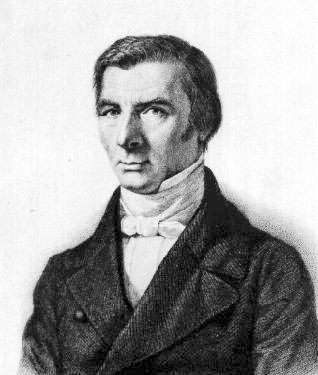
Frederic Bastiat

"Where you find the laws most numerous, there you will find also the greatest injustice." — Arcesilaus

In my previous blog I touched on the philosophy of Frederic Bastiat. In this post I would like to tell you something about the life and philosophy of Bastiat and why you should read his writings if you believe in freedom and the natural rights of man as our Founders did.

Claude Frederic Bastiat was born on June 30, 1801, in Bayonne, France, the son of a prominent merchant. His mother died when he was seven years old, and his father passed away two years later, when Frederic was only nine. He was brought up by an aunt, who also saw to it that he went to the College of Sorèze beginning when he was 14. But at 17 he left without finishing the requirements for his degree and entered his uncle’s commercial firm in Bayonne. Shortly afterward he came across the writings of the French classical-liberal economist Jean- Baptiste Say, and they transformed his life and thinking. He began a serious study of political economy and soon discovered the works of many of the other classical-liberal writers in France and Great Britain.

In 1825 he inherited a modest estate in Mugron from his grandfather and remained there until 1846, when he moved to Paris. During these 20 years Bastiat devoted almost all his time to absorbing a vast amount of literature on a wide variety of subjects, sharing books and ideas with his friend Félix Coudroy. It seems that Coudroy had socialist leanings, and Bastiat began to refine his skills in clear thinking and writing by formulating the arguments that finally won over his friend to a philosophy of freedom.

In the late 1820s and 1830s he began writing monographs and essays on a variety of economic topics. But his real reputation as a writer began in 1844, when he published a lengthy article in defense of free trade and then a monograph on Cobden and the League: The English Movement for Free Trade. While writing these works Bastiat began a correspondence with Richard Cobden, one of the primary leaders of the British Anti-Corn Law League, the association working for the repeal of all barriers to free trade. The two proponents of economic freedom became fast friends, supporting each other in the cause of liberty.

The success of these writings, and the inspiration from the success of Cobden’s free-trade activities in bringing about the end of agricultural protectionism in Great Britain in 1846, resulted in Bastiat’s moving to Paris to establish a French free-trade association and to start Le Libre Échange, a newspaper devoted to this cause. For two years Bastiat labored to organize and propagandize for free trade. At first he was able to attract a variety of people in commerce and industry to support his activities, including delivering speeches, designing legislation for the repeal of French protectionism, and preparing writings to change public opinion. But it was to no avail. There were too many factions benefiting from privileges and favors given by the government, and he was unable to arouse a sustained interest in his cause among the general public. It appeared that Adam Smith had been right in lamenting the prejudices of the public and the power of the factions, at least in France. This is what Madison feared most when writing in support of the Constitution in Federalist 10.

Following the revolution of February 1848, Bastiat began a career in politics,Bastiat serving first in the French Constituent Assembly and then in the Legislative Assembly. Having devoted most of his previous writings to demonstrating the fallacies in the arguments for protectionism, Bastiat turned his attention to a new enemy of economic liberty: socialism. In the Legislative Assembly he delivered powerful speeches against public-works programs, guaranteed national-employment schemes, wealth redistribution proposals, nationalization of industry, and rationales for the expansion of bureaucratic controls over social and economic life. But because of worsening tuberculosis that weakened his voice, he turned to the written word, producing a large number of essays detailing the absurdities in the arguments of the socialists.

Bastiat made his last appearance in the Assembly in February 1850. By spring of that year his health had declined so dramatically that he was forced to step down from his legislative responsibilities and spend the summer in the Pyrenees Mountains in the south of France. He returned to Paris in September and visited his friends in the cause for free trade, before setting out for Italy in search of a cure for his tuberculosis. He died in Rome on December 24, 1850, at the age of 49 — much too soon.

Frederic Bastiat’s intellectual legacy in the fight for economic freedom is contained in three volumes. Two of them are collections of some of his most biting, witty, and insightful essays and articles, and are available in English under the titles Economic Sophisms and Selected Essays on Political Economy. In his last years, Bastiat devoted part of his time to a general work of social philosophy and economic principles, published under the name Economic Harmonies.

As Henry Hazlitt rightly emphasized, the central idea in much of Bastiat’s writings is captured in his essay “What Is Seen and What Is Not Seen,” which was the last piece he wrote before his death in 1850. He points out that the short-run effects of any action or policy can often be quite different from its longer-run consequences, and that these more remote consequences in fact may be the opposite from what one had hoped for or originally planned.

Bastiat was able to apply the principle of the seen and the unseen to taxes and government jobs. When government taxes, what is seen are the workers employed and the results of their labor: a road, a bridge, or a canal. What is unseen are all the other things that would have been produced if the tax money had not been taken from individuals in the private sector and if the resources and labor employed by the government had been free to serve the desires of those private citizens. Government, Bastiat explained, produces nothing independent from the resources and labor it diverts from private uses.

This simple but profoundly important insight is the theoretical weapon through which Bastiat is able to demonstrate the errors and contradictions in the ideas of both protectionists and socialists. Thus in such essays as “Abundance and Scarcity,” “Obstacle and Cause,” and “Effort and Result,” he shows that barriers and prohibitions to freedom of trade only lead to poverty.

He points out that each of us is both a consumer and a producer. To consume a good we must either make it ourselves or make some other good that we think someone else will take in exchange for the good we want. As consumers we desire as many goods as possible at the lowest possible prices. In other words, we want abundance. But as producers we want a scarcity of the goods we bring to market. In open competition, in which all exchanges are voluntary, the only way to “capture” customers and earn the income that enables each of us, in turn, to be a consumer is to offer better, cheaper, and more goods than our competitors. The alternative to this method, Bastiat warns, is for each of us as a producer to turn to the government to gain from our neighbors what we are unable to obtain through peaceful, nonviolent trade on the market. Consider that you own a pizza shop and the government takes five dollars out of your till in taxes and then gives that five dollars to people to purchase a pizza from you. What would you have gained? Of course this does not take into consideration the 50 cents the government would keep for administrative costs. This is what government does when it takes money from person “A” to give to person “B” and claims this action is helping the economy and creating jobs. Bastiat saw 150 years ago that this was a false assertion — one that the progressives and socialists have rammed down our throats for years.

Herein lays Bastiat’s famous distinction between illegal and legal plunder, which is at the center of his analysis in The Law. The purpose of government, he says, is precisely to secure individuals in their rights to life, liberty, and property. Without such security men are reduced to a primitive life of fear and self-defense, with every neighbor a potential enemy ready to plunder what another has produced. If a government is strictly limited to protecting men’s rights, then peace prevails, and men can go about working to improve their lives, associating with their neighbors in a division of labor and exchange. This is what Jefferson meant when he said that your rights ended at the tip of his nose.

But government can also be turned against those whom it is meant to protect in their property. There can arise legal plunder, in which the powers of government are used by various individuals and groups and factions to prevent rivals from competing, to restrict the domestic and foreign trading opportunities of other consumers in the society, and therefore to steal the wealth of one’s neighbors. This, Bastiat argues, is the origin and basis of protectionism, regulation, and redistributive taxation.

But the consequences of legal plunder are not only the political legitimizing of theft and the breakdown of morality through the blurring of the distinction between right and wrong—however crucially important and dangerous these may be for the long-term stability and well-being of society. Such policies also, by necessity, reduce the prosperity of the society.

Every trade protection, every domestic regulatory restriction, every redistributive act of taxation above that minimal amount necessary to secure the equal protection of each individual’s rights, Bastiat insisted, reduces production and competition in society. Scarcity replaces abundance. Limiting competition reduces the supply of goods available to all members of the society. Imposing protectionist barriers on foreign trade or domestic regulations on production decreases the general availability of goods and makes them more expensive. Everyone is, in the end, made worse off. And thus Bastiat reached his famous conclusion that the state is the great fiction through which everyone tries to live at the expense of everyone else.

Why does legal plunder come about? Bastiat saw its origin in two sources. First, as we have just seen, some people see it as an easier means of acquiring wealth than through work and production. They use political power to redistribute from others what they are unwilling or unable to obtain from their neighbors through the voluntary exchanges of the marketplace. One basis for legal plunder, in other words, is the misguided spirit of theft.

The second, and far more dangerous, source of legal plunder is the arrogant mentality of the social engineer or utopian mastermind. Through the ages, Bastiat showed, social and political philosophers have viewed the multitude of humanity as passive matter, similar to clay, waiting to be molded and shaped, arranged and moved about according to the design of an intellectually superior elite.

Bastiat writes in The Law:

"These socialist writers look upon people in the same manner that the gardener views his trees. Just as the gardener capriciously shapes the trees into pyramids, parasols, cubes, vases, fans, and other forms, just so does the socialist writer whimsically shape human beings into groups, series, centers, sub-centers, honeycombs, labor-corps, and other variations. And just as the gardener needs axes, pruning hooks, saws, and shears to shape his trees, just so does the socialist writer need the force that he can find only in law to shape human beings. For this purpose, he devises tariff laws, relief laws, and school laws."

With a timeless relevance, Bastiat points out that the political elite praises the ideal of democracy, under which “the people” select those who will hold political office. But once the electoral process is finished, those elected to high political office arrogate to themselves the planning, directing, and controlling of every aspect of social and economic life. The task of modern democracy, apparently, is to periodically appoint those who shall be our societal dictators and masterminds.

Is this the way men have to live? Was illegal and legal plundering the only form of social existence? Bastiat answered no. In Economic Harmonies he tried to explain the nature and logic of a system of peaceful human association through production and trade. Historians of economic thought and other critics of Bastiat have said this work demonstrates that, despite his brilliant journalistic talents, he failed as a serious economic theorist. They point to his use of a form of a labor theory of value or his .faulty theory of savings, capital, and interest.

But beyond these errors and limitations is an aspect of Economic Harmonies that still makes it insightful. Harmonies attempts to offer a grand vision of the causal relationships among work, the division of labor, voluntary exchange, and mutual improvement of men’s condition, as well as the importance of private property, individual freedom, and domestic and foreign free trade. In freedom there is social harmony, since each man sees his neighbor not as an enemy but as a partner in the ongoing processes of human improvement. Where relationships are based on consent and mutual agreement there can be no plunder, only reinforcing prosperity, as each works to trade with his neighbors and acquire all the things that make life better for each and all. This is exactly the way our Founders thought.

If one looks at the period during which Bastiat devoted his efforts to fight for freedom and free trade, the conclusion would appear to be that his life ended in failure. Both during his lifetime and following his death France remained in the grip of the protectionist and interventionist spirit, never achieving the degree of economic liberty enjoyed in Great Britain through the second half of the nineteenth century.

And yet Bastiat’s life should be seen as a glorious success. For the 150 years since his passing, each new generation of advocates of economic liberty has been inspired by his writings. His fables and essays read as fresh as if they were written yesterday, because they address the underlying nature of human association and the dangers from political encroachment on the social and market orders.

Today we live in a society where 50% of the people pay no taxes for the government benefits they receive. This means they are plundering the other 50% to pay for their needs. According to the Bureau of Labor Statistics there are 48 million people on food stamps. These 48 million are plundering the people paying taxes for their daily bread and other niceties of life. Government assistance in the form of various welfare programs are plunder of those not receiving welfare payments. The bailout of the auto industry was plunder of the taxpayers for the purpose of protecting two auto manufactures who were in financial trouble due to their lack of providing the consumer what he or she wanted and the mismanagement of the companies. Government sponsorship of student loans has allowed the colleges and universities to plunder students, their parents, and taxpayers with higher and higher tuition costs. The list of examples of plunder goes on and on.

One of Bastiat’s comments in The Law referring to socialist and progressive is particularly relative today with all of the talk of fairness and the equality of results. Bastiat states:

"Socialism, like the ancient ideas from which it springs, confuses the distinction between government and society. As a result of this, every time we object to a thing being done by government, the socialists conclude that we object to its being done at all. We disapprove of state education. Then the socialists say that we are opposed to any education. We object to a state religion. Then the socialists say that we want no religion at all. We object to a state-enforced equality. Then they say that we are against equality. And so on, and so on. It is as if the socialists were to accuse us of not wanting persons to eat because we do not want the state to raise grain."

Bastiat’s writings are timeless as they show us the tyranny of the elite and masterminds as they rule over us for their own purposes and use legal plunder as their political currency. They have influenced conservative economists and philosophers such as; Ludwig von Mises, Friedrich Hayek (who had a profound influence on Margaret Thatcher), Henry Hazlitt, .Nobel Prize winning Milton Friedman, Walter Williams, and Thomas Sowell.

The video shown below, produced by the Von Misses Institute, presents a good overview of the writings and philosophies Frederic Bastiat.If you are interested in learning more about Bastiat and French liberalism it is well wrth your time.