Search This Blog

Wednesday, April 10, 2013

Tribute to a Great Leader

“Europe will never be like America. Europe is a product of history. America is a product of philosophy.” — Margaret Thatcher

During the 1990s I spent a great deal of time in Great Britain working with a firm in Swansea, Wales. During this period I got to know something of the British economy and medium-sized businesses. The one thing that sticks in my mind from this experience is the tremendous admiration these professionals had for Margaret Thatcher. While the international press called her the “Iron Lady” these colleagues of mine referred to her as the savior of the British economy and nation. Some of them admitted that they had been members of the Labor Party for years, but constantly supported the Conservative Thatcher. In that sense she drew support from left-leaning voters in the same manner Ronald Reagan pulled support from Democrats.

Margaret Hilda Roberts was born on 13 October 1925 in Grantham, Lincolnshire, the daughter of a grocer. She went to Oxford University and then became a research chemist, retraining to become a barrister in 1954. In 1951, she married Denis Thatcher, a wealthy businessman, with whom she had two children.

Thatcher became a Conservative member of parliament for Finchley in North London in 1959, serving as its MP until 1992. Her first parliamentary post was junior minister for pensions in Harold Macmillan's government. From 1964 to 1970, when Labour were in power, she served in a number of positions in Edward Heath's shadow cabinet. Heath became prime minister in 1970 and Thatcher was appointed secretary for education. Throughout her political life she was greatly influenced by political works such as Friedrich von Hayek's "The Road to Serfdom", which condemned economic intervention by government as a precursor to an authoritarian state.

After the Conservatives were defeated in 1974, Thatcher challenged Heath for the leadership of the party and, to the surprise of many, won. In the 1979 general election, the Conservatives came to power and Thatcher became prime minister. It is reported that during one of the Conservative conferences where there was debate over whether to take a more moderate position closer to Labor so they could garner more votes Thatcher stood and held Hayek’s book above her head and proclaimed in frustration that the Party should follow more the ideology espoused by the Austrian School of Economics than the Keynesian policies that were leading Great Britain down the road to socialism and destruction. She was also an advocate of the writings of the French Economist Frederic Bastiat.

She was an advocate of privatizing state-owned industries and utilities, reforming trade unions, lowering taxes and reducing social expenditure across the board. Thatcher's policies succeeded in reducing inflation, but unemployment dramatically increased during her early years in power as she privatized many of the government owned businesses and utilities making them more efficient and profitable.

Victory in the Falklands War in 1982 and a divided opposition helped Thatcher win a landslide victory in the 1983 general election. In 1984, she narrowly escaped death when the IRA planted a bomb at the Conservative party conference in Brighton.

In foreign affairs, Thatcher cultivated a close political and personal relationship with US president Ronald Reagan, based on a common mistrust of communism, combined with free-market economic ideology. Thatcher was nicknamed the 'Iron Lady' by the Soviets. She warmly welcomed the rise of reformist Soviet leader Mikhail Gorbachev.

In the 1987 general election, Thatcher won an unprecedented third term in office. But controversial policies, including the poll tax and her opposition to any closer integration with Europe, produced divisions within the Conservative Party which led to a leadership challenge. In November 1990, she agreed to resign and was succeeded as party leader and prime minister by John Major.

In 1992, Thatcher left the House of Commons. She was appointed a peeress in the House of Lords with the title of Baroness Thatcher of Kesteven and continued giving speeches and lectures across the world. She also founded the Thatcher Foundation, which aimed to advance the cause of political and economic freedom, particularly in the newly liberated countries of central and Eastern Europe. In 1995 she became a member of the Order of the Garter, the highest order of knighthood in England.

Margaret Thatcher was the not only the first woman Prime Minister of theThatcher_Union_Fla_2353616b United Kingdom she was the longest serving PM during the 20th century serving from 1979 to 1990. When she left office the UK had a ratio of 39% of GDP for spending and 35% of GDP in tax revenue. By 2000 with the continuation of her policies by John Majors and Tony Blair the ratio had flipped to spending at 34.5% of GDP and tax revenues at 36.2% of GDP.

Of all the possible ways to remember Prime Minister Margaret Thatcher — victorious cold warrior, pioneering woman politician, resolute American ally — the one that’s probably most relevant today is the way she transformed Britain’s domestic policy and economy.

The numbers tell the story. As the Telegraph reports, when she took office in 1979, the top British tax rate on earned income was 83 percent, on “unearned” income, 98 percent. By the time she left office in 1990, the rate had come down to 40 percent.

It was a classic supply-side success story. The growth encouraged by the lower rates (along with an increase in the value-added tax that shifted the tax burden to consumption rather than income) caused government revenues to more than triple, to 187 billion pounds in 1990 from 57 billion in 1979. Yet because the private sector grew faster than government spending, even during a Cold War military buildup and a war in the Falkland Islands, government spending as a percentage of GDP in Britain shrank during Thatcher’s administration, to 39 percent from 47 percent. Britain had annual real GDP growth of 4 percent in 1986, 4.6 percent in 1987, and 5 percent in 1988.

As if that weren’t enough, the Telegraph’s summary continues, she privatized government-owned gas, electric, coal, telephone, and airline companies, and she sold the “council flats” housing projects to the tenants who lived in them:

“The proof that the Trades Unions were tamed was seen not merely in better industrial relations and improved performance of the economy, but also in the way the once-mighty National Union of Mineworkers, led by Arthur Scargill, was defeated in a year-long strike in 1984-85. With that dragon finally slain, Mrs. Thatcher could now unpick what she considered one of the most wasteful legacies of state socialism, the nationalized industries. A succession of privatizations — of gas, electricity, coal, telecommunications and airlines — created a nation of shareholders and raised a fortune for the Treasury, enabling taxes to be cut at the top rate to 40 pence in the £ in 1988. A similar drive to spread prosperity as widely as possible was seen in the sale of council houses to their owners. By the end of the second Thatcher term in 1987 the British economy had been transformed, by these and by other important deregulatory measures, into one of the strongest in the western world.”

How did she do it? There are all sorts of possible explanations, including the fact that Britain in the late 1970s, like America, had sunk to such a sorry state that there was a market for solutions that were alternatives to the big-government conventional wisdom. But the point that seems most salient from this distance is Thatcher’s steadfast confidence in the basic principles behind her policies. It was, as she put it in her “Iron Lady” speech, “my defense of values and freedoms fundamental to our way of life.”

She explained those values in her 1988 Bruges Speech, speaking of how “From classical and mediaeval thought we have borrowed that concept of the rule of law which marks out a civilized society from barbarism. And on that idea of Christendom, to which the Rector referred — Christendom for long synonymous with Europe — with its recognition of the unique and spiritual nature of the individual, on that idea, we still base our belief in personal liberty and other human rights.”

She went on:

“The lesson of the economic history of Europe in the 70's and 80's is that central planning and detailed control do not work and that personal endeavor and initiative do. That a State-controlled economy is a recipe for low growth and that free enterprise within a framework of law brings better results. And that means action to free markets, action to widen choice, action to reduce government intervention. Our aim should not be more and more detailed regulation from the center: it should be to deregulate and to remove the constraints on trade.”

Even The New York Times obituary, beneath a home-page headline characterizing the heroine of the Cold War as “divisive,” seemed to grasp what it describes as “the principles known as Thatcherism — the belief that economic freedom and individual liberty are interdependent, that personal responsibility and hard work are the only ways to national prosperity, and that the free-market democracies must stand firm against aggression.”

But it probably seemed remote in the late 1970s, too, that Britain’s first woman prime minister, who had grown up in an apartment above her father’s grocery store, would reshape a failing post-colonial power into an exemplar of liberty. And who would have thought then that, 30 years later and an ocean away, she would be inspiring those of us who believe that even after Thatcher’s (and Reagan’s) Cold War victories and tax cuts, there yet remains room for another political leader with the conviction and skill to redefine the possibilities for growth and economic freedom?

At the height of the Cold War in 1980 when the United States and the Soviet Union were at the brink of nuclear war and all of Eastern Europe suffered under the oppressive yoke of tyrannical communism four people came together who changed the world and liberated millions of people while drastically reducing the threat of a nuclear exchange. Those four leaders were Ronald Reagan, Margaret Thatcher, Pope John Paul II, and Mikhail Gorbachev.

John O’Sullivan, who was a special adviser to former British Prime Minister Margaret Thatcher and part of her inner circle of speechwriters, on Monday credited her with restoring Britain’s world reputation and its economy.

In an interview with Newsmax TV, O’Sullivan said Thatcher, who died Monday at 87, played a key role, in putting Great Britain back on the world stage.

“She is the woman who managed to restore Britain’s reputation much in the same way that Ronald Reagan restored America’s,” he said.

“She was his partner in the victory over the Cold War, but domestically she reversed failures spanning about 30 years and turned Britain into a significant country globally and economically,” he said.

On March 3, 1995 Margaret Thatcher gave an address at Hillsdale College where the only statue of the Iron Lady in the United States resides. In her speech entitled "The Moral Foundations of Society" Mrs. Thatcher stated:

“History has taught us that freedom cannot long survive unless it is based on moral foundations. The American founding bears ample witness to this fact. America has become the most powerful nation in history, yet she uses her power not for territorial expansion but to perpetuate freedom and justice throughout the world.

For over two centuries, Americans have held fast to their belief in freedom for all men—a belief that springs from their spiritual heritage. John Adams, second president of the United States, wrote in 1789, “Our Constitution was designed only for a moral and religious people. It is wholly inadequate for the government of any other.” That was an astonishing thing to say, but it was true.

What kind of people built America and thus prompted Adams to make such a statement? Sadly, too many people, especially young people, have a hard time answering that question. They know little of their own history (This is also true in Great Britain.) But America’s is a very distinguished history, nonetheless, and it has important lessons to teach us regarding the necessity of moral foundations.

John Winthrop, who led the Great Migration to America in the early 17th century and who helped found the Massachusetts Bay Colony, declared, “We shall be as a City upon a Hill.” On the voyage to the New World, he told the members of his company that they must rise to their responsibilities and learn to live as God intended men should live: in charity, love, and cooperation with one another. Most of the early founders affirmed the colonists were infused with the same spirit, and they tried to live in accord with a Biblical ethic. They felt they weren’t able to do so in Great Britain or elsewhere in Europe. Some of them were Protestant, and some were Catholic; it didn’t matter. What mattered was that they did not feel they had the liberty to worship freely and, therefore, to live freely, at home. With enormous courage, the first American colonists set out on a perilous journey to an unknown land—without government subsidies and not in order to amass fortunes but to fulfill their faith.

Christianity is based on the belief in a single God as evolved from Judaism. Most important of all, the faith of America’s founders affirmed the sanctity of each individual. Every human life—man or woman, child or adult, commoner or aristocrat, rich or poor—was equal in the eyes of the Lord. It also affirmed the responsibility of each individual.

This was not a faith that allowed people to do whatever they wished, regardless of the consequences. The Ten Commandments, the injunction of Moses (“Look after your neighbor as yourself”), the Sermon on the Mount, and the Golden Rule made Americans feel precious—and also accountable—for the way in which they used their God-given talents. Thus they shared a deep sense of obligation to one another. And, as the years passed, they not only formed strong communities but devised laws that would protect individual freedom—laws that would eventually be enshrined in the Declaration of Independence and the U.S. Constitution.

…

They would do well to look at what has happened in societies without moral foundations. Accepting no laws but the laws of force, these societies have been ruled by totalitarian ideologies like Nazism, fascism, and communism, which do not spring from the general populace, but are imposed on it by intellectual elites.

It was two members of such an elite, Marx and Lenin, who conceived of “dialectical materialism,” the basic doctrine of communism. It robs people of all freedom—from freedom of worship to freedom of ownership. Marx and Lenin desired to substitute their will not only for all individual will but for God’s will. They wanted to plan everything; in short, they wanted to become gods. Theirs was a breathtakingly arrogant creed, and it denied above all else the sanctity of human life.

The 19th century French economist and philosopher Frederic Bastiat once warned against this creed. He questioned those who, “though they are made of the same human clay as the rest of us, think they can take away all our freedoms and exercise them on our behalf.” He would have been appalled but not surprised that the communists of the 20th century took away the freedom of millions of individuals, starting with the freedom to worship. The communists viewed religion as “the opiate of the people.” They seized Bibles as well as all other private property at gun point and murdered at least 10 million souls in the process.

…

It is important to understand that the moral foundations of a society do not extend only to its political system; they must extend to its economic system as well. America’s commitment to capitalism is unquestionably the best example of this principle. Capitalism is not, contrary to what those on the Left have tried to argue, an amoral system based on selfishness, greed, and exploitation. It is a moral system based on a Biblical ethic. There is no other comparable system that has raised the standard of living of millions of people, created vast new wealth and resources, or inspired so many beneficial innovations and technologies.

The wonderful thing about capitalism is that it does not discriminate against the poor, as has been so often charged; indeed, it is the only economic system that raises the poor out of poverty. Capitalism also allows nations that are not rich in natural resources to prosper. If resources were the key to wealth, the richest country in the world would be Russia, because it has abundant supplies of everything from oil, gas, platinum, gold, silver, aluminum, and copper to timber, water, wildlife, and fertile soil.

Why isn’t Russia the wealthiest country in the world? Why aren’t other resource-rich countries in the Third World at the top of the list? It is because their governments deny citizens the liberty to use their God-given talents. Man’s greatest resource is himself, but he must be free to use that resource.

In his recent encyclical, Centesimus Annus, Pope John Paul I1 addressed this issue. He wrote that the collapse of communism is not merely to be considered as a “technical problem.” It is a consequence of the violation of human rights. He specifically referred to such human rights as the right to private initiative, to own property, and to act in the marketplace. Remember the “Parable of the Talents” in the New Testament? Christ exhorts us to be the best we can be by developing our skills and abilities, by succeeding in all our tasks and endeavors. What better description can there be of capitalism? In creating new products, new services, and new jobs, we create a vibrant community of work. And that community of work serves as the basis of peace and good will among all men.

The Pope also acknowledged that capitalism encourages important virtues, like diligence, industriousness, prudence, reliability, fidelity, conscientiousness, and a tendency to save in order to invest in the future. It is not material goods but all of these great virtues, exhibited by individuals working together, that constitute what we call the “marketplace.” [“Reprinted by permission from Imprimis, a publication of Hillsdale College.”]

In American eyes, or at least in the eyes of those on the center and center-Right, she represented a set of ideals: freedom, anti-communism and the transatlantic alliance. She stood by Ronald Reagan in his battle against the Evil Empire. She used the same language as he did – free markets, free people – and entered into a unique public partnership with him. There has been nothing like it since: Clinton-Blair, Blair-Bush, Obama-Cameron, none of them endorsed one another with the same mutual enthusiasm. They saw one another’s flaws and they differed on small and large issues – as is normal between politicians of very different countries – and in public, these differences sometimes did show.

But Thatcher-Reagan was possible because they both understood the value of political symbolism, and each saw how useful that quality could be in the other. If Reagan wanted to pull away from whatever domestic mistakes and scandals absorbed him, he could appear with Thatcher on a podium. If Thatcher wanted to enhance her status on the world stage and escape Arthur Scargill, she could appear with Reagan at the White House.

Outside of Britain and America – and outside of Western Europe – their partnership had enormous force. All across communist Europe, and even in the Soviet Union, they came to represent a set of very real and very clear ideals. When Reagan lit candles in the White House windows in honor of the Polish Solidarity movement, eyes rolled in Washington. But in Warsaw, people took heart. When Thatcher arrived in Gdansk in 1988, dressed in Tsarina boots, a full-length fur coat, and a fur hat, ready to meet Lech Walesa, everyone thought something important would soon happen – and it did. Not accidentally, the most successful nations in what used to be called Eastern Europe are the ones that most admired the old Thatcher-Reagan agenda: Poland, Czechoslovakia and Estonia have all been led at various times in the past two decades by politicians who would describe themselves as “Thatcherite”.

Can the British appreciate this side of Margaret Thatcher? Probably not fully:Margaret_Thatcher they remember her mistakes, her errors and her arrogance all too well. But Americans can, and do, remember what she stood for on the world stage, and that is a part of her legacy too. No politician is a saint — that honorific is left to Popes and God. Madison, Jefferson, Lincoln, Churchill, Reagan, and Thatcher were no saints, but they did saintly things. They all had a deep respect for individual freedom, free markets, and property rights. Like all politicians they worked within the framework of their times while looking back on the great thinkers and philosophers of the past for guidance. In many ways they were pragmatists realizing that they could not change the world overnight, but needed to convince their citizens that the course they were taking was a correct one towards life, liberty and the pursuit of happiness. The great leaders of history are able to do just that without the club of tyranny.

Margaret Thatcher, the most dominant British prime minister since Winston Churchill in 1940 and a global champion of the late 20th-century free market economic revival, died on April 8, 2013 at the age of 87 from a stroke. She was a leader who understood the values of life, liberty and the pursuit of happiness as well as our Founders and governed under those values. May she rest in peace and be remembered for her major accomplishments and not the “diversity” expressed by small-minded statists intellectuals and masterminds.

Tuesday, April 9, 2013

The Greatest Generations

“Good leadership consists of showing average people how to do the work of superior people.” — John D. Rockefeller

There have been several generations that could be called the “Greatest Generation.” Firstly there were our Founders who pledged their lives, their fortunes and their sacred honor for our lives, liberty and happiness from 1776 to 1787. These men could be called the first of our greatest generations.

Secondly there were the men and women who were children of the Great Depression who went off to fight and die in the Second World War — a war against statist tyranny. These men and women returned to build the nation we live I today. They were the ones who built our cars, houses, refrigerators, radios and TV sets. They were the ones who went on to become teachers, scientists, engineers, and above all entrepreneurs. This was a term coined by the NBC news anchor Tom Brokaw.

Between the Civil War and the early 1900s, the United States became the premier industrial nation of the world. This was due in large part to the efforts of a growing number of market entrepreneurs-such as Andrew Carnegie, John D. Rockefeller, and Herbert Dow-rather than of political entrepreneurs commonly referred to as the robber barons-who relied on federal subsidies to propel their success.

The success of the Great Northern Railroad-a transcontinental railroad from St. Paul, Minnesota to Seattle, Washington-built by the private entrepreneur James J. Hill with no federal funding, showcased to Americans after the Civil War the worth of free market principles. Pursuing these principles allowed American businesses to flourish at home and successfully to challenge European industrial dominance, which led to significant developments socially and politically in America and throughout the world.

The discoveries and developments in the steel, oil, and chemical industries brought about by the entrepreneurship of Andrew Carnegie, John D. Rockefeller, and Herbert Dow, respectively, established the foundation for American industrial successes in the 20th century, particularly for Henry Ford and the automobile industry. Market principles and their own genius propelled these men to pursue innovation in all aspects of their industry, and to offer quality products consistently. Over time, this led to reduced prices and thus wide adoption of their products.

These notable men of the “Gilded Age” rightly have a claim to the title of the "Greatest Generation," as the quality of life in society at large improved greatly due to their entrepreneurship and their philanthropy.

What can we learn from these men such as Andrew Carnegie, John D. Rockefeller, Henry Dow, Henry Ford, and the other “Market Entrepreneurs who made the United States into the world’s greatest industrial power by the beginning of the 20th century?

A few of the things we see in the 1800s are: Lots of individual liberty, very few stifling regulations, and a national government determined to reduce the national debt and show the world we had the discipline to balance our budget and have surpluses. In fact we had surpluses for 28 years from 1865 to 1893 and cut the national debt by two-thirds.

Today, if we could restore that kind of discipline restored that kind of freedom to the United States we would again see an outburst of entrepreneurship. We have seen that with things such as the iPad and iPhone. We would see more with limited government and a more disciplined federal government that balances its budgets.

What is needed is the removal of stifling regulations, increased individual liberty followed by constitutional government, and our federal government must restore fiscal responsibility and pay off the national debt.

From the Civil War to the beginning of the 20th century the United States rose from being a second rate power to a first rate power and the premier industrial power of the world.

This accomplishment was made possible by American market entrepreneurs as distinguished from political entrepreneurs. Market entrepreneurs succeeded by making a quality product at a low price, product that their customers wanted. While on the other hand the political entrepreneurs relied on federal subsidies to be successful. It was this latter class that was dubbed “robber barons.”

Take as example the Transcontinental Railroad that was financed through the sale of government bonds under the Pacific Railroad Acts of 1862 and 1864. Through this act the federal government guaranteed the sale of bonds to finance the Union Pacific and Central Pacific to build a railway from Omaha, Nebraska to San Francisco, California some 1,900 miles. At the end of the Civil War the U.S national debt was $60 million dollars. As the construction of the Transcontinental Railway was paid by the mile the final cost was $60 million dollars the two railway companies obtained some 44 million acres of land in the bargain. While the Transcontinental Railway was a great engineering accomplishment, especially in the Sierra Nevada Mountains of California it was built by political entrepreneurs who needed the federal government to finance their enterprise.

On the other hand the Great Northern Railway was built using private capitalJames_J._Hill_at_35 at a cheaper costs and more efficiently. The Great Northern Railway running from Saint Paul, Minnesota, to Seattle, Washington—more than 1,700 miles was the creation of the 19th century railroad tycoon James J. Hill and was developed from the Saint Paul and Pacific Railroad. The Great Northern's route was the northernmost transcontinental railroad route in the United States. It was completed on January 6, 1893, at Scenic, Washington.

The Great Northern was the only privately funded, and successfully built, transcontinental railroad in United States history. No federal land grants were used during its construction, unlike every other transcontinental railroad; according to Hill, his railway was built "without any government aid, even the right of way, through hundreds of miles of public lands, being paid for in cash". Consequently, it was one of the few transcontinental railroads to avoid receivership following the Panic of 1893. Hill would be considered a “market entrepreneur” — a person who saw a need and was willing to risk his capital and that of his investors to deliver a service the public wanted in a quality manner at a lower cost. It should be noted that Hill’s railway was considered in broad outline the Taggart Transcontinental Railroad in Ayn Rand’s Atlas Shrugged.

In 1870 the largest steel producer in the world was Great Britain. They were selling steel for $56 per ton and the largest consumers of steel were the railways for use as rails. In 1848 a 13-year Andrew Carnegie immigrated to the United States with his parents from Scotland. Carnegie had very little formal education, but he had a sense for business and a terrific work ethic and desire to succeed. In 1850, at the age of 15, he learned Morse Code and in 1853, Thomas A. Scott of the Pennsylvania Railroad Company employed Carnegie as a secretary/telegraph operator at a salary of $4.00 per week. At age 18, the precocious youth began a rapid advancement through the company, becoming the superintendent of the Pittsburgh Division. His employment by the Pennsylvania Railroad Company would be vital to his later success. The railroads were the first big businesses in America, and the Pennsylvania was one of the largest of them all. Carnegie learned much about management and cost control during these years and from Scott in particular.

In 1864, Carnegie invested $40,000 in Story Farm on Oil Creek in Venango County, Pennsylvania. In one year, the farm yielded over $1,000,000 in cash dividends, and petroleum from oil wells on the property sold profitably. The demand for iron products, such as armor for gunboats, cannon, and shells, as well as a hundred other industrial products, made Pittsburgh a center of wartime production. Carnegie worked with others in establishing a steel rolling mill, and steel production and control of industry became the source of his fortune. Carnegie had some investments in the iron industry before the war.

After the Civil War Carnegie left the railroads to devote all his energies to the ironworks trade. Carnegie worked to develop several iron works, eventually forming The Keystone Bridge Works and the Union Ironworks, in Pittsburgh. Although he had left the Pennsylvania Railroad Company, he remained closely connected to its management, namely Thomas A. Scott and J. Edgar Thomson. He used his connection to the two men to acquire contracts for his Keystone Bridge Company and the rails produced by his ironworks. He also gave stock to Scott and Thomson in his businesses, and the Pennsylvania was his best customer. When he built his first steel plant, he made a point of naming it after Thomson. As well as having good business sense, Carnegie possessed charm and literary knowledge. He was invited to many important social functions—functions that Carnegie exploited to his own advantage.

Over the ensuing years Carnegie built a vast steel empire and in doing so reduces the cost of steel to $11.50 per ton and virtually drove British steel out of the country. By 1901 he had built the largest steel company in the world and at the age of 66 he negotiated the sale of Carnegie Steel to the banker J.P. Morgan and the organizers for U.S. Steel for $480 million dollars (presently, $13.246 billion dollars) which at the time was the largest ever personal commercial transaction.

After the sale Carnegie devoted the rest of his life and money to philanthropy, building libraries and schools, providing 4,000 churches with organs, and establishing the Carnegie Foundation for International Peace. Carnegie defended industrial capitalism and accepted many of the principles of classical liberal political economy—individualism, competition that promoted the “survival of the fittest,” the sanctity of private property, inequality. At the same time, he maintained the biblical demand that the wealthy provide for the common good. His “gospel of wealth” was meant to provide an alternative to the “science of wealth” advanced by atheist-materialists of the laissez-faire school as well as the “social gospel” of collectivism. In his famous 1889 essay “The Gospel of Wealth" Carnegie stated:

"The price which society pays for the law of competition, like the price it pays for cheap comforts and luxuries, is also great; but the advantages of this law are also greater still, for it is to this law that we owe our wonderful material development, which brings improved conditions in its train. But, whether the law be benign or not, we must say of it, as we say of the change in the conditions of men to which we have referred: It is here; we cannot evade it; no substitutes for it have been found; and while the law may be sometimes hard for the individual, it is best for the race, because it ensures the survival of the fittest in every department. We accept and welcome, therefore, as conditions to which we must accommodate ourselves, great inequality of environment, the concentration of business, industrial and commercial, in the hands of a few, and the law of competition between these as being not only beneficial, but essential for the future progress of the race."

The second major demanded product of the late 1800s was oil. Until the discovery of oil at Oil Creek, Pennsylvania in 1859 people would light their homes and businesses with candles or lamps burning expensive whale oil. This would soon change through the entrepreneurship of John D. Rockefeller.

Rockefeller was born in Richford, New York in 1839. His father, William Avery Rockefeller, was a traveling snake oil salesman who mover from town to town huckstering his various elixirs. His father was also a bigamist who left the family high and dry

His mother, Eliza, a homemaker and devout Baptist, struggled to maintain a semblance of stability at home, as William was frequently gone for extended periods. She also put up with his philandering and his double life, which included bigamy. Thrifty by nature and necessity, she taught her son that "willful waste makes woeful want." Young Rockefeller did his share of the regular household chores and earned extra money raising turkeys, selling potatoes and candy and eventually lending small sums of money to neighbors

In September 1855, when Rockefeller was sixteen, he got his first job as an assistant bookkeeper, working for a small produce commission firm called Hewitt & Tuttle. He worked long hours and delighted, as he later recalled, in “all the methods and systems of the office”. He was particularly adept at calculating transportation costs, which served him well later in his career. The full salary for his first three months' work was $50 (50 cents a day). As a youth, Rockefeller reportedly said that his two great ambitions were to make $100,000 and to live 100 years.

In 1859, Rockefeller went into the produce commission business with a partner, Maurice B. Clark, and they raised $4,000 in capital. Rockefeller went steadily ahead in business from there, making money each year of his career. After wholesale foodstuffs, the partners built an oil refinery in 1863 in "The Flats", then Cleveland's burgeoning industrial area on the banks of the Cuyahoga River. The refinery was directly owned by Andrews, Clark & Company, which was composed of Clark & Rockefeller, chemist Samuel Andrews, and M. B. Clark's two brothers. The commercial oil business was in its infancy. Whale oil had become too expensive for the masses, and a cheaper, general-purpose lighting fuel was needed.

In February 1865, Rockefeller bought out the Clark brothers for $72,500 at auction and established the firm of Rockefeller & Andrews. Rockefeller said, "It was the day that determined my career." He was well-positioned to take advantage of post-war prosperity and the great expansion westward, fostered by the growth of railroads and an oil-fueled economy. He borrowed heavily, reinvested profits, adapted rapidly to changing markets, and fielded observers to track the quickly expanding industry

In 1866, his brother William Rockefeller built another refinery in Cleveland and brought John into the partnership. In 1867, Henry M. Flagler became a partner, and the firm of Rockefeller, Andrews & Flagler was established. By 1868, with Rockefeller continuing practices of borrowing and reinvesting profits, controlling cost and using refineries' waste, the company owned two Cleveland refineries and a marketing subsidiary in New York; it was the largest oil refinery in the world. Rockefeller, Andrews & Flagler was the predecessor of the Standard Oil Company.

By the end of the American Civil War, Cleveland was one of the five main refining centers in the U.S. (besides Pittsburgh, Philadelphia, New York, and the region in northwestern Pennsylvania where most of the oil originated). In June 1870, Rockefeller formed Standard Oil of Ohio, which rapidly became the most profitable refiner in Ohio. Standard Oil grew to become one of the largest shippers of oil and kerosene in the country. The railroads were fighting fiercely for traffic and, in an attempt to create a cartel to control freight rates, formed the South Improvement Company, in collusion with Standard and other oil men outside the main oil centers The cartel received preferential treatment as a high-volume shipper, which included not just steep rebates of up to 50% for their product, but also rebates for the shipment of competing products. Part of this scheme was the announcement of sharply increased freight charges. This touched off a firestorm of protest from independent oil well owners, including boycotts and vandalism, which eventually led to the discovery of Standard Oil's part in the deal. A major New York refiner, Charles Pratt and Company, headed by Charles Pratt and Henry H. Rogers, led the opposition to this plan, and railroads soon backed off. Pennsylvania revoked the cartel’s charter and equal rates were restored for the time being.

Undeterred, though vilified for the first time by the press, Rockefeller continued with his self-reinforcing cycle of buying competing refiners, improving the efficiency of his operations, pressing for discounts on oil shipments, undercutting his competition, making secret deals, raising investment pools, and buying rivals out. In less than four months in 1872, in what was later known as "The Cleveland Conquest" or "The Cleveland Massacre", Standard Oil had absorbed 22 of its 26 Cleveland competitors. Eventually, even his former antagonists, Pratt and Rogers, saw the futility of continuing to compete against Standard Oil: in 1874, they made a secret agreement with their old nemesis to be acquired. Pratt and Rogers became Rockefeller's partners. Rogers, in particular, became one of Rockefeller's key men in the formation of the Standard Oil Trust. Pratt's son, Charles Millard Pratt became Secretary of Standard Oil. For many of his competitors, Rockefeller had merely to show them his books so they could see what they were up against, and then make them a decent offer. If they refused his offer, he told them he would run them into bankruptcy, and then cheaply buy up their assets at auction. He saw himself as the industry’s savior, "an angel of mercy", absorbing the weak and making the industry as a whole stronger, more efficient, and more competitive. Standard Oil was growing horizontally and vertically. It added its own pipelines, tank cars, and home delivery network. It kept oil prices low to stave off competitors, made its products affordable to the average household, and to increase market penetration, sometimes sold below cost if necessary. It developed over 300 oil-based products from tar to paint to Vaseline petroleum jelly to chewing gum. By the end of the 1870s, Standard was refining over 90% of the oil in the U.S. Rockefeller had already become a millionaire.

In 1877, Standard clashed with the Pennsylvania Railroad, its chief hauler. Rockefeller had envisioned the use of pipelines as an alternative transport system for oil and began a campaign to build and acquire them. The railroad, seeing Standard’s incursion into the transportation and pipeline fields, struck back and formed a subsidiary to buy and build oil refineries and pipelines. Standard countered and held back its shipments, and with the help of other railroads, started a price war that dramatically reduced freight payments and caused labor unrest as well. Rockefeller eventually prevailed and the railroad sold all its oil interests to Standard. But in the aftermath of that battle, in 1879 the Commonwealth of Pennsylvania indicted Rockefeller on charges of monopolizing the oil trade, starting an avalanche of similar court proceedings in other states and making a national issue of Standard Oil’s business practices

Standard Oil sold kerosene for $0.08 per gallon a product that cost them $0.06 per gallon to produce. Rockefeller, although an accountant by nature, was devoted to science and innovation so he invested $0.01 of the sales price into research and development for other products that could be derived from oil. This left him one cent for profit to be shared with his investors and stockholders. In fact Rockefeller became the first billionaire in the history of the United States by making one cent per gallon.

Rockefeller believed that God did make junk and this belief led him to drive his scientist to constantly look for new ways to use oil and its byproducts. Standard Oil was able to turn almost every drop of crude oil into a marketable product from kerosene and eventually gasoline to petroleum jelly (Vaseline), pharmaceuticals, and asphalt for paving roads. By the turn of the century Standard Oil was producing two thirds of all the refined oil in the world and 84% in the United States.

Rockefeller, like Andrew Carnegie, believed in philanthropy. Unlike Carnegie, who gave his money to libraries and the arts, Rockefeller gave his money away to medical science, education and spreading the Gospel of Jesus Christ. He founded hospitals and colleges. Rockefeller believed in the Efficiency Movement, arguing that:

"To help an inefficient, ill-located, unnecessary school is a waste. It is highly probable that enough money has been squandered on unwise educational projects to have built up a national system of higher education adequate to our needs, if the money had been properly directed to that end.”

He donated to Tuskegee Institute and in 1884; Rockefeller provided major funding for a college in Atlanta for African-American women, which became Spelman College (named for Rockefeller's in-laws who were ardent abolitionists before the Civil War). The oldest existing building on Spelman's campus, Rockefeller Hall, is named after him. Rockefeller also gave considerable donations to Denison University and other Baptist colleges.

He created the Rockefeller Foundation in 1913 to continue and expand the scope of the work of the Sanitary Commission, which was closed in 1915. He gave nearly $250 million to the foundation, which focused on public health, medical training, and the arts. It endowed Johns Hopkins School of Hygiene and Public Health, the first of its kind. It also built the Peking Union Medical College in China into a notable institution. The foundation helped in World War I war relief, and it employed William Lyon Mackenzie King of Canada to study industrial relations. In the 1920s, the Rockefeller Foundation funded a hookworm eradication campaign through the International Health Board. This campaign used a combination of politics and science, along with collaboration between healthcare workers and government officials to accomplish its goals.

Rockefeller’s main detractor was Ida Tarbell one of the leading "muckrakers" of the progressive era. She is best known for her 1904 book The History of the Standard Oil Company, which was listed as No. 5 in a 1999 list by New York University of the top 100 works of 20th-century American journalism. She depicted John D. Rockefeller as crabbed, miserly, money-grabbing, and viciously effective at monopolizing the oil trade. Her father was an oil producer and refiner in Venango County, Pennsylvania and his business, along with those of many other small businessmen, was adversely affected by the South Improvement Company scheme (circa 1872) between the railroads and larger oil interests. Later, Tarbell would vividly recall this situation in her work, as she accused the leaders of the Standard Oil Company of using unfair tactics to put her father and many small oil companies out of business.

Tarbell’s book aside Rockefeller was still a market driven entrepreneur who built Standard Oil on the needs of the consumer and not on the needs of his competitors who gave millions to his philanthropic endeavors for the purpose of helping all of mankind without looking to government for assistance as today’s political entrepreneurs of crony capitalists such as Solyndra or Fisker.

Herbert Henry Dow (February 26, 1866 – October 15, 1930) was a Canadian born, American chemical industrialist. He was a graduate of Case School of Applied Science in Cleveland, Ohio. His most significant achievement was the founding of the Dow Chemical Company in 1897. He was a prolific inventor of chemical processes, compounds, and products, and was a market entrepreneur.

In 1889 Dow received his first patent after inventing a more cost-effectiveHDow1888 and streamlined process for bromine extraction. He quickly formed his own company but was bankrupt within the year. His associates were impressed with his work and in 1890 helped him to found the Midland Chemical Company in Midland, Michigan. Dow continued his work extracting bromine and by early 1891 he had invented the Dow process, a method of bromine extraction using electrolysis to oxidize bromide to bromine. At the time, besides being used as a sedative, the main use for bromine was for the development of photographic plates.

Dow was not content with simply improving the bromine extraction process, but wanted to expand his research of electrolysis to yield other chemicals. His financial backers did not approve of his continued research and fired him from the Midland Chemical Company. He continued his research, developing a process to extract chloride and caustic soda from sodium chloride. Dow then sought funding from potential backers in Cleveland, including family friends and former Case School of Applied Science classmates. In 1895, Dow moved his family to Ohio and founded the Dow Process Company to develop the production mechanism for his process. The following year he returned to Midland, where he formed the Dow Chemical Company as successor to the Dow Process Company. The Dow Process Company was incorporated with 57 original stockholders. Within three years, his new company had purchased the Midland Chemical Company

With his new company and new technology, Dow was able to produce bromine very cheaply, and began selling it in the United States for 36 cents per pound. At the time, the government-supported German bromine cartel, Bromkonvention, had a near-monopoly on the supply of bromine, which they sold for 49 cents per pound. The Germans had made it clear that they would flood the American market with cheap bromine if Dow attempted to sell the element abroad. In 1904 Dow defied the cartel by beginning to export his bromine at its cheaper price to England. A few months later, an angry Bromkonvention representative visited Dow in his office and reminded him to cease exporting his bromine.

Unafraid, Dow continued exporting to England and Japan. The German cartel retaliated by flooding the US market with bromine at a mere 15 cents a pound in an attempt to put him out of business. Dow, unable to compete with the attempt at predatory pricing in the U.S., instructed his agents to quietly buy up hundreds of thousands of pounds of the German bromine locally at the low price. The Dow Company then turned the tables on the cartel by repackaging the bromine and exporting it to Europe, including Germany, at 27 cents a pound and making a neat profit of 12 cents per pound in the deal. The cartel, expecting Dow to go out of business, was unable to comprehend what was driving the enormous demand for bromine in the U.S., and where all the cheap imported bromine flooding their market was coming from. They even suspected their own members of violating their price-fixing agreement and selling in Germany below the cartel's fixed cost. The befuddled cartel continued to slash prices on their bromine in the U.S., first to 12 cents a pound, and then to 10.5 cents per pound. Dow continued selling the dumped bromine in Germany at 27 cents per pound. When the cartel finally caught on to Dow's tactic, they realized they could not keep selling below cost, and were forced to increase their prices worldwide. Dow's triumph has been used as an argument that predatory pricing is an irrational practice that would never work in the real world. However, this statement needs to be qualified in a sense that the product was a commodity that had the capacity to be mass-produced, standardized, and bought or sold in large quantities.

The same thing happened with Aspirin. The Germans were selling Aspirin, something that had been developed by the Bayer Chemical Company, for $5.50 per pound. This was a very expensive compound for relieving pains from headaches and other maladies. This market entrepreneur entered the market and through efficiencies and technology Dow Chemical was able to sell aspirin $0.60 per pound. Once again a market entrepreneur was providing a quality and needed product at a cheaper price. The consumer was the beneficiary of Herbert Dow’s entrepreneurship.

I have written about Henry Ford, but I want to take a moment to review the accomplishments of the second American billionaire. Henry Ford did not rely on government for and subsidies for his fledgling auto company. After several failures and the availability of Carnegie’s, Rockefeller’s, and Dow’s cheap steel, gasoline, and chemicals Ford was able to introduce his company’s first Model “T” Ford in 1980. Once again Ford through research and development, innovative manufacturing processes, and hiring a competent and loyal work force by paying his workers double the going wage for auto workers of the day Ford was able to deliver to the public a reliable automobile at an affordable price — a price his own workers could well afford. By the end of the First World War the American automobile industry was the largest in the world and it was supporting thousands of entrepreneurs who were supplying parts and services to the ever-growing auto industry.

These burgeoning steel, oil, chemical, and auto industries needed millions of workers to fill the factory floors, research laboratories, and sales forces. From 1880 until the United States’ entrance into the First World War millions of immigrants crossed the sea to come to the United States to pursue the “American Dream” — a dream that was made possible by the greatest generation of market entrepreneurs. This included my grandparents who came from the Austro-Hungarian Empire in 1910.

Between 1880 and 1920, a time of rapid industrialization and urbanization, America received more than 20 million immigrants. Beginning in the 1890s, the majority of arrivals were from Central, Eastern and Southern Europe. In that decade alone, some 600,000 Italians migrated to America, and by 1920 more than 4 million had entered the United States. Jews from Eastern Europe fleeing religious persecution also arrived in large numbers; over 2 million entered the United States between 1880 and 1920. [Source: History.com]

In contrast to the market entrepreneurs of the period we have a prime example of the political entrepreneur who attempted to develop and airplane using federal subsidies.

In 1898, based on the success of his models, Samuel Langley received a War Department grant of $50,000 and $20,000 from the Smithsonian to develop a piloted airplane, which he called an "Aerodrome" (coined from Greek words roughly translated as "air runner"). Langley hired Charles M. Manly (1876–1927) as engineer and test pilot. When Langley received word from his friend Octave Chanute of the Wright brothers' success with their 1902 glider, he attempted to meet the Wrights, but they politely evaded his request.

While the full-scale Aerodrome was being designed and built, the internal combustion engine was contracted out to manufacturer Stephen Balzer (1864–1940). When he failed to produce an engine to the power and weight specifications, Manly finished the design. This engine had far more power than did the engine for the Wright brothers' first airplane—50 hp compared to 12 hp. The engine, mostly the technical work of men other than Langley, was probably the project's main contribution to aviation. The piloted machine had wire-braced tandem wings (one behind the other). It had a Pénaud tail for pitch and yaw control but no roll control, depending instead on the dihedral angle of the wings, as did the models, for maintaining roughly level flight.

In contrast to the Wright brothers' design of a controllable airplane that800px-Wright_flyer_-_full could fly against a strong wind and land on solid ground, Langley sought safety by practicing in calm air over the Potomac River. This required a catapult for launching. The craft had no landing gear, the plan being to descend into the water after demonstrating flight which if successful would entail a partial, if not total, rebuilding of the machine. Langley gave up the project after two crashes on take-off on October 7 and December 8, 1903.

In the first attempt, Langley said the wing clipped part of the catapult, leading to a plunge into the river "like a handful of mortar," according to one reporter. On the second attempt the craft broke up as it left the catapult. Manly was recovered unhurt from the river both times. Newspapers made great sport of the failures, and some members of Congress strongly criticized the project.

The Boston Globe said that Langley should give up on airplanes and build submarines and the New York Times stated that it would take a million years for man to fly in an airplane. Nine days after Langley’s second failure with manned flight two itinerant high school drop-out brothers who made bicycles in Dayton, Ohio made a successful manned flight of an airplane on the wind-swept dunes of Kitty Hawk, North Carolina. The fourth flight of that day covered a distance over the ground at 852 feet and the time of the flight was 59 seconds. Within a year they were staying aloft for an hour and covering miles over the ground. The Wright Brothers beat the estimate for manned flight as stated by the New York Times by 999,999 years, 11 months and 21 days. Oh how sad for the paper that claims “all the news that’s fit to print.”

Once again it was the market entrepreneurs who, without government subsidies gave the United States the eventual leadership the aviation industry. Unlike the crony capitalist of today such as Fisker Motors, Solyndra, and $2.2 billion dollar Ivanpah Solar Electric Generating System these market entrepreneurs of the Gilder Age were able to take the risks and invest their own talent, reputation, energy, and treasure in enterprises they believed in — enterprises producing products and services the public wanted and would pay for. It should be noted that the Ivanpah project has received a $1.375 billion loan guarantee from the United States Department of Energy.

The Gilded Age, a phrase coined Mark Twain, produced men of extreme vision and risk taking — men who would catapult the United States in the premiere global economic superpower. Today, due to stifling regulations, high taxes, constant budget deficits, enormous national debt, and government intervention in unproven businesses we are slowly losing the position we once held. Due to these factors more and more jobs are moving offshore to nations like China and India while our government makes it increasingly difficult for free market entrepreneurs to succeed.

For more information about these men of the Greatest Generation see my blog; The Men Who Built America.

Tuesday, April 2, 2013

The Crisis of the Union

“I have no purpose, directly or indirectly, to interfere with the institution of slavery in the states where it exists. I believe I have no lawful right to do so, and I have no inclination to do so.” — Abraham Lincoln, First Inaugural Address, March 4, 1861.

Over the Easter weekend I viewed the film “Lincoln” via my local cable provider’s pay-per-view service. While probably not as good as watching it on the big screen in a theater I was satisfied seeing it on a 55-inch LED television set.

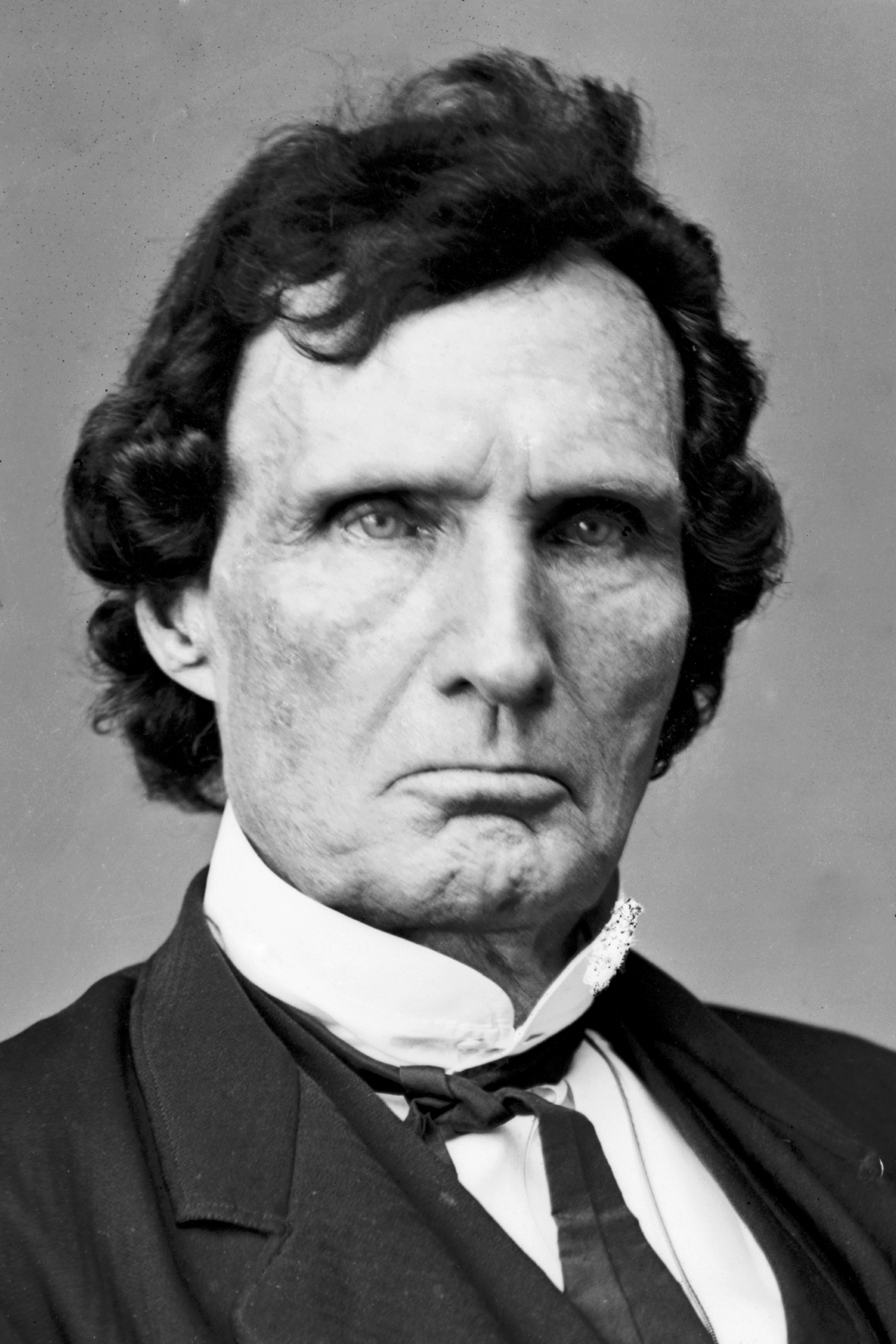
Before giving my brief critique of the film have must say that I was very impressed with Daniel Day Lewis’ portrayal of Abraham Lincoln and equallyThaddeus_Stevens_-_Brady-Handy-crop so with Sally Fields’ playing Lincoln’s manic-depressive wife, Mary Todd Lincoln. Tommy Lee Jones’s portrayal of the firebrand radical Republican Pennsylvania Representative Thaddeus Stevens was as good as it could be allowing for the flawed script he was given by director Spielberg and writers Tony Kushner and Doris Kearns Goodwin whose book “Team of Rivals: The Political Genius of Abraham Lincoln” the film was loosely based upon. Both writers and the director are ardent Progressives and their ideology was evident in the film.

As example the film opens with a scene of Lincoln being confronted by two Black soldiers complaining of their unequal pay in a very belligerent manner. The first words of the film are spoken to Lincoln by one of the black soldiers:

“Some of us was in the 2nd Kansas Colored. We fought the Rebs at Jenkins Ferry last April just after they killed every Negro they captured at Poison Springs. So at Jenkins Ferry we decided we weren't taking no Reb prisoners, and we didn't leave a one of them alive.”

Only a liberal (or maybe a white supremacist) would begin a story about Abraham Lincoln and the ending of slavery with a black racial atrocity. Obviously, Spielberg and Kushner don't believe it was an atrocity. They see it as something a soldier would be so proud of that he would immediately boast of it when happening upon the President of the United States nine months later. And Lincoln in turn would find it commendable, as confirmed by the response the filmmakers have him utter: "The 2nd Kansas Colored infantry, they fought bravely at Jenkins Ferry.

They did. But some of them — certainly not all, as Kushner infers — brutally slaughtered wounded and captured men and mutilated the dead. The exact details are lost to history, but the record of the Kansas National Guard doesn't appear to confirm Kushner's allegations that the killing was premeditated or that the soldiers "didn't leave a one of them alive."

According to the Gay, Progressive Kushner what the Confederates did to the black soldiers at Poison Springs was a moral crime. What the blacks did to the Confederates was rightful social justice, of which a soldier could be proud. A black soldier, that is. No one can imagine a white soldier bragging to the commander in chief that he had slaughtered wounded and captured prisoners and then mutilated their corpses.

As this first soldier finishes his boast, the other begins to harangue Lincoln about the unequal treatment of black soldiers, beginning with their lesser pay. This is Kushner memorializing another liberal trope: the eternal grievance. While it was true that black pay was lower during the Battle of Jenkins Ferry (April 30, 1864), Congress corrected the injustice almost immediately thereafter, equalizing black pay and making the increase retroactive.

Because that injustice was remedied nearly a year earlier, no black soldier would have ranted about it to Lincoln that night. In fact, no Black soldier would have spoken to the president in the manner and tone Kushner employs here. First he deprives blacks of a moral compass, and then he takes away their social probity. Interestingly, we actually have a first-hand account of a meeting between Lincoln and black troops occurring almost at this time:

"The black troops received him most enthusiastically, grinning from ear to ear, and displaying an amount of ivory terrible to behold," remarked Gen. U.S. Grant's aide, Horace Porter. "They cheered wildly, crowding around Lincoln, kissing his hand, brushing his coat or his horse so that they could tell others that they had touched the president. And Lincoln was touched. His eyes brimming with tears, his voice broke as he talked with the men; the encounter reminded everyone what was at stake."

It is highly unlikely that two enlisted soldiers — Black or white — would address the President of the United States in such a disrespectful manner, especially in public.

Once this opening scene was over the film settled down to its real theme — the battle over the 13th Amendment.

In my opinion the good points of the film were:

  • Lewis’ portrayal of Lincoln and his debates within his own Cabinet on the rational of pushing for the passage of the 13th Amendment before the war was over. Lincoln believed that once the war ended there would be no support for its passage.
  • A scene where Stevens (Tommy Lee Jones) is confronted by Mary Todd Lincoln over Congress’ disapproval of her lavish spending in the White House and the hearings they conducted to curb it. Unlike today’s imperial first family Congress in those days took a serious posture on public spending and held to their Constitutional duty of controlling the federal purse.
  • The raucous and passionate debate in the House of Representatives between the Free-Soilers, Conservative Republicans, Radical Republicans, and Democrats over the proposed amendment. This debate synthesized most of the arguments of the day over slavery and the war. The position of the Radical Republicans was expressed by Thaddeus Stevens who eventually was part of the House Managers in the impeachment of Andrew Johnson and fought for the money to allow Secretary of State William Henry Seward to purchase Alaska.
  • Lincoln’s use of paid “consultants”, under the supervision of Seward, to “convince” House Members to support the Amendment.
  • I will pass on the relationship portrayed in the film between Stevens’ Negro housekeeper, Lydia Hamilton Smith, who was involved with Mary Todd Lincoln’s Negro dressmaker Elizabeth Keckley.

All in all I would give the film 5 stars for the portrayal of Lincoln, Mary Todd Lincoln, Thaddeus Stevens, William Seward, and Congress. I would give it another 5 stars for the lighting, costuming, and sets. However, I would give it a mere two and a half stars for Kushner’s script. Now to reality!

The sectional divide that led to the outbreak of the Civil War was rooted in fundamentally opposing interpretations of the principles of the Declaration of Independence in addition to diverging perceptions of the institution of slavery. Slaveholders and non-slaveholders alike at the time of the Founding generally agreed that slavery was unjust and an evil that ran counter to the ethos of the Founding, even while countenancing it in practice. By the 1850s, prominent men such as John C. Calhoun and Alexander Stevens argued that slavery was a positive good, and that liberty and equality, far from being natural rights belonging to every human being, were privileges to be earned.

As showcased by the writings and life of Thomas Jefferson, at the time of the Founding there existed the wide-spread belief that slavery-while an institutional denial of natural rights and an inherently unjust practice, in addition to being an evil for the character of slave and owner alike-was a necessary evil without an immediately viable alternative. Various states took measures to eliminate slavery gradually within their borders, while organizations formed (The American Colonization Society) with the purpose of aiding emancipated slaves through a variety of ways (such as establishing the colony of Liberia in West Africa). This was a program based on “Compensated Emancipation.”

Compensated Emancipation was a method of ending slavery in countries where slavery was legal. This involved the person who was recognized as the owner of a slave being compensated monetarily or by a period of labor (an 'apprenticeship') for releasing the slave.

The latter was chosen as a compromise between slavery and outright emancipation, the former slaves receiving a nominal salary, while still being bound in their labors for a period of time. This proved unpopular, as for the slaves it amounted to little more than continued mandatory servitude, while it placed an added burden of wages on the former owners. Due to resistance in both the North and the South compensated emancipation

Only in the District of Columbia, which fell under direct Federal auspices, was compensated emancipation enacted. On April 16, 1862, President Lincoln signed the District of Columbia Compensated Emancipation Act. This law prohibited slavery in the District, forcing its 900-odd slaveholders to free their slaves, with the government paying owners an average of about $300 for each. In 1863 state legislation towards compensated emancipation in Maryland failed to pass, as did an attempt to include it in a newly-written Missouri constitution.

On the other hand the Free-Soilers wanted Congress to prohibit slavery in the new states and territories based on Article IV, Section 3 of the Constitution that stated:

“New states may be admitted by the Congress into this union; but no new states shall be formed or erected within the jurisdiction of any other state; nor any state be formed by the junction of two or more states, or parts of states, without the consent of the legislatures of the states concerned as well as of the Congress.

The Congress shall have power to dispose of and make all needful rules and regulations respecting the territory or other property belonging to the United States; and nothing in this Constitution shall be so construed as to prejudice any claims of the United States, or of any particular state.”

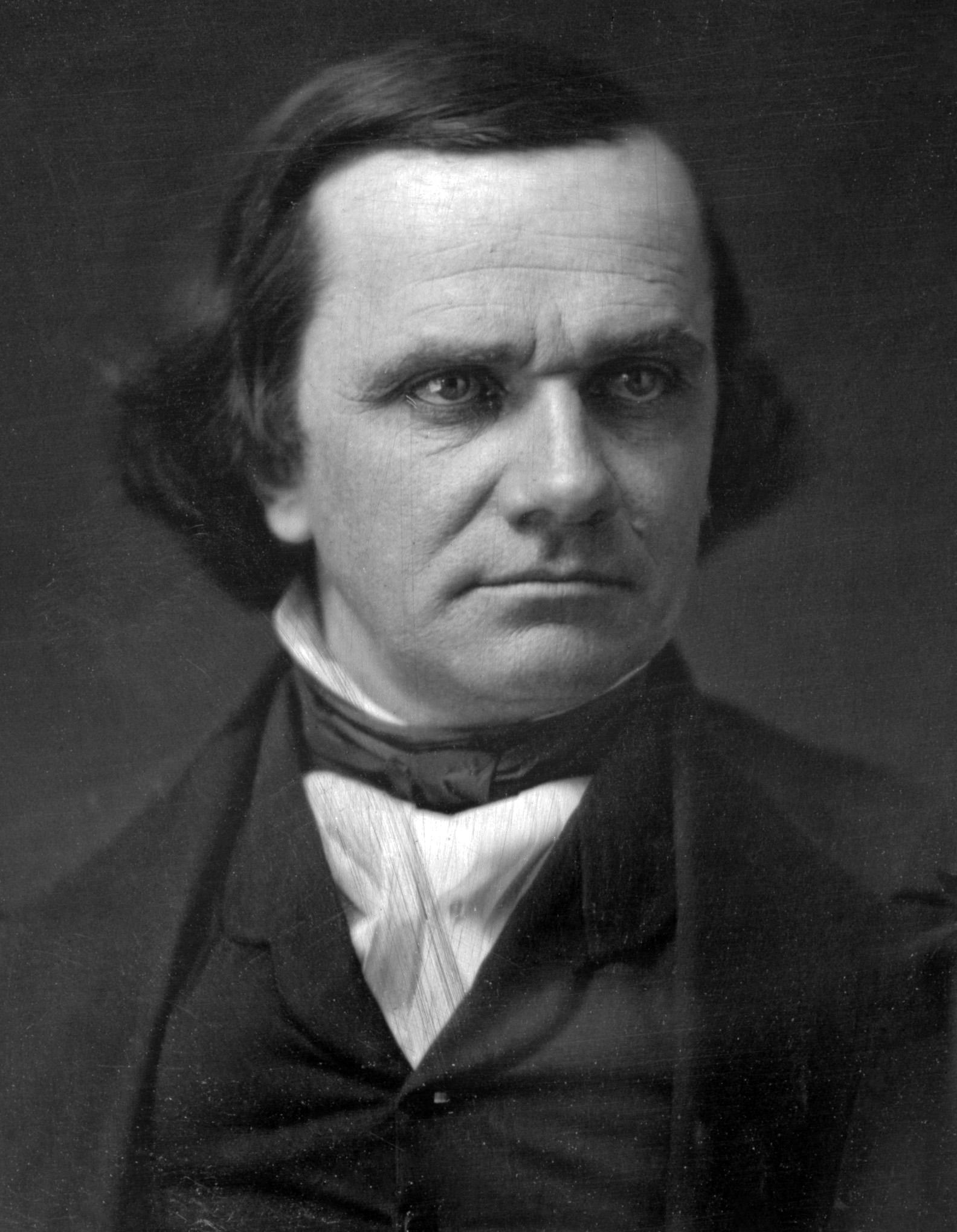
But, it was Stephen Douglas’, Lincoln’s opponent in the 1858 Illinois senatorial race, “popular sovereignty” that had carried the debate and was responsible for the notorious Kansas-Nebraska Act that Lincoln had so much disdain for.

Stephen A. Douglas, in a joint debate with Abraham Lincoln in Ottawa, Illinois on August 21, 1858 stated:

"Now, I hold that Illinois had a right to abolish and prohibit slavery465px-Stephen_A_Douglas_-_headshot as she did, and I hold that Kentucky has the same right to continue and protect slavery that Illinois had to abolish it. I hold that New York had as much right to abolish slavery as Virginia has to continue it, and that each and every state of this union is a sovereign power, with the right to do as it pleases upon this question of slavery, and upon all its domestic institutions. Slavery is not the only question which comes up in this controversy."

"Now, my friends, if we will only act conscientiously and rigidly upon this great principle of popular sovereignty, which guarantees to each state and territory the right to do as it pleases on all things, local and domestic, instead of Congress interfering, we will continue at peace one with another. Why should Illinois be at war with Missouri, or Kentucky with Ohio, or Virginia with New York, merely because their institutions differ? Our fathers intended that our institutions should differ. They knew that the North and the South, having different climates, productions and interests, required different institutions. This doctrine of Mr. Lincoln, of uniformity among the institutions of the different states, is a new doctrine, never dreamed of by Washington, Madison, or the framers of this government."

Lincoln’s response was:

"This declared indifference, but, as I must think, covert real zeal for the spread of slavery, I cannot but hate. I hate it because of the monstrous injustice of slavery itself. I hate it because it deprives our republican example of its just influence in the world-enables the enemies of free institutions, with plausibility, to taunt us as hypocrites-causes the real friends of freedom to doubt our sincerity, and especially because it forces so many really good men amongst ourselves into an open war with the very fundamental principles of civil liberty-criticizing the Declaration of Independence, and insisting that there is no right principle of action but self-interest."

Lincoln lost the election to Douglas, but attained a greater prize in 1860 — the presidency of the United States.

No American president has faced a national crisis of the magnitude Abraham

Lincoln confronted upon assuming office. To most observers of the time, Lincoln seemed ill-prepared for the momentous challenges that lay ahead. Born in a log cabin in Kentucky, he later moved with his family to Indiana and then to Illinois, receiving little formal education along the way. Nonetheless, Lincoln possessed a prodigious intelligence, and while in New Salem, Illinois, he began to study law on his own. In 1834 he was elected to the first of several terms in the Illinois legislature, and he gravitated toward the Whig party and its prominent leader, Henry Clay. Lincoln became a staunch proponent of law and order, an attribute that guided his thinking during the secession crisis of 1860–1861.

In 1846 Lincoln was elected to the U.S. House of Representatives from Springfield, Illinois, and while serving a single term in that body he became a vocal critic of President James K. Polk’s decision to lead the United States into war with Mexico. During and after the Mexican War, Lincoln asserted that any people “sufficiently numerous for national independence” possessed the right to “revolutionize” or throw off their existing government and to replace it with a government of their choosing. In later years, Lincoln was careful to insist that the right to revolution was a moral, not a legal, right—a right that could be exercised only on behalf of “a morally justifiable cause.” During the secession crisis, Lincoln maintained that secession was not revolution and was thus illegitimate and illegal—a point that he made clear in his first inaugural address. Lincoln aimed his speech at Unionists throughout the South, whom he believed had been tempted to embrace secession by a vocal minority of Southern nationalists. Lincoln believed most Southerners, even those in the states that had claimed to secede, were loyal to the Union and would, with proper encouragement, wrest political power from the rebels. Thus, his address contained a care

While a fierce opponent of slavery Lincoln did not believe he had the Constitutional authority to do anything about it in the existing states. He believed it would take amending the Constitution to that. In his first inaugural address on March 4, 1861 he stated:

“I have no purpose, directly or indirectly, to interfere with the institution of slavery in the states where it exists. I believe I have no lawful right to do so, and I have no inclination to do so.”

On the contrary Alexander H. Stephens, a friend of Lincoln’s and the eventual Vice President of the Confederacy stated regarding slavery in his Cornerstone Speech:

“But not to be tedious in enumerating the numerous changes for the better, allow me to allude to one other though last, not least. The new constitution has put at rest, forever, all the agitating questions relating to our peculiar institution African slavery as it exists amongst us the proper status of the negro in our form of civilization. This was the immediate cause of the late rupture and present revolution. Jefferson in his forecast, had anticipated this, as the "rock upon which the old Union would split." He was right. What was conjecture with him, is now a realized fact. But whether he fully comprehended the great truth upon which that rock stood and stands, may be doubted. The prevailing ideas entertained by him and most of the leading statesmen at the time of the formation of the old constitution were that the enslavement of the African was in violation of the laws of nature; that it was wrong in principle, socially, morally, and politically. It was an evil they knew not well how to deal with, but the general opinion of the men of that day was that, somehow or other in the order of Providence, the institution would be evanescent and pass away. This idea, though not incorporated in the constitution, was the prevailing idea at that time. The constitution, it is true, secured every essential guarantee to the institution while it should last, and hence no argument can be justly urged against the constitutional guarantees thus secured, because of the common sentiment of the day. Those ideas, however, were fundamentally wrong. They rested upon the assumption of the equality of races. This was an error. It was a sandy foundation, and the government built upon it fell when the "storm came and the wind blew."

Our new government is founded upon exactly the opposite idea; its foundations are laid, its cornerstone rests, upon the great truth that the negro is not equal to the white man; that slavery subordination to the superior race is his natural and normal condition. This, our new government, is the first, in the history of the world, based upon this great physical, philosophical, and moral truth. This truth has been slow in the process of its development, like all other truths in the various departments of science. It has been so even amongst us. Many who hear me, perhaps, can recollect well, that this truth was not generally admitted, even within their day. The errors of the past generation still clung to many as late as twenty years ago. Those at the North, who still cling to these errors, with a zeal above knowledge, we justly denominate fanatics…”

Lincoln, a firm believer in the Declaration of Independence and the Constitution, especially the Ninth and Tenth Amendments, believed the federal government had no warrant to war with existing states over the issue of slavery, but did have the power to squelch any form of rebellion by those states against the United States. This was Lincoln’s view of the Civil War until the Battle of Antietam on September 17, 1862.

This was the first major battle in the American Civil War to take place on Union soil. It was the bloodiest single-day battle in American history, with 22,717 dead, wounded and missing on both sides combined. 25% of the Federal Army were casualties and the public in the North and Congress were horrified. They began to question the purpose of the war and recruiting was waning.

To this effect Lincoln, under the war powers granted him as Commander-In-Chief in Article II, Section 2.1 issued his first Emancipation Proclamation. In this proclamation issued on September 22, 1862 gave the rebellious Southern States until January 1, 1863 to abolish slavery and rejoin the union:

“That it is my purpose, upon the next meeting of Congress to again recommend the adoption of a practical measure tendering pecuniary aid to the free acceptance or rejection of all slave-states, so called, the people whereof may not then be in rebellion against the United States, and which states, may then have voluntarily adopted, or thereafter may voluntarily adopt, immediate, or gradual abolishment of slavery within their respective limits; and that the effort to colonize persons of African descent, with their consent, upon this continent, or elsewhere, with the previously obtained consent of the Governments existing there, will be continued.

That on the first day of January in the year of our Lord, one thousand eight hundred and sixty three, all persons held as slaves within any state, or designated part of a state, the people whereof shall then be in rebellion against the United States shall be then, thence forward, and forever free; and the executive government of the United States, including the military and naval authority thereof, will recognize and maintain the freedom of such persons, and will do no act or acts to repress such persons, or any of them, in any efforts they may make for their actual freedom.”

The rebellious states did not take Lincoln’s proclamation to heart and on January 1, 1863 Lincoln issued the Final Emancipation Proclamation, the one we know today:

“Now, therefore I, Abraham Lincoln, President of the United States, by virtue of the power in me vested as Commander-in-Chief, of the Army and Navy of the United States in time of actual armed rebellion against authority and government of the United States, and as a fit and necessary war measure for suppressing said rebellion, do, on this first day of January, in the year of our Lord one thousand eight hundred and sixty three, and in accordance with my purpose so to do publicly proclaimed for the full period of one hundred days, from the day first above mentioned, order and designate as the States and parts of States wherein the people thereof respectively, are this day in rebellion against the United States, the following, to wit:

Arkansas, Texas, Louisiana, (except the Parishes of St. Bernard, Plaquemines, Jefferson, St. Johns, St. Charles, St. James, Ascension, Assumption, Terrebonne, Lafourche, St. Mary, St. Martin, and Orleans, including the City of New-Orleans) Mississippi, Alabama, Florida, Georgia, South-Carolina, North-Carolina, and Virginia, (except the forty-eight counties designated as West Virginia, and also the counties of Berkley, Accomac, Northampton, Elizabeth-City, York, Princess Ann, and Norfolk, including the cities of Norfolk & Portsmouth); and which excepted parts are, for the present, left precisely as if this proclamation were not issued.

And by virtue of the power, and for the purpose aforesaid, I do order and declare that all persons held as slaves within said designated States, and parts of States, are, and henceforward shall be free; and that the Executive government of the United States, including the military and naval authorities thereof, will recognize and maintain the freedom of said persons.”

In essence his proclamation abolished slavery in all of the rebellious states, but did not affect the Border States loyal to the Union or any of the Northern States. Lincoln had changed the mission of the war against rebellion to a two-fold mission of a Civil War — one to end the rebellion and the second to abolish slavery. This placated the abolitionists in the North but motivated the South to fight harder for their right to keep slaves.

Lincoln knew that when the war ended this proclamation would become void and to end slavery he would need to amend the Constitution. The Constitution had not been amended for 60 years with the 12th Amendment — the Amendment dictating the process for electing a President and establishing the Electoral College was ratified by the states on June 15, 1804. It is not an easy process as to amend the Constitution requires a vote of two-thirds of both Houses and then a ratification of three-fourths of the States Legislatures.

The 13th Amendment had been passed by the Senate on April 8, 1864, but the House of Representatives was another matter. Lincoln and his aides had to work and cajole the House Members either against the Amendment or on the fence.

The Senate passed the Amendment, by a vote of 38 to 6. However, just over two months later on June 15, the House failed to get the necessary two-thirds vote for passage, with 93 in favor and 65 against. Representative Ashley was instrumental in its eventual passage. An ardent Free-Soiler before becoming a Republican, he was the House floor manager and persuaded a number of Democrats to support it. President Lincoln took an active role in working for its passage through the House by ensuring the amendment was added to the Republican Party platform for the 1864 presidential election and using his powers adroitly. Finally, after seven months of debate and promises of patronage, the House narrowly reached the two-thirds majority needed to pass the bill on January 31, 1865, by a vote of 119 to 56. The Thirteenth Amendment's archival copy bears an apparent Presidential signature, under the usual ones of the Speaker of the House and the President of the Senate, after the words "Approved February 1, 1865"

The amendment was sent to the state legislatures. The Northern states quickly ratified it. On December 18, 1865, Secretary of State Seward proclaimed the amendment to have been adopted as of December 6, 1865, when Georgia's ratification brought the total number of ratifying states to 27, of the then 36 states in the union (75%). Florida ratified it on December 28, 1865; New Jersey in 1866; Texas in 1870; Delaware in 1901; and Kentucky in 1976. Mississippi, whose legislature voted in 1995 to do so, belatedly notified the Office of the Federal Register in February 2013 of that legislative action, completing the legal process for the state.

On March 4, 1865 Lincoln gave his famous Second Inaugural Address where he mentioned the horrible cost of the war in blood and treasure, the abolishen of slavery, and his thoughts on reconstruction where he stated:

“With malice toward none; with charity for all; with firmness in the right, as God gives us to see the right, let us strive on to finish the work we are in; to bind up the nation’s wounds; to care for him who shall have borne the battle, and for his widow, and his orphan—to do all which may achieve and cherish a just and a lasting peace, among ourselves, and with all nations.”

On April 9, 1865 Robert E. Lee, commander of the Confederate Army of Northern Virginia surrender to Lieutenant General Ulysses S. Grant and the Union Army of the Potomac at Appomattox Court House, Virginia, thus ending for all intents and purposes the Civil War. Five days later Lincoln would meet his death at the hands of the assassin John Wilkes Booth and Secretary Seward would be seriously wounded by Wilkes’ co-conspirator Lewis Powell.

It would take another Amendment — the 14th to give the freed slaves the rights of full citizenship.

On July 5, 1852 Frederick Douglass in his “What to the Slave is the Fourth of July” speech had this to say about the Declaration, the Constitution, and the United States:

“Pride and patriotism, not less than gratitude, prompt you to celebrate and to hold it in perpetual remembrance. I have said that the Declaration of Independence is the ring-bolt to the chain of your nation’s destiny; so, indeed, I regard it. The principles contained in that instrument are saving principles. Stand by those principles, be true to them on all occasions, in all places, against all foes, and at whatever cost.

…

Your fathers staked their lives, their fortunes, and their sacred honor, on the cause of their country. In their admiration of liberty, they lost sight of all other interests. They were peace men; but they preferred revolution to peaceful submission to bondage. They were quiet men; but they did not shrink from agitating against oppression. They showed forbearance; but that they knew its limits. They believed in order; but not in the order of tyranny. With them, nothing was "settled" that was not right. With them, justice, liberty and humanity were "final;" not slavery and oppression. You may well cherish the memory of such men. They were great in their day and generation. Their solid manhood stands out the more as we contrast it with these degenerate times.

How circumspect, exact and proportionate were all their movements! How unlike the politicians of an hour! Their statesmanship looked beyond the passing moment, and stretched away in strength into the distant future. They seized upon eternal principles, and set a glorious example in their defense. Mark them!

…

Fellow-citizens! there is no matter in respect to which, the people of the North have allowed themselves to be so ruinously imposed upon, as that of the pro-slavery character of the Constitution. In that instrument I hold there is neither warrant, license, nor sanction of the hateful thing; but, interpreted as it ought to be interpreted, the Constitution is a GLORIOUS LIBERTY DOCUMENT. Read its preamble, consider its purposes. Is slavery among them? Is it at the gateway? or is it in the temple? It is neither. While I do not intend to argue this question on the present occasion, let me ask, if it be not somewhat singular that, if the Constitution were intended to be, by its framers and adopters, a slave-holding instrument, why neither slavery, slaveholding, nor slave can anywhere be found in it. What would be thought of an instrument, drawn up, legally drawn up, for the purpose of entitling the city of Rochester to a track of land, in which no mention of land was made? Now, there are certain rules of interpretation, for the proper understanding of all legal instruments. These rules are well established. They are plain, common-sense rules, such as you and I, and all of us, can understand and apply, without having passed years in the study of law. I scout the idea that the question of the constitutionality or unconstitutionality of slavery is not a question for the people. I hold that every American citizen has a fight to form an opinion of the constitution, and to propagate that opinion, and to use all honorable means to make his opinion the prevailing one.

It’s too bad that Kutcher and Spielberg could not have opened their film with a quote from Frederick Douglass rather than two fictional, disgruntled Black soldiers.

The Oscar for Best Actor went to Daniel Day-Lewis, and deservedly so. This Welshman brought the Great Emancipator to the screen in a remarkably lifelike portrayal. He captured the Hoosier accent, the awkward gestures, even the pained walk of a man whose feet hurt him. The only thing amiss in this amazing rendition was that Day-Lewis's Lincoln looked like the incoming president, the man of 1861, not the withered, ravaged commander-in-chief. The Abraham Lincoln of 1865 had visibly aged twenty-five years in four.

Still, Daniel Day-Lewis's Lincoln comes closer to the real man than some of the caricatures that are, unfortunately, being offered by some conservatives. Some of them say Lincoln is a hypocrite because he approves of the right of revolution spelled out in the Declaration of Independence but disapproves of secession.

Secession was no revolution it was rebellion. We have Jefferson Davis's own Inaugural Address to prove that:

“The declared purpose of the compact of Union from which we have withdrawn was "to establish justice, insure domestic tranquility, provide for the common defense, promote the general welfare, and secure the blessing of liberty to ourselves and our posterity;" and when, in the judgment of the sovereign States now composing this Confederacy, it had been perverted from the purposes for which it was ordained, and had ceased to answer the ends for which it was established, a peaceful appeal to the ballot-box declared that so far as they were concerned, the government created by that compact should cease to exist. In this they merely asserted a right which the Declaration of Independence of 1776 had defined to be inalienable; of the time and occasion for its exercise, they, as sovereigns, were the final judges, each for itself. The impartial and enlightened verdict of mankind will vindicate the rectitude of our conduct, and He who knows the hearts of men will judge of the sincerity with which we labored to preserve the Government of our fathers in its spirit. The right solemnly proclaimed at the birth of the States, and which has been affirmed and reaffirmed in the bills of rights of States subsequently admitted into the Union of 1789, undeniably recognize in the people the power to resume the authority delegated for the purposes of government. Thus the sovereign States here represented proceeded to form this Confederacy, and it is by abuse of language that their act has been denominated a revolution. They formed a new alliance, but within each State its government has remained, the rights of person and property have not been disturbed. The agent through whom they communicated with foreign nations is changed, but this does not necessarily interrupt their international relations.”

The reason Mr. Davis denied his Confederate States were making a revolution was simple: If he had a human right to revolution, then so did his slaves. Also, Jefferson Davis wanted the aid of England and France, then both monarchies. They would be unlikely to assist a Southern revolution that might give ideas to their own disenfranchised masses.

Jefferson Davis's vice president, Alexander Hamilton Stephens, was a personal friend to Abraham Lincoln. But Vice President Stephens gave a famous "Cornerstone Speech," in which he openly avowed that the new Confederate constitution was based on slavery.

When President Lincoln wrote to editor Horace Greeley, he famously said he would free all the slaves or none, or free some and leave others alone if by so doing he could save the Union. Recall, this letter was written while Lincoln had the draft of the Emancipation Proclamation in his desk drawer.

This is taken to be proof that he didn't care about slavery. Not in the least. Let's remember how he was elected. It was to stop the extension of slavery into the territories.

Saving the Union would stop the spread of human bondage over the continent. There was no inconsistency in this. Saving the Union meant "putting slavery on the path to ultimate extinction." That was the Founders' policy; that was Lincoln's policy.

The leaders in those states that seceded were not confused about Lincoln's views on slavery. They took the election of Lincoln on an anti-slavery platform as their signal to leave the Union. Each of those states sent commissioners to other slaveholding states, urging them to leave the Union, too. Would they have done that if they thought Lincoln was insincere about stopping the spread of slavery?

To say Lincoln didn't free anyone by his Emancipation Proclamation is similarly misguided. It is true he didn't free the slaves of loyal Union citizens in the Border States (or in those regions occupied by the Union army). That's because he knew that his war powers extended only to suppressing the rebellion. If an American citizen was obeying the laws, Lincoln had no right to interfere with their slaves — until the Thirteenth Amendment was ratified.

From that date —January 1, 1863 — until the ratification of the Thirteenth Amendment, however, the Union armies and navy became forces of liberation. Slaves swarmed into Union camps crying for joy and blessing the Lord for their freedom. If those freedmen and women — many of whom were kept illiterate by law — could understand so clearly what Lincoln's Emancipation Proclamation meant, how can we get it so wrong?

Some folks say the Civil War was not about slavery, but about states' rights. We strongly support states’ rights — especially when it comes protecting our essential liberties from the dangers of ObamaCare. But in 1861, the secessionists' new constitution prohibited any free state from joining the Confederacy. It forbade the people of any Confederate state from voluntarily freeing their slaves. And the framers of that constitution even debated — and soundly defeated — a provision that would have allowed states to secede from the Confederacy. Clearly, the war was not just about states' rights.

Some think Abraham Lincoln gave us the Big Government we all deplore today. He did give us the Trans-Continental Railroad, to be sure, but that was privately built and owned. And the Homestead Act turned over millions of acres of public lands to private owners who would farm and improve them. Even the military — which had mushroomed to over a million men in wartime (including some 200,000 free men of color) — quickly shrank after the war. By 1870, it was little larger than before the war. Even the income tax imposed during the Civil War was quickly repealed and not enacted again until the Progressive Era of the 20th century and the 16th Amendment.

Today, the people of the South are leading the country in respect for life and in defending marriage. The South cares deeply about religious freedom. We thank God for our Southern friends and fellow believers. This is true conservatism.

But if conservatives today surrender Lincoln to the Hollywood left and Barack Obama, we will be giving up a vitally important cultural icon and one of our two greatest presidents. Conservatives believe in the Founding principles of this nation, including the inalienable right to life. Lincoln said that in the Founders' enlightened belief, "nothing stamped in the divine image was sent into the world to be trod upon." We know he meant the slaves. But we challenge President Obama: "Are not unborn children so stamped?" Let's not abandon Lincoln and allow liberals to "blow out the moral lights around us."